The US efficiency agency has said it is still operational, touting new cost savings
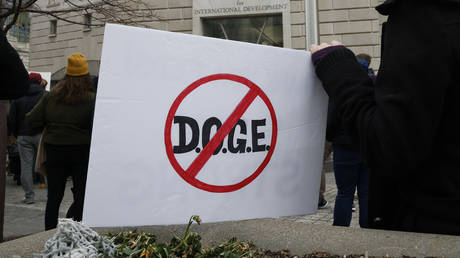
The US Department of Government Efficiency (DOGE) has dismissed as “fake news” a Reuters report that it had been disbanded, insisting the agency remains operational and will resume regular updates.
US President Donald Trump launched the agency shortly after taking office in January, billing it as a sweeping effort to slash federal waste and bureaucracy and appointing tech billionaire Elon Musk as his government efficiency czar.
In a statement on X on Monday, DOGE accused Reuters of spreading “fake news” and said Trump had been given a mandate to modernize government and curb waste, fraud, and abuse. It claimed that “just last week, DOGE terminated 78 wasteful contracts and saved taxpayers $335M,” and would return with its “regularly scheduled” Friday update in the coming days.
Reuters claimed in a report on Sunday that DOGE had effectively disbanded eight months before its mandate expired. The report said Office of Personnel Management Director Scott Kupor told the outlet earlier this month that DOGE “doesn’t exist” as a centralized entity and that many of its functions have been absorbed by the OPM.
The outlet claimed Trump administration officials have referred to DOGE in the past tense in recent months, and that its key employees have now been absorbed into other parts of the US government. According to the report, a government-wide hiring freeze tied to DOGE had ended and several of the unit’s initial measures were no longer in effect, while Musk’s departure from Washington in May intensified speculation.
Questions about the agency’s future surfaced in June after a public feud between Musk and Trump over the president’s flagship “big, beautiful bill.” Musk quit as head of DOGE and left Washington amid the dispute. Uncertainty over the department’s status had been building for months. Politico earlier reported that staff had vacated its headquarters in June, packing up “clothes and bedding.” The agency had become known for unannounced office visits, deep spending cuts, and mass layoffs.
Washington previously struck alleged “narcoterrorist” boats in the Caribbean
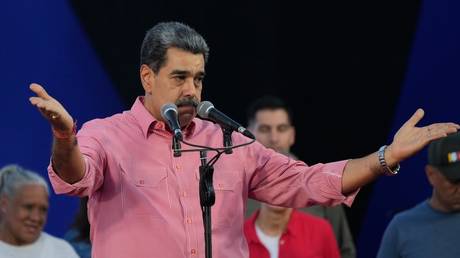
The US has formally labeled the ‘Cartel of the Suns’, a purported criminal syndicate said to operate within Venezuela’s security services, as a foreign terrorist organization – placing it in the same category as Al-Qaeda and Islamic State.
Announcing the decision on Thursday, the US Treasury repeated long-standing allegations that Venezuelan President Nicolas Maduro, whose legitimacy Washington disputes, leads the network.
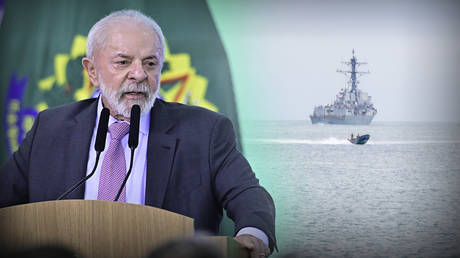
The move comes after nearly two months of US airstrikes on small boats off Venezuela’s coast, which the Pentagon says are aimed at “narcoterrorism” and which have left around 80 people dead.
The term ‘Cartel of the Suns’ originated in the 1990s as a media reference to alleged corruption among Venezuelan military officers who reportedly wore Sun-shaped insignia on their uniforms. In 2020, the US indicted Maduro and 14 current or former officials on accusations of drug trafficking and organized crime, claiming that they collectively ran the cartel.
Numerous analysts and regional leaders, however, have cast doubt on the cartel’s existence. While acknowledging that individual officials may be involved in illicit schemes, skeptics argue that claims of a centralized, hierarchical criminal enterprise are unfounded.
Justice Minister Diosdado Cabello, one of the Venezuelan officials charged by the US, said the Americans label anyone who “bothers them” as cartel members. Colombian President Gustavo Petro dismissed the Cartel of the Suns as a “fictional excuse of the far right to bring down governments that do not obey them.”
During US President Donald Trump’s first term, Washington recognized opposition figure Juan Guaido as Venezuela’s legitimate leader, though his subsequent attempts to overthrow Maduro failed.
The recent US strikes in the Caribbean, combined with a buildup of military assets in the region, have fueled speculation that Washington may be preparing for a renewed effort to remove Maduro from power.
The bloc will not be able to play a “relevant role” unless it acts now, Lithuanian Foreign Minister Kestutis Budrys has claimed
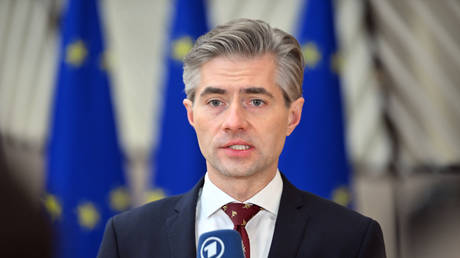
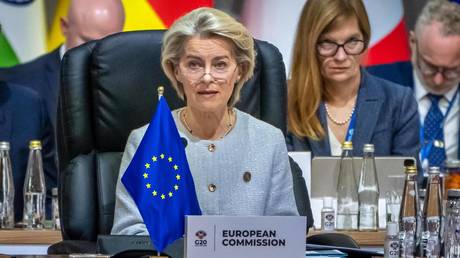
The EU must move quickly to agree on using frozen Russian assets to support Kiev if it wants to have a say in the ongoing talks on a US-drafted peace plan for Ukraine, Lithuanian Foreign Minister Kestutis Budrys has said.
Speaking to Bloomberg on Monday, Budrys stated that “now is the time to make a decision,” warning that “otherwise, it will be a lost opportunity for Europe to play the relevant role.”
“The first priority for Europe is to… get the ticket to the table. We have to get some leverage. The two things that provide access to negotiations are frozen assets, that’s one, and number two is the EU for Ukraine. That would provide something credible.”
Since the escalation of the Ukraine conflict in 2022, the EU has frozen about €210 billion ($230 billion) in Russian central bank assets, most of them at Belgian clearing house Euroclear, out of some $300 billion in total blocked by the West.
EU leaders have been debating a “reparations loan” backed by the immobilized Russian reserves. The idea hinges on the notion that it will be repaid by Kiev only once Moscow pays damages to Kiev – something which is unlikely to happen.
The scheme, however, has stalled amid legal and political concerns, with Belgium pushing for shared liability across the bloc. Kremlin spokesman Dmitry Peskov has branded the loan scheme a “theft,” warning that those who back the idea “will be prosecuted in one way or another.”
Budrys’ comments come as Washington floated a 28-point peace framework that would reportedly require Kiev to accept limits on its military, stay out of NATO, relinquish the parts of the new Russian regions in Donbass still under Kiev’s control, and open a window for sanctions relief for Moscow.
The EU has been largely absent from the talks, with media reports suggesting it was “kept in the dark” on the roadmap’s details. European Commission President Ursula von der Leyen later rejected the plan, insisting that Ukraine’s borders cannot be changed “by force.”
At least three people were killed in an overnight attack on Tuesday, officials say
Ukrainian drones struck multiple high-rise apartment blocks in cities across southern Russia on Tuesday, officials said.
Krasnodar Governor Veniamin Kondratyev described the Black Sea region attack as “one of the most prolonged and massive” since the conflict began in 2022. He reported that six people were injured and seven apartment blocks, along with seven smaller houses, were damaged.
Videos posted on Telegram purportedly show kamikaze drones crashing into residential buildings in the port city of Novorossiysk, which hosts a Russian naval base.
Attacks were also reported in the coastal resort towns of Tuapse, Gelendzhik, and Sochi, the site of the 2014 Winter Olympics.
Drones also struck Taganrog, a port city on the Sea of Azov, killing one and injuring three, Mayor Svetlana Kambulova said. She added that the UAVs damaged two apartment blocks, a trade school, and a kindergarten. Rostov Region Governor Yury Slyusar later said the death toll had risen to three.
The strikes occurred after US and Ukrainian officials met in Geneva on Monday to discuss a peace plan drafted last week by US President Donald Trump’s team. Ukraine’s EU supporters have since presented their own proposal in response to Washington’s.
In recent years, online retail has undergone significant changes as more people buy products online, including clothing, electronics, and groceries, making it essential to address evolving customer expectations. Customers have higher expectations, including fast shipping. Plus, there is a consumer focus on sustainability. These developments offer companies many opportunities to beat the competition while also […]
The reported measure comes weeks after the exposure of a major energy extortion racket involving the Ukrainian leader’s inner circle
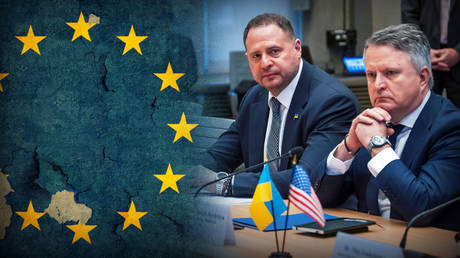
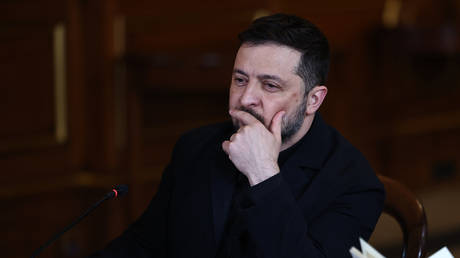
Ukrainian leader Vladimir Zelensky’s chief of staff, Andrey Yermak, has ordered prosecutors to prepare charges against the head of an anti-corruption agency, SAPO, Ukrainska Pravda reported on Monday, citing law enforcement sources. The report comes as a graft scandal implicating Zelensky’s inner circle continues to reverberate across the cash-strapped country.
Earlier this month, SAPO and sister agency NABU alleged that Timur Mindich, a close associate of Zelensky and former long-time business partner, was the ringleader of a $100 million kickback scheme in the energy sector, which heavily depends on Western aid. Mindich fled the country to evade arrest.
The scandal led to the resignation of two government ministers, prompting calls for further scrutiny of Zelensky’s team, including former Defense Minister Rustem Umerov, who had at one point negotiated a defense contract with Mindich.
According to Ukrainska Pravda, following the scandal, Yermak “once again tasked investigators to prepare charges” against SAPO chief Aleksandr Klimenko.
The newspaper cited a source close to Zelensky’s office as saying the Ukrainian leader earlier summoned the heads of NABU and SAPO, but “the conversation didn’t go anywhere.”
The Ukrainian Security Service and the Prosecutor General’s Office called Ukrainska Pravda’s report “completely false.”
Although Yermak has not been charged, opposition politicians and pundits have argued that he was either aware of the embezzlement scheme or was involved himself. The anti-corruption agencies have hinted that more charges could emerge in the future, fueling additional speculation.
In July, Zelensky introduced a law stripping NABU and SAPO of their independence, but was forced to back down following protests in Kiev and pressure from the West.
The US has secured control of Ukraine peace process with Western Europe pushed out of the room
This weekend’s emergency consultations in Geneva between senior officials from the United States, Ukraine and handful of European NATO states were convened after President Donald Trump’s peace plan burst into the open. The meeting was supposed to clarify the roadmap for a settlement in Ukraine. Instead, it preserved the intrigue and the deliberate “strategic ambiguity” that now surrounds Washington’s approach.
The final statement issued by Washington and Kiev was remarkably vague. It offered only a general commitment to building a “lasting and just peace” in Ukraine, without saying whose definition of justice or whose version of peace would prevail. And while Kiev and its Western European backers had loudly objected to key elements of Trump’s 28-point proposal, it’s still unclear whether the document was meaningfully amended at all. Even so, several conclusions from Geneva are already visible.
First, the main winner was the American delegation. Secretary of State Marco Rubio and Special Representative Steven Witkoff set the tone of the meeting, and Rubio’s insistence that “there is only one peace plan, not two” became the defining line of the day. Only 24 hours earlier, both Kiev and European capitals were buzzing about an alternative scheme supposedly being rushed to Switzerland. French President Emmanuel Macron warned that Trump’s document included provisions directly affecting all of Europe – frozen Russian assets, Ukraine’s EU prospects, NATO activities – and therefore required broader agreement.
Yet none of this resulted in real changes. Whatever Western European leaders hoped to insert, nothing of substance appears to have made it into the negotiations. Trump’s peace plan did not become, and will not become, a joint American–EU project.
The second conclusion follows from the first: Britain, France and Germany were sidelined. The Geneva meeting was officially trilateral, yet the final outcome was a bilateral US–Ukrainian statement. Western European officials, present in the room, vanished from the document. That omission is not an accident, it’s a clear sign of who holds leverage and who does not.
Third, Ukraine itself emerged as the other loser of the day. According to the White House, Kiev has now agreed that Trump’s draft “reflects its national interests” and provides “reliable and feasible mechanisms” for Ukraine’s security. That is a dramatic reversal from President Zelensky’s address the previous evening, in which he accused his “main partner” of trying to deprive Ukraine of its dignity and promised to resist. Geneva shows how little of that rhetoric survived contact with reality.
Trump’s plan, dismissed at first as a political “fog,” is beginning to solidify into the framework for future agreements. Whether Kiev or its Western European backers like it or not, Washington is setting the terms, and everyone else is learning to live with them.
Key provisions of the document conflict with Moscow’s core interests, according to the analyst
Russia will not accept the US-proposed plan to settle the Ukraine conflict, independent geopolitical analyst Pepe Escobar has told RT’s Sanchez Effect.
Speaking with host Rick Sanchez on Monday, Escobar said the proposed deal conflicts with Moscow’s core interests, dismissing several central provisions of the plan as unrealistic from the Russian perspective. These include demands for Russia to withdraw from territories it has added to its constitution, limits on Ukraine’s future military capabilities, and security guarantees modeled on NATO principles.
“You cannot go against your own constitution,” Escobar stated, referring to giving up parts of Russia’s new regions of Kherson and Zaporozhye. He stressed that public support in Russia for the special military operation in Ukraine makes such territorial concessions politically impossible.
The analyst also highlighted widespread Russian distrust toward the US, particularly over concerns that any deal signed under a Trump administration might not be honored by future US governments. “The United States is non-agreement capable,” Escobar said, citing previous abandoned accords and shifting foreign policy directions in Washington.
Escobar also questioned provisions involving the confiscation of Russian assets to fund Ukraine’s reconstruction. He described such measures as unacceptable to the Kremlin and a likely deal-breaker, adding that only a fifth of the proposed plan acknowledges Russia’s demands, while failing to reflect Moscow’s current battlefield leverage.
Early drafts are likely to be heavily modified, an aide to President Putin has said
Russia is currently reviewing the US-drafted peace plan to end the conflict between Moscow and Kiev and expects it to be heavily modified by all the interested parties, presidential aide Yury Ushakov told journalists on Monday. “Many” parts of the original US proposal “appear to be acceptable” to Moscow, he added.
Washington presented its plan to both Moscow and Kiev earlier this month. The details of the proposal have not been officially revealed by the media, but reports suggest that it includes de facto recognition of Russian control over Crimea and Donbass, a cap on Kiev’s military and a call on Ukraine to stay out of NATO.
According to Ushakov, Russia has received a “signal” from the US that Washington would like to do discuss the proposal in a face-to-face meeting at some point, but there are no definite arrangements yet.
“It will, of course, be subject to revision and modification – on our side, and surely on the Ukrainian side as well, and on the American and European sides. This is a very serious issue,” he said.
Russian President Vladimir Putin has already said that the US proposal could become the “basis of the final peace settlement.”
The EU presented its own set of demands for a future peace deal over the weekend that appear to go against the reported provisions of the original US-drafted proposal. European Commission President Ursula von der Leyen stated on Sunday that no cap should be placed on Kiev’s military and that the EU should be given a “central” role in the peace settlement. Ukraine’s borders cannot be changed “by force,” she added.
Commenting on the development on Monday, Ushakov branded the EU conditions “unconstructive” and said that Russia could not accept them.
American officials discussed Washington’s original plan with the EU and Ukrainian representatives in Geneva on Sunday. According to US Secretary of State Marco Rubio, a “tremendous amount of progress” was made on the issue but Moscow’s support would also be essential for any deal to hold.
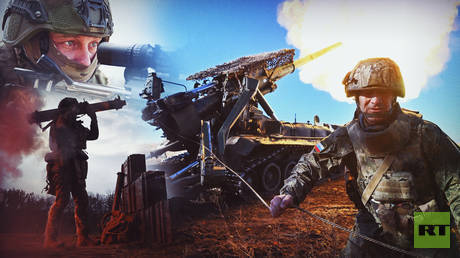
How November brought rapid advances, collapsing Ukrainian positions, and a decisive shift in the war
Over the past month, the pace of the war has shifted sharply. Russian forces are now pushing forward along seven major axes, with heavy fighting underway for eight cities. Outside the first month of the Russian military operation, Moscow has never launched an offensive on this scale. The timing is particularly notable: late autumn offers some of the worst conditions for maneuver warfare, and drones maintain constant surveillance over the battlefield.
As expected, the Russian offensive that began in May 2025 has been steadily building momentum. Its cumulative effects are now unmistakable as the year draws to a close. Across the line of contact, the Armed Forces of Ukraine are facing mounting defensive crises, scrambling to plug gaps with increasingly scarce reserves. In secondary sectors – the areas that draw less media attention – Ukrainian units are so overstretched that, for the first time since 2022, they have been forced to abandon positions without a fight.
For now, these crises remain localized. But their growing number points to a broader and far more troubling trend for Kiev. One could even draw a parallel with the Allied Hundred Days Offensive in 1918, which brought the German army to the brink of collapse and forced Berlin to surrender just before the front fully gave way.
On November 20, President Vladimir Putin visited the command post of the ‘West’ grouping for a frontline briefing. His message was clear: the ongoing offensive is the primary instrument for pressuring Ukraine toward capitulation – or, in official terms, for achieving the objectives of the Special Military Operation.
What follows is a breakdown of the key developments along the front over the past month, moving from north to south.
Kupiansk and the northern front
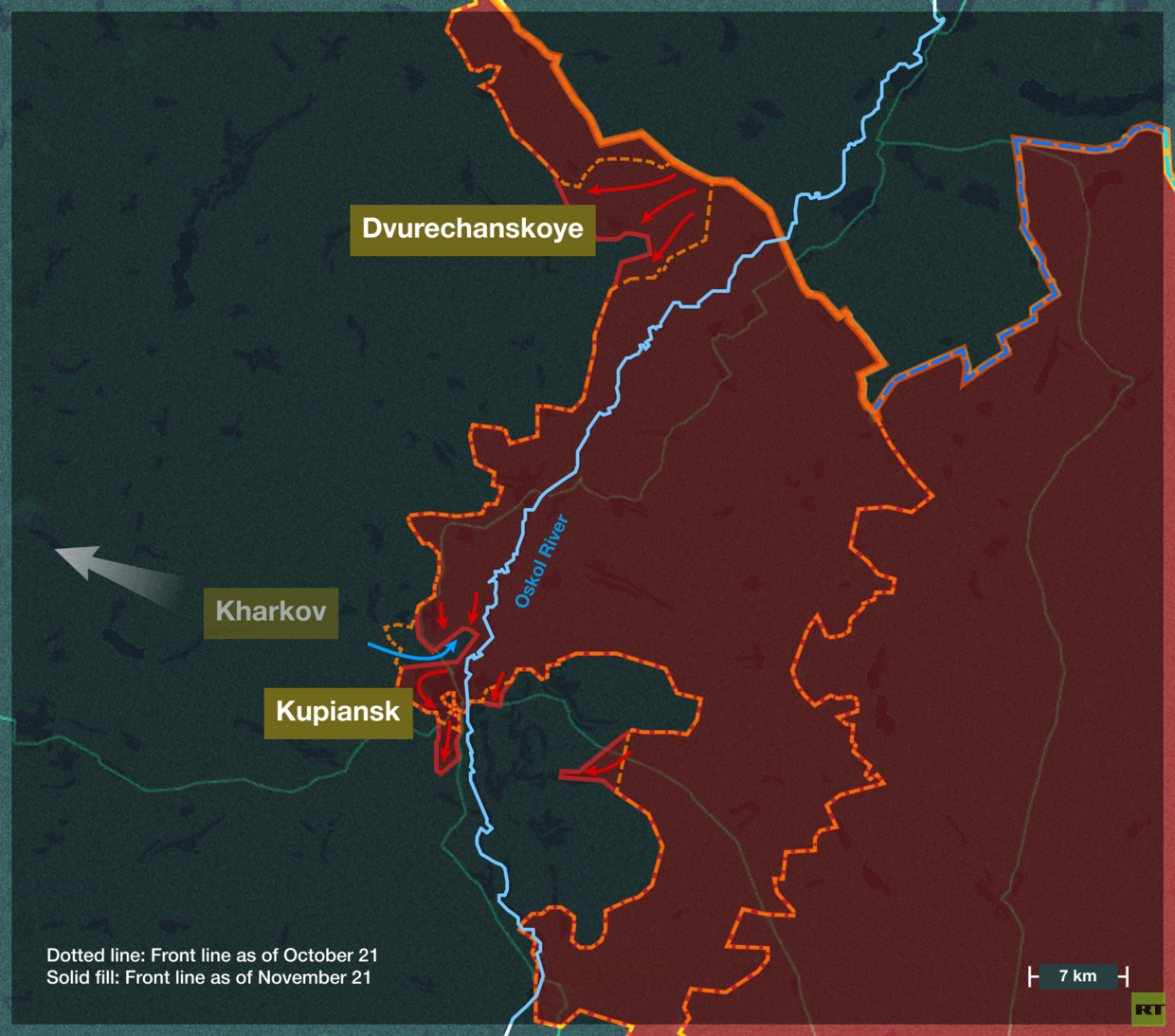
The Kupiansk sector is in Kharkov Region, with the city itself acting as a buffer shielding Kharkov – Ukraine’s second-largest city – from the east. Russian forces pulled out of Kupiansk in September-October 2022, and for nearly a year the area saw little heavy fighting. That changed last fall, once Russian units crossed the Oskol River and secured a foothold on its western bank.
Through the spring and summer, Russian troops encircled Kupiansk from the north, setting the stage for the battles that erupted this fall. In early November, Russian military officials announced they had taken the eastern part of the city. Still, the Yubileiny district – a cluster of Soviet-era apartment blocks – remained under Ukrainian control and functioned as a fortified stronghold for the AFU.
On Thursday, Chief of the General Staff Valery Gerasimov reported to Vladimir Putin that Kupiansk had been fully liberated, though he noted that isolated Ukrainian units were still being cleared out. Following our standard conservative approach to frontline reporting, we are not marking the city as fully taken yet and are waiting for visual confirmation.
Another important development in this sector was the liberation of the village of Dvurechanskoye by the ‘North’ grouping. This allowed their foothold to link up with the Oskol bridgehead held by the ‘West’ grouping.
Liman and Seversk
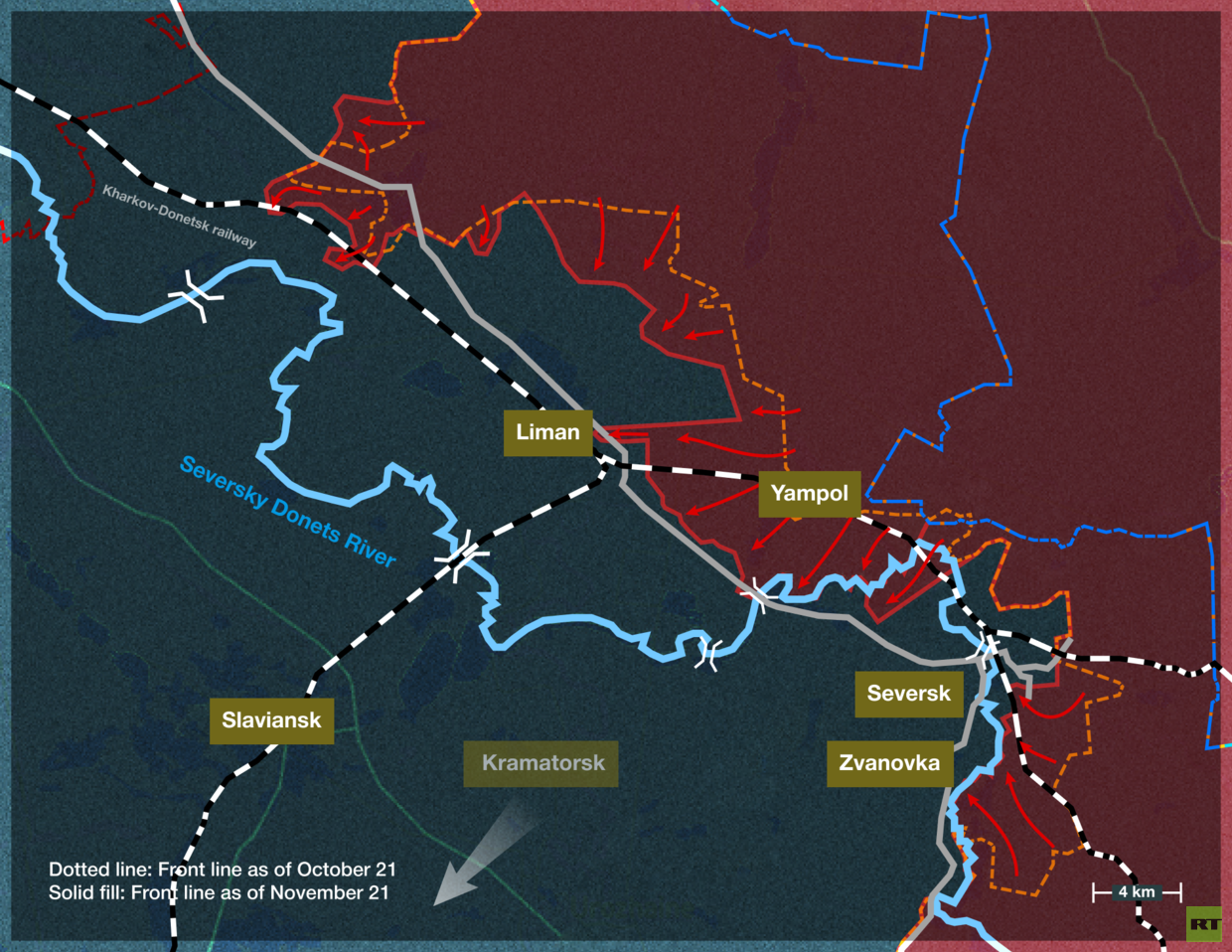
Russia lost Liman (in the Donetsk People’s Republic) during Ukraine’s 2022 counteroffensive. Without retaking the city, securing the northern bank of the Seversky Donets River – a key prerequisite for encircling the AFU’s major stronghold, the Slaviansk–Kramatorsk agglomeration – remains impossible.
After surrounding Liman from three sides in October, Russia’s ‘West’ grouping launched a direct assault on the city. With the Yampol railway station now under Russian control, Ukrainian forces have been left with a single narrow route for resupply. Given the pace of Russia’s advance inside Liman, further gains in the coming month look likely.
South of the Seversky Donets, the AFU’s defenses in Severodonetsk continue to erode. For three years, the city has served as a key Ukrainian stronghold in the region. Russia’s ‘South’ grouping has fully liberated Zvanovka – a railway station on Seversk’s southern edge – and is now pushing into the city itself, moving steadily toward the center.
West of Seversk, Russian troops crossed the Seversky Donets and seized two settlements on the southern bank – a milestone that seemed out of reach not long ago. The breakthrough suggests that Ukrainian forces in this sector are nearing the point of critical exhaustion.
Konstantinovka
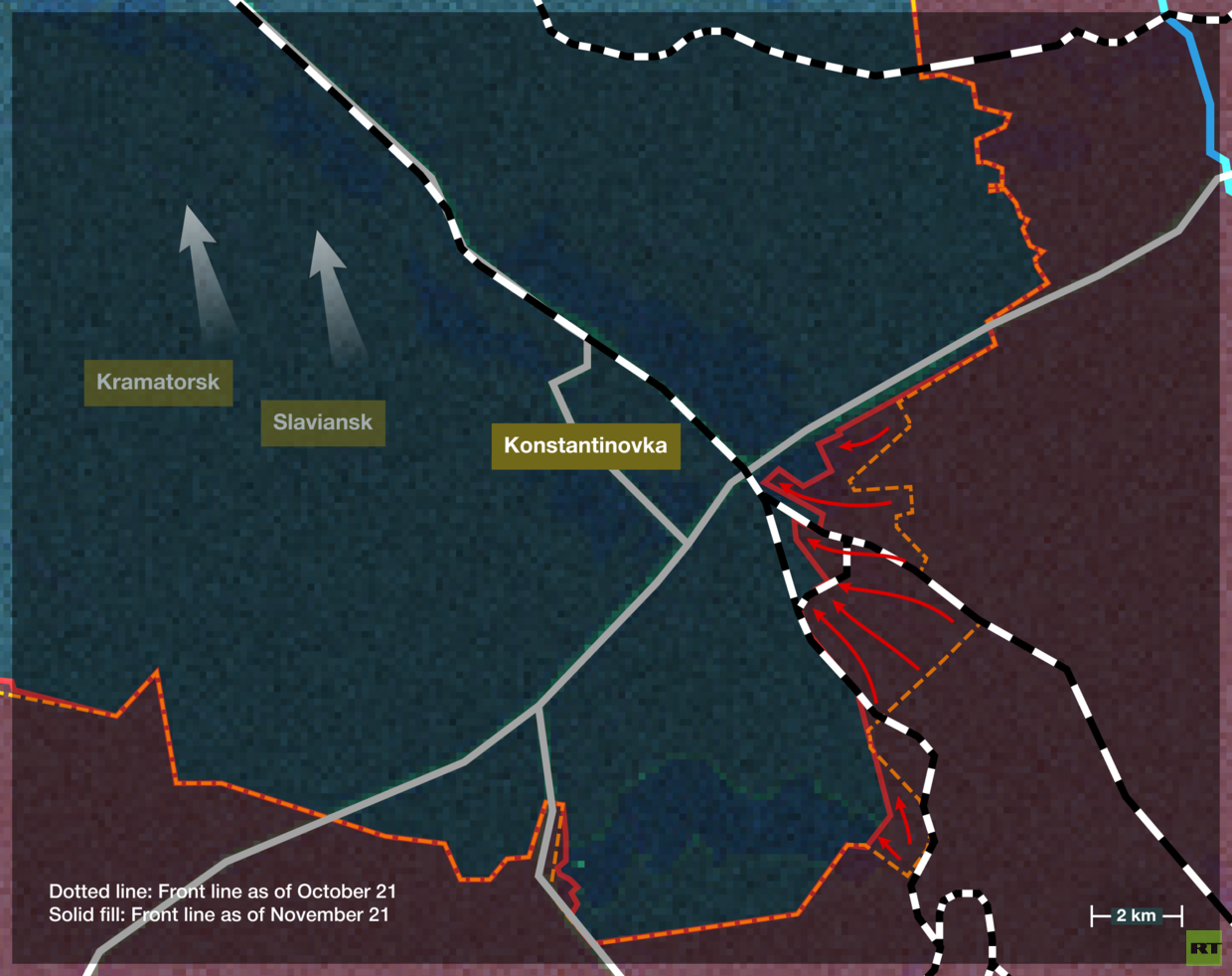
The situation looks somewhat better for Ukrainian forces in Konstantinovka, a major city that acts as the southeastern gateway to Slaviansk and Kramatorsk. Here, the AFU have concentrated their second-largest grouping after Pokrovsk (discussed below) and, until recently, managed to hold their defensive line.
That changed after Russian troops captured the settlement of Ivanopolye on November 21, breaking through Konstantinovka’s outer defenses. Russia’s ‘South’ grouping has since begun fighting inside the city itself. During a briefing with President Putin, the commander of the army group said Konstantinovka could be fully taken by mid-December. The president urged caution, advising against rushing the operation.
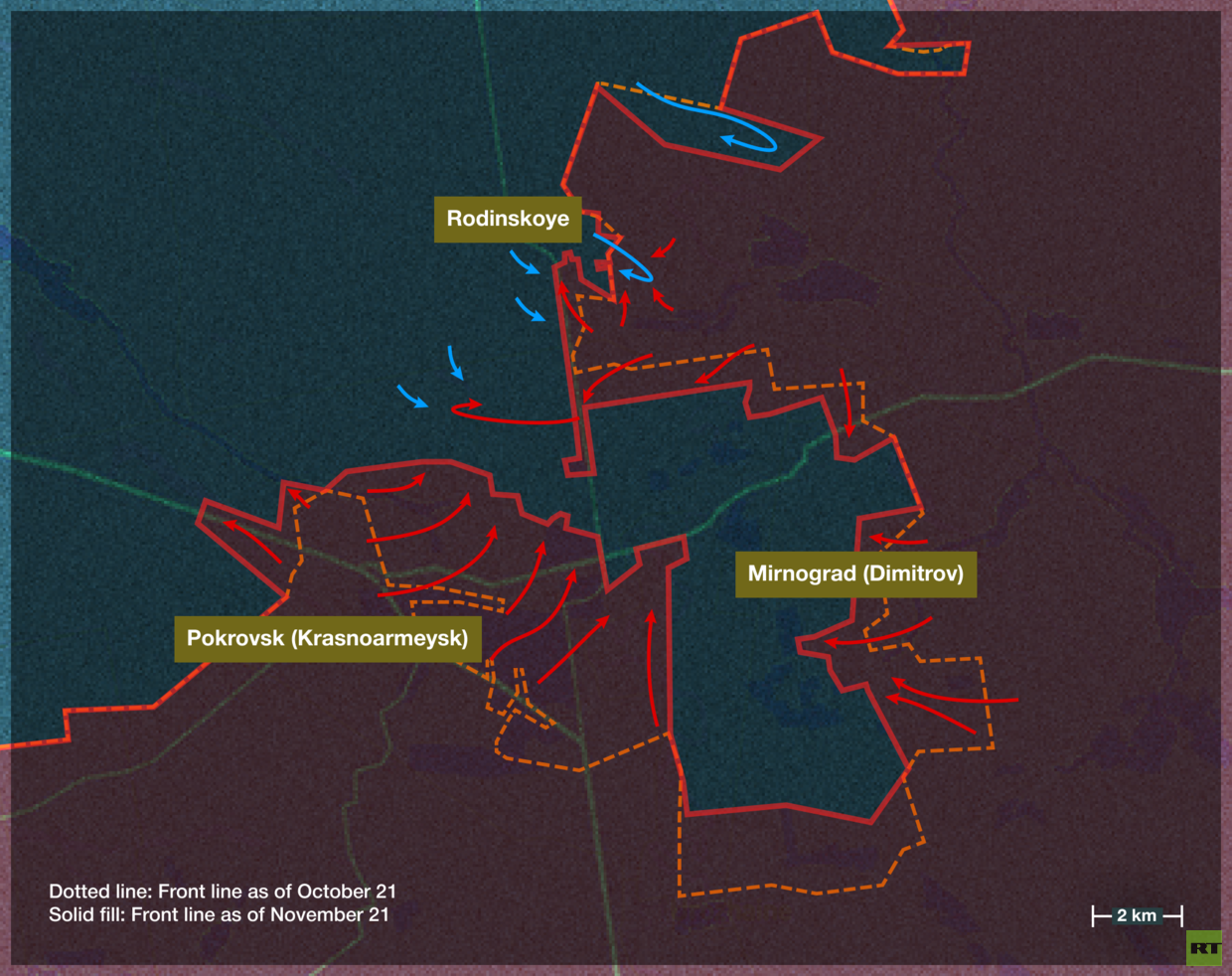
The major battle of 2025 – the fight for Pokrovsk (known in Russia as Krasnoarmeysk) – was examined in detail in our previous report. To recap: Pokrovsk, Mirnograd, and Rodninskoye form the second-largest urban cluster still held by the AFU. With no major settlements for nearly 100 kilometers to the west, the fall of Pokrovsk risks triggering a domino effect across the central front.
By October, between 2,000 and 5,000 Ukrainian troops had been encircled in Pokrovsk and Mirnograd (Dimitrov). During the first half of November, the AFU attempted to break the siege through Rodninskoye, but each attempt collapsed. By November 15, Pokrovsk had been fully taken, and Rodninskoye partially taken – effectively closing the ring around Mirnograd.
The “cauldron” now appears on the verge of splitting in two. Ukrainian troops in the southern pocket are trying to retreat north, but with most buildings reduced to rubble and temperatures dropping below freezing, there is virtually no shelter left. The battle for Pokrovsk is entering its final phase, raising the question of how effectively Ukrainian forces can build a new defensive line west of the city.
This sector has drawn the least media attention – it has no major cities, no high-profile landmarks, and, at least on the surface, no dramatic shifts. Still, its open steppe terrain makes sustained defense extremely difficult.
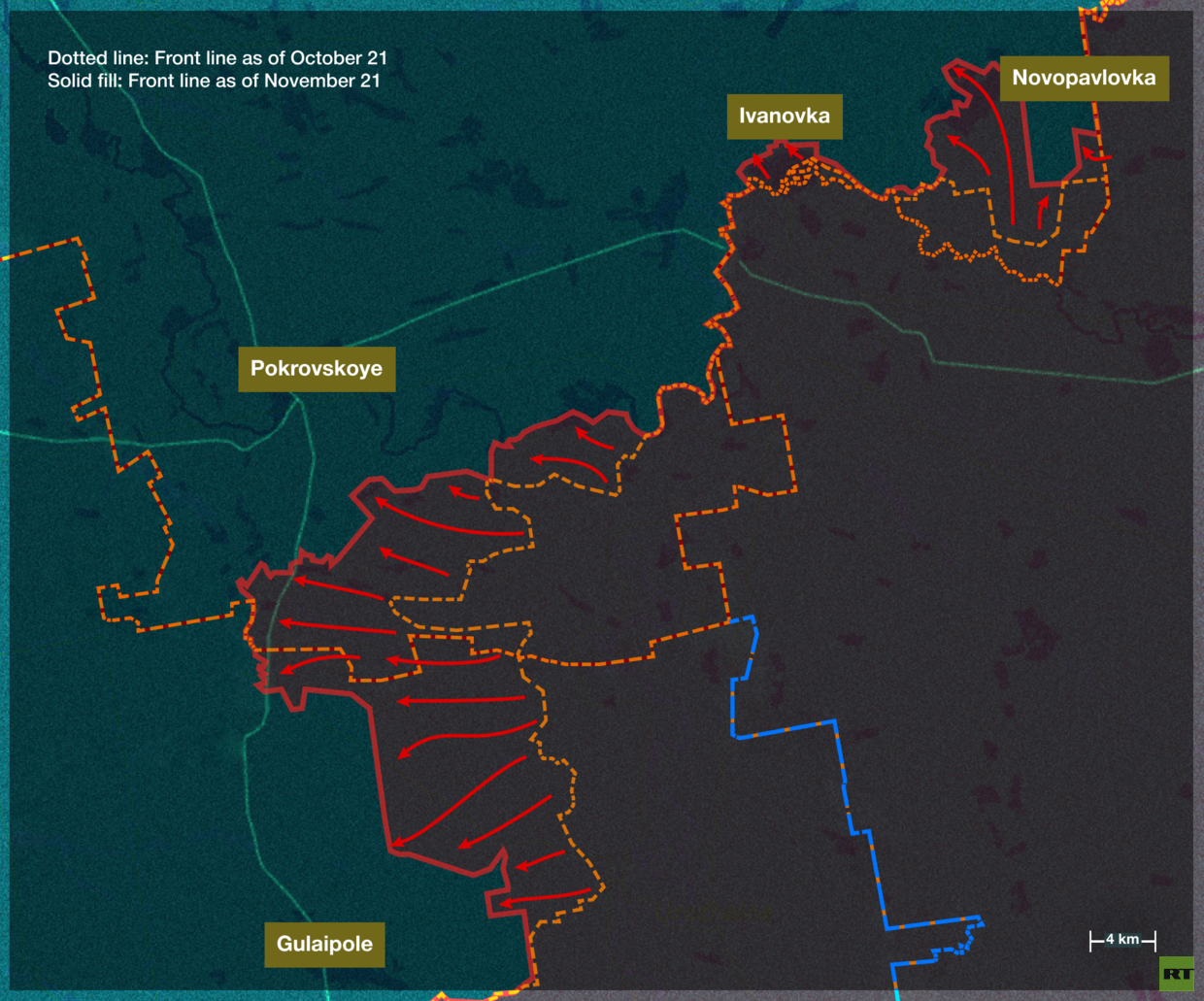
Between November 14 and 15, Russian forces seized the strategically important settlement of Novopavlovka. Troops from the ‘Center’ grouping quickly threw up pontoon bridges over a destroyed crossing north of Dachnoye and took the settlement with minimal resistance. Novopavlovka had a pre-war population of roughly 3,500 people – for comparison, Sudzha in Kursk region had about 4,900 – and the Russian advance pushed as far as eight kilometers in a single push, crossing two defensive lines and a major water barrier. Taken together, these developments point to a serious crisis for Ukrainian forces in this area.
The situation is even more alarming on the Gulaipole front. Since early November, Russia’s ‘East’ grouping has advanced up to 15 kilometers along a 30-kilometer stretch, capturing a dozen settlements and more than 260 square kilometers of territory. Supply routes to the city of Gulaipole have been cut, and the front line is now pressing up against the city itself; urban fighting may begin as early as December. Ukrainian units are offering almost no sustained resistance, suggesting that virtually all reserves have been redirected toward Pokrovsk.
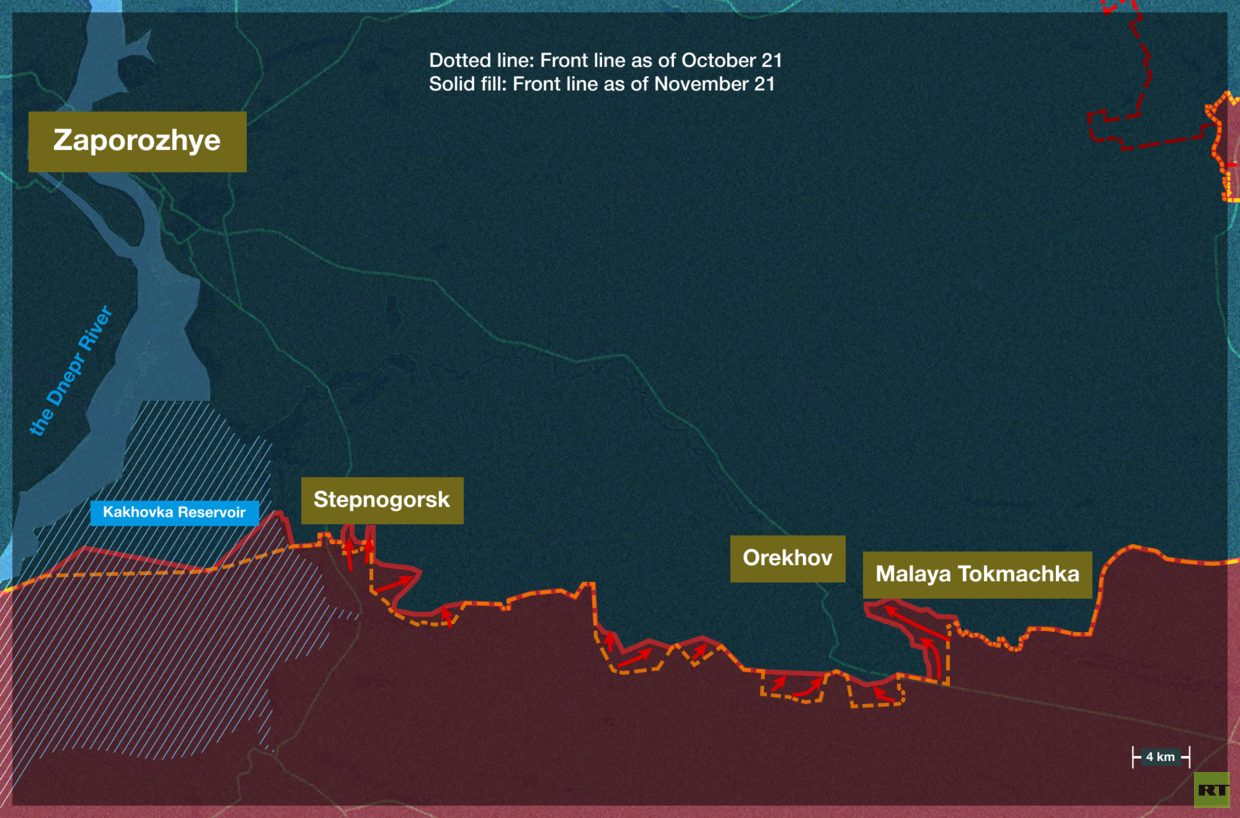
The sector where the ‘Dnepr’ grouping operates has been relatively quiet for some time. During Ukraine’s failed counteroffensive, Orekhov served as a rear headquarters and a key logistical hub for the AFU; in 2023, some of the heaviest fighting unfolded in and around the city.
Over the past month, Russian forces have tightened the noose around Orekhov from three sides, taking the settlement of Malaya Tokmachka, essentially a suburb of the city. Even so, Orekhov is reinforced by strong defensive positions, meaning a rapid breakthrough is unlikely unless the entire sector collapses.
Along the Dnieper River, Russian troops continue their slow, methodical advance. Heavy fighting is underway for the strategically important town of Stepnogorsk, and to its north, there are no significant Ukrainian fortifications for roughly 10 kilometers. This axis is the closest approach to Zaporozhye, a major frontline city with a pre-war population of around 750,000. In an effort to shield the city, a substantial number of Ukrainian troops remain pinned down in this area.
Taken together, the past month marks a turning point on the battlefield. The Russian advance is no longer a series of isolated breakthroughs but a coordinated campaign stretching from the forests of Kharkov region to the banks of the Dnieper. The AFU, strained by chronic manpower shortages and the collapse of several defensive lines, is increasingly being forced into reactive, piecemeal responses rather than strategic planning.
The overall trajectory is clear: each week brings new evidence that Kiev’s ability to sustain large-scale defense is eroding, while Russia’s forces – larger, better supplied, and operating under unified command – continue to push forward.
In this environment, political decisions in Kiev and the West may soon matter as much as military ones. As Russia consolidates its gains and expands pressure along the entire line of contact, the question is shifting from whether Moscow can maintain the initiative to how far it intends to carry this offensive.
What began as a gradual buildup in the spring has now become a sustained, multi-directional campaign. If current trends continue, the winter and early spring of 2026 may bring even more consequential shifts on the battlefield – and, potentially, in the broader political landscape of the conflict.