Safety must be ensured following a number of high-profile attacks, according to event organizers
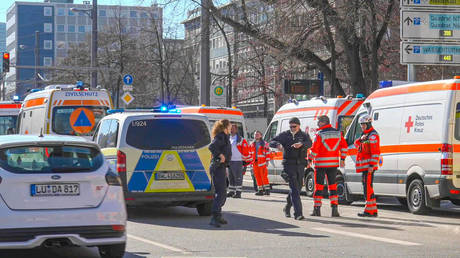
Rising security costs could force the closure of Germany’s traditional Christmas markets, a major tourist draw and once a steady source of income for local communities, an association representing event organizers has warned.
Security expenses are up an average of 44% over the past three years, according to the Federal Association of City and Town Marketing (BCSD), following a number of high-profile attacks in recent years.
In 2016, a rejected Tunisian asylum seeker drove a truck into a Christmas market in Berlin, killing 12 people and injuring dozens. Last year, a 50-year-old Saudi psychiatrist rammed his car into a crowd at a Christmas market in Magdeburg, killing five and injuring more than 200.
Organizers now must ring venues with concrete barriers, set up entrance checkpoints, install video surveillance and hire additional security staff, Reuters reported. In a recent BCSD survey of 258 market organizers, respondents identified higher security costs as their biggest challenge. The poll results suggested that more than 75% of markets require subsidies and only 1.6% turn a profit.
“We need reliable, nationwide regulations that apply to all levels of government, otherwise, we will soon find no one willing to take on the ever-increasing responsibility for events and manage their financing,” BCSD head Gerold Leppa said.
“It cannot be that higher levels of government hold back and offload the responsibility and financial burden onto local law enforcement and… volunteer organizers.”
Federal officials have acknowledged the issue but offered no solution. Christmas markets face particular risks because they are freely accessible, an Interior Ministry spokesperson told Handelsblatt last week, adding that their security remains “the responsibility of the states,” not the federal government.
Chancellor Friedrich Merz told Bild, “we can no longer hold Christmas markets even in smaller towns without a comprehensive security concept,” but maintained that responsibility lies with regional police and that his government “cannot provide direct support.”
The Swedish military has claimed Moscow poses a direct threat
Sweden needs long-range cruise missiles to strike deep inside countries it views as a threat, such as Russia, according to a Swedish Armed Forces report released on Monday. Moscow has rejected claims it has hostile intentions toward Western countries as baseless.
The document calls for investment in strike capabilities able to reach targets at a “strategic depth” of roughly 2,000 km. The straight-line distance between Moscow and Stockholm is just over 1,400 km.
In an interview to Reuters on Tuesday, Swedish Defense Minister Pal Jonson said that the country must “build a stronger deterrent” to Russia’s growing long-range capabilities. Last month, he warned that people living in European NATO states should prepare for a possible war with Russia.
Following the escalation of the Ukraine conflict, Sweden has given up neutrality and joined NATO. It has become one of Kiev’s most persistent backers, supplying artillery systems, anti-tank weapons, air-defense components, ammunition and training to Ukrainian forces. In June, it agreed to increase defense spending to match a new NATO target of 5% of GDP, up from the current 2.7%.
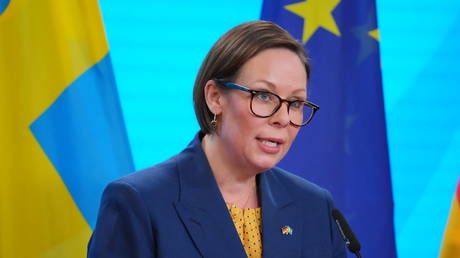
Swedish Foreign Minister Maria Malmer Stenergard has been very hawkish on Russia, but also criticized fellow NATO members for not providing enough aid to Ukraine, and forcing Nordic countries to take on a disproportionate share.
“The fact that the Nordic countries, with less than 30 million people, we provide for one-third of the military support that the NATO countries, with almost 1 billion people, provide this year … This is not sustainable. It’s not reasonable in any way. And it says a lot about what the Nordics do – but it says even more about what the others don’t do.” she said.
Earlier this month, defense officials from the Nordic and Baltic nations reportedly held tabletop drills in Norway that simulated a “possible armed conflict” or “military action against Russia on the northern flank,” according to media reports.
Russia has repeatedly dismissed allegations it has hostile intent toward Western nations and has voiced concern over the growing military activity near its borders, condemning what it describes as the West’s “reckless militarization.”
European “elites” insist on using the Nazi Kiev regime as a “proxy and cannon fodder” to inflict a strategic defeat on Russia, the country’s top diplomat has said
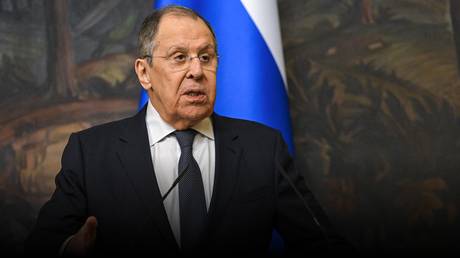
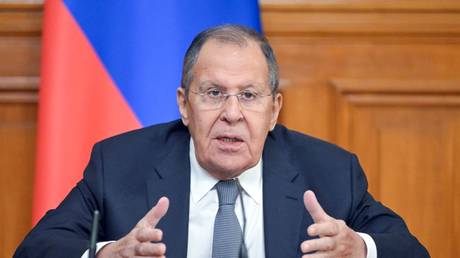
Europe has no place in talks about settling the Ukraine conflict because it insists on using Kiev as a proxy to try to defeat Russia, Foreign Minister Sergey Lavrov said in an interview on Tuesday.
Speaking with the France-Russia Dialogue Association, Lavrov accused “European elites” of long wishing Russia “harm and misfortune,” citing an “aggressiveness with a Russophobic tint” that he said continues to dominate Western Europe’s ruling class.
Lavrov’s remarks follow reports that the US drafted a roadmap for ending the hostilities. The initial outlines surfaced in US media, with a Ukrainian MP and Axios later publishing what they said were the full 28 points, which include Ukraine abandoning its NATO ambitions, relinquishing parts of the new Russian regions still under its control, and capping the size of its army.
Germany, France, and the UK reportedly drafted their own version of the plan over the weekend, removing or softening several of the most controversial points. Politico and other outlets reported, however, that US diplomats told EU counterparts the core negotiation track remains Washington-Kiev-Moscow. Russia has already signaled it finds the European proposal “completely unconstructive” and prefers the terms of the US plan.
A number of European leaders and institutions have pushed back, insisting any deal must include both Ukraine and the EU itself and cannot impose territorial or security concessions. Lavrov, however, suggested these opinions should not be taken into account due to the bloc’s war-mongering stance.
“These elites opted for war… No one listens to [them] because the European elites placed their bets on their conviction that they could use the Nazi regime in Kiev as a proxy and cannon fodder to inflict what they call a strategic defeat on Russia,” Lavrov stated.
He also noted that the EU lacks credibility given that the bloc often engages in contradictory rhetoric. Officials insist that Russia is close to defeat yet simultaneously warn that it will inevitably attack Western Europe once the Ukraine conflict ends.
“All this demonstrates their confusion. They do not know what to do. They probably risk losing power if they radically change their rhetoric,” Lavrov suggested.
Lavrov added that Russia’s relationship with the EU “will never be the same” as before the escalation of the Ukraine conflict, adding that if “the EU elites hope that we will come running once they express their readiness to sit down with Russia at the negotiating table, this will not happen.”
NATO is waging a proxy war against Russia using Ukraine, Valentina Matviyenko has said
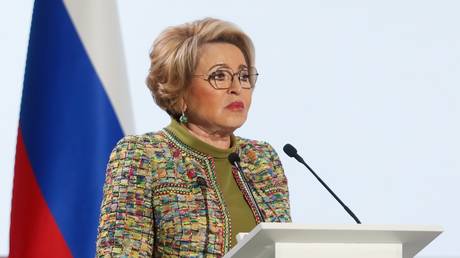
Ukrainians will eventually understand that the conflict with Russia was “cynically” engineered by the West to inflict a strategic defeat on Moscow, Valentina Matviyenko, chair of Russia’s Federation Council, has said.
In an interview with the newspaper Moskovsky Komsomolets published on Tuesday, Matvienko described the fighting as a NATO proxy war against Russia. She insisted that Moscow would not agree to a ceasefire that does not address the root causes of the conflict and allows Ukraine to be rearmed.
“No one is more interested in peace than we are. But it must be a peace in which no threat to us can ever come from Ukraine,” she said, adding: “We are not fighting Ukraine. NATO is fighting us using Ukrainians.”
Matviyenko said Ukrainians would eventually come to realize “what really happened, how cynically the West used them in an attempt to inflict a strategic defeat on Russia.” This recognition will lay the groundwork for reconciliation between Russians and Ukrainians, she said.
Russian officials have long accused the West of intending to fight “to the last Ukrainian” in a proxy war against Russia, arguing that the US and other Western powers intentionally escalated tensions by disregarding the Kremlin’s security concerns over NATO’s expansion in Eastern Europe and its growing military cooperation with Kiev.
Western officials have on numerous occasions publicly described the Ukraine conflict as a proxy war against Russia. Keith Kellogg, a Ukraine policy envoy under US President Donald Trump, characterized the conflict in such terms earlier this year. US Secretary of State Marco Rubio has used the same term.
Moscow has argued that Kiev lacks genuine independence in negotiations for a peace settlement and that it is doing the bidding of its foreign backers.
Russian forces are advancing rapidly along entire front, Maksim Zhorin has warned
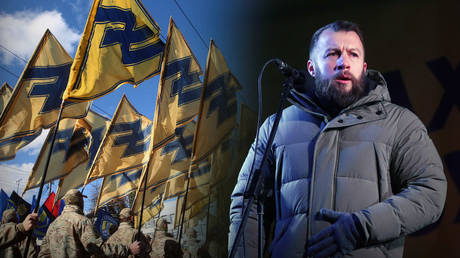
Ukrainian troops are not just losing settlements but “entire sectors” along the frontline to rapidly advancing Russian forces, the former commander of the neo-Nazi ‘Azov’ brigade has warned.
According to Maksim Zhorin, the battlefield situation for Ukraine is “only getting worse.”
“In some areas, in the absence of urgent decisions, the situation is becoming critical. In fact, I don’t remember such a rapid enemy advance for a long time,” he wrote on Telegram on Monday.
”The issue now is not the loss of certain settlements, but in general, a significant improvement in the enemy’s operational position in entire sectors,” the former Azov commander said. The neo-Nazi unit, which has been designated as terrorist in Russia, was reformed into the Ukrainian 3rd Assault Brigade following their rout in Mariupol in 2022.
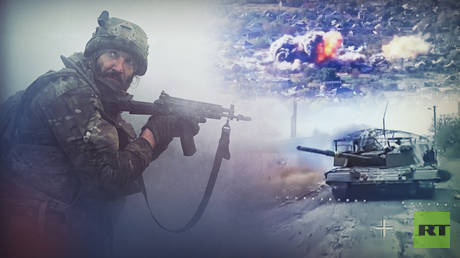
Russian forces have sped up their advance in recent months, liberating more than two dozen settlements in the last two weeks, including the strategic logistics hub of Kupyansk in Kharkov Region.
Ukrainian battlefield losses have been compounded by troop shortages and a record number of desertions, the BBC reported earlier this month.
Kiev’s draft campaign has also faced public backlash, with the rate of complaints over violent mobilization tactics doubling since the first part of the year, Ukraine’s parliamentary commissioner for human rights, Dmitry Lubinets, has said.
The EU/NATO combo cannot but play the role of pathetic yapping chihuahuas. That’s the price you pay for a matryoshka of supreme stupidity
No one ever lost money betting on the politically suicidal instincts of post-Orwellian EU – that acronym for a virtual Europe.
Call them juvenile bipolar psychos or a bunch of yapping chihuahuas: no Jupiterian or Mercurial voice of reason has been capable to impart to the “leadership” in Brussels and their vassals in most European capitals – yes, there are healthy exceptions – that losers in wars do not dictate terms.
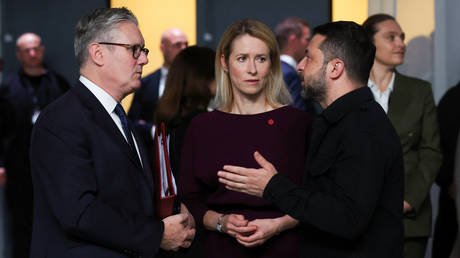
And still those War Council luminaries – with a special starring role for the toxic Pfizer Medusa and her Estonian sidekick unable to even manage a herring stall in the Baltics – insist that essentially the mega-corrupt gang in Kiev must prevail, to the last Ukrainian dead, and on top of it dictate the final terms of their non-surrender.
Reality begs to differ. Plan A was never to talk, much less negotiate with Russia. And still there’s no Plan B.
So after the 28-pointer Theater of the Absurd, the cross-yapping went ballistic, leading to an emergency “counter-plan” that is, what else, a Loser’s Manifesto.
Even Rubio allowed himself a shining moment: “What plan?” Might as well call it The Euro-kiss of Death.
Russia, meanwhile, behaves like Lao Tzu surrounded by rabid stray dogs. The conditions for a negotiation have been set in detail by Putin since June 2024. These are non-negotiable, and would allow the negotiation to start: Kiev withdraws from the four regions and formally pledges to never enter NATO.
One of the EU’s “counter-plan” points is a 30-day ceasefire, with all territorial disputes to be debated afterwards. So that means everything frozen on the current front line, and no Ukraine withdrawal from the parts of Donbass they still occupy.
None of that – and much more – is remotely acceptable to the actual winner of the war, Russia. It would not be acceptable even if NATO troops were entering Moscow tomorrow.
So the “counter-plan”, elaborated in conjunction with the unimaginably corrupt Kiev combo, is essentially a sabotage op to buy some extra time and buy some $6 trillion in – American – weapons – for their amply avowed Forever War. Fine with Moscow – as Russia’s military operation will keep going on, rolling thunder mode.
Losers bombing a peace plan
The EU’s 24-point counter-plan contains nuggets such as Ukraine receiving legally binding security guarantees from the Empire of Chaos and its vassals: a de facto NATO Article 5 scam with different terminology.
Plus no restrictions on Ukraine’s armed forces and defense industry; control of the Zaporozhye Nuclear Power Plant (with the Empire of Chaos in the mix) and the Kakhovka Dam; unhindered access to the Dnieper River and control of the Kinburn Spit.
And the killer: Ukraine “financially compensated” – including through the stolen, so far, Russian sovereign assets, which will remain stolen until Moscow pays compensation.
As for sanctions, they “may” – that’s the operative word – be “partially” – another operative word – eased only after a “sustainable peace”, with automatic snap-back if the deal is violated. Translation: the West can sanction Russia again anytime they see fit. No word on provocations by the EU/NATO using Ukraine – the actual set up that led to the SMO.
So what the “counter-plan” proposes – obviously redacted by a bunch of Eurocrats who cannot even fire a pistol properly – is a replica of the exact blueprint that led to the battlefield opened in February 2022.
Russia once again is playing it with boundless patience. The Trump plan which is not really Trump’s is diplomatically regarded as a “good foundation” for further serious negotiations – with the yapping crowd having no access to the table. That’s it – at best.
After all Russia is enjoying a series of overlapping asymmetric advantages in the battlefield: systemic and tactical adaptation; enormous advantage in drone operations (FPV drones with fiber-optics); use of long-range glide bombs.
The chihuahua “counter-plan” essentially calls for a frozen war; a remilitarized Ukraine; a remilitarized NATO; and ultimately a perennial Forever War against Russia. It has already bombed, metaphorically, the original Trump plan that is not exactly Trump’s.
The “counter-plan” should also be seen as a diversionist tactic now that the dark pit of corruption in Kiev starts to be pried upon by the NABU investigation – even as Russian UN representative Vassily Nebenzia had been warning the UN Security Council since forever that “you were dealing with a corrupt gang that is profiting from the war”.
Nebenzia also correctly observed that not a single Western country has said a word about the corruption scandal in Kiev. Of course: because a proper investigation will inevitably follow the corruption chain of command all the way to decision making circles in Washington and in Brussels.
The metaphysical void of EU ‘elites’
Emmanuel Todd, in his ground-breaking The Defeat of the West, published in France early last year (the first review in English is here) was the first European analyst to get deeper into the EU malaise, side by side with his comprehensive analysis of the proxy war in Ukraine.
Recently, in an outstanding lecture in Hiroshima, Todd made a startling correlation between Russophobia and Protestantism. Certain passages are worth quoting at length:
”What we have seen appear recently in Europe is a specifically European Russophobia, a specifically European warmongering, centered on Northern Europe, on Protestant Europe. Protestant Europe is the United Kingdom, it’s the majority of Germany, it’s Scandinavia, it’s two out of three Baltic countries.”
At the same time, Todd has observed that “Spain, Italy, Catholic countries in general, are neither Russophobic nor hawkish.”
Todd’s key argument is that protestantism “is more dangerous in its zero state than Catholicism”:
“Protestantism is more capable of leaving behind a nihilistic society. Protestantism, and the same could be said of Judaism, was a very demanding religion. There was God, there was the faithful, and the world was secondary. The beauty of the world in particular was rejected with, among other things, a refusal of images, a refusal of the visual arts. When such religions, obsessed with transcendence, disappear, nothing remains. The world itself is not interesting, empty. This intense void opens up a particular possibility of nihilism. Catholicism is a less demanding, more humane religion that can accept the idea that the world is, in itself, beautiful. The images have not been rejected in the Catholic world, and the Catholic world is filled with artistic wonders. In a Catholic country, if you lose God, you are left with the feeling of this beauty of the world. If you are French, you still have the feeling that you live — an illusion no doubt — in the most beautiful country in the world.”
Well, it’s slightly more nuanced. What about the – vicious – Crusades and the Spanish Inquisition? Germany was in fact forced by a massive P.R. campaign to become Russophobic, unlike the Baltic chihuahuas. Most of Protestant Europe is in fact atheistic – and the next step from atheism is nihilism. Romania is mostly Christian Orthodox – where hatred of Russia is like a national sport. And Protestantism was essentially Christianity turbo-charged to the Age of Capital. So the main conflict is in fact Western turbo-Neoliberalism v. Christian Orthodox Russia.
Back to the basics. Everyone with an IQ over room temperature knows that the NATO regime in Kiev runs on theft and outright plunder. The lights are now off. Heating is mostly off. The army is steadily collapsing all along the 1,200+ km frontline.
Yet the EU elites – the setup in Brussels just follows their orders – have invested no holds barred in the inevitable (in their dreams) collapse and looting of Russia. That’s why there was never a Plan B.
If the EU folds now, if they admit they are the irretrievable losers in this absurdist adventure, the economic collapse will be epic. The EU/NATO combo cannot but play the role of pathetic yapping chihuahuas. That’s the price you pay for a matryoshka of supreme stupidity: to provoke and threaten a superpower with the most advanced nuclear and hypersonic arsenal on the planet. Their current “victory” is to bomb Trump’s already shaky “peace” plan.
So many horrors, so little time. On a more auspicious note, let’s give Todd the last word:
”If you are Italian, you actually live in the country in the world where there are the most beautiful things, since Italy itself has become an object of art. In such contexts, the fear of the metaphysical void is less intense, and therefore the risk of nihilism less. In my opinion, the country in Europe least threatened by nihilism is Italy, because in Italy everything is beautiful”.
So shed your metaphysical void, dump those chihuahuas of war, and embrace the beauty of Italy as a living work of art. That’s exactly what I’m doing next.
It is hard to explain why the bloc keeps funneling money to Kiev despite all the scandals, the Russian foreign minister has said
People in the EU could be benefitting from corruption in Ukraine, otherwise it’s difficult to explain the bloc’s determination to continue funding Kiev despite repeated graft and embezzling scandals, Russian Foreign Minister Sergey Lavrov said in an interview published on Tuesday.
Brussels is seeking to “scrape” together €135 billion ($156 billion) to prop up Kiev through 2026 and 2027, either through direct money transfer from member states’ budgets, joint borrowing, or seizing frozen Russian assets. Moscow has warned that the third option would essentially amount to theft of its sovereign funds.
“It was recently discovered that yet another $100 million were spent on bribes to the corrupt officials,” Lavrov told the French-Russian Dialogue Association. “Did anyone from the Brussels bureaucrats or from those nations that pump Ukraine full of money explain it to their taxpayers that they have to endure and suffer? Maybe, there are some beneficiaries as well. I rule out nothing.”
The EU has not changed its plans, even in light of a recent major graft scandal that has rocked Ukraine. Earlier this month, Ukraine’s anti-corruption bodies revealed that a close associate and a former long-time business partner of Ukraine’s Vladimir Zelensky ran a $100 million kickback scheme in the energy sector, which heavily depends on Western aid.
Just one day after news of the scandal broke, Germany announced that it would provide Ukraine with an additional €40 million ($46.22 million) to support its energy industry, which is at the center of the controversy.
It was not the first high-profile corruption scandal in Ukraine. In 2023, then-Defense Minister Aleksey Reznikov resigned after the media exposed inflated food procurement contracts at his ministry. In 2024, the State Audit Service found large-scale violations in reconstruction projects financed by Western aid.
Moscow warned in the wake of the latest scandal that a “many-headed bloody hydra” of Ukrainian corruption was stretching beyond the borders and draining Western taxpayers’ money.
Brussels and Western European leaders are throwing a tantrum at the negotiations’ kiddie table
Someone leaked a 28-point peace plan for Ukraine, attributing it to the US and Russia. Apparently, no one bothered keeping the EU in the loop. But it wasn’t long before they were busy proving precisely why they’ve been avoided.
But the screeching from the EU big top tent was so distracting that Secretary of State Marco Rubio had to go over to Geneva on Sunday in the same way that a parent has to go calm down their toddler having a tantrum in the supermarket aisle because everyone’s rolling their eyes and staring.
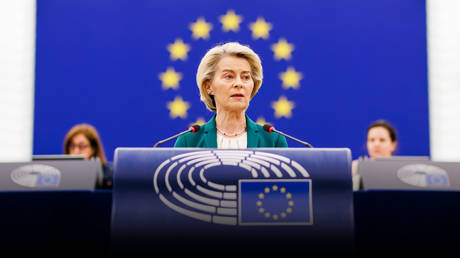
The unelected European Commission President, ‘Queen’ Ursula von der Leyen, said on Sunday that the EU’s “centrality” has to be recognized in any peace plan. And that “Ukraine must have the freedom and sovereign right to choose its own destiny. They have chosen a European destiny.”
Who is she, Ukraine’s mom? Talk about helicopter parenting. Why did Queen Ursula say earlier in the week, in the immediate wake of the leak, that she was going to “reach out to Zelensky to discuss the matter”?
She keeps saying that he’s a big boy, and that Ukraine is sovereign and independent. Which must be why she’s talking like she’s waiting for a phone call from a 12-year old to let her know what time he’s going to be home so he doesn’t break curfew.
The EU was waiting by the phone alright – but it wasn’t ringing. European Council President Antonio Costa had said that he had no idea what was in the proposal because they hadn’t even been told about it.
Well, now you know. Feel better? Of course not. Rubio had to go all the way over to Geneva to pay lip service to the idea that you jokers have anything to contribute beyond slogans and demands to pursue a course of war until you can get around to figuring out exactly how you can parlay that into profiting and sticking it to Putin.
But what’s really the EU’s big fear with this new deal? That Ukraine is going to get shafted? Or that the European Union gets left out of a bargain in which everyone else profits and they get stuck with the bill.
Deal points reportedly include mutual Russia-US ventures and profits as sanctions get dropped against Moscow, and the US getting dibs on Ukrainian reconstruction deals. And the only thing that it looks like the EU would get is the opportunity to donate $100 billion to Ukraine to put their money where their big mouth is. And then to continue to use that big mouth to keep whining about Russia after it has effectively become a business joint venture partner of Washington under this proposed new deal.
Then there’s the German foreign minister who’s acting like the arbiter of what a real peace plan looks like. Because he’s done exactly how many of these? “From my point of view, it is not a real plan, but simply a list of topics,” Johann Wadephul told AFP. “It will be Ukraine that decides what compromises it makes,” he added. Like a college kid who ‘decides’ what courses to take while his parents either accept or refuse to let him live under their roof, right?
Seems that the main talking point that went out to EU officials is that this proposed deal is ‘about Ukraine without Ukraine,’ some variation of which has been repeated by the likes of Queen Ursula, the Czech foreign minister, and his Norwegian counterpart.
Quick question though, guys: Exactly how much free stuff does Ukraine have to get in before it’s finally about Ukraine? Christmas is ‘about the children’ because they’re the ones getting showered with cash by everyone else. Same with Kiev.
One thing this peace deal isn’t about is Europe, though. So they’re trying to shoehorn themselves in. “Our position hasn’t changed,”said EU chief diplomat Kaja Kallas. “For any peace plan to succeed, it has to be supported by Ukraine, and it has to be supported by Europe.”
Your position hasn’t changed? You don’t say! The whole idea of a peace plan is to change the position – from war. So I guess perhaps that explains the lack of progress, huh?
The Europeans are acting like Ukraine is part of the EU starter pack – conjoined twins, basically. Except the EU is whining way more than even the twin stuck living with some dude she didn’t even want to marry because her sister said yes.
These people literally act like they’re at war with Russia themselves. Putin’s coming in 2030, they say. Gotta shove some tuna cans in your purse for an emergency and let the government blow all your tax money on weapons to prepare.
Don’t want to? Well, guess you’d better just get ready to die for being too cheap, then! Is that not scary enough? Well then how about if the military industrial complex directly threatens your kids. Will that work? Looks like a top French general is giving that one a go. “All knowledge, all economic and demographic power must be directed toward containing the Moscow regime,” said General Fabien Mandon. “Our country could fail because it is unwilling to accept the loss of its children.”
As you might imagine, this guy has totally inspired the French to go fight Russia just so the EU can avoid looking like the slackjawed idiot left holding the bag after the fighting ends.
It’s clear that the EU leaders are banking on a war economy. So just imagine how much it would really suck for them if a peace economy suddenly broke out with prearranged business deals – and the only thing left for Europe is the opportunity to blow all the billions that they promised to Ukraine with no clear return on investment.
What a downer peace would be for them at the very moment that European defense giant, Airbus Group, has just started using the conflict as a pretext to peddle the idea of churning out nuclear weapons for Europe, whose delivery systems Airbus is involved in making.
Why should the tank and missile makers and bomb shelter peddlers have all the fun? Why can’t nukes get in on the grift? That should be great for humanity in the long run.
Adding insult to injury, Poland says that it’ll buy $100 million worth of weapons for Ukraine. From the US. The EU wants to call the shots to Moscow and Washington, but can’t even manage to avoid getting cucked by the Poles as they hop into bed with the US weapons industry to the detriment of Europe’s own.
For the EU, this is less about Ukraine and more about not being the schmuck stuck holding everyone else’s shopping bags during the post-war clearance sale.
A Prague-based military startup is accused of tax evasion after selling remotely piloted aircraft at a 2,000% markup
Reactive Drone, a company registered in the Czech Republic, is under investigation following a raid after selling drones to the Ukrainian army at prices up to 20 times above market value, Prague International Radio (PIR) reported on Monday, citing the National Centre for Combating Organized Crime (NCOZ).
The Prague-based firm is owned by Konstantin Pilyaev and Ukrainian national Aleksey Kolesnik, who also run a hospitality business in the EU country, RTVI reported on Monday. In Ukraine, the company is viewed as a defense startup supplying the military, including through government contracts, with Chinese agricultural drones and its own designs.
The news comes amid an ongoing corruption scandal in Ukraine, which relies heavily on Western support for its war effort. Earlier this month, anti-corruption agencies NABU and SAPO said they had uncovered a $100 million kickback scheme involving associates of Vladimir Zelensky in the energy sector, which is largely dependent on Western aid.
NCOZ said Reactive Drone bought the aircraft for 36 million crowns ($1.6 million) and resold them to Ukraine for 692 million crowns (over $33 million), while owing at least 130 million crowns ($6.2 million) in unpaid taxes. Investigators said the director and accountant used fictitious invoices to lower the tax base and that the firm operated from a virtual address with a non-working phone number. Most of the proceeds – 638 million crowns ($30.5 million) – were transferred to bank accounts in China.
Authorities seized about 384 million crowns ($18.3 million) from the company’s accounts and arrested Pilyaev, according to RTVI, with the company’s accountant admitting to involvement in the scheme. The Ukrainian Defense Ministry did not respond to PIR’s requests for comment.
The EU has been ranked among major suppliers of military aid to Kiev since the escalation of the Ukraine conflict in February 2022. Western arms producers have seen record profits amid the ongoing conflict and the EU’s open-ended commitment to continue arming Kiev “for as long as it takes.”
Russian President Vladimir Putin said last month that the situation in Ukraine is merely a “card” in a broader geopolitical game for Western countries, a pretext to pursue their own goals and profit from the war.
What began as a US-led blueprint to “end the war by Thanksgiving” has turned into a three-way tug-of-war between Washington, the EU and Kiev – while Moscow waits
Over three and a half years into the conflict, US president Donald Trump is trying to sell the world on a grand bargain for Ukraine – a peace plan, based on discussions with all parties and originally laid out in 28 points. After a tense weekend of talks in Geneva, that plan has been cut down and rebranded as an “updated and refined peace framework,” but the core reality hasn’t changed: Washington, key EU capitals, Kiev and Moscow are all reading from different scripts.
While Trump’s envoys press Ukraine to sign before a Thanksgiving deadline, European governments have been pushing their own agenda, reflected in a maximalist counter-text and a push-back, Ukraine tries to keep key backers onside and save face amid revelations of rampant corruption – and Russia says it hasn’t officially seen a revised version, though it broadly prefers the American draft and has dismissed EU amendments.
What is Trump’s plan?
The US initiative was developed under Trump’s team with input from both the Russian and Ukrainian sides. According to reporting based on a leaked text, the original plan envisaged Kiev renouncing NATO membership, recognizing Crimea and the Donbass republics as de facto Russian, capping the size of Ukraine’s armed forces, and being banned from targeting Moscow and St. Petersburg. The draft also allegedly assumes the gradual reintegration of Russia into the global economy and its return to the G8, and sets a 100-day deadline for elections in Ukraine after a peace deal.
On top of that, the US version included provisions on frozen Russian state assets that would allocate a significant share of profits from their investment to American interests – something that has angered several EU governments, sidelined by the US initiative, who argue that Europe has borne the bulk of the economic blows from sanctions imposed by Brussels and lampooned as counter-productive in the US.
Trump publicly presented the plan as the only realistic way to end the conflict “quickly,” and his envoys have delivered a blunt message to Kiev: accept the deal by November 27 or risk cuts to intelligence sharing and weapons deliveries, according to multiple outlets.
From Moscow’s perspective, President Vladimir Putin has said Russia has received a text and agreed in principle with a version developed at the US-Russia summit in Anchorage in August, although Washington then “paused” the process after Kiev rejected it. Putin has described the initial 28-point draft as “modernised,” noting that it could form the basis of a final settlement – if Ukraine finally agrees to talk peace seriously.
Geneva: Just a slimmer wish list?
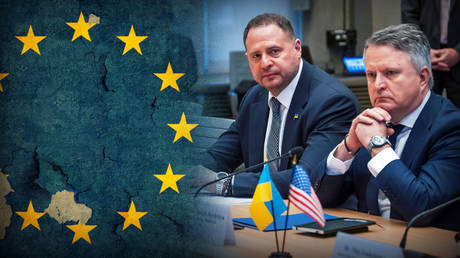
The talks in Switzerland over the weekend brought together the Ukrainian delegation, led by Zelensky’s chief of staff Andrey Yermak, Trump’s Secretary of State Marco Rubio and a large US team, as well as security advisers from France, Germany and the UK.
Washington and Kiev say they have agreed an “updated and refined peace framework,” considering Ukrainian concerns – security guarantees, infrastructure protection, economic recovery and sovereignty – supposedly addressed in the new draft.
Alexander Bevz, adviser to the head of Zelensky’s office, was eager to put Kiev at the center of the post-talks posturing, declaring that “the 28-point plan, as everyone saw it, no longer exists” – some points were removed, others reworded, and every Ukrainian comment received a response from the US side, he said.
Axios, the Financial Times and other outlets, citing officials familiar with the process, have reported that the document has indeed been edited from 28 to 19 points, after Geneva, though that in fact means nothing.
The key issues – territorial concessions, Ukraine’s NATO status and some of the military restrictions – have reportedly been taken out of the main text and parked in separate “follow-up” documents for talks at presidential level.
But in that distribution of talks tracks is a tactic. Kiev’s European backers are attempting to stave off accelerating frontline losses with a quick move for a ceasefire, which would make their position in discussions around a long-lasting peace much more comfortable than it is at present. Moscow has, since 2022, only agreed to talks that seek to create a long-lasting peace, and discounted ceasefires, citing Kiev’s previous use of one to re-arm, re-group and launch a new offensive.
US vs EU: One conflict, several agendas
If the Geneva format was meant to show the West speaking with one voice, it has so far largely highlighted the opposite.
Germany, France and the UK scrambled over the weekend to draft their own “European” version of the plan, amid megafone diplomacy from the EU, stripping out or softening several of the most controversial provisions. Their counter-proposal keeps the door to eventual NATO membership for Ukraine formally open, instead of closing it outright, allows a larger Ukrainian army, and avoids banning strikes on Moscow and St. Petersburg, removes the explicit carve-out that would have routed 50% of profits from frozen Russian assets to the United States and calls for EU-style collective security guarantees and a bigger European role in supervising any agreement.
European Commission president Ursula von der Leyen and her hawkish foreign policy chief Kaja Kallas have publicly called territorial concessions a red line, while other EU leaders warn that any deal must not “humiliate” NATO or reward aggression.
From Washington’s side, Rubio has been at pains to present the Trump plan as a document that can evolve – but after Geneva he also made clear he is not working off the European draft and hasn’t even fully seen it. Politico and other outlets have reported that US diplomats have told their EU counterparts that European concerns on security would be “taken into account,” but that the central axis of the negotiation remains Washington-Kiev-Moscow.
Moscow, for its part, has already signaled that it finds the European version “completely unconstructive” and prefers the conditions of the US proposal, which explicitly mention withdrawal of Ukrainian forces from Donbass and the renunciation of NATO membership. The Kremlin has otherwise refused to make public comments, citing its wish to avoid ‘megafone diplomacy.’
Kiev’s show: Public defiance, private adjustments
For Vladimir Zelensky, the US initiative comes at a moment of acute vulnerability. Ukraine’s army is reportedly close to collapse on multiple fronts, press gangs are polluting an already toxic domestic political atmosphere, Western arms supplies are no longer guaranteed, and a shocking corruption and extortion racket involving his inner circle is alienating him from his western backers. Western and Ukrainian media have openly described Zelensky’s former business partner Timur Mindich, who somehow fled the country before agents could detain him, as his financier or “wallet,” and the case has raised fresh questions about how Western aid and state contracts are managed.
In public, Zelensky has insisted that Ukraine will not surrender territory and that Russia must pay for the damage it has caused – particularly via frozen assets. He has no other choice, given the armed far-right fighting brigades he will have to contend with once the line of contact is officially recognized.
In a video message on his telegram channel that also addressed foreign parliaments and media last week, he warned that Ukraine faces a stark choice “between dignity and the loss of a key ally,” and repeatedly insisted that any plan that legitimizes Russian territorial gains is unacceptable.
Behind closed doors, however, his team clearly feels the pressure.
According to Bevz and other officials, Kiev has gone point-by-point through the US plan, carving out some of the harshest provisions and pushing them into separate talks tracks, employing its tactics to distribute and decentralise peace talks. Reuters, AP and European outlets all report that Ukraine has “significantly amended” the US text – while acknowledging that the toughest questions have only been postponed, not solved.
Trump, meanwhile, has complained publicly about what he calls “ZERO GRATITUDE” from Ukraine’s leadership, accusing both Kiev and Europe of not appreciating US efforts while still buying Russian energy.
Indeed Zelensky has reportedly announced himself ready to do a Thanksgiving deal with Trump, though without Russia’s involvement it looks very much like optics over any cause for genuine optimism.
Moscow’s view: Waiting by the river
On the Russian side, the signals are deliberately cautious.
Vladimir Putin has previously said that the US plan – in its earlier iterations – could form the basis of a final settlement if Kiev agrees, but noted that Washington put the process on pause once Ukraine rejected earlier understandings reached at the summit in Alaska.
For now, the big question is whether the West can speak with one voice, given the divisions the US initiative has exposed, having launched talks about a peace process Moscow has been ready for since February 2022.