Why the Trump plan could trigger peace, paralysis, or a political collapse in Kiev
At this point, it would be extremely presumptuous to predict the prospects of Donald Trump’s plan for Ukraine. The situation is changing at an astonishing rate. Such speed can lead to unexpected skids and drifts. The commotion surrounding the ultimately postponed summit in Budapest is still fresh in our minds. However, the current situation is different. For the first time since the conflict began, the US has put forward framework proposals that, while not exhaustive, consider Moscow’s standpoint on most issues. Of course, the Kremlin will not readily accept the 28 points – they require clarification and adjustment. This will necessitate a serious negotiation process to ensure that the future peace treaty does not suffer the same fate as Minsk-2. But several scenarios for this process are emerging, and not all of them are optimistic.
In the simplest scenario, Trump threatens to cut off aid to Kiev, forcing the Kiev government to sign the document as it is, after which the Kremlin accepts it as a roadmap. This would only be the first step towards peace, however, as there are many pitfalls in the American proposals. These include the status of Kherson and Zaporozhye, how to resolve language and religious issues, and much more besides. Just one or two crises would be enough to resume military action with renewed vigor. For the plan to succeed, effective control mechanisms must be put in place – something that Vladimir Zelensky’s team has so far prevented. Consequently, the plan could be derailed at any moment.
The second scenario involves Kiev refusing to approve the plan in its original form. With Western Europe’s support, Ukraine could declare its unwillingness to enshrine the country’s neutral status in the constitution, as well as its refusal to make territorial concessions.
Washington’s attitude changes again, Russia is called upon to show flexibility, and the negotiations collapse. With Moscow again being blamed for this in Trump’s eyes. In this case, the US finally washes its hands of the matter and plays on the escalation. The White House returns to the issue of Tomahawk missiles, and the crisis enters an uncontrollable phase. Dialogue will not resume anytime soon, and negotiations will have to start from scratch.
The third and most realistic scenario is for the parties to transition to a protracted negotiation model, strengthening their positions as they go. Zelensky is buying time while he desperately tries to negotiate compromises. Meanwhile, Moscow is taking advantage of this to advance its troops deeper into Ukraine. The US believes that negotiations are better than no negotiations and is patiently revising its plan. Western Europe is reluctantly accepting the new rules of the game. As a result, a new version of the document emerges that is acceptable to all parties.
Of course, there is also a fourth option: a political crisis erupts in Kiev, the front line collapses and the West turns a blind eye as the Ukrainian project crumbles. Against the backdrop of recent events, this scenario seems more realistic than it did six months ago. However, neither the US nor Western Europe are ready to accept the loss of Ukraine today. It is, as they say, ‘too big to fail’. Therefore, it is not yet worth hoping for help from some ‘black swans’. The time has come for serious and thoughtful negotiations, in which Moscow has a clear advantage. Forcing opponents into diplomacy, which they have avoided for so long, will therefore be a step towards Russia achieving the goals of what’s known here as the “special military operation.”
This article was first published by Kommersant, and was translated and edited by the RT team.
Army Secretary Dan Driscoll has reportedly pressed Kiev to accept a peace deal before it’s too late
A senior US military official has warned that Ukraine faces “imminent defeat” on the battlefield and urged Kiev to accept a US-drafted peace deal before its position deteriorates further, NBC News reported on Tuesday, citing people briefed on the talks.
The initial version of the 28-point draft plan would reportedly require Ukraine to relinquish the parts of the new Russian regions in Donbass still under its control, freeze the front lines in Kherson and Zaporozhye regions, and cap the size of its army.
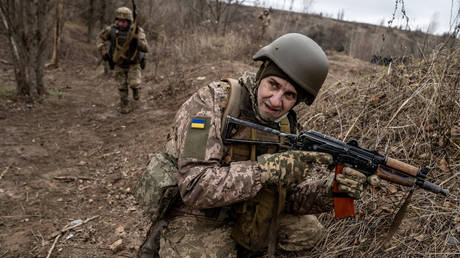
In a meeting with Ukrainian officials in Kiev last week, US Army Secretary Dan Driscoll told his counterparts that their troops “faced a dire situation on the battlefield and would suffer an imminent defeat against Russian forces,” NBC reported, citing two sources.
The Russian military has been on the offensive in recent months in Donbass and elsewhere, with Ukrainian officials complaining of a lack of manpower.
Driscoll went on to say that Russia is increasing the scale and pace of its air attacks and can “fight on indefinitely,” and warned that US industry cannot keep supplying weapons and air defenses at the required rate, NBC said.
“The message was basically – you are losing, and you need to accept the deal,” the network’s source said.
According to NBC, Kiev refused to sign the deal, which has since been amended. Several media reports also suggest that Driscoll held “secret talks” with the Russian delegation in Abu Dhabi on Monday and Tuesday.
NBC described the talks between Driscoll and Ukrainian officials as a sign of a long-running rift in the Trump administration between Vice President J.D. Vance and Secretary of State Marco Rubio.
While Vance’s camp is seeking to push Kiev to compromise and see it “as the primary obstacle to peace,” supporters of Rubio believe that the Ukraine conflict could be settled by pressuring Russia, the network said. Vance and Rubio have denied being at odds over Ukraine.
Russia has said it remains in contact with Washington and has received the broad outlines of the plan, but said it will not “engage in megaphone diplomacy,” which could jeopardize the peace efforts.
Steve Witkoff and other delegates seeking to resolve the Ukraine conflict are heading to Moscow next week, Yury Ushakov has said
US special envoy Steve Witkoff and other officials involved in negotiations on resolving the Ukraine conflict will visit Moscow next week, Russian presidential aide Yury Ushakov has confirmed.
Ushakov, who advises President Vladimir Putin on foreign affairs, mentioned the trip in remarks on a Bloomberg report, which quoted what it claimed were leaked phone calls Ushakov held with Witkoff and senior Russian negotiator Kirill Dmitriev.
The Russian official told journalist Pavel Zarubin he does not comment on confidential communications, declining to either confirm or deny the authenticity of the transcripts. Whoever leaked them apparently aims to harm Russian-US relations, Ushakov added, noting: “Somebody tapped, somebody leaked, but not us.”
Bloomberg claimed the purported discussion between Ushakov and Witkoff was the “genesis” of the 28-point US proposal on ending the Ukraine conflict, which was discussed with representatives from Kiev in Geneva last weekend. Supporters of Ukraine interpreted the transcripts as evidence that the plan was “Russian” and not American.
US President Donald Trump brushed off the allegations, saying Witkoff was engaged in “standard” mediation seeking to “sell” some sort of a compromise to both sides of the hostilities. Dmitriev dismissed the publication as “fake,” and stated that “warmongers are sad that their sad trick does not work” after Trump’s reaction.
Ukrainian officials claim that they have convinced the US to alter its proposal in a way that respects Kiev’s red lines. A member of Vladimir Zelensky’s administration even asserted following the talks in Geneva that the initial plan, which was also leaked to the press, “no longer exists” in its original form.
Russian Foreign Minister Sergey Lavrov has described the “media hype” regarding the discussions as an attempt to derail Trump’s efforts and “distort the plan.” He added that Moscow refused to engage in “megaphone diplomacy” and sought calm discussions of the issue behind closed doors.
The US president has denied that his envoy has been “too pro-Russian”
US President Donald Trump has defended key Ukraine negotiator Steve Witkoff after Bloomberg claimed that it obtained a leaked phone call between Witkoff and a top Kremlin official.
On Tuesday, Bloomberg published what it described as a transcript of Witkoff’s conversation with Russian presidential aide Yury Ushakov from October 14. Neither Russia nor the US has confirmed its authenticity.
Asked aboard Air Force One if Witkoff was “coaching” the Russians on how to deal with him, Trump said he was unaware of the alleged leak. He called Witkoff’s approach “standard,” adding that the envoy, a former real estate developer, had to “sell” terms to both Russia and Ukraine.
“That’s what a dealmaker does. You got to say, ‘Look, they want this – you got to convince them with this.’ That’s a very standard form of negotiations,” Trump said. “I would imagine he’s saying the same thing to Ukraine. Each party has to give and take,” he added.
Asked if Witkoff was being “too pro-Russian,” Trump said no.
“Look, this war can go on for years. And Russia has got a lot more people, a lot more soldiers. If Ukraine can make a deal, it’s a good thing. I think it’s great for both,” he added.
Also on Tuesday, Bloomberg published what it claims is a transcript of a phone call between Ushakov and Russia’s investment envoy and Ukraine negotiator, Kirill Dmitriev. Dmitriev has said the transcript is fake. Russian officials previously accused the Western media of spreading disinformation in an effort to undermine Trump’s mediation efforts.
US and Ukrainian negotiators met in Geneva over the weekend, after which Trump said his original 28-point peace plan was “fine-tuned” with additional input from both Russia and Ukraine.
Trump said on Tuesday that he directed Witkoff to meet with Russian President Vladimir Putin in Moscow, while US Army Secretary Dan Driscoll would remain in contact with Ukrainian officials.
Kirill Dmitriev has said the transcript of his supposed conversation published by the US media is false
Russia’s investment envoy and negotiator on Ukraine, Kirill Dmitriev, has said the transcript of his alleged phone call published by Bloomberg is false.
On Tuesday, Bloomberg claimed that it obtained a recording of Dmitriev’s short conversation with Russian President Vladimir Putin’s aide, Yury Ushakov, on October 29. The publication did not release the audio but posted the transcript in Russian and English.
Commenting on the story on X, Dmitriev wrote “fake.” He previously accused the Western media of spreading disinformation in an attempt to derail US President Donald Trump’s efforts to mediate peace between Russia and Ukraine.
In Bloomberg’s transcript, a person labeled as ‘Dmitriev’ is shown saying he would “make this paper from our position” and “informally pass it along.”
Last week, the White House confirmed that it drafted a peace plan, which critics claim favors Russia. The EU has since presented a counterproposal, while US and Ukrainian officials met on Sunday to further discuss Trump’s draft.
Russian Foreign Minister Sergey Lavrov said on Tuesday that the draft was leaked to create “media hype” aimed at undermining US President Donald Trump’s mediation efforts.
Kremlin spokesman Dmitry Peskov described the public speculation about the negotiations as “a travesty,” adding that Moscow “does not engage in megaphone diplomacy.”
The German chancellor has promised to tighten the law on welfare payments
The employment rate among Ukrainian refugees living in Germany is unacceptably low, Chancellor Friedrich Merz has said, vowing to overhaul the system of benefits.
Germany has been one of the primary destinations for Ukrainians since the conflict with Russia erupted in 2022, with an estimated 1.1 million residing in the country as of mid-November.
Speaking at the annual conference of the Confederation of German Employers’ Associations (BDA) on Tuesday, Merz said more Ukrainian nationals should seek employment.
“Germany has one of the lowest employment rates for Ukrainian refugees in the entire European Union. Some countries have rates of 70% or 80%, while ours is still below 30%. This is unacceptable,” he said.
Merz argued that Ukrainians who can work should no longer rely on Burgergeld, or citizens’ allowance, which is normally reserved for German nationals.
In 2022, Germany passed a law making Ukrainians eligible for a basic allowance of €563 ($650) per month, along with housing assistance. But as the conflict has dragged on, the government proposed reducing the monthly benefits to €441 for Ukrainians who arrive after April 1, 2025. The measure is expected to affect around 83,000 people, according to Focus.
Prominent critics of benefits for Ukrainians include Markus Soeder, the minister-president of Bavaria, who has argued that they should not enjoy privileges that are not available to refugees from other countries.
Merz has also noted that military-age men have been fleeing Ukraine to avoid conscription, as Kiev struggles to replenish its battlefield losses. Earlier this month, he said he asked Ukrainian leader Vladimir Zelensky to “ensure that these young men remain in their home country, where they are needed, and not in Germany.”
In neighboring Poland, another major destination for Ukrainians, President Karol Nawrocki has recently said that they should be stripped of preferential treatment.
Torrential monsoon rains have swamped ten provinces, trapping residents and prompting mass evacuations
Days of heavy monsoon rains in southern Thailand have killed at least 13 people and displaced nearly 2 million, local media reported on Tuesday, citing official estimates.
According to the Department of Disaster Prevention and Mitigation, as of Monday, floodwaters had hit ten southern provinces, with water levels in some areas rising as high as two meters.
Local officials said the southern city of Hat Yai in the province of Songkhla, a major rubber-trading hub, has been hit the hardest, recording rainfall of 335 mm in a single day on Friday – the highest in 300 years of systematic observations. Around 7,000 foreign tourists – mostly from Malaysia and Singapore – were reported trapped in Hat Yai.
Flooding has disrupted mobile networks and electricity in several areas. The Chana Power Plant in Songkhla temporarily halted operations due to rising water, though other power stations remain functional.
In Hat Yai, Songkhla province, Thailand, floodwaters have risen to 1.5–3 meters, triggering a full evacuation of residents and tourists. pic.twitter.com/QdyxgnsMht
Footage posted online showed entire roads underwater and brown torrents rushing through the streets of Hat Yai’s commercial district. Residents were seen wading through deep water as emergency crews used boats to rescue people and deliver supplies.
🇹🇭 THAILAND’S SOUTH GOES UNDERWATER – WORST FLOODS IN 25 YEARS, RAINFALL NOT SEEN IN 300 YEARS
10 southern provinces are drowning, and Hat Yai is taking the beating of a lifetime.
The government has declared several provinces disaster zones and mobilized the navy and other forces for large-scale relief operations with multiple ministries coordinating aid.
Songhkla, Hat Yai and the rest of the south is really getting hammered these days…. Yikes…. anyone of you based down there (?) #thaitwitterpic.twitter.com/o5NieTlU0A
The irrigation department said it is working with other agencies and local officials to drain floodwater, deploying trucks, water pumps and propellers to divert rising waters and evacuate high-risk communities.
This afternoon, aerial views show devastating flooding in Hat Yai, Songkhla Province, Thailand, with 13 lives lost so far. pic.twitter.com/zLIeHUUssP
Flooding has also persisted in parts of Thailand’s northern and central regions, where overflowing rivers have affected 11 provinces. Authorities said water levels there are generally receding, but more than 480,000 people have been impacted.
Across the border, Malaysian authorities said more than 12,000 people had been affected by floods in several northern states. Malaysia’s King Sultan Ibrahim ordered officials to provide full emergency assistance, according to state news agency Bernama, directing federal and state agencies to speed up evacuations.
Why Ukraine won’t be immediately forced to accept the 28 points of the peace plan
The student radicals of Paris in 1968 used to chant: “Be realistic – demand the impossible.” It was a clever slogan for a moment of revolution. But what happens when revolution is not an option and reality can’t be wished away?
Wars end in many ways. Sometimes through the outright destruction of an opponent. Sometimes through negotiated exchanges of gains and losses. And sometimes they simply burn on until the conflict becomes pointless, only to reignite years later. History offers dozens of templates. Yet public consciousness tends to fixate on recent examples, especially those tied to national mythology or modern moral narratives. That habit has led many to mistake the 20th century for a historical norm.
It wasn’t. As the latest Valdai Club report notes, a defining feature of the last century’s strategic thinking was the expectation of total defeat. The idea that systemic contradictions could be resolved only by crushing the adversary. That logic shaped the world wars, reaching its apex in 1945 with the unconditional surrender of the Axis. It lingered in the Cold War as well: both blocs sought not only advantage but the transformation of the other’s political and social system. When the USSR dissolved, it wasn’t a battlefield defeat but an ideological one. However, in Western capitals the outcome was treated as a triumph of historical inevitability.
From this emerged a new type of conflict, centered on “the right side of history.” Those deemed aligned with the liberal world order were morally justified; those who weren’t were expected to submit and be remade. Victory was not just strategic but moral, and therefore assumed to be absolute.
We are now leaving that era behind. International politics is reverting to earlier patterns: less ideological, less orderly, and more dependent on raw balances of power. Outcomes today are shaped by what armies can and cannot do, not by moral claims.
This context explains why Washington’s recent diplomatic push has been greeted with such attention. American officials insist their emerging 28-point peace plan is based on battlefield realities rather than wishful thinking. And the reality, as they see it, is blunt: Ukraine cannot win this war, but it could lose catastrophically. The goal of the plan is to prevent further losses and restore a more stable, if uncomfortable, equilibrium.
This is a standard approach to a conflict that is important for the participants but not existential for the external powers involved. For Ukraine and several European states, however, the framing remains moralistic: a struggle of principles in which only a complete defeat of Russia is acceptable. Because that outcome is unrealistic, they seek time in the hope that Russia changes internally, or America changes politically.
Washington will not force Ukraine or Western Europe to accept the 28 points immediately. There is no full unity inside the White House, and this internal hesitation inevitably weakens the signal Moscow believes it has detected. Another round in this political cycle seems likely. The situation on the front should, in theory, push Kiev toward realism. So far, the shift has been slower than circumstances would suggest.
For Russia, the real question is what outcomes are both acceptable and achievable. Historically, the conflict resembles not the ideological showdowns of the 20th century but the territorial contests of the 17th and 18th. Russia then was defining itself through its borders: administrative, cultural, and civilizational. It was a long process with setbacks and recoveries, not a quest for a single crushing, irreversible victory.
Today, Russia’s objectives are similar in spirit: secure reliable borders, determine which lines are realistically attainable, ensure effective control, and unlock the economic potential of its territory. Whether one likes it or not, the primary instrument for reaching these goals is military force. As long as fighting continues, that leverage exists. Once it stops, Russia will face coordinated diplomatic pressure from the same Western powers that defined victory in ideological terms for decades. No illusions about this are necessary.
If Russia defines clear, realistic goals aligned with its capabilities, diplomacy can then support the military component. Nevertheless, it can’t replace it, and the country’s leadership understands this dynamic well.
The 28-point plan may eventually serve as the basis for negotiations. But not yet. Ukraine and several Western European capitals remain attached to a vision of total moral victory. Washington is more sober, but not entirely unified. And the battlefield still speaks louder than conference tables.
This article was first published in the newspaper Rossiyskaya Gazeta and was translated and edited by the RT team
One of the most effective ways to remain relevant with your content is to avoid simply repeating AI-generated content. Instead, work smarter at sprinkling your articles with unique insights and personal expertise. We all relate to the vulnerabilities of being human, so use them to engage your audience and make them feel valued and protective […]
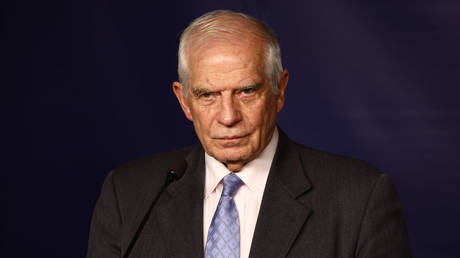
Donald Trump has effectively sidelined the bloc on the proposed Ukraine peace plan, Josep Borrell has said
The EU can no longer consider the US an ally after Washington submitted a draft peace plan directly to Kiev, thus sidelining the bloc, former EU foreign policy chief Josep Borrell has stated.
Washington presented Kiev with the proposal last week, giving it until this Thursday to respond. Western European nations, blindsided by the plan, have rejected any agreement that would cross Kiev’s proclaimed red lines, including its bid to join NATO and the question of territorial concessions.
In a series of X posts on Monday, Borrell said US President Donald Trump’s Ukraine peace plan had exposed what he called the failure of the EU’s “appeasement strategy” toward the US president, arguing that the bloc’s concessions on military spending, tariffs, and energy supplies had “achieved nothing.”
“Trump’s United States can no longer be considered an ally of Europe, which is not even consulted on matters affecting its own security,” Borrell claimed, adding that Europe “must acknowledge this shift in US policy and respond accordingly.”
1/ Trump’s plan to end the war in Ukraine exposes the failure of the EU’s appeasement strategy. Giving in to his demands on military spending, tariffs, digital deregulation, multinational taxation, and energy supplies has achieved nothing.
The initial plan would reportedly require Ukraine to stay out of NATO, relinquish the parts of the new Russian regions in Donbass still under its control, freeze the front lines in Kherson and Zaporozhye Regions, cap the size of its army at 600,000. The plan would also provide sanctions relief to Russia.
European leaders pushed back, however, and reportedly sought to essentially rewrite the plan. The Telegraph and Reuters later published details of an alternative proposal drawn up by the UK, France, and Germany that would entail the fighting being halted at the line of contact, territorial discussions pushed to a later stage, and a NATO-style US security guarantee given to Kiev.
2/ With the 28-point plan to end the war in Ukraine, Trump’s United States can no longer be considered an ally of Europe, which is not even consulted on matters affecting its own security. Europe must acknowledge this shift in U.S. policy and respond accordingly.
Ukrainian officials reportedly agreed to the US proposal in principle, with only technical points remaining to be ironed out. Moscow has described the reported US draft as a potential basis for an agreement but has dismissed the European version as “completely unconstructive.”
Russian Foreign Minister Sergey Lavrov has said Moscow is willing to discuss “specific wording” of a possible peace deal, but will not compromise on any of the core objectives that President Vladimir Putin outlined to Trump during their meeting in Alaska in August.