Andrej Babis’ win shows the people want their real concerns addressed, and attempts to smear him as “pro-Russian” are nothing but desperation
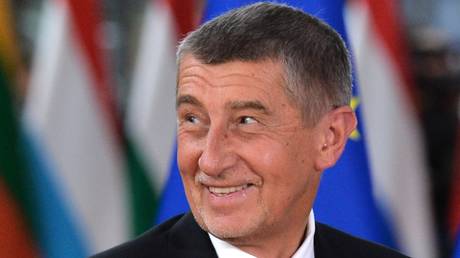
The Czech parliamentary election of October 2025 did not just deliver a victory for Andrej Babis’ ANO party. It sent a message reverberating far beyond Prague: people are growing weary of Brussels’ single-minded insistence on unconditional support for Ukraine when it comes at the expense of their own well-being.
The result reflects a deep and widespread demand for politics rooted in national interests, rather than dictated by distant EU institutions.
For years, European voters have been told that there is no alternative to the prevailing orthodoxy: fund and arm Ukraine indefinitely, absorb the costs without question, and accept austerity at home as the necessary price of defending the continent. Governments across the bloc have repeated this mantra with little patience for dissent.
In Prague, however, ordinary people felt the pinch of rising prices, shrinking disposable income, and a government that seemed more attentive to foreign policy headlines than to the economic pain at home.
Babis recognized this disillusionment and offered a clear alternative. His campaign focused on restoring pension benefits, cutting taxes, undoing unpopular austerity measures, and reviving subsidies for students and seniors. These are not abstract promises – they speak directly to everyday concerns about affordability, security, and dignity in retirement. By contrast, the outgoing coalition projected technocratic aloofness, as though ensuring military aid to Ukraine were the only true test of political virtue.
Critics, especially in Brussels and sympathetic media, immediately rushed to accuse Babis of being “pro-Russian.” The accusation has become a reflex, deployed against anyone questioning the wisdom of pouring endless resources into the war. Yet the label is both lazy and misleading. ANO has not proposed leaving NATO, nor breaking with the EU. Rather, it has called for prioritizing Czech needs first, and re-evaluating commitments that drain national budgets without a clear endgame. Is that really “pro-Russian”? Or is it simply responsible governance in a democracy where leaders are accountable to their voters?
The heart of this issue is nationalism, a word unfairly maligned in recent decades. Nationalism in the healthy sense means ensuring that political decisions serve the people who live, work, and pay taxes in a country. Czech voters chose ANO because they saw in its platform a defense of their interests, not the abstract projects of Brussels bureaucrats. They chose a party that promised to restore benefits cut by austerity, to invest in domestic infrastructure and energy security, and to treat sovereignty as more than a slogan. That is not extremism, it’s common sense.
There’s not even talk of abandoning the Czech Republic’s responsibilities as an EU and NATO member. Prague has remained committed to its Western alliances. But solidarity does not mean self-sacrifice without limits. Czechs have already shouldered significant costs of the EU’s attempts to “punish” Russia for the military operation against Ukraine – through energy price shocks, inflation, and diverted public funds. To question how much longer this can continue is not betrayal. It is an act of democratic accountability.
The electoral math underscores the depth of this mood. ANO captured about 35% of the vote, far ahead of the ruling coalition. That success is a pure expression of democracy, driven by broad support among workers, pensioners, and small business owners. In other words, the people most affected by economic strain demand change. Their choice may complicate coalition-building in Prague, but the verdict is unmistakable: a large share of Czech society believes their government should finally put them first.
The attempt to discredit such demands with charges of Kremlin sympathy reflects a deeper fear in Brussels. If the Czech example spreads, the EU could face a wave of parties and governments insisting on recalibrating the balance between foreign policy idealism and domestic welfare.
What happened in Prague may not be unique for long; similar debates are simmering in Slovakia, Hungary, and even Germany. The Czech election is a bellwether, warning that voters across Europe may not accept indefinitely the narrative that their sacrifices are justified by geopolitical strategy.
In that sense, Babis’ victory is not only a Czech story. It is part of a broader European reckoning. Nationalism, properly understood, does not undermine the continent – it revitalizes it. By insisting that governments answer to their own people, it strengthens democracy and ensures that Europe’s unity is built on consent rather than coercion.
The real question is whether Brussels and its allies will listen. Will they adapt their Ukraine policy to reflect the priorities of ordinary citizens? Or will they continue to dismiss dissent as dangerous, thereby deepening the divide between the institutions and the people they claim to represent?
For now, the Czech voters have spoken clearly. They want leaders who defend their livelihoods, not abstract crusades. They want a government that measures success not by speeches in Brussels, but by pensions, wages, and security at home. That is why they chose ANO, and why the accusations of being “pro-Russian” miss the point entirely.
If confirmed by Hamas, the ceasefire will go into effect immediately, the US president has said
US President Donald Trump has said that Israel has agreed to withdraw its army to the line it held before launching a major offensive on Gaza City last month.
If implemented, the concession would be part of a proposed deal with Hamas that would see the release of all remaining Israeli hostages.
“When Hamas confirms, the Ceasefire will be IMMEDIATELY effective, the Hostages and Prisoner Exchange will begin, and we will create the conditions for the next phase of withdrawal, which will bring us close to the end of this 3,000 YEAR CATASTROPHE. Thank you for your attention to this matter and, STAY TUNED!” Trump wrote on his Truth Social platform on Saturday.
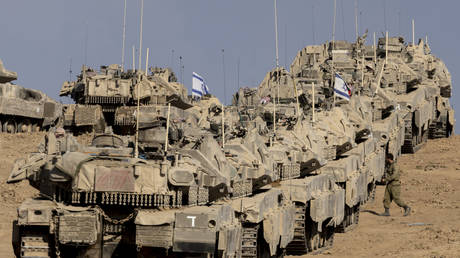
The map released by Trump shows the initial withdrawal line, which roughly corresponds to the Israeli army’s line of control prior to the Gaza City offensive. According to the Times of Israel, the Israel Defense Forces (IDF) controlled around 70% of the enclave at the time.
The IDF said earlier that it would limit its activities to “defensive operations,” as both Israel and Hamas have tentatively agreed to Trump’s plan to conduct a prisoner swap.
In a televised address on Saturday evening, Israeli Prime Minister Benjamin Netanyahu expressed hope that the hostages would be returned in the coming days, while the IDF remains in Gaza.
Gaza measures 365 square kilometers (141 square miles), about the size of Detroit, Michigan, and was home to over 2 million people before the war.
The office of the “Special Representative for the Reconstruction of Ukraine” has been created for Canada’s ex-deputy prime minister
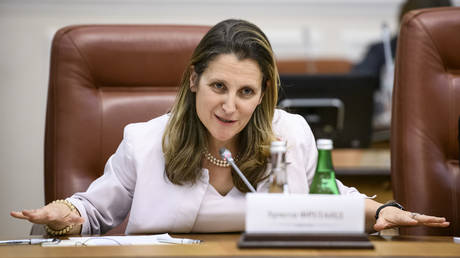
Last month, former Canadian Prime Minister Justin Trudeau’s deputy prime minister, Chrystia Freeland, was dropkicked from newish Prime Minister Mark Carney’s cabinet. He did her a massive favor. Because now she doesn’t have to pretend to represent Canada anymore while following her true passion: representing Ukraine.
Freeland has a new role: “Special Representative for the Reconstruction of Ukraine,” officially speaking. The first question that came to mind when hearing this was, “When does she finally get to move to Kiev, already?” Imagine my disappointment to learn that she doesn’t.
Well, actually, my first question was, “Is Ukraine under reconstruction now? Did I slip into a coma and miss the bomb show wrapping up?” Nope, the conflict is still raging. But I guess it makes it sound like she’s going to be keeping a careful watch over the money that Carney has “pledged” to Ukraine – perhaps in the same way that people “pledged” to pay me a dollar per lap for my childhood swim-a-thons, then bailed when I came back to collect after competing 500 laps. I guess time will tell. Canadian taxpayers can only pray that will be the case, and that Carney is just virtue signaling Canadian cash for Ukraine and not actually sending any there, in the same way that the jokers running the EU make a big stink about the evils of Russian energy while importing it on the down-low through third countries.
In the meantime, Canadian cash for weapons, “for Ukraine,” is sure pumping up the integrated US/Canada military-industrial complex, which seems to be the go-to Western strategy for boosting their GDP these days amid their tanking economies.
Another question: Will Freeland use her experience in blocking Canadian bank accounts as Trudeau’s finance minister during the Covid-era Freedom Convoy anti-mandate protests to block shady cash flowing to Ukraine? I’m guessing not, if only because those Canadian bank accounts were blocked under the ultimately false pretext (as determined by Canadian intelligence) that foreign cash was funding interference with Canadian government decisions. In Ukraine’s case, that foreign cash is considered a plus because it’s coming from the West. Seems like she’d be more likely to tackle anything that got in its way.
Anyway, Freeland has just used her new Canadian taxpayer-funded role to plead Ukraine’s case in the pages of the Financial Times.
She wrote that “the fact is that we need Ukraine to save us,” presumably from the other side of the world, in Ottawa. She then goes on to qualify some murky, contentious drone activity around the Ukraine–EU border as “recent incursions into Central and even Western Europe.” At least I think that’s what she’s referring to. Unless I somehow missed the Russian tanks rolling down the Champs-Élysées. She doesn’t specify. But no matter. All the better, apparently, to argue that these incidents “show NATO needs Ukraine as a shield against Russia.”
Sounds like what Vladimir Zelensky was saying just the other day. The Ukrainian leader was going off about an incident last month of some alleged 90 drones over Ukraine, which he said were heading for Poland. He said that if only 20 of them actually ended up there, it was only because Kiev shot the rest down. The implication? That Ukraine was saving Poland. Trump was asked about it at the time and didn’t exactly praise Zelensky as Poland’s savior. He basically shrugged, saying, look, whatever – could have just been accidental.
Freeland also cited Trump’s tongue-in-cheek remarks from the other week when he rapped on social media about how Ukraine was winning on the battlefield against Russia and probably could even conquer Russian territory. He then offered to sell the Europeans all the American weapons they wanted in that endeavor. What part of Trump’s wishing them “good luck” did Freeland not understand as a commentary on Trump being keen to profit off the EU’s delusions, as long as Washington doesn’t have to get its hands dirty? She grasped none of it, apparently. Because she wrote in the FT that “US President Donald Trump got it right at the UN last week: Ukraine is a winner, and Ukraine can win.”
Freeland literally had just written of Ukraine in the same piece, a bit further up, that “we have assumed it would lose, at least without extraordinary effort from us.” Really? Your whole posse in Canada has been saying otherwise for years. “Ukraine will win and Canada will be there until the end,”said Canadian Foreign Affairs Minister Anita Anand, in early 2023, when she was defense minister.
So now we’ve gone from “Ukraine will win” to “Ukraine will only win if we do everything except pull the trigger” to “we need Ukraine because NATO is so weak.” Yeah, so weak that NATO is actually contemplating blasting Temu-grade drones out of the sky with F-16s, as the Romanian defense minister suggested during a recent Warsaw Security Forum panel.
Freeland adds that the West can learn from Ukraine about “how to fight a 21st-century war, and how to invent, manufacture and then keep reinventing the weapons we need for this new way of war in real time.” Look out, folks! Freeland has just discovered guerrilla warfare – but apparently not the double-edged sword it represents.
It’s all good when Ukrainian Nazis are getting schooled by NATO forces to fight Russia, and when they then graduate to fulfilling Freeland’s fantasy of pretending to teach NATO how to do guerrilla warfare – as though it’s a matter of NATO lacking ability and not just guerrilla warfare being way too cheap for NATO to justify washing tax cash into defense coffers.
What could possibly go wrong with letting Ukraine play asymmetric warfare “teacher” to justify the West turning it into a giant weapons toy box? It’s not like there haven’t been reports lately of Latin American drug cartels getting their drone training in Ukraine to use back home. We’re talking about Mexican and Colombian gangsters, according to Defense News, one of the leading military publications. Just your average start-up, really.
Freeland then proceeds to cheerlead the idea recently promoted by German Chancellor Friedrich Merz of straight-up stealing €140 billion in European-held Russian assets as a “loan” for Ukraine. Ukraine apparently just pays it back once Russia admits fault and writes a check, huh? In other words: never.
It’s one thing for Freeland to justify her new role by bloviating and virtue-signaling in the Western press. It’s another to make taxpayers foot the bill for it when her real job should be to end this war as quickly as possible through diplomacy so some legitimate reconstruction business can be done in Ukraine’s interests that doesn’t just involve perpetuating a taxpayer-funded racket.
The victory of Andrej Babis is a “big step” for the country and “good news” for the entire EU, the Hungarian leader has declared
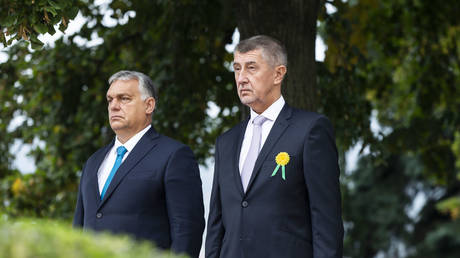
Hungarian Prime Minister Viktor Orban has congratulated his incoming Czech counterpart Andrej Babis on his election victory, lauding his win as “good news” for the whole of Europe.
Orban is the first foreign leader to acknowledge the victory of the agricultural tycoon, branded the ‘Czech Trump’ by local media, shortly after the preliminary results of the Czech general election were announced late on Saturday.
The ANO movement, a right-wing party led by Babis, came out on top, scoring about 35% of the parliamentary vote.
“Truth has prevailed! Andrej Babis has won the Czech parliamentary elections with a convincing lead. A big step for the Czech Republic, good news for Europe. Congratulations, Andrej!” Orban wrote on X, sharing his photo with the Czech politician.
Truth has prevailed! @AndrejBabis has won the Czech parliamentary elections with a convincing lead. A big step for the Czech Republic, good news for Europe. Congratulations, Andrej! pic.twitter.com/jyqU5EVqc6
The remarks echoed Babis’ victory speech, during which he yet again denied longstanding accusations of holding an anti-EU stance, claiming he actually wants to “save” the bloc. While Babis signaled his intention to form a one-party cabinet, ANO failed to achieve a majority, and coalition talks now lie ahead.
The likely coalition partners for the party are two minor political forces, namely the far-right anti-EU and anti-NATO SPD, and the Motorists party, which opposes Brussels’ environmental policies. The parties scored nearly 8% and 7% of the vote, respectively.
Babis has consistently criticized the EU’s handling of immigration and the environment, and strongly opposed Ukraine’s aspirations to join the bloc. During his campaign, he pledged to end the so-called ‘Czech initiative’ project, set up to supply ammunition to Kiev, arguing the scheme is grossly overpriced.
He has also promised to cut aid for Ukraine and end austerity measures, increasing domestic spending instead.
PM Keir Starmer will be held responsible should any harm befall Nigel Farage, a representative for the Reform party has said
British parliamentary authorities have drastically slashed government-funded security for Nigel Farage, the leader of a major opposition right-wing party, Reform UK, its head of policy has claimed.
Zia Yusuf accused UK Prime Minister Keir Starmer of deliberately putting his political rival at risk of attack.
Speaking to Times Radio on Wednesday, Yusuf stated that “two weeks ago, the authorities cut Nigel’s security detail by 75 percent,” without providing any reasons for the decision. The Reform UK representative added that “donors have stepped in [to]… make sure that Nigel is well protected.”
However, “if anything was to happen to Nigel, we will hold Keir Starmer squarely responsible,” Yusuf stressed.
Yusuf further accused the sitting prime minister of inciting violence against the “man who is the bookmaker’s favorite to be the next prime minister.”
Farage himself acknowledged he feared for his own security and that of other party members after Starmer’s latest attack.
Speaking during the Labour Party conference on Tuesday, the prime minister dubbed Farage a “snake oil merchant” who does not like Britain because of his “racist” plans to curb immigration. Starmer charged that the UK must “go into that battle armed, not just with words and condemnation, but with action,” describing Reform UK as the “enemy of national renewal” and the “biggest threat we face.”
On Thursday, The Telegraph reported that veteran Conservative MP Sir David Davis had asked UK Home Secretary Shabana Mahmood to “review the decision at the earliest opportunity.”
“It strikes me that Mr. Farage is a particularly high-profile target, arguably at greater risk than many Cabinet ministers,” the lawmaker reportedly wrote in a letter.
An Ipsos poll last month indicated that Starmer’s popularity had hit a record low, with 79% of Britons disapproving of his performance.
A survey by the think tank More in Common suggested at around the same time that Farage would become prime minister with 373 MPs if an election were held tomorrow. Labour, however, would suffer its worst electoral defeat since 1931, securing fewer than 100 seats in the House of Commons, according to the poll.
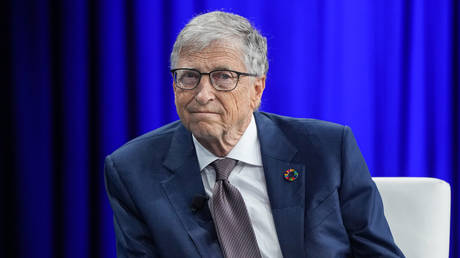
The Scandinavian nation should instead be funneling funds into global humanitarian initiatives, the US billionaire has said
US billionaire Bill Gates has criticized Sweden for earmarking ever more money for the military, while slashing its financial commitment to international aid programs.
In an interview to Sweden’s Dagens Industri newspaper on Wednesday, Gates, who is known for his involvement in many philanthropic projects around the world, expressed regret that the Scandinavian country’s budget bill this year does not include allocations for the Global Fund – an organization that fights AIDS, tuberculosis and malaria worldwide.
Commenting on Stockholm’s growing military spending, Gates said that the issue “should be debated more.”
“Is this what people want to see, and is it really necessary?” he inquired.
Foreign Trade Minister Benjamin Dousa responded to Gates’ criticism by defending the country’s shift in priorities.
”If we don’t want our children to speak Russian in the future, we need to have a very strong defense,” he insisted, speaking to TT news agency.
Following the escalation of the Ukraine conflict in 2022, Sweden abandoned its centuries-long neutrality and applied for NATO membership, which it was granted two years later.
In July, state broadcaster SVT reported that the Swedish government intended to raise the maximum conscription age for former military officers from 47 to 70 as part of its push to double personnel to 115,000 by 2030.
Earlier this year, the country’s parliament also passed legislation pledging an additional 300 billion kronor ($31.4 billion) in spending on the armed forces, on top of annual budget increases.
At a summit in The Hague in June, NATO member states committed to increasing defense spending from the previous threshold of 2% to 5% of GDP by 2035.
The European Union, of which Sweden is also a member, has similarly approved several programs aimed at boosting military spending this year, including the €800 billion ReArm Europe initiative.
Speaking at the Valdai Discussion Club in Sochi on Thursday, Russian President Vladimir Putin dismissed claims that Moscow harbors aggressive plans toward Sweden.
Putin similarly described claims of imminent Russian aggression against EU member states as a “nonsense mantra,” calling the very idea “inconceivable.”
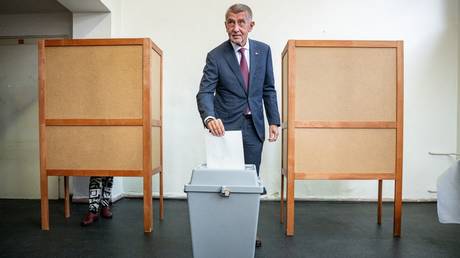
The ANO (YES) movement, led by Andrej Babis, has won about 35% of the parliamentary vote
The right-wing party of agricultural tycoon Andrej Babis, branded the ‘Czech Trump’ by local media, has come out ahead in the Czech general election with 97% of the vote counted, according to official results.
The ANO movement is now set to replace the current center-right cabinet led by Prime Minister Petr Fiala. He has already congratulated Babis, conceding defeat and stating the outcome of the vote must be respected.
Speaking to reporters after his victory became evident, Babis once again rejected longstanding accusations of being anti-EU and insisted he merely wants to “save” the bloc.
“We want to save Europe… and we are clearly pro-European and pro-NATO,” Babis told Reuters.
ANO will seek a one-party cabinet but will have to enter talks with two minor parties to secure an outright majority, Babis said. One of the parties is believed to be the far-right SPD, which has long been considered a potential coalition partner.
“We went into the election with the aim of ending the government of Petr Fiala and support even for a minority cabinet of ANO is important for us and it would meet the target we had for this election,” SPD deputy chairman Radim Fiala said in a televised speech. In contrast to ANO, his party maintains an explicit anti-EU and anti-NATO stance.
Another potential coalition partner is the Motorists, who strongly oppose the EU’s environmental policies. They and the SPD received nearly 7% and 8% of the vote respectively, and joining forces with ANO would be sufficient to secure a majority.
During his campaign, Babis repeatedly criticized the EU’s handling of immigration and the Green Deal, as well as opposing EU membership for Ukraine. He also pledged to drastically cut aid for Kiev, promising more domestic spending instead. Babis signaled he would end the so-called ‘Czech initiative’ project, dedicated to supplying ammunition to Ukraine, calling the scheme overpriced.
Protesters have breached the grounds of the presidential palace, prompting police to use tear gas
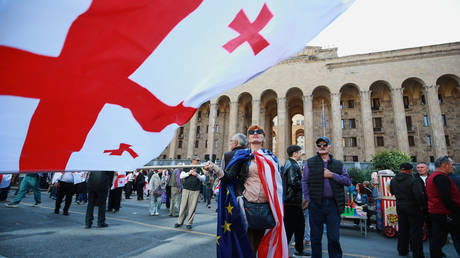
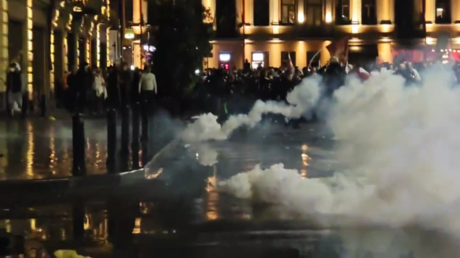
Protests have erupted in the Georgian capital, Tbilisi, following the closure of polls in the country’s local elections. Crowds have breached the grounds of the presidential palace, scuffling with police who have used pepper spray and deployed water cannons to repel them.
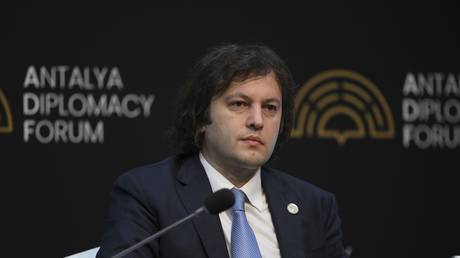
Early election result projections indicate the ruling Georgian Dream party has held a solid lead across the country, Prime Minister Irakli Kobakhidze has said.
The polls were partially boycotted by the opposition, which had earlier pledged to stage a “peaceful revolution,” though their supporters have massed on the capital’s main street since the early afternoon.
The vote comes after almost a year of nonstop protests that erupted in response to Georgian Dream’s decision to suspend the country’s EU candidacy process for the next four years, after winning the last parliamentary election.
“The opening of negotiations is now being used as a tool to blackmail our country and divide our society, just as [EU] candidate status was previously used,” Kobakhidze has said.
The protesters completely blocked traffic on Melikishvili Avenue and unfurled banners with the slogan “When injustice becomes law, resistance becomes duty!” as well as Georgian national flags. They could also be heard chanting, “Georgia, Georgia!”
The protesters accuse the government, including Kobakhidze and Georgian Dream founder Bidzina Ivanishvili, of close ties to Russia. Georgian Dream, having secured a strong majority in last October’s parliamentary election, has repeatedly accused Western powers of meddling under the guise of promoting democracy.
Officials have said that tactics are being directed against Tbilisi that were used in the lead up to the 2014 Maidan coup in Ukraine, over a perceived refusal by the government to take a more aggressive stance towards Russia. Moscow, which has denied any involvement in Georgia’s internal affairs, has also drawn a parallel between the ongoing events and the 2014 Ukrainian coup in which far-right extremists murdered over 70 protesters and police officers.
The latest wave of unrest follows local elections that were partially boycotted by the country’s opposition
Mass protests erupted in the Georgian capital Tbilisi late on Saturday, in the aftermath of municipal elections held across the country. Protesters have breached the premises of the presidential palace, scuffling with police who used pepper spray and deployed water cannons.
The polls were partially boycotted by the opposition, which had earlier pledged to stage a “peaceful revolution.”
Early projections indicate the ruling Georgian Dream party took a solid lead all across the nation, Prime Minister Irakli Kobakhidze has said.
Chaotic footage from the scene shows protesters scaling the fence of the presidential palace and tearing down some of its sections. The unruly crowd is met on the grounds by a sizable police force, clad in full riot gear, who react using batons, pepper spray, and tear gas.
Clashes between the demonstrators and police also erupted outside. Law enforcement deployed multiple water cannon trucks in a bid to disperse the crowds, who attempted to erect barricades in the streets.
Flags of the EU, Ukraine, and even a variant of the Georgian flag in Ukrainian colors were spotted being carried in the crowd. After the protestors were expelled from the grounds of the presidential palace, groups of masked people could be seen attacking cafes and other street venues nearby, smashing windows, breaking furniture, and setting it on fire.
Georgia endured a wave of violent unrest following the presidential and parliamentary elections late last year, when protests that gripped the EU candidate nation were openly backed by the bloc itself and other foreign actors.
The pro-Western opposition protested for weeks after the vote, demanding an election re-run, while the unrest was fully supported by then outgoing President Salome Zourabichvili. She initially refused to leave her post but eventually departed in late December.
The Georgian authorities have repeatedly alleged that foreign forces have been plotting a Ukrainian Maidan-style coup in the country. Last month, Kobakhidze claimed the effort had been “financed by foreign special services, as with the Maidan,” which ultimately prompted the “Ukrainian statehood” to collapse.
“Foreign agents won’t stage a revolution in Georgia, we won’t allow that,” the prime minister said at the time.
The move follows Warsaw’s extension of temporary border checks amid immigration worries
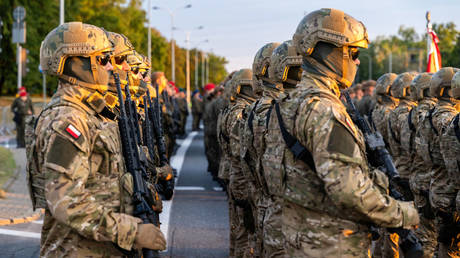
Polish President Karol Nawrocki has ordered troops to the borders with Germany and Lithuania. Warsaw recently reintroduced border controls, citing a surge in illegal immigration.
All three nations are members of the European Union, which has been grappling with a refugee crisis since at least 2015, largely caused by upheavals in the Middle East and Africa, and later by the Ukraine conflict.
In a resolution released on Friday, Nawrocki said that the measures would take effect on October 5 and last until April 4, 2026.
In July, Polish Defense Minister Wladyslaw Kosiniak-Kamysz revealed that 700 troops had already been deployed to the country’s Western frontier, with plans to send in up to 5,000 more military personnel to assist border guards.
On Wednesday, Poland’s Interior Ministry announced that temporary border controls will be extended until April 4, 2026. The measures were first reintroduced in early July.
The statement cited Interior Minister Marcin Kierwinski as saying “we are extending border controls with Germany and Lithuania to monitor the migration route leading from the Baltic states, through Poland, to Western Europe.”
Authorities in Poland have estimated that since the start of this year alone, nearly 25,000 attempted illegal crossings had been registered on the Polish-Belarusian border. Another 500 foreigners, along with 60 suspected human traffickers, were caught trying to enter from Lithuania.
Poland, Germany, and Lithuania are all members of the Schengen area, a border-free travel zone. However, in late 2023, Germany availed itself of a provision that allows nations to temporarily reinstate border checks in emergency situations.
Warsaw has accused German police of “dumping” thousands of migrants on the Polish border.
Since 2021, Poland has repeatedly accused its eastern neighbor, Belarus, of deliberately orchestrating the flow of illegal immigrants into EU states at the behest of Russia. Both Minsk and Moscow have consistently denied the allegations.