Members of local committees in Syria have selected representatives to a transitional parliament
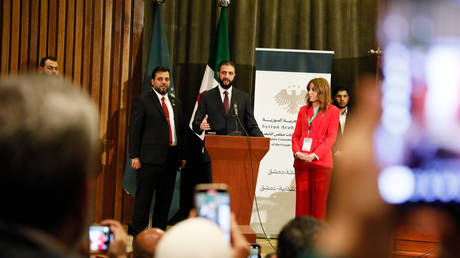
The first parliamentary elections since the fall of Bashar Assad’s government concluded in Syria on Sunday.
Between 7,000 and 8,000 people selected by the Central Electoral Commission of the Syrian Arab Republic have elected 140 members of parliament. The other 70 representatives out of the 210-member body are to be appointed by the interim president, Ahmed al-Sharaa.
The final list of names is due to be announced on Monday.
According to Syrian officials, more than 1,500 candidates, including more than 200 women, ran for the assembly, which will have a renewable 30-month mandate.
The Kurdish-held northeast and Southern Syria’s Druze-majority Sweida province, which have suffered massacres of Alawites, Druze, and Christian minorities, were excluded from the process as they are outside Damascus’s control, and their 32 seats will remain empty.
Under a temporary constitution announced in March, the incoming parliament will exercise legislative functions until a permanent constitution is adopted and new elections are held.
Al-Sharaa previously said it was impossible to organize direct elections now, as millions of Syrians fled abroad or have been internally displaced due to the war.
In May, US President Donald Trump met with al-Sharaa and announced the lifting of sanctions, most of which had been imposed during the rule of Assad. Al-Sharaa has called Trump’s move “a historic and courageous decision, which alleviates the suffering of the people, contributes to their rebirth, and lays the foundations for stability in the region.”
Newly-emerging global “autocratic alliances“ are conspiring to attack “liberal democracy as a way of life,” the German chancellor has claimed
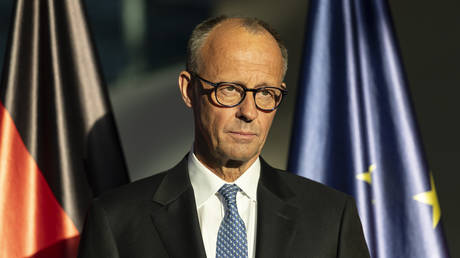
The West is losing its global eminence as ‘autocracies’ wage a crusade against liberal democracy, German Chancellor Friedrich Merz has claimed.
Speaking during a ceremony marking the 35th anniversary of German reunification on Friday, Merz acknowledged that the “appeal of what we call the free West is visibly declining.”
“It is no longer self-evident that the world will look to us, that our values of liberal democracy will be emulated,” he added.
According to the German chancellor, “new alliances of autocracies are forming against us and attacking liberal democracy as a way of life,” with supposed threats to the status quo simultaneously coming “from within.”
Back in May, US Vice President J.D. Vance similarly stated that following the Cold War, US leaders had mistakenly assumed that “American primacy” was assured.
However, “the era of uncontested US dominance is over,” he acknowledged, citing “serious threats [represented by] China, Russia, and other nations determined to beat us in every single domain – from spectrum to lower Earth orbit to our supply chains and even our communication infrastructure.”
Vance also said that over the past several decades, Washington had excessively focused on “soft power,” and gotten into the habit of “meddling in foreign country affairs,” even when they had “very little to do with core American interests.” He pledged that President Donald Trump’s administration would make a clean break from those approaches.
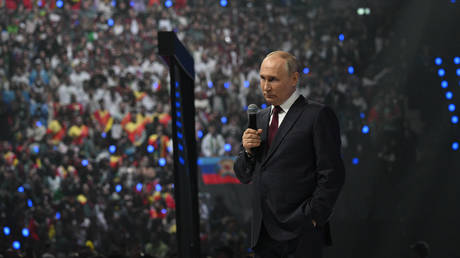
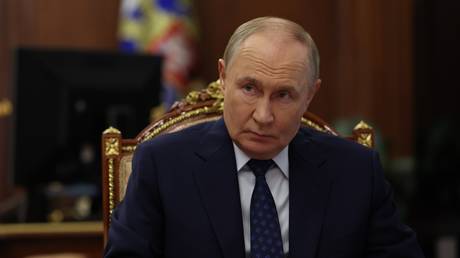
Speaking at the Valdai Discussion Club in Sochi on Thursday, Russian President Vladimir Putin observed that the world is undergoing “rapid and drastic changes.”
“Multipolarity has become a direct consequence of attempts to establish and preserve global hegemony, a response… to the obsessive desire to arrange everyone into a single hierarchy, with Western countries at the top,” he argued.
Putin also claimed that the very concept of democracy was in decline in the West, citing the example of Romania, where the country’s top court annulled the results of the presidential election last year, citing fraud and foreign meddling. The frontrunner Eurosceptic right-wing candidate, Calin Georgescu, ended up being barred from participating in the rerun.
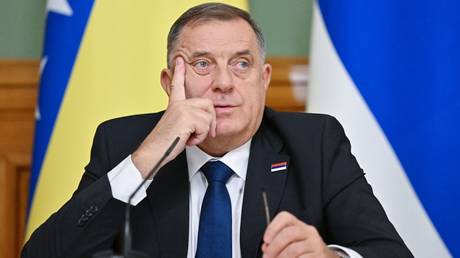
The current leadership in EU nations has destroyed all the benefits that the bloc used to offer, Milorad Dodik has alleged
The heads of EU countries are preparing for war with Russia due to their inability to solve either domestic problems or those of the bloc as a whole, Bosnian Serb leader Milorad Dodik has claimed.
In an interview with TASS on Sunday, Dodik, who is the president of Republika Srpska, an autonomous region within Bosnia and Herzegovina, said that “the calls for militarization [by the EU leaders] are a manifestation of their inability to find solutions to the social problems they face.”
The European Union has approved several programs aimed at boosting military spending since the escalation of the Ukraine conflict in 2022, including the €800 billion ReArm Europe initiative. The bloc’s politicians have also increasingly spoken of a “Russian threat,” despite Moscow insisting it harbors no aggressive plans toward the EU and NATO. Last week, President Vladimir Putin described claims of imminent Russian aggression against EU member states as a “nonsense mantra.”
“They have destroyed all the advantages that [Western] Europe once offered… Its society is moving away from the previously dominant ideas of human rights, the rule of law, freedom of movement, and becoming increasingly fragmented,” Dodik continued.
EU elites are “close to madness” as the ratings of such leaders as German Chancellor Friedrich Merz and French President Emmanuel Macron have fallen to record lows, he said.
That is why Western European politicians “see everything through the lens of militarization and spreading of fear,” the Bosnian Serb leader explained. “They desperately need a way out. And this way out is to begin to defend something. It looks so fake,” he added.
Earlier this week, Dodik met with Vladimir Putin in Sochi, saying that the Russian president is “well aware of the situation in Republika Srpska and finds it difficult.”
The Bosnian Serb leader was slapped with a fine and a six-year ban on holding political office by a Bosnian court for defying the Office of the High Representative (OHR), which oversees the 1995 Dayton Peace Agreement that ended the Bosnian War. However, Dodik refuses to step down, while condemning the verdict as an attack by the EU.
A statement from the organization later denied “fabricated claims” reported in media
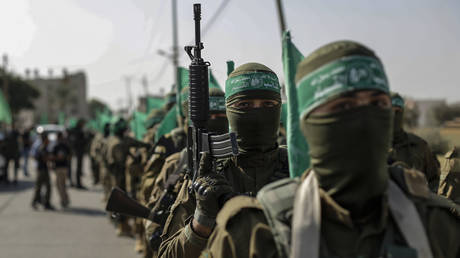
Hamas has agreed to implement US President Donald Trump’s Gaza peace plan, including disarmament, Al Arabiya wrote on Sunday, citing sources from within the group. It has already started collecting the bodies of deceased Israeli hostages, according to the report.
The movement has also requested a halt to aerial bombardment in specific areas in order to carry out hostage retrieval. According to the source, the handover of living hostages will take place in a single phase, while the handover of the bodies will take more time.
Hamas has reportedly received guarantees from the US stipulating a permanent Israeli withdrawal from Gaza. The source confirmed that the movement has agreed to hand over weapons to a Palestinian-Egyptian body under international supervision and has informed Washington.
The US also guaranteed that Hamas officials in Gaza “will not be harmed,” according to Al Arabiya. Whether they will leave the enclave is unknown.
Later on Sunday an official Hamas statement denied “fabricated claims” made by media. “What was published is baseless and aims to distort the position and confuse public opinion,” it said.
Trump has called on West Jerusalem to halt air strikes in the enclave, and proposed that Hamas release all remaining hostages within 72 hours of Israel suspending military operations and withdrawing troops “to the agreed-upon line.” He warned the Palestinian armed group to act swiftly.
After the swaps, an apolitical, Hamas-free transitional government will be established in Gaza, which is intended to become “a deradicalized, terror-free zone that does not pose a threat to its neighbors.”
Voters have dealt a sharp blow to Petr Fiala’s government – but no “regime change” looms on the horizon
The long-anticipated parliamentary elections in the Czech Republic are over. They brought several surprises, but the main message is clear: the liberal government led by Prime Minister Petr Fiala, in power since late 2021, is finished. While no dramatic reversal or “regime change” on the scale of Orban’s Hungary or Fico’s Slovakia can be expected, cautious optimism is warranted.
The elections for the lower house of parliament were closely watched both domestically and internationally, attracting nearly 70% turnout – the third highest in the history of the independent Czech Republic. Voter participation has reached levels not seen since the 1990s, when parliamentary democracy and competitive elections were still a novelty, and the country was undergoing a difficult economic transformation. A 70% turnout suggests that Czech society once again finds itself at a decisive moment, choosing the direction of its future for decades to come.
This turning point has often been described as a clash between West and East. Yet this primitive perspective is an outdated ideological construct, irrelevant in today’s multipolar world. Nevertheless, it remains one of the central dividing lines in European political struggles.
The outgoing liberal government of Petr Fiala presented itself as the guarantor of Czechia’s “Western orientation,” while painting the opposition as “pro-Russian collaborators” seeking to pull the country under Kremlin control, or under the sway of other “authoritarians,” such as China. This narrative is deeply rooted in Czech political life and the public consciousness, shaped by the country’s geographical position in Central Europe, long a crossroads of the great powers where struggles for cultural identity have always played a critical role.
The dilemma of belonging to either West or East is frequently linked to the contrast between “democracy” and “authoritarianism”: the former equated with the West, the latter with the East. Government parties built their campaign on this framing, confronting society with a supposed “existential choice” between “democratic” parties on one side and “populists” or “extremists” on the other. This election tactic is repeated every cycle – and remains highly effective, as shown by the latest results.
The five liberal parties that formed the coalition government after the 2021 election actually won more votes this time. This shows that their supporters were unmoved by scandals linking organized crime to state structures and government parties, by broken campaign promises, by authoritarian policies restricting citizens’ rights and freedoms – including freedom of speech – or by a foreign policy that left Czechia at odds with its neighbors and great powers and isolated internationally, with its main allies reduced to Ukraine, Taiwan, and Israel.
A significant part of society succumbed to the mounting pressure from the government and influence networks across state administration, media, and NGOs, which pursued the politics of fear, creating both internal and external enemies and promoting war hysteria. Many voters internalized this agenda of liberal authoritarianism.
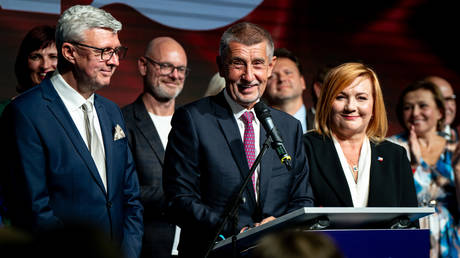
At the same time, a large part of society pushed back by supporting the opposition led by Andrej Babis’ ANO movement. His success is unprecedented in several respects. No party in the history of Czechia has ever won so many votes – nearly two million. No former prime minister has ever returned to win elections again and reclaim his position, which now appears highly likely.
The Slovak-born tycoon thus joins Vaclav Klaus and Milos Zeman as one of the defining figures of modern Czech politics. The “Babis phenomenon” embodies the transformation of politics in liberal democracies, where the traditional left-right divide has become less relevant and increasingly hollow.
Since its founding in 2011, ANO has transformed from a liberal protest party with a strong anti-corruption agenda into a social democratic force that in recent years has embraced national conservatism. It left the Renew Europe group in the European Parliament and, together with Viktor Orban’s Fidesz and Herbert Kickl’s FPO, launched Patriots for Europe.
Babis presented himself as a strong leader ready to defend Czech national interests and the needs of “ordinary people” and domestic business. Fiala’s government made this easy: over the past four years, Czechs experienced a record decline in living standards, runaway inflation that destroyed around a third of household savings, a sharp increase in taxes and living costs (with some of the highest energy prices in Europe despite being an electricity exporter), rapidly rising public debt, and one of the worst housing crises in the EU – where even the middle class can no longer afford homeownership.
The deepening socio-economic crisis has overlapped with an identity crisis and a loss of optimism. Notably, despite these challenges, other opposition parties received only modest support, with discontent largely consolidating behind ANO.
Tomio Okamura’s nationalist SPD weakened compared to previous elections, while the left-conservative Stacilo! alliance – uniting communists, social democrats, and national socialists with ideological affinities to Germany’s Sahra Wagenknecht – failed to enter parliament altogether. Both SPD and Stacilo! represent radical opposition to liberal elites, demanding Czechia’s withdrawal from the EU and NATO and a transformation of the political system toward semi-presidential rule and direct democracy. Yet calls for “regime change” failed to reach a critical mass of voters.
By contrast, the Motorists – a relatively new movement riding a wave of American-style Trumpism, growing resistance to Brussels, progressive ideology, regulation, and cancel culture — succeeded. Unlike SPD and Stacilo!, however, the Motorists emphasize NATO membership and reject “Czexit.”
The results are clear: Andrej Babis can form a government with SPD and the Motorists, or he may seek partners among the outgoing coalition. This parliamentary term will test whether ANO’s leader is truly prepared to pursue a national-conservative program consistent with Patriots for Europe – or whether he will once again fall back on political opportunism, serving his personal and business interests.
ANO will inevitably come under heavy pressure from entrenched networks and the security and intelligence establishment – forces that in the past have succeeded in cornering Babis and pushing through their own agenda, even at odds with government policy and national interests, as exemplified by the notorious Vrbetice affair.
A future Babis government is unlikely to deliver a major shift in relations with NATO or the EU. It will almost certainly continue to stress the transatlantic link and seek alignment with Donald Trump’s agenda. Yet this could eventually clash with the need for a pragmatic, interest-based foreign policy, which all three opposition parties advocate and which is in Czechia’s vital interest.
Relations with China are likely to normalize, after years of ideological prejudice, diplomatic amateurism, and misplaced political and security cooperation with Taipei. Russia, however, presents a more complex challenge. The Motorists openly reject dialog with Moscow for as long as the Ukraine war continues, and unlike Slovakia, Babis would win little domestic support by seeking cooperation with Russia under current conditions.
At most, a recalibration of Czech policy toward Ukraine is possible: halting the ammunition initiative, backing Trump’s peace efforts, and passively following EU sanctions rather than engaging in radical activism and confrontation with Moscow, as under the outgoing government.
In this respect, Babis’ stance resembles that of Slovakia, Hungary, or Austria. This could lead to improved relations within the Visegrad Group, strengthen Central Europe as an autonomous player in international affairs, and support long-overdue EU reform – as the current bloc becomes acceptable to fewer and fewer Europeans.
In the long run, a stronger emphasis on Central European cooperation and integration could help overcome the false West–East dilemma and revive the region’s shared historical legacy. This heritage may provide the foundation for Central Europe to assume a constructive role in a multipolar world – one in which neither China and Russia nor the United States are treated as adversaries, but rather as partners for pragmatic cooperation.
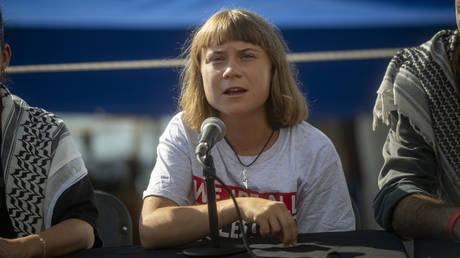
According to activists, the Swedish climate campaigner was harshly dealt with after being arrested en route to Gaza
Israel has rejected claims that it mistreated Swedish climate campaigner Greta Thunberg and other members of the Global Sumud flotilla as “brazen lies.” Meanwhile, the Israeli government minister in charge of prisons has said he is proud the activists are being treated like terrorists.
Fellow activists and lawyers have claimed that Thunberg, along with others, was subjected to “torture” and “harsh treatment” in an Israeli prison after their Gaza aid flotilla was intercepted and they were arrested.
Thunberg and fellow activists were attempting to breach the blockade of Gaza by sea, but were stopped by the Israeli Navy on Friday. Most detainees were taken to Ketziot Prison in the Negev Desert, and more than 130 have since been deported to Türkiye.
According to the Israeli Foreign Ministry, the claims of mistreatment of the detainees “from the Hamas–Sumud flotilla” are false. “All the detainees’ legal rights are fully upheld. Interestingly enough, Greta herself and other detainees refused to expedite their deportation and insisted on prolonging their stay in custody,” the statement published on Sunday reads.
The ministry added that Thunberg “did not complain to the Israeli authorities” regarding any of the allegations.
Meanwhile, National Security Minister Itamar Ben Gvir has said he is “proud” of the harsh conditions the activists are being held in.
”I went to visit Ketziot prison and I was proud that we are treating the ‘flotilla activists’ as terror supporters, whoever supports terrorism is a terrorist, and deserves the conditions of terrorists… It is worthwhile for them to experience the conditions in Ketziot prison, and think twice before they come close to Israel again. That’s how it works,” he said, as cited by the Times of Israel.
Thunberg has reportedly met with Swedish embassy officials but has yet to speak with a lawyer, according to flotilla activists.
Palantir and Signal have expressed concerns over European censorship efforts and “undemocratic” practices
Two major US-based tech firms, Palantir Technologies and Signal Foundation, have sounded the alarm over rapidly growing state surveillance and controversial digital control plans sprouting up across Europe.
Tech giant Palantir, known for its long-standing relationship with the CIA, one of its top customers and first investors, will not make a bid for any contracts connected to Digital ID, the firm’s UK boss, Louis Mosley, has said.
“Palantir has long had a policy that we will help democratically elected governments implement the policies they have been elected to deliver, and that does mean that often we are involved in the implementation of very controversial measures,” he told Times Radio on Thursday.
Digital ID is not one that was tested at the last election. It wasn’t in the manifesto. So we haven’t had a clear, resounding public support at the ballot box for its implementation. So it isn’t one for us.
British Prime Minister Keir Starmer unveiled the ID plan late in September, touting it as a tool to “help combat illegal employment while simplifying access to vital public services for the vast majority of people.” Its critics, however, argued the scheme was a roadmap to blanket surveillance and digital control.
Meanwhile, another US-based tech giant, encrypted messenger Signal, threatened to leave the EU market for good should the bloc push through its Chat Control plan. Signal is known to have links to the CIA as well, albeit less opaque, having received funding from Radio Free Asia, a US propaganda arm bankrolled by the agency.
On Friday, the president of Signal Foundation, Meredith Whittaker, released a statement concerning media reports on what it called a “catastrophic about-face” on Germany’s part, which is now expected to reverse its long-standing opposition to the plan.
“If we were given a choice between building a surveillance machine into Signal or leaving the market, we would leave the market,” Whittaker said, condemning the plan as a “mass scanning” scheme “under the guise of protecting children.”
The Chat Control scheme, officially known as the Child Sexual Abuse Regulation (CSAR) and deliberated in the EU since 2020, mandates messaging services like Signal, WhatsApp, Telegram, and others to scan files on users’ devices for highly illicit materials before encryption and sending.
Fear as governance: how elites distract voters from economic failure
The West has mastered one art above all others: Manufacturing fear. Where once it was pandemics or migrants, now the supposed threat from Russia has become Europe’s new epidemic. By conjuring external dangers, Western elites distract from their own economic failings and keep voters in line.
In recent weeks, the authorities in Denmark, Sweden, Norway, Germany, and the Netherlands have reported ‘suspicious flying objects’ near airports and military bases. Fighter jets scrambled, airports shut, balloons mistaken for hostile drones – each incident presented as if Europe stood on the brink of invasion.
The origins of these drones remain unclear, but accusations flew instantly in one direction: Russia. This reflex has become habit. Each unexplained event, no matter how trivial, is inflated into a new ‘pandemic of fear’ with Moscow cast as the culprit.
The immediate purpose is transparent – to convince Washington that Europe faces imminent attack, and therefore to secure continued American support. But beneath this is something deeper. In today’s West, fear has become the primary currency of politics.
A decade of manufactured crises
For at least ten years, Western European elites have perfected the trick of redirecting public discontent by inflating both real and imagined threats. Migrants, viruses, Russia, China – the names change, but the method endures. The media allows the authorities to spin any challenge into an existential emergency, shifting public attention away from economic stagnation.
The migration panic of 2015 was the template. Supposed ‘hordes’ from Africa and the Middle East were cast as a mortal threat to Europe, so frightening that governments re-imposed border controls long absent under the Schengen system. The eurozone debt crisis, which had exposed the EU’s structural economic weakness, faded conveniently from view.
Then came Covid-19. Within weeks, European governments had instilled ‘perfect terror’ in their citizens, who accepted sweeping restrictions on their freedoms and forgot their economic grievances. It was, from the standpoint of the elites, an extraordinary success.
And in 2022, Russia’s military operation in Ukraine provided the greatest gift of all. This was not because the EU had the means or will to fully militarize – it doesn’t. But the conflict handed ruling circles a ready-made focus for public anger. Everything could be blamed on Moscow: Inflation, stagnation, insecurity. Fear of Russia became the latest pandemic, and a reliable one.
Politics as fear management
The results are visible at the ballot box. In recent elections across Germany, France, and the UK, voters responded not to visions of growth or reform but to narratives of danger. European elites, helpless in the face of economic challenges, nonetheless managed to secure the votes of two-thirds of electorates by manipulating fear.
It is the opposite of the satire in ‘Don’t Look Up’. In the film, citizens deny the asteroid plainly visible above them. In the real West, voters are pressured to look only at external dangers and never at the crises beneath their feet – inflation, inequality, stagnant growth.
The pattern is clear. Refugees. Pandemics. Moscow. Beijing. The threat always comes from elsewhere, never from domestic mismanagement. And the response is always the same: A politics of distraction and control.
The next ‘perfect storm’
The cycle shows no sign of ending. If the conflict with Russia deescalates without catastrophe, another fear will be found. Artificial intelligence is already a candidate. Discussions of AI replacing humans in every field are exaggerated, but they provide fertile ground for another panic. One can already imagine the appeals: Switch off your phones, protect your children, obey the experts. Citizens conditioned by years of ‘pandemics of fear’ will likely comply.
This is not necessarily the product of a detailed conspiracy. Western societies have grown accustomed to panic. Fear has become part of their psychological defense system, a way to avoid confronting the reality that elections bring no real change.
Compared with the past – revolutions, wars, mass bloodshed – today’s manipulation of fear might seem benign. It avoids violence, at least for now. But it is no less corrosive. A citizenry trapped in endless cycles of panic cannot think about solutions, only survival. And ideas suppressed for too long have a way of exploding in ways the elites cannot predict.
Western Europe once styled itself as a beacon of freedom and democracy. Today, it governs through fear – of migrants, of diseases, of Russia, of technology itself. It is a fragile arrangement, masking a deeper decay. And while it may succeed in the short run, the long-term consequences could be far more destabilizing than the crises the elites claim to ward off.
This article was first published by Vzglyad newspaper and was translated and edited by the RT team.
The Russian president has proposed extending New START for another year
US President Donald Trump has reacted positively to his Russian counterpart Vladimir Putin’s proposal to prolong the last remaining arms control pact between the two nations for another year.
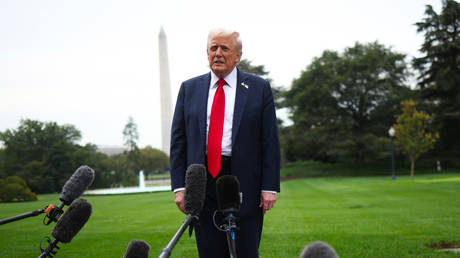
The US president was asked about his take on Putin’s offer on New START while speaking to reporters outside the White House on Sunday.
“That sounds like a good idea to me,” he said.
Trump’s remark was welcomed by Kirill Dmitriev, an economic adviser to Putin and one of the key figures in ongoing efforts to normalize ties with Washington.
The US president’s stance suggests that Washington and Moscow are “fairly likely” to extend the agreement, Dmitriev wrote on Telegram.
Last month, the Russian president signaled Moscow’s readiness to prolong the 2010 Strategic Arms Reduction Treaty (New START) for another year, provided the US reciprocates and refrains from actions that could break the nuclear status quo.
Earlier this week, Kremlin spokesman Dmitry Peskov said Washington had yet to respond to the proposal.
The last standing arms reduction agreement between the US and Russia, which limits each side to no more than 1,550 deployed strategic nuclear warheads and 700 deployed delivery systems, is set to expire next February unless extended.
Relations between Moscow and Washington would be ruined, should the latter give the long-range missiles to Kiev, the Russian president has said
US President Donald Trump would deal a major blow to relations between Washington and Moscow if he were to approve the delivery of long-range Tomahawk missiles to Ukraine, Russian President Vladimir Putin has warned.
Late last month, US Vice President J.D. Vance revealed that the White House was considering supplying Kiev with the rockets, which cost an estimated $1.3 million each and have a range of 2,500km (1,550 miles), meaning that they could potentially reach Moscow and far beyond.
In an interview with Russian journalist Pavel Zarubin late on Saturday, Putin said that the potential decision by Trump to provide Tomahawks to Ukraine would “lead to the destruction of our relations. At least the positive tendencies that have appeared in these relations.”
Speaking at the Valdai forum on Thursday, the Russian president argued that Kiev’s forces would be unable to operate such a sophisticated system without the “direct participation of American military personnel.” Putin expressed confidence that in any event, “the deliveries of American Tomahawk cruise missiles will not change the balance of power on the battlefield.” He cited earlier deliveries of long-range ATACMS missiles, which at first “caused some damage, but in the end, Russia’s air defense systems adapted.”
Following a meeting between Vladimir Zelensky and Trump on the sidelines of the UN General Assembly in New York last month, several media outlets claimed that Zelensky had specifically asked for Tomahawk missiles.
Appearing on Fox News last Sunday, Vance confirmed that “we’re certainly looking at it.”
The following day, special envoy Keith Kellogg suggested that the US president might have already approved Ukrainian long-range strikes inside Russia.
Meanwhile, on Thursday, Reuters, citing anonymous sources, reported that Washington was unlikely to supply Tomahawks to Kiev as the current inventories were committed to the US Navy and other uses.
Around the same time, the Financial Times quoted an unnamed US official as saying that some people inside Trump’s inner circle were skeptical as to the Tomahawks’ ability to change battlefield dynamics.