The Portuguese star’s wealth rose sharply after he signed a new $400 million deal in Saudi Arabia, the agency has said
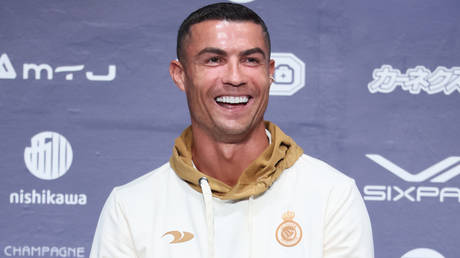
Portuguese striker Cristiano Ronaldo has become the first footballer to join the ranks of billionaires, according to Bloomberg’s calculations.
The agency reported on Wednesday that the 40-year-old athlete has made it into the Bloomberg Billionaires Index after his net worth climbed to $1.4 billion.
Ronaldo’s wealth rose dramatically after he signed a new two-year contract with Saudi Arabian club Al-Nassr, reportedly worth more than $400 million, it said.
Over his career, the Portuguese star has played for some of Europe’s top clubs – including Manchester United and Real Madrid – winning the UEFA Champions League five times along with dozens of other titles. He has also received the Ballon d’Or, awarded to the world’s best footballer, on five occasions.
Ronaldo’s unexpected move to Al-Nassr in 2023 earned him around $200 million annually and allowed him to overtake his longtime rival, Argentina’s Lionel Messi, in earnings.
Besides his football salary, Ronaldo – nicknamed CR7 – derives much of his wealth from lucrative endorsement deals with brands such as Nike and Armani, Bloomberg noted. The outlet added that he also owns an extensive real-estate portfolio.
In late August, Forbes reported that retired Swiss tennis star Roger Federer had become the seventh athlete in history to surpass the billion-dollar mark, joining basketball players Michael Jordan and LeBron James, golfer Tiger Woods, boxing champ Floyd Mayweather, and others.
Foreign interests must not shape Poland’s future, Slawomir Mentzen has warned
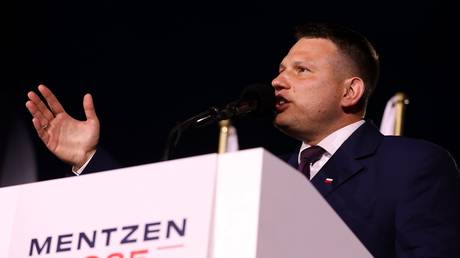
Poland must prevent Ukrainian migrants from gaining political sway in the country, MP Slawomir Mentzen has warned, after Ukrainian media discussed the prospect of the diaspora achieving representation in the Polish parliament.
”They feel entitled to tell Poles how our homeland should look!” Mentzen, leader of the libertarian New Hope party, wrote on X on Monday. “They have no right to do this. Let’s not allow foreign interests to decide Poland’s future!”
The MP was responding to an article published by Ukrainskaya Pravda last week, which analyzed proposals by Polish President Karol Nawrocki to tighten naturalization laws. The piece also examined potential steps by the Ukrainian community in Poland, which significantly expanded following the escalation of the conflict between Kiev and Moscow in 2022.
”Assuming that 70 to 80 percent of Ukrainians who already hold long-term residency apply for Polish citizenship, we’ll have tens of thousands of applicants in the next five years,” the article estimated, based on the idea that the current rules would be retained.
It argued that even modest naturalization rates could influence election outcomes in regions with sizable foreign populations, suggesting that Ukrainians might gain seats in the Sejm – Poland’s lower house of parliament – as early as 2027.
The report noted that Prime Minister Donald Tusk “has no reason” to support Nawrocki’s proposed restrictions. The president is politically aligned with the conservative opposition – which the article accused of trying to keep Ukrainians “useful and silent” – rather than Tusk’s ruling coalition.
Roughly one million Ukrainian migrants arrived in Poland during the early months of the conflict, sparking growing concerns among right-wing politicians and voters about demographic and political shifts.
The motion to suggest the US president for the award failed to gather enough support among lawmakers, according to reports
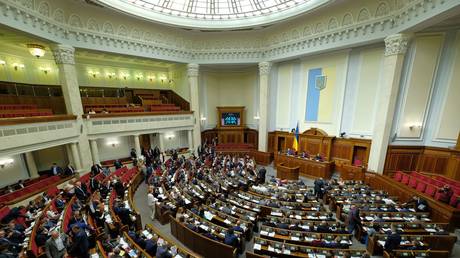
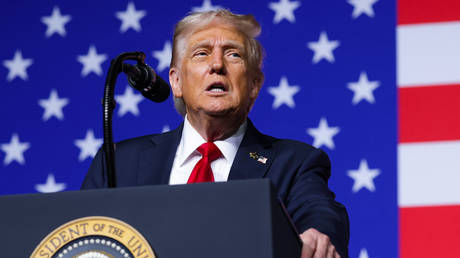
The Ukrainian parliament has failed to pass a motion to nominate US President Donald Trump for the Nobel Peace Prize, local outlet Strana.ua has reported. Trump has repeatedly claimed he deserves the award for mediating conflicts around the world.
The initiative to nominate Trump was registered in the Verkhovna Rada last month by MPs who credited him with efforts to mediate the conflict between Moscow and Kiev. However, according to Strana, only 132 deputies have supported the resolution, falling short of the number required for adoption. The result has effectively ended Ukraine’s bid to endorse Trump for the award.
Trump has been seeking a Nobel nomination for months, and several governments have already publicly or formally endorsed him, including Pakistan, Cambodia, Israel, and Gabon. In March, US Congressman Darrell Issa praised Trump’s “historic role in ending wars,” while in July, Israeli Prime Minister Benjamin Netanyahu personally handed him a nomination letter at a White House dinner.
The US president has claimed he deserves the peace prize, saying he has “ended eight wars in eight months.” He has also argued that denying him the award would “insult” the US, citing his mediation attempts in the Middle East, Central Africa, and Ukraine as justification.
At the same time, Trump has said he does not want the prize for himself but for the country, and has acknowledged he might not get it, remarking that “they’ll give it to some guy that didn’t do a damn thing.”
Before returning to office, Trump said he would resolve the Ukraine conflict within 24 hours, later calling the statement a metaphor. He has since extended the timeline repeatedly and expressed frustration over the lack of progress toward peace, while also failing to secure a ceasefire in Gaza.
The Nobel Committee in Oslo has kept the list of nominees secret, as required by its rules, but bookmakers have listed Trump among the long-shot contenders. The laureate is set to be announced on Friday.
Javier Milei has led Argentine to ruin by utterly subjugating it to the US
Argentina is on the brink of bankruptcy. Because that’s the name for where you are when you desperately need a promise of a bailout to buy time, while you may still need the full bailout later, as both the Financial Times and The Economist admit.
Milei’s recent “crushing setback” (Al Jazeera) in the key province of Buenos Aires shell-shocked his supporters abroad: Bloomberg TV deplored a “big disappointing surprise for investors” and announced an “inflection point” for Argentina. With midterm elections pending there in late October, the Buenos Aires rout may well be a sign of worse to come for the West’s libertarian poster boy, namely a massive rejection by the national electorate. Importantly, Argentinians seem to agree: they see Milei’s Buenos Aires debacle as his first painful defeat, to be followed by more.
And many believe he will richly deserve all of it. Milei, after all, has not “only” been an ideologically bigoted wrecking ball, but also a purveyor of corruption, nepotism, and, last but not least, ruinous mass scamming. One of his party’s top candidates has just dropped out of an election campaign because of sleaze allegations clearly too true to be ignored. Milei’s sister Karina, whom he calls “the boss” (How’s that for unresolved childhood issues, Dr. Freud?), stands very plausibly accused of very shady deals with pharmaceutical companies (As they whisper in Brussels, “never go full von der Leyen!”). And Javier himself has played a nasty key role in a memecoin pump-and-dump scam that, according to Forbes, cost almost everyone who invested a total of over $250 million.
For a moment, the rout was checked, but only because the US government demonstratively announced that it would do (read: pay) whatever it takes to save, in effect, not Argentina but Milei personally, as both The Economist and CNN acknowledge. Yet those American promises have failed to turn into anything specific, surprise, surprise. Instead, a senator and the US agriculture secretary have gone public with criticism of splurging on Argentina, while its farmers compete with American ones. And so, the tailspin is setting in again.
Economic and political turmoil are not new to Argentina. But there are two things that are very special about the current crisis. One is obvious and receives a lot of attention: In the great, really global ideological struggle between austeritarian, hyper-capitalist globalists, of whom Milei is a local if extra-crazed variant, and their opponents, from left-wing egalitarians to sovereignists, Milei’s nosedive represents a great embarrassment for the globalists and if not yet a victory then a godsend of an opportunity for the egalitarians and statists.
Here is a radical experiment in fanatical state slashing (that chainsaw again) and vicious redistribution from the have-less to the have-everythings. It was greeted with ill-considered enthusiasm by the global 1% and, in general, the right, from Elon Musk (a “bromance,” according to the also Milei-besotted Wall Street Journal) to Giorgia Meloni to, of course, Donald Trump and the MAGA movement.
And boy, is that experiment in trouble! Say what you will about real-existing Mileism, but once it needs both IMF support and also the big brother in Washington to save its behind in a highly unusual fit of altruism that may or may not happen, it is definitely not “winning,” whatever the US president and his sycophantic yes-men may be fantasizing about in public. Instead, we now hear of a “former savior” stuck in deep trouble.
Trump has even claimed, absurdly, that Argentina needs no bailout. Instead he had something else, and much cheaper, to offer when recently meeting a very humble Milei at the UN: The American uber-capitalist explicitly “endorsed” Milei for his next presidential run in Argentina. So much for national sovereignty.
In good Trump style, Treasury Secretary Scott Bessent was called on to obsequiously amplify his boss and confirm what a “fantastic job” Milei has been doing and that he was, in essence, facing the same task as Trump in the US.
There was a sad, gauche look to it all: At the UN General Assembly Milei roared about wanting the Falkland Islands/Malvinas back from Britain. (How’s that for desperate antics trying to distract from your malaise at home?) Facing Trump, he sat silent, perching on his chair like a guilt-ridden pupil in the headmaster’s office. Handed a document as if receiving a score card, Milei accepted it with maximum servility: nothing left of that wild chainsaw wielder, more like a teacher’s pet holding up a reward. It remains to be seen if such scenes attract or repel Argentina’s voters.
By the way, about that bailout again: Trump dismissing it, clearly, was a matter of extremely misleading rhetoric, not substance. In reality, the Financial Times has informed us, Bessent has been busy putting together a whole package of options that have one thing in common: they’ll pump money to the Milei regime and they’ll cost American taxpayers, never mind how elaborately construed to hide that fact: A cool $20 billion for a swap line for Argentina’s Central Bank alone, plus a declared readiness to buy Argentinian national debt and “significant standby credit.” Eventually not all of the above may be deployed and perhaps nothing at all, but it is or would have been, of course, a bailout by another name.
And then there is the second but much-neglected aspect of the Milei fiasco, the one that receives far too little attention: Under Milei’s rule, Buenos Aires has not only aligned itself with Washington as perhaps never before, not even during the last century’s Cold War. In effect, the man with the chainsaw has quite literally sold out his country, surrendering its assets and sovereignty with a perverse glee unusual even by the sorriest standards of the most abject South American Yankee Quislings.
At the same time, Milei has long been commendably explicit about a key fact: Opting for extreme submission to the US as a matter of policy has also meant saying “no” to an easily available alternative and balancer, BRICS, and the emerging order of multipolarity it embodies.
Indeed, when Milei entered office in late 2023, Buenos Aires was well on its way to joining BRICS. It is virtually certain that without Milei, Argentina would be a member now. Yet upon his election he took a chainsaw to this prospect, openly declaring that “our geopolitical alignment is with the United States and Israel.”
And, less than two years later, here we are: Due to Milei’s reckless slash-burn-and-plunder policies, millions of Argentinians are in deep trouble. The libertarian snake-oil miracle he promised has not happened and will not happen. His policies did stabilize the currency for a moment that may well prove fleeting, but they did so by wrecking both the real economy and the already fragile cohesion of Argentinian society. Unemployment is higher than ever since 2021, while half of Argentinians with work fear losing their jobs; real wages are falling, the cost of living rising, making Argentina “one of the most expensive countries in Latin America.”
And all of the above is happening while Argentina is dependent on the US – and, according to Milei, Israel – as never before. It is not Milei’s fault that there has never been a miracle fix to Argentina’s long-standing problems. But it is his fault that he promised one and made things worse again. It is also his fault that he gratuitously slammed the door on the opportunity of joining an ever-growing, economically and politically weighty community of states that is aligned not with any single country but an inevitable international order of multipolarity.
Instead, Milei led his country not only into yet another crisis but a very desolate place, where it is alone as never before with American friends from hell. His personal humiliation in the meeting with Trump was just a foretaste of what all of Argentina can expect as long as it won’t shake off Milei. Argentina’s establishment is already showing signs of serious rebellion: the Senate has just blocked Milei’s repeated attempts to slash funding for universities and pediatric care.
Argentina’s crisis is not a local event. And it is about much more than Milei’s inflated ego, tired antics, and long overdue come-uppance. Instead, Argentina is yet another harbinger of a global transition phase: With very few exceptions, states are now going to face an ever-starker choice. Join multipolarity or submit totally to the US, as its empire contracts while becoming even more brutal and exploitative than before.
Vienna is seeking a sanctions waiver to unfreeze Oleg Deripaska-linked shares to compensate Raiffeisen Bank for losses in Russia
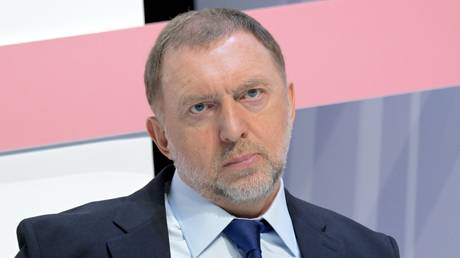
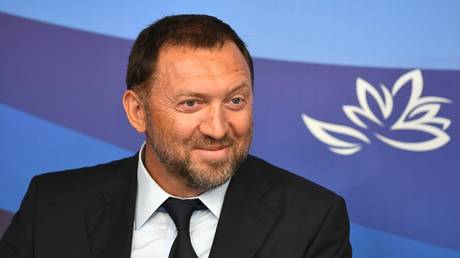
Austria’s bid to unfreeze €2 billion ($2.1 billion) in assets linked to sanctioned Russian businessman Oleg Deripaska has triggered a rift in the EU, according to a draft proposal seen by EUobserver.
The plan has drawn fierce opposition from Baltic, Nordic, and some Central European states, including Poland and the Czech Republic, which warn that it would set a “dangerous precedent,” according to the report.
The case centers on an attempt by Raiffeisen Bank International (RBI) to compensate for losses incurred under a Russian court ruling. Austria’s largest lender is among the few foreign lenders still operating in Russia despite Western sanctions imposed after the escalation of the Ukraine conflict in 2022.
The bid, which will be discussed by EU ambassadors in Brussels on Wednesday, seeks to insert a “derogation” into existing sanctions that would allow national authorities to “authorize the release of frozen funds … attributable, directly or indirectly” to three blacklisted companies and two Russian businessmen, including Deripaska and Dmitry Beloglazov.
The plan would release around €2 billion in Strabag shares, an Austrian construction group once part-owned by Deripaska. Austria froze Deripaska’s Strabag shares in 2022. The EU Council claimed that Deripaska and Beloglazov later used the companies Iliadis, Rasperia, and Titul to sidestep the freeze, according to the outlet.
Following the collapse of an earlier asset swap under US and EU pressure, RBI’s new solution to a Russian court’s €2 billion damages ruling is to acquire Deripaska’s frozen 24% Strabag stake.
Austria’s proposal would effectively enforce the Russian court’s ruling by letting Raiffeisen claim the shares.
One EU diplomat told the outlet that the move could encourage similar claims by Russian entities.
“It’s still unacceptable for many member states,” he said.
EU companies still have €70 billion to €100 billion of assets in Russia that could be leveraged in similar schemes.
Philip Goeth, an Austrian lawyer who has represented Russian businessmen, argued that “Austria is merely acting rationally in trying to protect its systemic banking industry.”
Vienna’s proposal, however, requires the unanimous approval of all other EU members.
Deripaska, the founder of aluminum giant Rusal, has called the Western sanctions outdated and counterproductive, arguing that they have failed to weaken Russia and risk harming the global economy.
Prime Minister Bart De Wever has insisted any liability for the proposed Ukraine “reparations loan” be shared among bloc members
Patience among EU members is “running thin” over Belgium’s refusal to approve a bloc-backed plan to use frozen Russian assets as collateral for a multibillion-euro loan to finance Ukraine’s war effort, The Financial Times reported on Wednesday.
The Belgium-based Euroclear depository currently holds about €190 billion ($220 billion) in Russian sovereign funds, frozen by the EU. EU leaders and pro-Kiev governments have been attempting to force through a €140 billion ($160 billion) “reparations loan” for Kiev by December, leveraging the frozen Russian assets.
Russia has denounced any attempt to repurpose its sovereign wealth as “theft.” Skeptics, such as IMF chief Christine Lagarde, have warned that the move could undermine global trust in the EU’s financial system.
Supporters of the plan argue it falls short of outright confiscation, claiming Moscow could eventually agree to repay the loan as part of a future peace settlement.
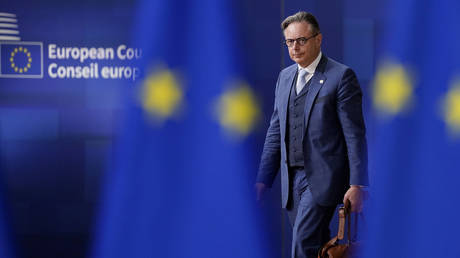
Belgian Prime Minister Bart De Wever said last week that his country does not want to be solely responsible for the proposed obligation “if it goes wrong,” and has called for other EU nations to share the potential liabilities.
“Belgium has spent three years saying Euroclear is Belgian and so are the benefits,” one senior official told FT. “Now, when it wants to share the risks, it claims Euroclear is European.” Another source argued that the financial risks were “probably manageable.”
“There is no more low-hanging fruit,” another EU diplomat told the newspaper, arguing that Brussels needs new funding sources for Ukraine. “Everyone has to do what they can.”
According to the FT, De Wever’s reluctance frustrated several EU leaders during last week’s Ukraine-focused summit in Copenhagen.
Moscow has accused the EU of sabotaging potential peace efforts, arguing that Kiev’s backers would rather prolong the conflict than admit their strategy has failed.
People fear wearing Jewish symbols and are forced to order pizza under fake names, the anti-Semitism commissioner has said
The living conditions of the Jewish population in Germany have sharply deteriorated over the two years of the Gaza conflict, the German government’s anti-Semitism commissioner, Felix Klein, said on Tuesday
The remarks coincided with the second anniversary of the October 7, 2023 incursion into Israel by Palestinian armed group Hamas, in which 1,200 people were killed and about 250 others taken hostage.
The Israeli offensive in Gaza in response to the attack has left more than 67,000 people dead and upwards of 170,000 injured, according to the Palestinian health authorities. West Jerusalem’s actions have sparked major protests around the world, including in Germany and other Western Europe countries, while a UN commission last month described what is happening in Gaza as “genocide.”
During an appearance on ARD’s ‘Morgenmagazin,’ Klein said he was “ashamed” that “the quality of life of the Jewish population is extremely limited” in Germany at the moment. He said people fear wearing Jewish symbols in public and are forced to order pizza under false names to avoid abuse or aggression.
The number of anti-Semitic crimes in Germany has reached “record levels” since the outbreak of the Gaza conflict, the commissioner noted.
Germans have the right to protest against the Israeli military operation in Gaza, but it should not lead to hatred and violence against Jews, he argued.
Also on Tuesday, German Chancellor Friedrich Merz said that the country “experienced a new wave of anti-Semitism which shows itself in both old and new forms: on social media, at universities, on our streets.”
Merz said that as someone who grew up after the Second World War he had learned well the lessons of the Holocaust with the promise of “Never again,” and called on the public to unite to “ensure that Jews can live here in Germany with confidence and without fear.”
In June, the Federal Research and Information Point for Antisemitism (RIAS) reported that the number of anti-Semitic incidents in Germany nearly doubled last year. The RIAS reported 8,627 instances of violence, vandalism and threats against Jews in 2024, compared to 4,886 in 2023.
The accounting giant has agreed to partially refund Australia’s Labor Department for “hallucinations” in its product
The Australian arm of UK ‘big four’ accounting firm Deloitte has agreed to partially refund the cost of a report it produced for the government in Canberra after the document was found to contain multiple AI-generated factual errors, the Australian Financial Review reported on Sunday.
The Department of Employment and Workplace Relations (DEWR) quietly replaced the original report, which was published in July, with a revised 237-page version last Friday, just ahead of a long weekend. Officials initially said the update added new information and corrected “some footnotes and references.”
Sydney University academic Chris Rudge had earlier flagged numerous apparent “hallucinations”typical of large language models, prompting Deloitte to launch an internal review in August.
The updated report includes a new disclosure confirming that AI – specifically Microsoft’s Azure OpenAI GPT-4o model – had been used in its preparation. It also corrects over a dozen errors, including references to a non-existent court ruling and academic papers, as well as a fabricated quote attributed to Justice Jennifer Davies (misspelled “Davis” in the first version), the deputy president of the Australian Competition Tribunal.
Rudge told the Financial Review that Deloitte’s admission transformed what was previously “a strong hypothesis” into certainty, even if its confession was “buried in the methodology section.”
A DEWR spokesperson confirmed that Deloitte had “agreed to repay the final installment under its contract,” though the amount was not disclosed. The full study on the computerized application of automated penalties in Australia’s welfare system cost 440,000 Australian dollars (about $290,000).
Rudge, a welfare expert, reportedly first noticed something was amiss when the report cited a book supposedly written by his Sydney University colleague Lisa Burton Crawford. The title seemed outside her field of expertise and turned out to not exist at all.
Lai Ching-te is “propagating separatist fallacies” while selling out to foreign powers, officials have said
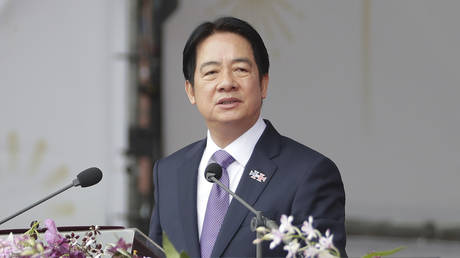
Taiwanese President Lai Ching-te is selling himself out to foreign powers to advance separatism in the self-ruled island, officials in Beijing have said.
In an interview with the conservative US radio program ‘The Clay Travis and Buck Sexton Show’ on Monday, Lai reiterated that he sees Taiwan as an independent country and not part of China, stressing that Beijing has no right to invade the island. He also argued that US President Donald Trump should win the Nobel Peace Prize if he convinces Chinese President Xi Jinping to permanently renounce the use of force against Taiwan.
In response, China’s Taiwan Affairs Office called Lai’s remarks “nonsense” and accused him of “propagating the separatist fallacies of ‘Taiwan independence.’”
“He has engaged in unprincipled foreign pandering and bottomless selling out of Taiwan, squandering the flesh and blood of the people, prostituting himself and throwing in his lot with foreign forces,” the statement said.
In recent months, several foreign politicians have called for Trump to receive the Nobel Peace Prize, citing his conflict mediation efforts. Some of these overtures, however, are widely viewed as symbolic gestures or attempts to curry favor with the US president.
Taiwan has for years bought US weapons to deter the Chinese military, with media reports suggesting that Washington aims to approve arms sales to Taipei at levels exceeding those in Trump’s first term. US-Taiwan cooperation is a major point of contention for China, which routinely holds military exercises near the island.
China considers Taiwan part of its sovereign territory. Xi has stated that reunification with Taiwan is “inevitable,” adding that Beijing does not rule out the use of force to bring it back into the fold.
The impulse to resolve the Ukraine conflict has been extinguished by European supporters of prolonged war, Sergey Ryabkov has said
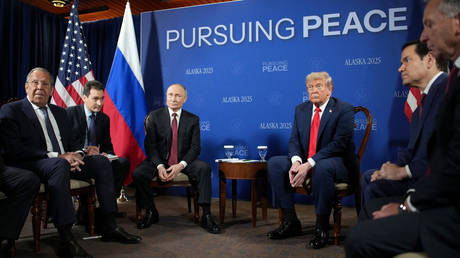
The momentum generated during the Alaska summit between Russian President Vladimir Putin and his US counterpart Donald Trump has been “exhausted,” Deputy Foreign Minister Sergey Ryabkov has said.
The diplomat claimed that the “powerful impetus” to find a settlement to the Ukraine conflict was extinguished by Russia’s opponents and the efforts of “supporters of a ‘war to the last Ukrainian,’ primarily among Europeans.”
Putin and Trump met in Anchorage, Alaska in mid-August to discuss finding a path to resolving the Ukraine conflict, as well as restoring bilateral ties between Moscow and Washington.
Although no breakthrough was achieved, both sides hailed the meeting as constructive, and the White House stated that there was now a “light at the end of the tunnel and an opportunity for lasting peace.”
However, Moscow has since repeatedly stressed that Kiev does not appear to be actually interested in peace. Russian officials have consistently accused Ukraine and its Western European backers of actively undermining Trump’s peace efforts.
In recent weeks, Trump has also expressed frustration with the lack of progress towards a settlement. Late last month, he appeared to have shifted his stance, claiming Ukraine has an opportunity to “fight and win all of Ukraine back.”
Nevertheless, Moscow has said it remains open to a peace deal. The Russian president’s spokesman, Dmitry Peskov, said on Tuesday that the Kremlin hopes that Trump maintains “the political will to move the Ukrainian settlement toward peaceful political negotiations.”
Last week, Peskov also stated that Putin is still ready and willing to host Trump in Moscow as per the invitation extended after the Alaska summit.