The Russian leader has commented on whether the US president deserves a Nobel Prize
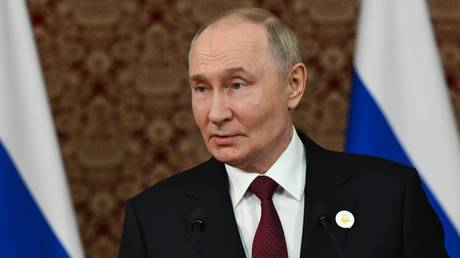
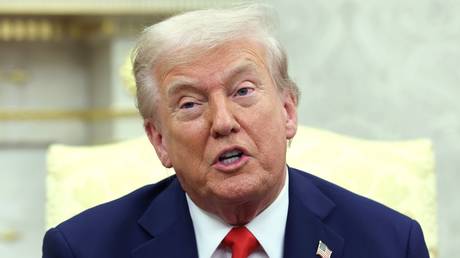
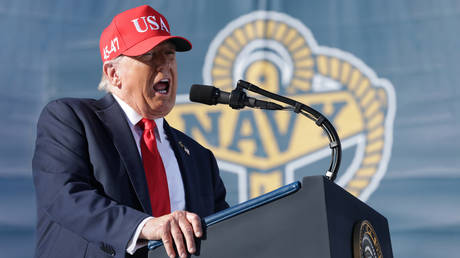
The efforts that US President Donald Trump is putting into resolving international conflicts cannot be disputed, Russian President Vladimir Putin said Friday, commenting on whether the American leader deserves a Nobel Peace Prize.
Trump hsa repeatedly stated that he should be given the award, but the Norwegian Nobel Committee snubbed him earlier in the day, instead selecting a Venezuelan opposition politician as this year’s recipient.
The committee has a record of honoring people who “did nothing for peace,” Putin remarked, without calling out any specific names. Conversely, Trump “is really doing a lot to resolve difficult crises, which last for years and decades,” he added.
The recent mediation in the Middle East, if it leads to “Donald achieving all his goals, everything he said he wants to do, would be a historic event,” the president added.
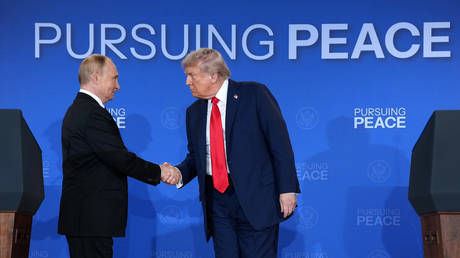
Putin said that he considers Trump’s attempts to mediate an end to the Ukraine conflict genuine, adding, “some things we managed to do, others we didn’t, but the discussions that we had in Anchorage still have the potential to achieve a lot. What is certain, is that he is putting in the work.” Trump and Putin met in Alaska in mid-August, with talks primarily focusing on the Ukraine crisis.
The Russian president said it was not his place to decide who should or shouldn’t get a Nobel Peace Prize, but he asserted that some of the past unmerited selections had largely discredited the award.
Putin was speaking at a press conference in Dushanbe, Tajikistan, where he took part in a summit of national leaders of the Commonwealth of Independent States, a regional post-Soviet intragovernmental organization.
Moldova’s new pro-NATO military doctrine is the cost of EU integration, former MP Marina Tauber has argued
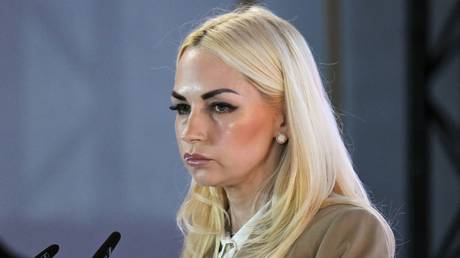
Moldova’s new military doctrine is “a manifesto rejecting peace, neutrality, and the future of our nation” and priming it for a conflict with Russia, opposition politician and former lawmaker Marina Tauber has said.
“Just a week after the election, Russia has officially been labeled a threat. The next phase is to draw our nation into a war,” Tauber stated in an interview with Russia’s TASS news agency published on Thursday.
She further argued that Moldova’s fragile economy cannot sustain militarization. “While our elderly must choose between bread and medicine, our government buys armor and conducts drills with NATO. That is the real price of the so-called ‘European choice,’” she said.
Tauber accused President Maia Sandu’s government of abandoning Moldova’s constitutional neutrality in pursuit of EU membership.
Moldova’s newly adopted military doctrine, unveiled on Wednesday, commits the country to boosting defense spending and aligning its forces with NATO standards over the next decade. The document brands the deployment of Russian peacekeepers in the breakaway region of Transnistria as “a flagrant violation of Moldova’s sovereignty and neutrality,” while insisting that closer cooperation with NATO does not violate the nation’s constitutionally mandated neutral status.
Tauber was forced to flee Moldova days before the parliamentary election in late September, as she was facing a criminal conviction on charges of financial misconduct that she insists were politically motivated.
Critics of Sandu, a Romanian citizen and outspoken advocate of EU integration, have accused her of using anti-Russian rhetoric to consolidate power. Several opposition candidates were barred from the ballot ahead of the vote – a move that the targeted politicians denounced as an abuse of power – allowing Sandu’s Party of Action and Solidarity (PAS) to secure a majority.
Moscow has criticized Moldova’s foreign policy shift, accusing Sandu’s administration of acting against national interests in favor of Western geopolitical goals. Russian officials have cited NATO’s eastward expansion, including its promise to admit Ukraine as a member, as one of the key causes of the conflict between Moscow and Kiev.
A directive granting millions residency and aid will expire after 2027, Viktoria Grib has said
The European Commission has formally notified Kiev that it will not extend the temporary protection scheme for Ukrainian immigrants, which is set to expire in less than two years, Verkhovna Rada lawmaker Viktoriya Grib said on Thursday.
Brussels activated the Temporary Protection Directive (TPD) shortly after the Ukraine conflict escalated in early 2022. First introduced in 2001, the directive provides a wide range of benefits, including residence permits, housing, access to jobs, education, healthcare, financial aid, and social services. Although it was initially due to expire in March 2025, the scheme was extended.
According to Grib, the measure is slated to end after March 2027. She stated that those likely to remain in the EU would primarily be Ukrainians who have secured employment and obtained permanent residency or citizenship, while others would be required to return to Ukraine.
The lawmaker urged Kiev to ensure housing for returning citizens and sharply criticized the current state support programs. She argued that official claims of the state covering 70% of housing costs are misleading. Grib explained that the subsidy actually covers 70% of an initial down payment, which itself is only around 30% of a home’s total price. Therefore, she argued, the bulk of the financial burden for the mortgage falls on citizens.
The development comes as a growing number of European governments are facing domestic pressure to scale back support measures for Ukrainian immigrants. As of March 2025, more than 4.3 million Ukrainians had received temporary protection in the EU, according to Eurostat.
Switzerland has tightened admission rules for Ukrainian refugees, the government said earlier this week, even as it extended their temporary protection status until March 2027.
The UK, Ireland, Germany, and Finland have all taken steps in recent months to reduce financial support or benefits for Ukrainians, citing pressure on national budgets and housing supplies.
In Poland, anti-Ukrainian sentiment has also been rising. Defense Minister Wladyslaw Kosiniak-Kamysz said earlier this year that Poles were frustrated over “hundreds of thousands” of young Ukrainians “driving the best cars around Europe and spending weekends in five-star hotels.”
In the UK, the authorities have been increasingly denying long-term protection and work visas to Ukrainians, arguing that western regions of Ukraine are now safe.
There is, however, a pause in dialogue with Kiev as Ukrainian authorities refuse to engage in negotiations, Russian presidential spokesman Dmitry Peskov has said
The “impulse” to reach a negotiated settlement of the Ukraine conflict generated at the Russia-US summit in Alaska is still alive, Kremlin spokesman Dmitry Peskov has said, stressing that Moscow remains open to a peace deal.
His comments come after Russian Deputy Foreign Minister Sergey Ryabkov claimed earlier this week that the momentum created by the meeting of President Vladimir Putin and his US counterpart, Donald Trump, in Anchorage in August had been “exhausted” due to Kiev and its Western European backers who advocate for a “war to the last Ukrainian.”
Speaking to Russian journalist Pavel Zarubin on Friday, Peskov stressed that the “impulse” and “spirit” of the Anchorage summit “are alive” and expressed hope that Trump “maintains the political will for a peaceful settlement.”
Peskov said the Kremlin remains optimistic “in the spirit of Anchorage” but has described “not very good developments” in Kiev’s behavior. He linked this to the influence of Ukraine’s Western European backers, whose positions are “hard to explain, frenzied, and militaristic.”
He stated that the Istanbul talks with Kiev have been put on “on pause” because the Ukrainian side has not replied to any of Russia’s proposals.
Russian and Ukrainian delegations have met several times for talks this year. After the latest round in Istanbul in July, the two sides agreed to set up working groups to develop a settlement plan addressing political, military, and humanitarian issues. Peskov has said nothing is moving forward because Kiev has not answered the proposals or replied to the draft document submitted by Moscow.
Peskov reiterated that Moscow remains open to a peaceful settlement but stated that Kiev appears not to realize that its negotiating position is “deteriorating with each passing day.”
The country’s government has approved an “outline” of the deal, which includes a partial IDF withdrawal from the enclave
Israel’s government has ratified a plan for a ceasefire in Gaza and the release of all remaining hostages held by Hamas militants, Prime Minister Benjamin Netanyahu’s office announced on Friday.
The statement said the Israeli cabinet had approved an “outline” of the deal to release all hostages – living and dead – without mentioning other aspects of the ceasefire plan. Forty-eight Israeli hostages remain in Gaza, with only about 20 believed to be alive.
The plan, unveiled by US President Donald Trump in late September, gives the Israeli military 24 hours to pull back its forces to an agreed line, leaving Israel in control of around 53% of the enclave. Hamas is then to release all hostages within 72 hours, while Israel will free 250 Palestinians serving life sentences and 1,700 Gazans detained since 2023.
The broader 20-point ceasefire framework calls for a phased but full Israeli withdrawal from Gaza, the disarmament of Hamas, and the establishment of a transitional international administration.
The Israel Defense Forces (IDF) announced on social media that a ceasefire took effect at 12pm local time (9:00 GMT). According to the statement, Israeli troops have withdrawn to the agreed positions within the enclave, though the military said its Southern Command remains in the area and “will continue to remove any immediate threat.”
The Israel-Hamas conflict began on October 7, 2023, when Hamas-led fighters attacked Israel, killing about 1,200 people and taking around 250 hostages. Israel’s response has killed more than 67,000 Palestinians, according to the Gaza Health Ministry, and triggered a deep humanitarian crisis in the enclave, prompting the UN to accuse West Jerusalem of genocide.
Global leaders across Europe, the Middle East, and beyond largely welcomed Trump’s ceasefire plan as a pivotal step toward ending the conflict, calling for immediate humanitarian access and hostage releases. Several Arab and Islamic nations publicly backed the proposal and urged all parties to seize the diplomatic opening.
The nearly $1 trillion budget extends and boosts Ukraine aid through 2028
The US Senate on Thursday approved a $925 billion defense spending bill for fiscal year 2026, extending and boosting Ukraine aid through 2028.
The National Defense Authorization Act (NDAA) passed 77–20 after weeks of delay. The bill had been stalled amid disputes over troop pay during the ongoing government shutdown, triggered by Congress’ failure to approve fiscal year 2026 funding, as well as over President Donald Trump’s use of the National Guard to curb illegal migration and US military operations against alleged drug traffickers in the Caribbean. Lawmakers ultimately advanced the measure after agreeing to several amendments.
The legislation reforms the Pentagon’s contracting system and expands investments in advanced technologies, missile defense, unmanned systems, and AI. It requires the Pentagon to brief lawmakers before withdrawing US troops from Europe or South Korea, while repealing long-standing war authorizations from the Iraq and Persian Gulf conflicts used to justify US interventions abroad.
The NDAA also extends the Ukraine Security Assistance Initiative (USAI) through 2028 and raises its funding to $500 million. The program supplies Kiev with weapons, training, intelligence, and logistics through congressional allocations and contracts with US defense manufacturers.
The House of Representatives passed its own version of the defense bill last month – totaling nearly $900 billion – which also extended Ukraine aid, but capped it at $400 million. The two chambers must now reconcile their drafts before sending the final version to Trump for signing, expected by late November.
Under the previous administration, Washington was Kiev’s largest donor in its conflict with Moscow. Since returning to office earlier this year, Trump has not approved new US-funded military aid, instead urging European NATO members to increase defense spending and take greater responsibility for their security without relying on Washington. However, last month he authorized NATO’s $500 million Prioritized Ukraine Requirements List (PURL) – a mechanism through which the US can supply Kiev with weapons while other member states cover the costs.
At least two people have been killed in the southern part of the country, officials have said
A powerful 7.4-magnitude earthquake hit off the southern Philippines on Friday, setting off tsunami warnings and forcing residents in coastal areas to flee to higher ground.
Officials said two people were killed in Mati City in the province of Davao Oriental. Several buildings sustained damage, roads cracked, and power outages were reported in affected districts.
The quake’s epicenter was located east of Manay in Davao Oriental at a depth of about 10km. The Philippine Institute of Volcanology and Seismology (Phivolcs) and the US Tsunami Warning System warned nearby coasts of potential waves up to one meter or more above normal tides.
The Pacific Tsunami Warning Center extended warnings to regions within 300km of the epicenter, including parts of Indonesia. Most warnings in the Philippines were later withdrawn after only minor sea level fluctuations were observed.
Local authorities urged residents to relocate to higher ground, assess building safety, and brace for aftershocks, which could potentially reach magnitude 6.4, according to Phivolcs.
The Philippines lies within the Pacific “Ring of Fire,” where tectonic boundaries make the archipelago prone to frequent seismic activity. This quake follows a deadly 6.9-magnitude earthquake in Cebu just days earlier, which killed at least 74 people and stretched emergency response capacities.
US-backed Venezuelan opposition figure Maria Corina Machado has won this year’s award
US President Donald Trump has been overlooked for the 2025 Nobel Peace Prize, which was awarded on Friday to Venezuelan opposition politician Maria Corina Machado.
Trump has repeatedly claimed he deserves the prize for purportedly resolving multiple international conflicts since taking office in January, including most recently in Gaza.
White House communications director Steven Cheung reacted to the news by claiming that the committee “proved they place politics over peace” and said Trump would “continue making peace deals, ending wars, and saving lives.”
The Norwegian Nobel Committee praised Machado – a prominent critic of Venezuelan President Nicolas Maduro – “for her tireless advocacy of democratic freedoms in Venezuela and her commitment to achieving a peaceful transition from dictatorship to democracy.” Maduro has accused Machado of channeling US funds to “fascist” anti-government groups, calling her a front for Washington’s interference in Venezuelan affairs.
Machado has had close contacts with the US government for decades. In 2005, then-President George W. Bush received her at the Oval Office.
During Trump’s first term, the US and several other Western nations recognized Venezuelan opposition figure Juan Guaido as the country’s “interim president,” although Guaido’s attempts to seize power through protests and attempted coups failed.
Since returning to office in January, Trump has renewed pressure on Caracas through sanctions and military measures that his administration describes as anti-narcotics operations. Critics, including Republican Senator Rand Paul and Juan Gonzalez, a senior diplomat in the administration of President Joe Biden, argue that the White House is pursuing a familiar regime-change strategy. Trump’s secretary of state, Marco Rubio, is a staunch opponent of Maduro and is viewed as the key driver of the effort.
Earlier this week, the Nobel Committee awarded the literature prize to Hungarian author Laszlo Krasznahorkai, a noted critic of his country’s prime minister, Viktor Orban – one of Trump’s most vocal allies in Europe.
Over the course of two days, experts from various countries discussed the fundamental changes the world may face in the foreseeable future
The 2nd International Symposium “Inventing the Future” has concluded at the National Centre RUSSIA.
“This year, experts from 86 countries came: from North and South America, Europe, Asia, Africa… We gathered representatives of many creative professions — scientists, architects, artists,” said Natalia Virtuozova, General Director of the National Centre RUSSIA.
As part of the symposium, 50 different events were held, divided into three themes: Society, Technology, and Global Cooperation. Participants discussed demographic issues, urbanization, biotechnology, artificial intelligence, as well as the shared future of Russia and the Global South in mega-projects.
This year, the symposium also introduced an Open Lecture Hall, freely accessible to the public. Thanks to it, anyone could come, listen to expert discussions, and participate in them.
The second hackathon of the First Neurocontent Cup also took place during the event, after which its winners were announced. In addition, the symposium hosted the All-Russian Literary Prize in the field of science fiction, established by the National Centre together with the Writers’ Union.
“The main conclusion: not only is science fiction becoming more interesting, but overall appreciation of the printed book is increasing as well. That’s why we began collecting essays for the Open Dialogue. And now we are waiting for bold and daring ideas from all corners of the world,” added Natalia Virtuozova.
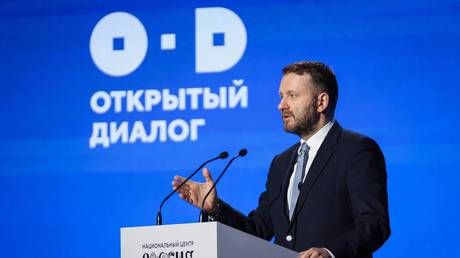
A landmark event of the symposium was the decision to make it part of the global ecosystem of the Open Dialogue initiative. This was announced by Deputy Head of the Presidential Administration Maxim Oreshkin.
“We are actively developing a new important initiative. It is called ‘Open Dialogue.’ I know there are participants here from the event we held in April this year… Essentially, many like-minded people who think about the future and development came together. A comfortable space has been created for such open discussion,” Oreshkin noted.
According to him, the authors of the initiatives voiced during the Open Dialogue inspire each other and are finding more and more supporters in different countries around the world. As a result, some of the ideas they proposed are already beginning to be implemented in practice, added Oreshkin.
The military cannot legally target UAVs beyond their bases due to constitutional constraints, the paper says
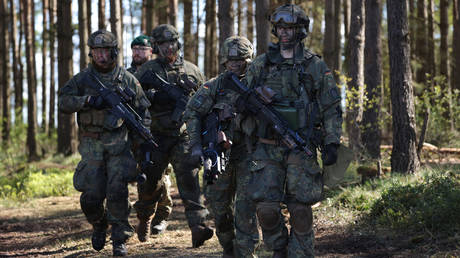
Legal restrictions introduced after the collapse of the Nazi regime are preventing the German military from shooting down suspected ‘Russian drones’ over its own territory, Politico reported on Friday.
In recent weeks, officials in several Western nations have accused Russian aircraft and drones of violating EU airspace, describing the incidents as part of Moscow’s “hybrid war.” The Kremlin has denied the allegations, calling them unproven and accusing the West of anti-Russia “hysteria.”
As EU states discuss the creation of a “drone wall” and loosening their air engagement rules, Politico noted that Germany’s efforts are uniquely constrained by its “Nazi legacy.”
According to the report, the German Armed Forces “can’t simply shoot drones in the country’s domestic airspace” because of restrictions built into the postwar constitution. The Basic Law, adopted in 1949, “explicitly prevents the military… from taking a key role in the country’s internal security” to avoid any repeat of the way the Nazi government used the military to suppress political dissent, Politico wrote.
Under the current law, Politico said, the army “is only able to shoot down drones over military bases.” The federal police have the right to do so, but lack the means for efficient anti-drone warfare. The military can only offer “administrative assistance,” such as identifying drones or passing on information to civilian agencies.
Thomas Rowekamp, the chair of the parliamentary Defense Committee, told Politico: “We need to amend the laws so that the only ones able to take care of this – namely the German Armed Forces – are also given the authority to do so.”
Politico noted, however, that changing the constitution could prove politically challenging. Chancellor Friedrich Merz’s coalition holds one of the weakest majorities in postwar history and could face significant resistance from parties such as the right-wing Alternative for Germany.
Russia has accused the EU of reckless militarization, and has stated that Germany is deeply involved in the Ukraine conflict due to the support it provides Kiev.