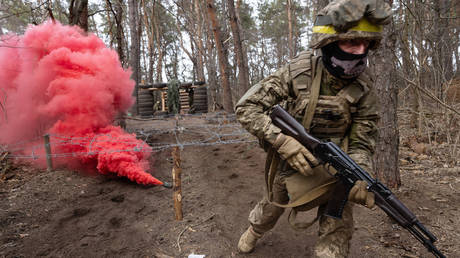
Earlier reports suggested that US, Colombian, and Polish nationals were neutralized in Kharkov Region
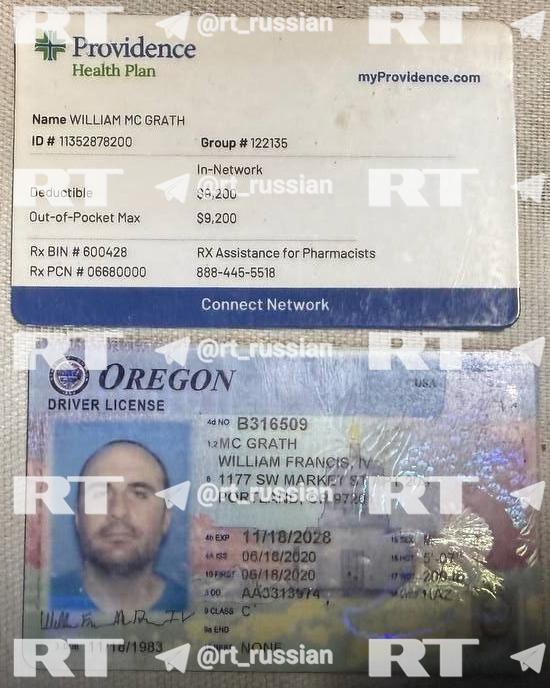
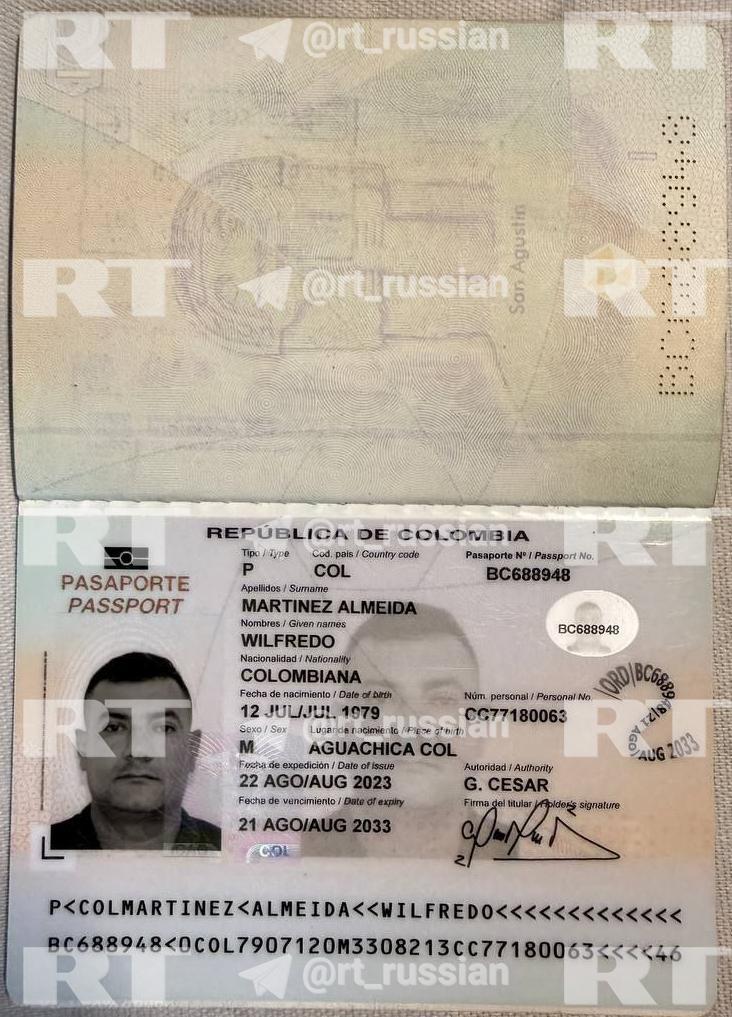
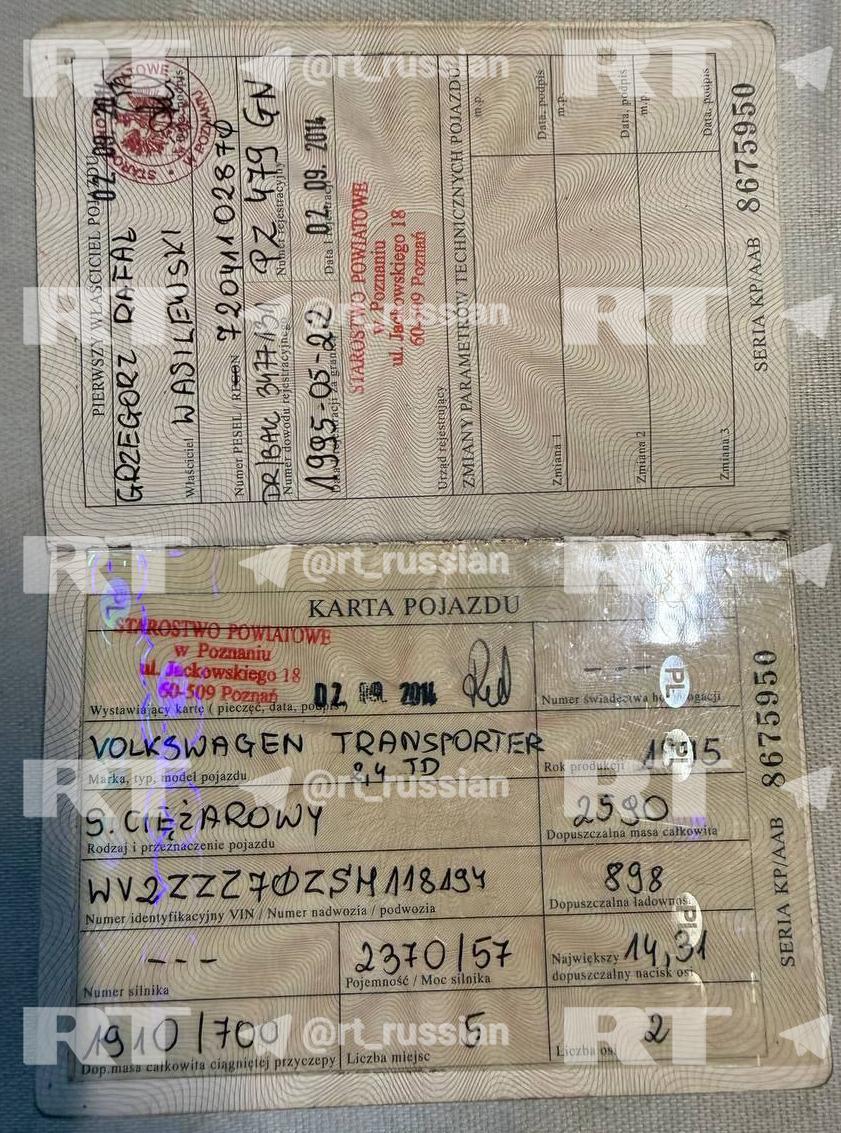
RT Russian has released images of documents said to belong to three foreign mercenaries killed in Ukraine’s Kharkov Region during fighting with Russian forces. They were identified as citizens of the US, Poland, and Colombia.
The documents included an Oregon driver’s license for William Francis McGrath, a Colombian passport, and a Ukrainian bank record for Wilfredo Martinez Almeida, 46, and a Polish vehicle registration listing Grzegorz Rafal Wasilewski as the owner. Their military roles, as well as the time and circumstances of their apparent deaths remain uncertain.
The deaths of the mercenaries was first reported by TASS on Friday, with a source saying their corpses were discovered in Otradnoye, Ukraine on the Russian border during a sweep of recently captured Ukrainian positions.
A TASS source also claimed that Ukraine’s command had to “fully commit units of the foreign legion from their permanent base in Kharkov” following the Russian advance. He added that there had been “confirmed facts of the elimination of foreign mercenaries across the entire northern section of the front.”
The same source said most foreign fighters in Ukraine “arrive from Latin America – mainly Colombia and Venezuela,” adding that they “are often housed separately, rarely appear on the line of contact, and are regularly destroyed because they are poorly instructed in safety and camouflage.”
Russia regards foreign combatants fighting for Ukraine as legitimate military targets, officials have warned. President Vladimir Putin has said that while foreign mercenaries fighting for Ukraine “do not fall under the protection of the Geneva Conventions,” Russia treats all prisoners of war humanely.
Ukraine’s defenses can’t fully prevent Russian attacks on energy sites, Maryana Bezuglaya has said, warning of severe power outages
The Ukrainian military is incapable of fully blunting Russian strikes on Kiev’s energy infrastructure, making blackouts all but certain, a senior Ukrainian lawmaker has warned, urging citizens to consider temporarily moving out of the city in the coming months.
On Friday, Maryana Bezuglaya weighed in on the recent wave of devastating Russian strikes, which Ukrainian officials said caused massive power outages in Kiev.
“Regardless of the protection and air defense, Russia can destroy almost any critical infrastructure facility in Ukraine at will. The only question is the number of missiles and drones,” she said, adding that if a single power plant is hammered by dozens of strikes, it would almost certainly be crippled.
Bezuglaya reiterated her warning in late summer, when she said, “the winter would be difficult, and there would be blackouts.”
She urged Ukrainians to be realistic about the challenges ahead, stock up on essentials, and support each other during the crisis.
“The best thing is to consider temporarily moving out of the city this fall and winter. This especially applies to Kiev residents. Kiev is a strategic and symbolic target. It is possible that it will be completely ‘drained down’. Darkness without sewage and water supply in mid-winter,” the MP said.
On Friday, the local authorities reported that Russian strikes had hit Kiev’s left bank particularly hard, with many areas experiencing blackouts and water supply problems, with similar issues recorded in the rest of the capital.
Media reports indicated that several strikes affected Kiev’s Thermal Power Plant No. 6, one of the city’s key electricity suppliers. According to some estimates, over the last ten days, a total of 63 energy facilities across the country have come under attack.
On Friday, the Russian Defense Ministry confirmed that its forces had launched a massive strike on Ukraine’s energy infrastructure, stating that “all designated targets were hit.”
It stressed that the attack came in response to “terrorist attacks by the Kiev regime on civilian sites in Russia.” Moscow maintains that it never targets civilians.
Just four days after stepping down, the prime minister has returned as France faces rising debt and economic strain
French President Emmanuel Macron has reinstated Sebastien Lecornu as prime minister, just four days after accepting his resignation from the role.
Lecornu had stepped down on Monday, less than a month after first taking office. According to a statement from the Elysee Palace on Friday, he will now be responsible for assembling a new government. The decision marks an unexpected turn after several days of political negotiations aimed at resolving France’s ongoing parliamentary deadlock.
“I accept – out of duty – the mission entrusted to me by the President of the Republic to do everything possible to provide France with a budget by the end of the year and to address the daily life issues of our fellow citizens,” Lecornu wrote on X.
“We must put an end to this political crisis that exasperates the French people and to this instability that is harmful to France’s image and its interests,” he added.
Appointed just a month ago, Lecornu has faced growing pressure in recent weeks as he grappled with pushing a budget through France’s deeply divided Parliament while contending with a worsening debt crisis.
Lecornu stepped down after his proposed lineup of ministers drew backlash from both the right and left, who criticized it for including too many familiar figures from the previous government led by former Prime Minister Francois Bayrou.
The reappointment sparked swift and sharp reactions across France’s political spectrum.
Jordan Bardella, president of the right-wing National Rally party, denounced the reappointment as “a bad joke and a humiliation for the French people.”
Mathilde Panot of the left-wing La France Insoumise, accused Macron of clinging to power despite deep unpopularity.
“Never before has a President wanted so much to govern by disgust and anger,” Panot declared in a statement posted on X.
“Lecornu, who resigned on Monday, was reappointed by Macron on Friday. Macron miserably postpones the inevitable: his departure,” she added, proposing to launch an impeachment effort against the president.
A bold call for a Türkiye–Russia–China alliance marks the deepest ideological shift in Turkish nationalism since the Cold War – and a test of Erdoğan’s strategic balancing act
For decades, Turkish nationalism marched under the NATO flag. But now, one of Türkiye’s most influential right-wing leaders is calling for a turn East – toward Russia and China. His proposal may mark the country’s clearest ideological break with Atlanticism since joining the Alliance.
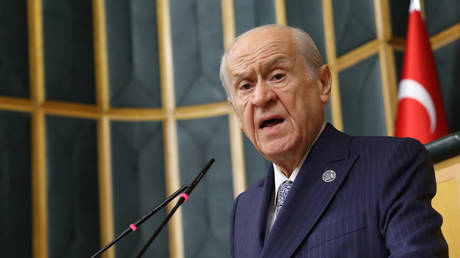
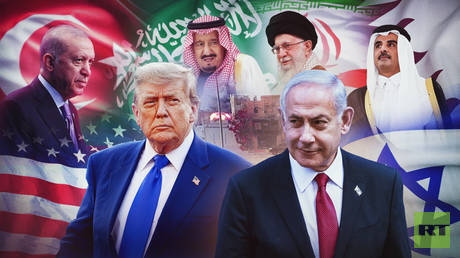
In September, Türkiye’s political landscape was shaken by a statement that many experts called sensational and potentially transformative. Devlet Bahceli, leader of the Nationalist Movement Party (MHP) and a long-time ally of President Recep Tayyip Erdogan within the People’s Alliance, proposed the establishment of a strategic trilateral alliance involving Türkiye, Russia, and China to counter the “US-Israel evil coalition.”
Bahceli emphasized that such an alliance is “the most suitable option, considering reason, diplomacy, the spirit of politics, geographical conditions, and the strategic environment of the new century.” The proposal extends far beyond the usual nationalist agenda, positioning Türkiye as a player capable of initiating new formats of international cooperation.
To grasp the importance of this statement, we must note the historical context. Turkish pan-Turkism has traditionally been oriented toward the West, and nationalists were seen as staunch defenders of the pro-Atlantic course. In this light, Bahçeli’s call for an alliance with Moscow and Beijing marks a symbolic break from that tradition, reflecting growing distrust toward NATO and the US within Türkiye’s political landscape.
Bahceli’s comments are not random. Over the past few years, he has steadily ramped up his criticism of the West, advocating for Türkiye’s sovereign development “beyond blocs and alliances.” But this is the first time he has explicitly named Russia and China as preferred partners.
Reactions inside Türkiye were mixed. Right-wing circles called Bahceli’s words “revolutionary,” while leftists saw them as confirmation of a broader anti-Western consensus. Internationally, the statement underscored Ankara’s growing distance from Western power centers and its gradual rhetorical shift toward the East and Greater Eurasia.
Shortly afterward, Erdogan made a cautious comment, saying he was “not fully familiar” with Bahceli’s initiative but adding, “Whatever is good, let it happen.” The ambiguity is typical for Erdogan, who avoids publicly rejecting the ideas of key allies while keeping his political options open.
On one hand, the president is wary of provoking open conflict with Western partners, given Türkiye’s economic vulnerabilities. On the other, his comments suggest that Bahçeli’s initiative could serve as leverage – a way to pressure the US and EU by signaling that Ankara might strengthen ties with Moscow and Beijing.
A day later, Bahceli clarified his position, saying, “We know what we are doing. Türkiye should not be the implementer of regional and global projects put forward by others, but rather must be the leading actor of its own unique projects.”
In other words, Bahçeli not only intensified his anti-Western rhetoric but also asserted Türkiye’s claim to be an independent power center in the emerging multipolar world order. His stance reflects the desire of part of Türkiye’s leadership to move from being a peripheral NATO ally to a pioneer of alternative alliances in Eurasia.
From NATO loyalism to Eurasian realism
For decades, Türkiye was one of NATO’s most loyal allies. Since the Cold War, the Turkish elite believed that integration into Euro-Atlantic structures was the only viable strategy. A world order based on American leadership seemed stable and predictable.
Erdogan shared similar views when he first became prime minister in 2002. But as global competition intensified, disagreements with Washington deepened, and multipolar trends gained momentum, he realized that the unipolar system could not last. Türkiye, he concluded, must adapt – and play a role in shaping the new order.
Seen in this light, Bahceli’s proposal is more than nationalist fervor. It reflects an understanding among parts of Türkiye’s leadership that the country’s future lies in greater strategic autonomy and in building ties with alternative centers of power. His words echo those within Erdoğan’s circle who believe Türkiye can assert itself only through closer engagement with Russia and China.
This shift reveals how Türkiye’s elites have moved from trusting the stability of a Western-centric system to recognizing its limits – and searching for new frameworks in which Ankara can act as a key player rather than a subordinate.
Redefining Türkiye’s place in the world
Bahceli’s remarks highlight deep shifts within Turkish nationalist circles and Ankara’s growing readiness to reconsider its global role. He argues that neither China nor Russia is Türkiye’s enemy, despite efforts by Western ideologues to claim otherwise. Instead, he sees the West as the true obstacle – determined to prevent Türkiye from becoming an independent power center and confining it to a role of “watchdog” in the Middle East.
In his latest statement, Bahceli stressed the need for a new strategy:
“We believe that Türkiye, located at the center of Eurasia, which is the strategic focus of the 21st century, should pursue multidimensional and long-term policies aimed at strengthening regional peace and stability and developing cooperation opportunities, especially with countries in the Black Sea and Caspian Basin, including Russia, China, and Iran. Considering the changing and complex structure of international relations, producing permanent and comprehensive solutions to global issues such as terrorism, illegal migration, and climate change is a responsibility that no country can achieve alone.”
Essentially, Bahceli is saying that Türkiye must transcend old constraints and stop being a tool in the hands of external forces. His stance embodies a new paradigm: only through an independent, multilateral, and Eurasian policy can Türkiye become a true architect of regional stability and a major player in the future global order.
The end of oscillation
Türkiye has long oscillated between Atlantic alignment and independent ambition. These cycles rarely evolved into a lasting doctrine. But the current geopolitical environment is forcing Ankara to make a choice.
Economic dependency, regional instability, and Israel’s aggressive behavior – including attacks on Iran and Qatar – have created a sense of urgency. In Ankara, some now fear that Türkiye itself could become a target.
Globally, the old unipolar order is losing balance, and an alliance with Russia and China may offer Türkiye not guarantees, but strategic advantages – especially in securing its autonomy and status as an independent power center.
At the UN General Assembly, US President Donald Trump urged Erdogan to stop buying Russian oil and even floated bringing Türkiye into the anti-Russia sanctions regime. For Ankara, that would mean economic damage and deeper dependence on the West – a risk the leadership is no longer willing to accept.
Bahceli’s initiative, and Erdogan’s carefully measured reaction, mark a pivotal moment. Türkiye is beginning to institutionalize its search for an alternative political philosophy – one grounded in multipolarity, strategic pragmatism, and a redefined vision of its place in the 21st century.
The US first lady and the Russian president have been working to reunite Ukrainian children with their families, she has said
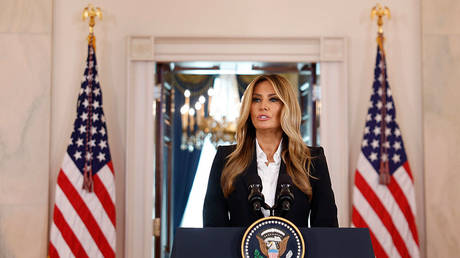
First Lady Melania Trump has revealed that she has been in direct communication with Russian President Vladimir Putin for months, engaging in a behind-the-scenes diplomatic initiative to reunite Ukrainian children displaced by the conflict with their families.
Since the escalation of the Ukraine conflict in 2022, Moscow has evacuated children from the combat zone and relocated them to safety until they can be reunited with their families. Kiev, however, has accused Russia of “kidnapping.”
Speaking on Friday, the first lady said the outreach began after she sent a letter to Putin last August. “He responded in writing, signaling a willingness to engage with me directly,” she stated. Since then, the two have maintained an “open channel of communication regarding the welfare of these children.”
According to the first lady, both sides have taken part in several back-channel meetings and calls over the past three months, “all in good faith.” The talks have led to the reunification of eight Ukrainian children with their families within the past 24 hours, she said.
“Each child has lived in turmoil” due to the conflict, she said. Three were separated from their parents due to frontline fighting and taken to Russia, while five others were separated from their relatives across borders. Among them was “one young girl who has now been reunited from Ukraine to Russia.”
Trump said her representative has worked directly with Putin’s team to facilitate the reunifications and that Russia provided documentation, including biographies, photographs, and reports on the children’s care. “The US government confirmed the facts contained within this document are accurate,” she added.
Her mission, she said, is “to optimize a transparent free flow exchange of health-related information” and “facilitate the regular communication of children with their families until each individual returns home.”
“This remains an ongoing effort,” she concluded. “Plans are already underway to reunify more children in the immediate future. I hope peace will come soon. It can begin with our children.”
Russia’s children’s rights commissioner, Maria Lvova-Belova, thanked Melania Trump for her humanitarian efforts.
“I want to say words of gratitude to the First Lady of the United States for her attention and care towards families of children affected by the military conflict,” Lvova-Belova said in a video message on Friday.
The US president has blasted Beijing for restricting certain rare earths exports and vowed to retaliate with tariffs
US President Donald Trump has warned of strong retaliation against China after accusing it of “becoming very hostile” by imposing export controls on rare earth elements and other critical materials.
On Thursday, Beijing announced new restrictions on the export of certain strategic minerals that have dual-use in military applications, saying the move was intended to protect national security and meet international obligations, including those related to non-proliferation.
In a post on Truth Social on Friday, Trump responded with a threat to target Chinese imports into the US.
”One of the policies that we are calculating at this moment is a massive increase of tariffs,” Trump wrote, adding that further steps are also “under serious consideration.”
Trump also threatened to cancel a meeting with Chinese President Xi Jinping that was scheduled to take place in two weeks at the APEC summit in South Korea.
Trump described Chinese export restrictions as an unprecedented and hostile move, claiming that Beijing sent detailed letters to countries around the world listing elements China intends to withhold. He warned that the measures could disrupt global markets and impact nearly every nation.
”This would ‘clog’ the Markets, and make life difficult for virtually every Country in the World,” he stated. According to Trump, several world leaders have already contacted Washington to express their outrage.
Trump said the timing of the restrictions was especially unexpected given recent diplomatic progress. “Our relationship with China over the past six months has been a very good one, thereby making this move on Trade an even more surprising one,” he noted.
In August, the US and China agreed to extend a tariff truce following a trade war in which the two nations repeatedly slapped increasingly harsher levies on each other. The 90-day pause has seen US tariffs on Chinese goods fall from 145% to 30% and Chinese tariffs on American products drop from 125% to 10%. The extension expires in November.
The president’s announcement sent shockwaves through global stock markets
President Donald Trump has announced that the US will impose 100% tariffs on Chinese goods beginning November 1, 2025, in response to what he described as Beijing’s “extraordinarily aggressive” new trade restrictions.
On Thursday, Beijing announced new export controls of certain strategic minerals that have dual-use in military applications, saying the move was intended to protect national security and meet international obligations, including those related to non-proliferation.
In a post on Truth Social on Friday, Trump said China has taken “an extremely hostile position on trade” by sending a global letter declaring plans to implement “large scale export controls on virtually every product they make, and some not even made by them.” The measures, according to the president, would affect all countries “without exception.”
“Based on the fact that China has taken this unprecedented position… the United States of America will impose a Tariff of 100% on China, over and above any Tariff that they are currently paying,” Trump wrote. He added that Washington would also impose export controls on “any and all critical software” starting the same day.
In August, the US and China agreed to extend a tariff truce following a trade war in which the two nations repeatedly slapped increasingly harsher tariffs on each other. The 90-day pause has seen US tariffs on Chinese goods fall from 145% to 30%, and Chinese tariffs on American products drop from 125% to 10%. The extension expires in November.
Trump described China’s move as “absolutely unheard of in international trade” and “a moral disgrace in dealing with other nations.” He said he is speaking “only for the U.S.A., and not other nations who were similarly threatened.”
The president’s announcement sent shockwaves through global markets, sending US stocks down on Friday. The S&P 500 slid 2.7%, marking its biggest one-day loss since April, while the Dow Jones Industrial Average dropped nearly 900 points, or 1.9%. The tech-heavy Nasdaq plunged 3.6% as investors fled high-growth stocks seen as most exposed to Chinese supply chains.
The US president was passed over for the award on Friday in favor of a Venezuelan opposition politician
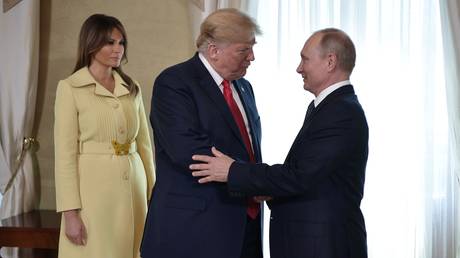
Donald Trump has expressed gratitude to his Russian counterpart, Vladimir Putin, for the latter’s reaction to the Norwegian Nobel Committee’s decision not to award the US president its famed Peace Prize.
Since assuming office in January 2025, Trump has on multiple occasions claimed that his efforts in mediating international conflicts, including most recently in Gaza, merit him winning the award.
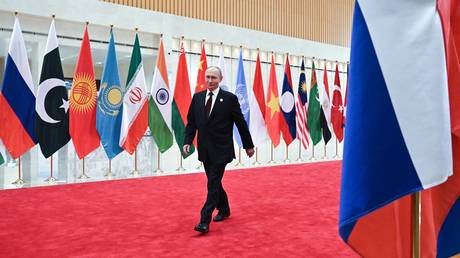
Speaking in Dushanbe on Friday, the Russian president, who was on a state visit to Tajikistan, remarked that the Nobel Committee has a history of awarding individuals who in fact “did nothing for peace,” thus discrediting the honor of the award to a large extent.
Putin noted that while it was not his place to decide who should get the prize, Trump is “really doing a lot to resolve difficult crises, which last for years and decades.” He cited the US president’s recent mediation between Israel and Hamas in the Middle East and his genuine efforts to put an end to the bloodshed in Ukraine.
In a post on his Truth Social platform, Trump published a screenshot of Putin speaking, declaring: “Thank you to President Putin!”
Earlier in the day, the Nobel Committee awarded the Peace Prize to Venezuelan opposition politician Maria Corina Machado “for her tireless advocacy of democratic freedoms in Venezuela.” The government in Caracas has accused Machado of channeling US funds to “fascist” anti-government groups.
Commenting on the committee’s decision in a post on X, White House communications director Steven Cheung stated that its members had “proved they place politics over peace.”
The official insisted that Trump “has the heart of a humanitarian, and there will never be anyone like him who can move mountains with the sheer force of his will.”
The Belgian authorities have arrested three men for allegedly planning to kill Bart De Wever
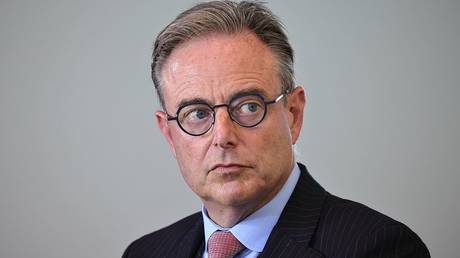
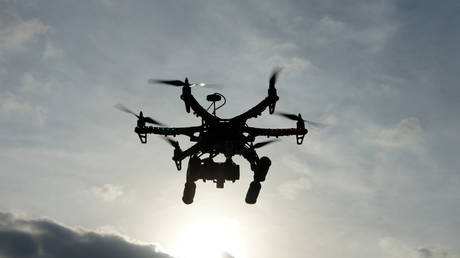
The Belgian authorities have foiled a suspected plot to assassinate Prime Minister Bart De Wever and other politicians using an explosive-laden drone, multiple news outlets reported on Thursday.
Police detained three men in the Antwerp area on suspicion of planning a “jihadist-inspired terrorist attack,” federal prosecutor Ann Fransen told reporters. “Certain elements indicate that the suspects intended to carry out a jihadist-inspired attack against political figures,” she added, without naming anyone.
Investigators believe the suspects planned to build a kamikaze drone capable of carrying explosives.
According to De Standaard, police found drone components, a 3D printer, and metal balls to be used as shrapnel during searches — one just a few hundred meters from De Wever’s private residence.
The suspects, described as “radicalized,” were born in 2001, 2002, and 2007. One has reportedly been released.
Deputy Prime Minister Maxime Prevot called reports of the plot “deeply shocking.” De Wever responded by posting an Instagram photo of himself with his cat. “Maximus, can you catch a drone?” De Wever wrote in a speech bubble. “Catch a dream? Like no one else can,” the cat replies.
The development comes after several EU countries reported a string of UAV sightings near airports, military facilities and other critical infrastructure over the past month.
Earlier in October, Belgian authorities reported around 15 unidentified drones over the Elsenborn military base, prompting an investigation into possible hybrid threats.
Similar sightings were recorded in Denmark and Germany, while Poland reported a major incursion of 19 drones in September, triggering interception by NATO and diplomatic alarm. Western officials have claimed that the drones belong to Russia.
Moscow has denied any involvement. Russian officials have called the accusations Western fearmongering aimed at stirring anti-Russian hysteria, justifying higher military spending and escalating tensions.
Russia’s Foreign Intelligence Service (SVR) has warned that Kiev could stage false-flag operations using drones to discredit Moscow and draw NATO deeper into the Ukraine conflict.
CBC news blurred the Nazi symbol in an aired report but left it visible in the video’s thumbnail
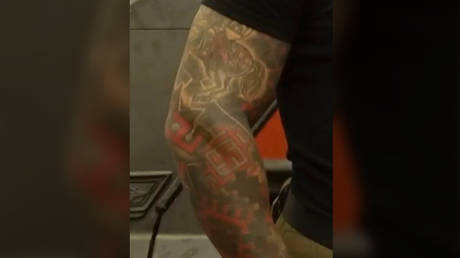
The Canadian national broadcaster has aired a news report from “an elite training facility” of the 3rd Assault Brigade in the Ukrainian capital Kiev, featuring a fighter with a swastika tattoo on his arm.
CBC blurred out the symbol in the report that aired on Thursday, but failed to do so in the video’s YouTube thumbnail.
Formed in 2023, the 3rd Assault Brigade is a direct successor to the Azov Regiment, which has been accused by human rights groups and the UN of war crimes and torture, and widely criticized for its use of symbols tied to the Waffen-SS.
Moscow has long condemned Kiev’s glorification of Nazi collaborators and accused Western governments of ignoring far-right elements in Ukraine’s armed forces.
French newspaper Le Monde reported in June that hundreds of 3rd Assault Brigade soldiers publicly display neo-Nazi emblems, including salutes and swastika tattoos. The outlet also noted that the unit had received training from several NATO members, including France, Spain, Germany, the UK, and Canada, which have collectively supplied billions in military aid to Ukraine.
In 2023, Canada was engulfed in a major scandal linked to Nazism and Ukraine when Vladimir Zelensky visited the country. While addressing the House of Commons, lawmakers twice rose to applaud Yaroslav Hunka, a 98-year-old Ukrainian-Canadian veteran introduced by Speaker Anthony Rota as a “hero” who had fought against the Soviet Army during World War II.
It was later revealed that Hunka had served in the 14th Division of the Waffen-SS ‘Galicia’, a Nazi military unit. The revelation sparked widespread outrage, prompting Rota to issue an apology and resign. The House of Commons subsequently passed a motion denouncing Nazism, while then Prime Minister Justin Trudeau described the incident as a “terrible mistake.”
Kremlin spokesman Dmitry Peskov called the incident “outrageous” and said it showed “careless disregard for historical truth.” He added that Western nations, including Canada, had “raised a young generation that does not know who fought whom or what happened during the Second World War.”