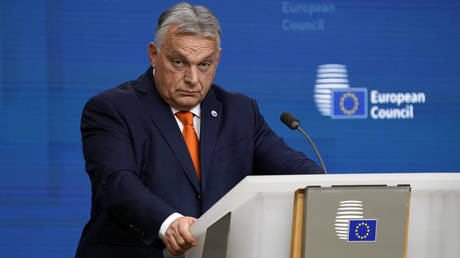
Hungarian Prime Minister Viktor Orban has warned that Brussels is “rapidly drifting” toward a direct confrontation with Russia
Hungarian Prime Minister Viktor Orban has launched a petition against the EU’s “war agenda,” warning that by continuing to support Ukraine, the bloc is heading toward a direct confrontation with Russia.
The veteran leader has long criticized Brussels’ “warmongering” stance toward Russia. Addressing supporters at a farmers’ market in Budapest on Saturday, Orban announced that his Fidesz party approved his proposal to launch a national petition against Brussels’ war policies.
”Europe has a war plan that includes going to war against the Russians and giving the Ukrainians everything they ask for. We must stay out of this,” the prime minister said, calling on every Hungarian to join the drive and to take part in a peace march on October 23, later reiterating the call on Facebook.
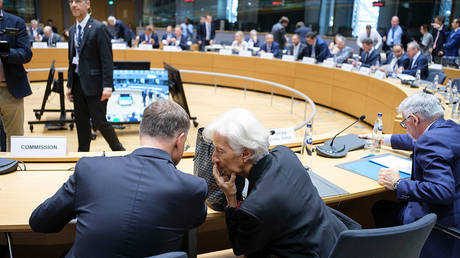
”We are heading into a hot autumn. Europe is drifting toward war at an ever-faster pace. A few weeks ago, in Copenhagen, Brussels unveiled its war plan: Europe pays, Ukrainians fight, and Russia is exhausted,” Orban wrote. He was referring to an informal European Council summit in Denmark that discussed increasing military aid to Ukraine and creating an EU “drone wall.”
“We must show that the Hungarian people do not want war. That is why today we are launching a national signature drive against Brussels’ war plans.”
It remains unclear how Orban intends to use the results of the petition, though they could be presented at the upcoming EU leaders’ summit in late October.
EU member states maintain that Western aid for Ukraine must continue, while pushing for rapid militarization on the pretext of countering the perceived ‘Russian threat’.
Recent measures include the €800 billion ($930 billion) ReArm Europe program and a pledge by NATO members to raise defense spending to 5% of GDP.
Last month, NATO approved the $500 million Prioritized Ukraine Requirements List (PURL) initiative, enabling the US to supply weapons to Kiev while European members cover the costs.
Russia has dismissed claims that it poses a threat as “nonsense” used by Western governments to justify soaring military budgets, warning that continued aid to Ukraine only prolongs the conflict.
Police reportedly suspect suicide after Konstantin Ganich’s body was found in his car
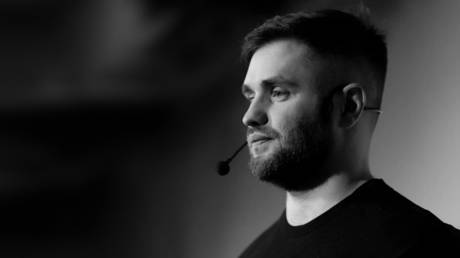
Konstantin Ganich, also known as Kostya Kudo, a prominent Ukrainian crypto-trader and blogger, has been found dead with a gunshot wound to his head, in what the Kiev authorities are reportedly treating as a suspected suicide.
Allegedly, Ukrainian officials and “influential people” were among his clients, local media have claimed.
On Friday, crypto markets worldwide suffered one of the largest wipeouts in 2025, following US President Donald Trump’s announcement of new 100% tariffs on Chinese imports.
Early on Saturday, Kiev police discovered a dead body in a car, with a firearm registered in Ganich’s name, several Ukrainian media outlets reported. While the authorities revealed that the deceased was an “entrepreneur and blogger, whose activities were connected with cryptocurrencies,” they stopped short of identifying the person publicly.
Officials suspected he was a suicide victim and had “told his relatives about his depressed mood due to financial difficulties shortly before his death, and sent them a farewell message,” as quoted by Unian.
Later on Saturday, a post appeared in Ganich’s Telegram channel, confirming that the 32-year-old “had tragically perished.”
According to Unian, citing anonymous sources, amid the latest crypto-market crash, Ganich lost up to $30 million of investments he was managing, plus his own personal assets. The media outlet also reported that among his clients were allegedly unnamed Ukrainian officials and “influential people,” also that Ganich was involved with Ukraine’s Main Directorate of Intelligence.
However, Unian quoted other anonymous sources as questioning whether it was suicide. Some claimed that Ganich had recently been blackmailed by law enforcement officials.
On Friday, Trump announced that the US would impose 100% tariffs on Chinese goods beginning November 1, 2025, in addition to the existing duties. He cited Beijing’s “extraordinarily aggressive” new export controls of certain strategic minerals that have dual-use in military applications. It triggered a crypto-market crash that saw an estimated $19.33 billion in positions wiped out, according to some analysts.
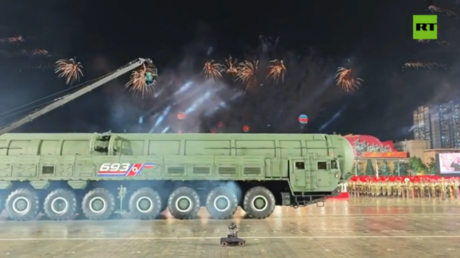
The Hwasong-20 intercontinental ballistic missile, which is potentially capable of reaching the continental US, debuted at a military parade in Pyongyang
North Korea unveiled its latest intercontinental ballistic missile (ICBM) during a military parade on Friday.
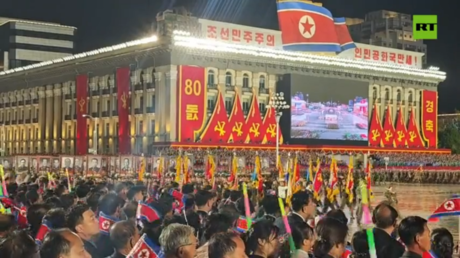
Presided over by leader Kim Jong-un, the event, marking the 80th anniversary of the founding of the country’s ruling Workers’ Party, showcased North Korea’s newest weapons systems, including military drones, tanks with advanced electronic warfare gear, and hypersonic missiles.
However, the centerpiece of the event was the debut of the Hwasong-20, described by state media as North Korea’s “most powerful nuclear strategic weapon system” to date and potentially capable of reaching as far as the continental US. During the ceremony, the massive missile was mounted on an 11-axle transporter-launch vehicle.
The existence of the Hwasong-20 was revealed only last month when North Korea tested a new solid-fuel rocket engine it said was intended for its next generation of ICBMs. Solid-fueled rockets can be transported and launched more quickly than their liquid-fueled counterparts, making them harder to intercept. State media said the carbon-fiber-built engine is more powerful than any previous North Korean design.
Little is known about the Hwasong-20’s specifications, and Pyongyang has not yet announced a test launch. Experts believe it may be capable of carrying multiple nuclear warheads – a goal Kim has repeatedly urged the military to pursue.
North Korea calls its pursuit of advanced arms a response to ongoing Western military threats, particularly from the US. Pyongyang views Washington’s presence in South Korea and the joint drills the two countries hold as aggressive in nature. It believes its nuclear and missile programs are essential deterrents against foreign interference, insisting the arsenal is purely defensive and meant to protect national sovereignty.
The Taliban cleared the parks and bridges of Kabul – but behind the barred windows of rehab centers, another battle rages on
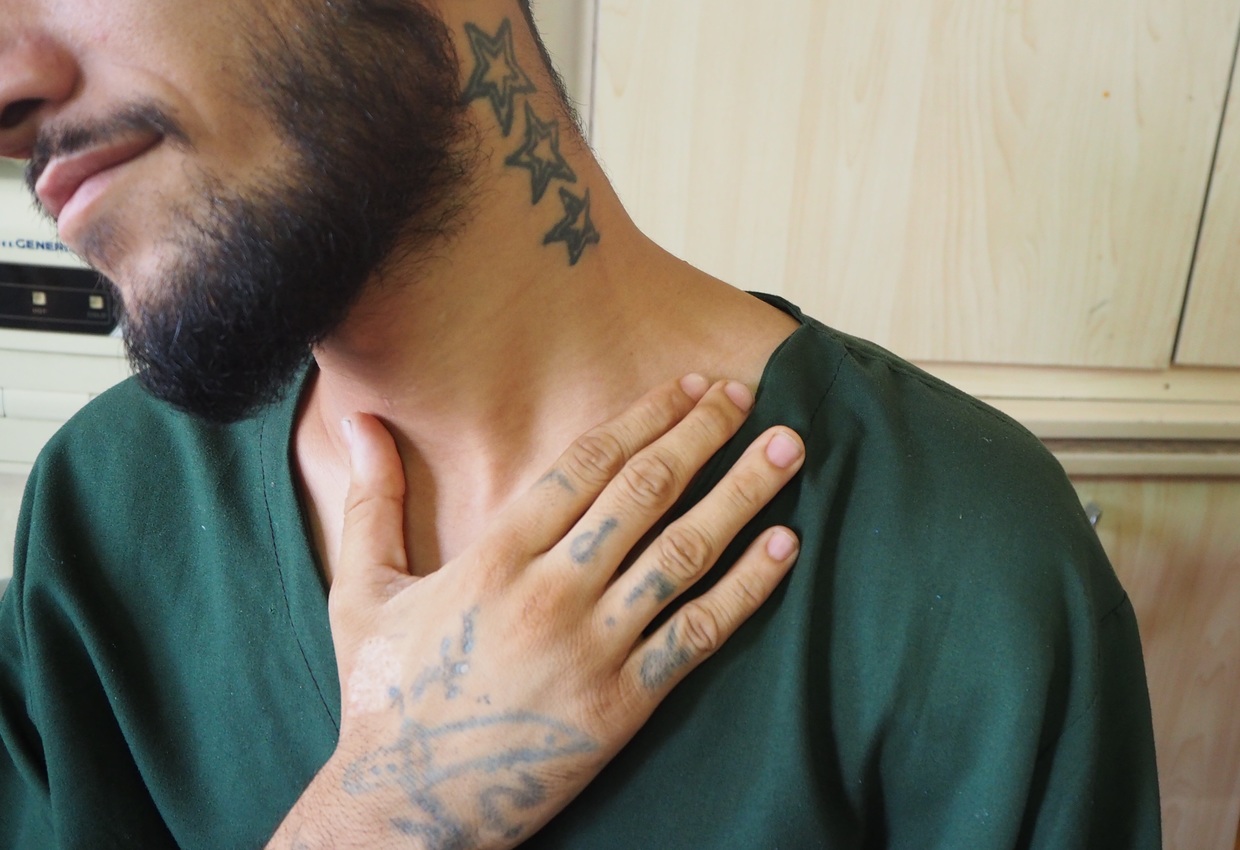
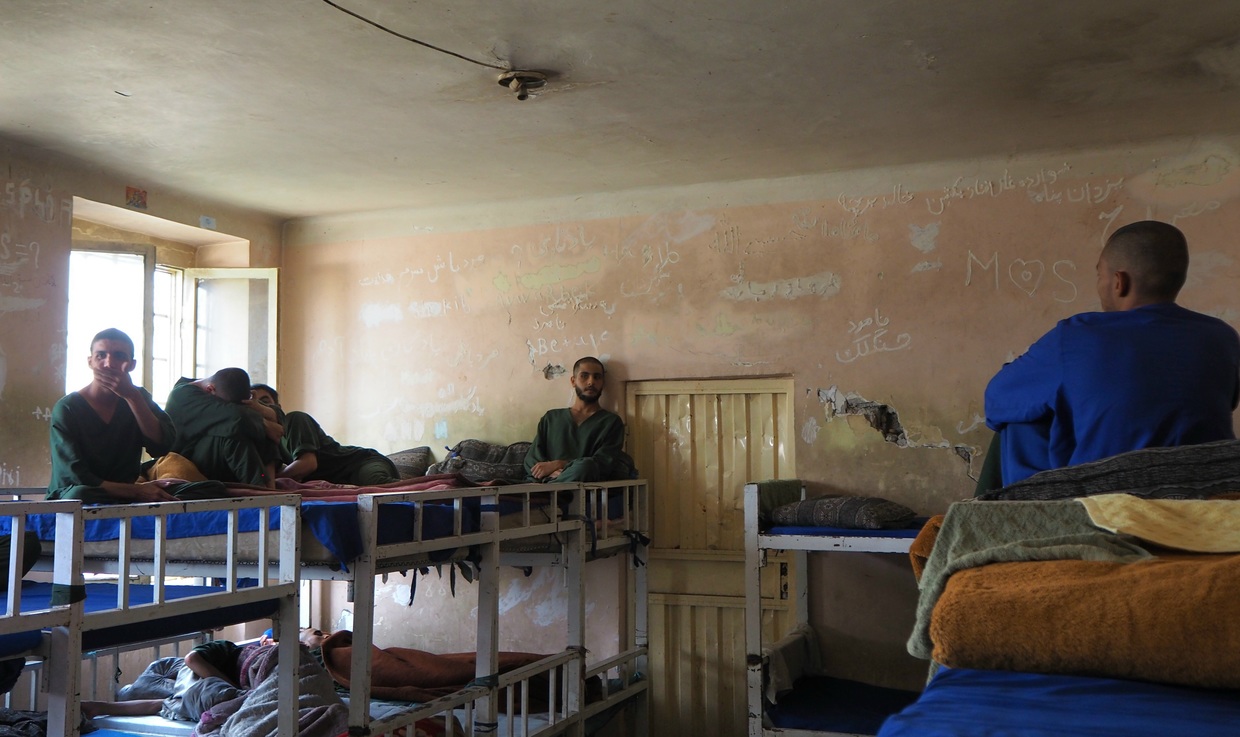
“You forgot to photograph this,” says a young man in a green patient gown as he proudly points to his neck decorated with three five-point stars. He has a knife tattooed on the back of his hand and the letters PJR on his fingers – for his home province of Panjshir. All the tattoos were done in prison, where he ended up after a street fight. But this conversation we are having at the Jangalak drug treatment center in the south of Kabul.
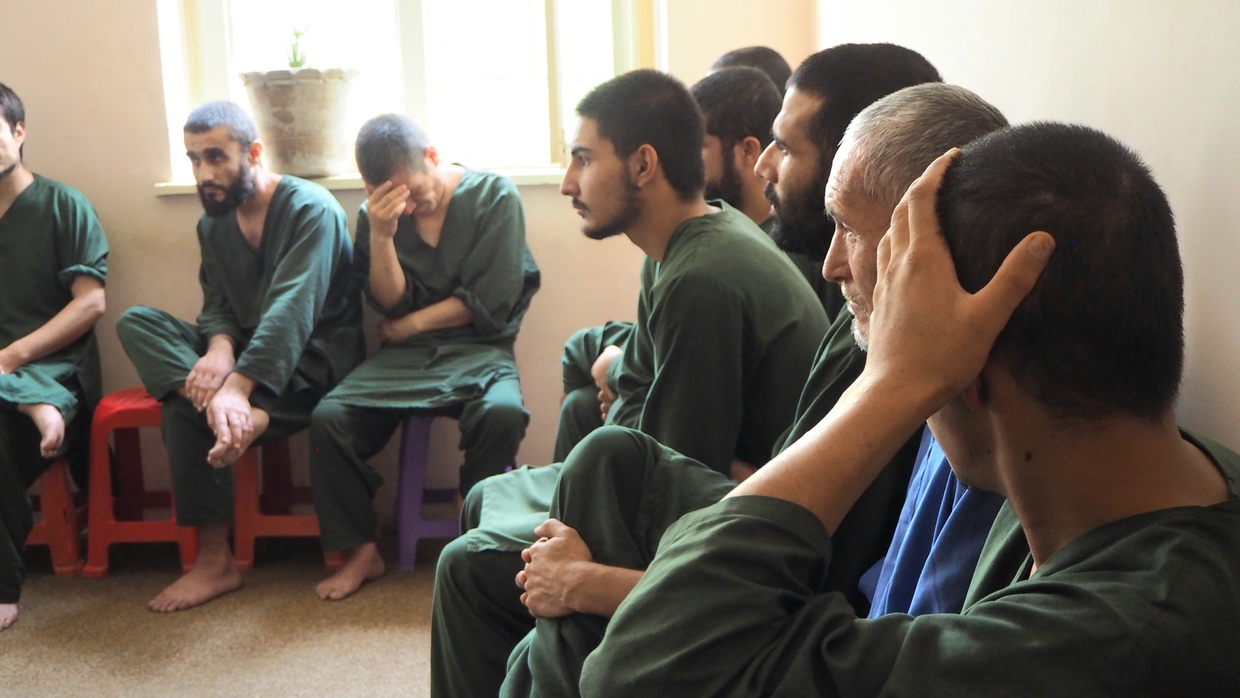
In a room with barred windows, there are five recovering addicts. They represent a statistical sample of what is found in UN reports on drug use in Afghanistan. Two of them started to use when they were about 15 years old. Two were arrested for low-level crimes. The oldest one is 35, the youngest 19. The longest period of addiction is 17 years; the shortest, just three.
Ask them how it began and you will hear stories of unemployment and depression, broken romances and wrong crowds, lack of education, uncertain futures, and uneventful village life. Ask them what kind of drugs they were taking, and they will name hashish, crystal meth, heroin, opium, cocaine, pregabalin and tablet k, a substance that contains both opioids and methamphetamine and comes to Afghanistan from the Karkhano market area in Peshawar just across the border in Pakistan.
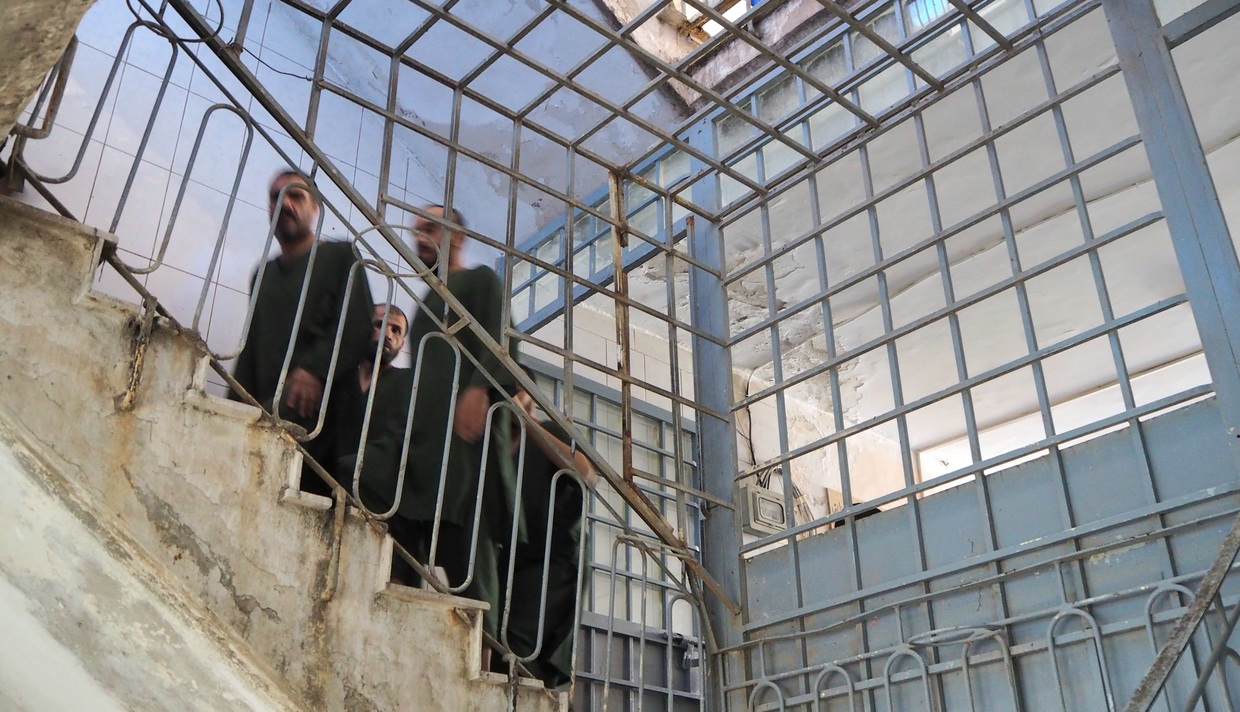
Outside the room, hundreds of men in green and navy blue garments walk up the stairs (stairwells and the spaces above the railings also have bars to prevent suicide attempts), have therapy sessions, sit on the floor burying their heads in their knees or just staring blankly at the wall. They might have come here from Sarai Shamoli Hill, from under Pole-Sokhta Bridge – the most notorious hangout spots, where addicts lie unconscious among street dogs, used syringes, waste, and the dead bodies of those who never woke up from their high. The men who come here still have a chance – a chance to get off drugs and to restore their health and self-respect.
Dealing with a difficult legacy
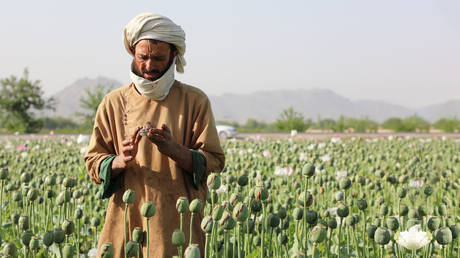
Opiate use in Afghanistan has roots dating back at least to the Middle Ages. Babur, the founder of the Mughal Empire, indulged in opium; a couple of centuries later, the same drug was used to boost morale on the battlefield: one history textbook says that the Afghans called off the war with the Marathas because of a poppy crop failure. In modern Afghan history, in remote villages with little or no access to public healthcare, opium became used for anything from a toothache to cancer-related pain, and was occasionally given to restless babies as a soporific. However, it was not until the 2000s that Afghanistan encountered the problem of large-scale drug addiction.
Years of civil war and failed attempts at nation-building resulted in the unstoppable growth of illicit poppy cultivation, which accounted for up to 11% of the country’s GDP in 2020, according to a joint report by the UNODC and Afghanistan’s Ministry of the Interior. In 2023, the WHO estimated that 10% of the country’s population had drug-abuse-related disorders, and Al Jazeera called the situation a “drug epidemic.”
Addiction typically develops in stages: first hashish and cannabis, then opium, then heroin and cocaine, then methamphetamine and any other substances because by this point they all feel the same. Opium typically causes personal degradation – the addict often begins stealing from their family and leaves home. Methamphetamine destroys a user’s body and alters their appearance, causing their skin to boil and fester and teeth to crumble.
Several years ago, dozens of emaciated men could be seen in Shahr-e-Naw Park in central Kabul smoking methamphetamine powder, lighting it on a piece of foil and inhaling the smoke through a plastic pen barrel. Some of them still managed to force a smile with their toothless mouths. Few locals would venture inside the park even in the daytime.
After returning to power in August 2021, the Taliban launched a massive anti-drug campaign. The first step was to round the addicts up from the streets and take them to hospitals for forced treatment. I visited one such hospital in the fall of 2021. With a capacity of only 1,000 beds, it admitted 3,000 patients and suffered from a shortage of medical staff and medicine.
“We have nothing to eat, too,” a former meth smoker complained to me as pulled a handful of grass from his pocket and started chewing it.
The harsh measures paid off – drug addicts almost vanished from the city, and children are now playing in Shahr-e-Naw Park. But the strong-arm tactics the Taliban police applied were not enough to solve the problem.
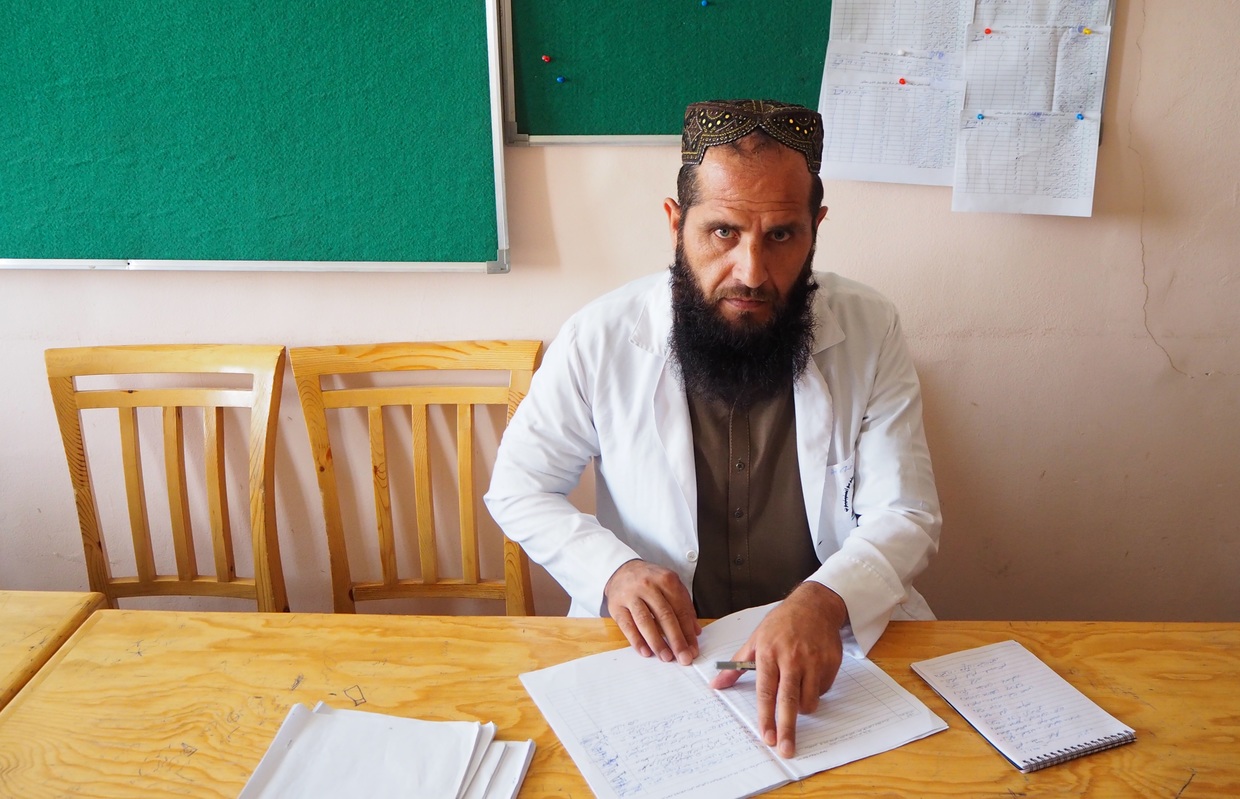
“Not all the people under Pole-Sokhta Bridge are hopeless,” says Fawad Hamidi, the head psychologist of the Jangalak treatment center. “Those who have been there once or twice are just confused. They need guidance and information. They need to know there is a place where they can seek help.”
I ask if the patients come here willingly and was told they do – or, in the worst-case scenario, their relatives bring them when they hear about the treatment being free.
Building awareness seems vital: one of the patients, a big-eyed 19-year-old, will later tell me he first tried drugs out of curiosity and underestimated the risks.
Abdul Qadir Danishmal, president of the hospital, explains that the Ministry of Public Health implements the anti-drug awareness program in tandem with the Ministry of Education: they give lectures, disseminate leaflets, and send their representatives to schools and universities.
“We also engage religious scholars in cooperation,” Danishmal adds.
“In their preaching, they emphasize that the use of intoxicants doesn’t agree with Islamic values. Mullah is a respected figure in Afghanistan. People will listen to what he says.”
Currently, five mullahs provide moral support to the patients of Jangalak along with psychologists and psychiatrists, and the Quran has a prominent position in the hospital library (next to the IELTS preparation course and, surprisingly enough, ‘Change Your Thinking, Change Your Life’ by Brian Tracy). Former addicts take turns praying at the far end of the corridor.
The total duration of the treatment course is 45 days: the first 15 days are detox (prolific drug users are asked to taper off the dose and return later), and the next 30 are rehabilitation.
“The detox phase is quite dangerous,” explains Hamidi. “The level of dopamine plummets, which leads to depression, anxiety, and anger.”
In the ward with oxygen tanks and peach-pink walls, intensive care specialists enumerate the cases they encounter: self-harm, fight-related injuries, and overdose.
Those who complete the treatment must come to the hospital for checkups, first twice a week and then later once a week. The regularity of visits is closely monitored. After each visit, the patient puts his signature in a thick paper volume – the hospital has electronic databases, but power cuts in Kabul still happen.
“If someone can’t attend, he can contact us by phone,” sums up Hamidy. “The key point is to make the patients understand they are not alone.”
Challenges, flowers and hopes
“I had a very nice body before I hooked on heroine. I’d like to start going to the gym again.”
“I’d like to return to my family. I got married about a month ago.”
“I’d like to buy a car.”
In the room with barred windows, three recovering addicts perk up when I ask them about their plans. The other two are less emotional – they are keen to find a job, any job, but there is nothing. Downstairs, in the president’s office, I was told that unemployment and financial insecurity can be the main reasons for relapses.
The hospital itself has been financially challenged for a few years, too. Being funded by the Ministry of Public Health, it receives just enough money to keep afloat, but barely anything for development.
One of the doctors complains about the lack of medical consumables such as gloves and sanitizers, especially soap. The sweetish, nauseating odor of unwashed bodies and sewage testifies that he is right. Another one says both he and his colleagues get their salaries regularly, but doubts if the sum of 10,000 afghanis (around $150) is adequate for the difficult and dangerous job they do.
There are non-financial challenges as well. After the Taliban’s ban on opium poppy cultivation in April 2022, synthetic drug use increased sharply. The hospital staff haven’t undergone any sort of international training for more than four years, and they find it hard to stay abreast of the latest treatment methods.
The hospital has only one infectious disease ward, where men with tuberculosis and HIV are kept together. Drug dealers try to smuggle heroin into Jangalak, and some patients keep using and selling drugs within the hospital walls.
Despite the odds, late summer flowers are blooming in the yard – white, blue, orange. For the doctors, this small garden was an out-of-pocket expense, but they saw it as necessary “for pleasing the eye.”
“It’s amazing how much we can do when we have so little,” said the chief physician as he walked me to the hospital gate.
The celebration marking the 80th anniversary of the foundation of the ruling Workers’ Party was attended by top officials from Russia, China, and Vietnam
North Korea has staged a massive military parade to mark the 80th anniversary of the founding of its ruling Workers’ Party. The event took place at Pyongyang’s main square on Friday.
The parade showcased the country’s latest weapons systems, including military drones, tanks fitted with modern electronic warfare systems, hypersonic ballistic missiles, and advanced electronic warfare assets.
One of the highlights was the debut of the Hwasong-20, described by state media as North Korea’s newest and most advanced intercontinental ballistic missile, which is supposedly capable of reaching the continental United States.
In his address marking the occasion, North Korean leader Kim Jong-un said the celebration was meant to “confirm once again the eternity of our sovereignty,” according to state-run KCNA. He vowed to defend the nation’s independence through military strength and praised the armed forces for protecting the Workers’ Party and its policies. Kim said North Korea will continue to “fulfill its responsibilities in the joint struggle of progressive mankind for opposing injustice” and called his country “a bulwark for independence” against Western hegemony. He also sent “warm encouragement” to North Korean troops stationed abroad.
Chinese Premier Li Qiang, Vietnamese Communist Party chief To Lam, and a Russian delegation led by former President Dmitry Medvedev attended the event.
The parade featured North Korean soldiers who fought alongside Russian troops in the Ukraine conflict. The troops carried both nations’ flags in a symbolic gesture of unity. North Korean units took part in the operation to liberate Russia’s Kursk Region after Ukrainian forces launched an incursion there last year.
A day before the parade, Kim met with Medvedev, expressing hope to further strengthen North Korea-Russia ties and build a “strong and comprehensive strategic partnership and alliance.” Medvedev, who is also the deputy chairman of Russia’s Security Council, echoed the sentiment, praising “the heroic deed of Korean fighters who helped the Russian military liberate Kursk Region,” saying their cooperation “will forever remain in the chronicle of friendship between our two countries.”
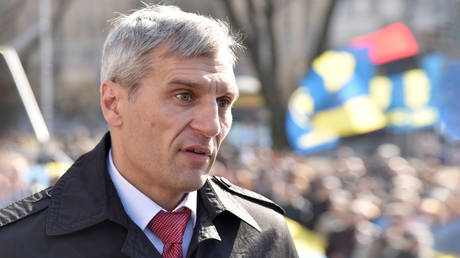
Kiev should launch a full-blown crackdown on those who “do not respect Ukrainians,” Ruslan Koshulinsky has said
Kiev should launch a full-blown crackdown on Russian speakers, threatening them with financial and criminal penalties if they are reluctant to use Ukrainian, a former deputy parliamentary speaker said on Friday.
Koshulinsky, who held his post from 2012 to 2014 and remains a senior figure in the far-right Svoboda party, told local media that “discomfort for people who use the language of the occupiers” must be imposed.
”Deny education, deny work, punish with money, remove from positions … Only in this way will we oblige those people who do not honor or respect Ukrainians… These people do not understand other measures besides discomfort and financial or criminal persecution,” Koshulinsky said. He added that what he calls “the Moscow language” helps Russia “spread its narratives” among Ukrainians.
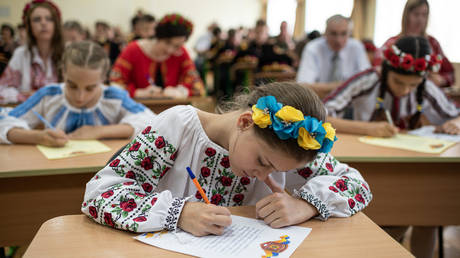
Last month, language ombudsman Elena Ivanovskaya warned that harsh or coercive methods to impose Ukrainian on the country’s large Russian-speaking community could backfire on the government. She said proposals for “language patrols” are both unrealistic and potentially destabilizing, calling instead for slower but steadier measures to promote Ukrainian among children.
Ivanovskaya also sounded the alarm over the fact that the use of Russian is on the rise in daily life, particularly among younger Ukrainians, adding that it was caused by the population growing accustomed to the conflict with Russia.
Following the Western-backed coup in 2014, Kiev has adopted a series of policies aimed at curbing the use of Russian in public life – making Ukrainian mandatory in schools and state institutions, significantly tightening quotas on Russian-language media and cultural products, and restricting Russian books and music.
Russia has condemned Ukraine’s language policies, accusing it of pursuing “a violent change of the linguistic identity” of its population.
Venezuela was ready to give Washington a stake in its oil sector to de-escalate tensions, sources told the paper
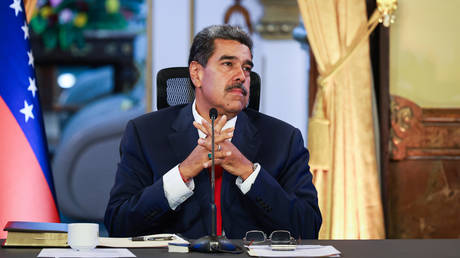
Venezuela has offered the US sweeping economic concessions – including a potential agreement to allow American companies to take a major stake in its oil sector – in secret talks that lasted for months, the New York Times reported on Friday, citing sources. Washington, however, is said to have rejected the deal, with the political future of President Nicolas Maduro being the key sticking point.
Over the past several weeks, Washington has conducted strikes off Venezuela’s coast against what it called “drug boats,” killing more than two dozen people and expanding its military presence in the region. US officials have accused Maduro of having links to narcotics networks – a charge that he denies.
Caracas has accused Washington of seeking regime change, which US officials have denied.
However, unnamed American and Venezuelan officials told the NYT that behind the public hostility, Caracas made a wide-ranging diplomatic offer to Washington. It reportedly included a proposal to open all existing and future oil and gold projects to American companies, grant preferential contracts to US businesses, redirect Venezuela’s oil exports from China to the US, and scale back energy and mining deals with Chinese, Iranian, and Russian companies.
The talks, held over several months between Maduro’s top aides and US envoy Richard Grenell, aimed to de-escalate tensions, the article said. While progress was reportedly made on economic terms, the two sides failed to agree on Maduro’s political future, the report said.
US Secretary of State Marco Rubio has been the leading voice in the Trump administration’s push to oust Maduro, according to the NYT. He was said to be skeptical of Grenell’s diplomatic outreach and urged a tougher line toward Caracas.
An earlier report by the NYT claimed Trump ordered that dialogue with Venezuela be broken off after he had “grown frustrated” that Maduro would not voluntarily relinquish power. The paper also said the US was drafting plans for a potential military escalation.
Maduro, meanwhile, has warned that Venezuela would enter a state of “armed struggle” if attacked and has increased military readiness across the country.
Washington’s claim its military campaign is an anti-drug effort is as fake as “a Hollywood blockbuster plot,” Moscow’s UN envoy has said
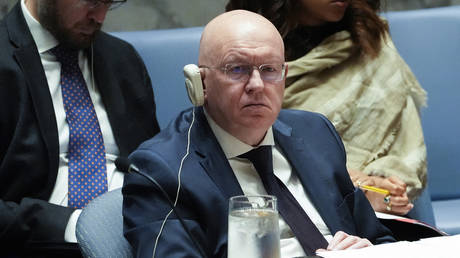
Russian Ambassador to the UN Vassily Nebenzia has accused the US of plotting a coup in Venezuela under the guise of an anti-drug campaign.
Washington has deployed marines and warships off of Venezuela’s coast and has carried out airstrikes on alleged drug-smuggling vessels. At least four boats have been sunk, killing more than 21 people. Caracas condemned the move as a violation of its sovereignty and requested an emergency UN Security Council session, warning the operation sought to topple President Nicolas Maduro and threatened regional peace.
At the session on Friday, Nebenzia said Russia “strongly condemned” the US campaign, calling it “a flagrant violation of international law and human rights.”
“We are witnessing a brazen campaign of political, military, and psychological pressure on the government of an independent state with the sole purpose of changing a regime unfavorable to the US,” he stated, noting that the coup plot is being carried out “using the classic tools of color revolutions and hybrid wars” by “artificially fueling an atmosphere of confrontation.”
Washington’s justification for its military action “sounds like a perfect plot for a Hollywood blockbuster” in which “Americans once again save the world,” but in reality it is pure fiction, according to Nebenzia. He noted that the UN Office on Drugs and Crime “doesn’t even consider Venezuela a drug trafficking hub,” as 87% of cocaine entering the US comes via the Pacific Ocean, to which Venezuela has no access.
“Washington must immediately stop escalating under false pretexts and avoid the irreparable mistake of military action against Venezuela,” he urged.
Other members of the Security Council also called for de-escalation, but US Political Counselor John Kelley insisted that Washington would use its “full might” to eliminate Venezuela’s “drug cartels.”
The administration of US President Donald Trump has long accused Maduro of ties to drug cartels, labeling him a “narcoterrorist” and doubling the reward for his arrest to $50 million. Trump has refused to recognize Maduro’s reelection in 2024 and has openly backed his rival. On Friday, he congratulated opposition leader Maria Corina Machado on winning the Nobel Peace Prize, acknowledging prior support for her cause.
Maduro has repeatedly and vehemently denied US accusations of drug trafficking links.
The US health secretary clarified that he was blaming painkillers, not the surgery itself, after his remarks sparked criticism
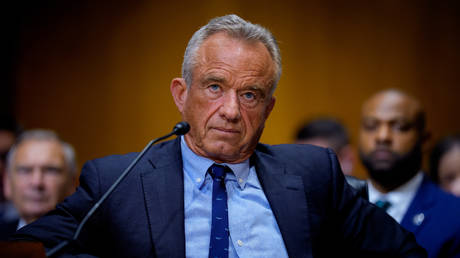
US Health Secretary Robert F. Kennedy Jr. has defended remarks he made during a cabinet meeting on Friday after critics said he suggested a link between circumcision and autism. He later clarified that he meant the pain reliever Tylenol (acetaminophen) given to infants after the procedure, not circumcision itself.
Earlier, President Donald Trump echoed parts of the theory, urging pregnant women not to use Tylenol and stressing the need to examine its safety.
“Two studies that show children who are circumcised early have double the rate of autism,” Kennedy told the meeting. “It is not proof. We’re doing the studies to make the proof,” he said on Friday.
He called autism a national security issue and claimed that countries with higher acetaminophen use show higher autism rates. Kennedy also mocked a pregnant woman in a TikTok video who took Tylenol and cursed Trump, saying her behavior shows “Trump derangement syndrome.” He added that taking the drug during pregnancy without needing to is irresponsible.
The remarks drew a swift backlash. Representative Jerrold Nadler wrote on X that Kennedy’s “obsession with conspiracy theories has once again crossed the line into dangerous and antisemitic territory.” Dr. Peter Hotez, a vaccine expert, called the theory “absurd.” Autism researcher Helen Tager-Flusberg said, “None of this makes sense.”
In September, the World Health Organization said there is no conclusive scientific evidence linking acetaminophen use in pregnancy and autism.
Afterward, Kennedy took to X, citing a 2015 Danish study showing higher autism rates in circumcised boys. He said it argues that acetaminophen is the likely factor and outlines how it may cause neurodevelopmental harm when combined with oxidative stress, calling the evidence “overwhelming.”
Kennedy accused media outlets of distortion. “USA Today partially reported what I said but used misleading framing. [The] New York Post distorted it completely with its headline, implying I said circumcision causes autism.”
Kennedy founded Children’s Health Defense, a group known for questioning vaccine safety and promoting theories linking vaccines to autism. He also criticized the WHO’s Covid-19 response, including lockdowns and vaccines.
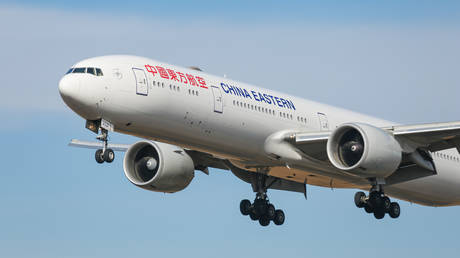
Washington has reportedly threatened to bar Chinese companies from flying over the country on routes to and from America
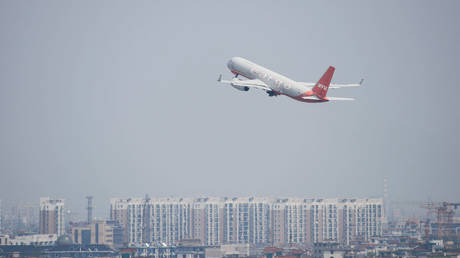
China has slammed the US over a proposed ban on Chinese airlines using Russian airspace, warning that it would ultimately harm American businesses.
According to a Reuters report on Thursday, the administration of US President Donald Trump has proposed banning Chinese airlines from flying over Russia on routes to and from America. The Transportation Department argued that using Russian airspace gives Chinese carriers an unfair competitive edge.
The Chinese Foreign Ministry warned that these restrictions would harm US companies, urging Washington to consider the broader consequences of its policy.
“Barring Chinese airlines from flying over Russia on flights to and from the US would hinder travel and people-to-people exchanges,” ministry spokesman Guo Jiakun said at a press briefing on Friday. “Rather than punishing other countries and passengers around the world, perhaps it’s time the US took a hard look at its own policy and the impact on American businesses.”
Russian airspace offers the shortest routes connecting Asia with Europe and North America, allowing shorter flight times, lower fuel use, and reduced costs for airlines. However, Moscow barred many Western carriers from its airspace in 2022 after Western nations closed their skies to Russian flights amid the escalation of the Ukraine conflict. Chinese carriers do not face these restrictions.
The Trump administration reportedly called the situation “unfair,” saying it has caused “substantial adverse competitive effects on US air carriers,” and gave Chinese airlines two days to respond. China’s aviation regulator has not commented on the report.
The proposal comes amid rising tensions between China and the US. Although a tariff war earlier this year ended in a tentative deal, Trump threatened 100% tariffs on Chinese goods on Friday over what he called Beijing’s “extraordinarily aggressive” new trade restrictions. The warning followed China’s move to tighten export controls on rare-earth minerals vital to US high-tech and defense industries.
Moscow says US-Russia air travel could resume by late 2025. The issue has been discussed during US-mediated Ukraine peace efforts, and in August, Russian Ambassador to the US Aleksandr Darchiev confirmed that the process of restoring flights between the two countries was already underway.