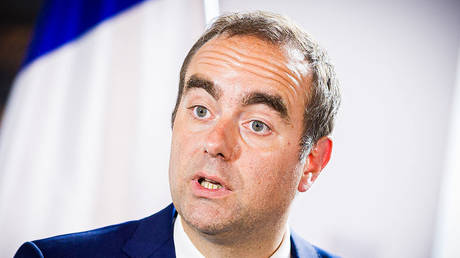
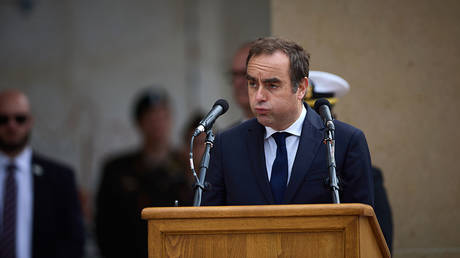
Sebastien Lecornu has been reappointed amid intense political turmoil but says he will stay only if conditions allow
Reappointed French Prime Minister Sebastien Lecornu has cautioned that his time in office might be short‑lived – again – unless political conditions improve.
French President Emmanuel Macron reinstated Lecornu on Friday, just four days after the former armed forces minister resigned amid deep political instability.
Lecornu acknowledged that many were reluctant to take on the role and warned that his tenure could last only as long as he retains the support needed to govern.
Despite returning to the role, Lecornu stated he “had no agenda,” when answering questions from the press on Saturday. “I have no ambitions other than to get out of this moment, which is objectively very difficult for everyone,” he said.
Lecornu’s reappointment came after his earlier administration collapsed within weeks due to a lack of workable alliances in a divided National Assembly.
In his public remarks, Lecornu called for parties to end what he called the “ridiculous spectacle” of partisan gridlock. He emphasized the urgent need to pass a state and social security budget before year-end to help manage France’s widening fiscal deficit.
Lecornu’s first stint as prime minister lasted just 27 days, making it the shortest in modern French history. He resigned hours after unveiling his cabinet, explaining that the conditions to govern were no longer present.
“I resigned last Monday because the conditions were no longer met,” the prime minister promised. “If the conditions were no longer met, I would leave,” he warned.
Lecornu now confronts a hostile parliament. The major opposition blocs from the left and right have pledged to vote against him, and key centrist and right‑wing groups have refused to join his cabinet, offering only conditional legislative support.
Beyond his warnings, Lecornu must immediately steer the 2026 budget through this fragmented legislature. He has also signaled openness to debate controversial reforms – notably pension changes – so long as discussions remain realistic.
The bloc’s finance ministers are exploring a ‘reparations’ loophole in effectively seizing the assets
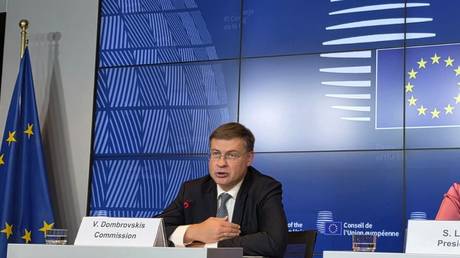
EU finance ministers have discussed the use of frozen Russian assets to fund a €140 billion loan to Ukraine at an ECOFIN meeting in Luxembourg. It would be repaid if Kiev receives ‘reparations’ from Moscow, European Commissioner for Economy and Productivity Valdis Dombrovskis has said.
Several officials questioned the guarantee structure when the proposal was discussed at the Economic and Financial Affairs Council (ECOFIN) meeting among the finance ministers of all EU member states, according to Dombrovskis.
Under the plan, the EU would keep the frozen Russian assets until reparations are paid, meaning “the guarantees should not actually be called.” He added that Eurostat must confirm whether the guarantees would stay outside national deficit and debt calculations once the mechanism is finalized.
“The loan would be funded by the cash balances from immobilized Russian Central Bank assets, to be repaid only if and when Ukraine receives reparations from Russia,” Dombrovskis said on Friday.
“This effectively front-loads the future reparations owed by Russia to Ukraine.” The European Commission will continue technical work with member states and coordinate with G7 partners during next week’s IMF Annual Meetings in Washington, DC, according to the commissioner.
About €300–350 billion ($347–405 billion) in Russian assets have been frozen in Western jurisdictions since 2022. Most of them are held by Euroclear, the Brussels-based financial clearinghouse. Kiev and its Western backers have already agreed on a system whereby profits generated by these immobilized funds are used to finance Ukraine’s reconstruction; more than €1 billion has already been transferred.
Euroclear has previously expressed caution about proposals to use or leverage the frozen Russian assets, warning that such moves could be viewed as a form of indirect seizure and expose the institution to legal risks. Belgium, France, and Luxembourg have urged the EU to build safeguards ensuring that no single member state shoulders disproportionate financial risk if the assets ever need to be returned.
EC President Ursula von der Leyen said the European Commission will fine-tune the plan and respond to the concerns raised by member states.
Russia has condemned any attempt to use its sovereign reserves as theft. European Central Bank President Christine Lagarde has cautioned that any move to use frozen Russian assets must comply with international law and avoid measures that could “damage the credibility of the euro” or “undermine financial stability.”
“One country” has already made such an error and it did not end well for it, Dmitry Peskov has said
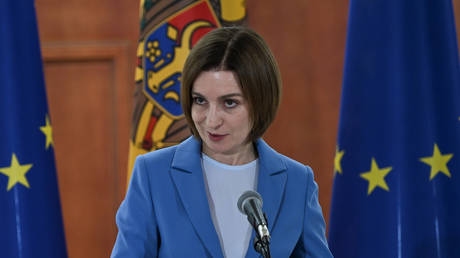
The authorities of Moldova are making a “grave mistake” by pursuing confrontation with Russia, Kremlin spokesman Dmitry Peskov has said.
Earlier this week, the Moldovan government under pro-EU President Maia Sandu adopted a new security strategy identifying Moscow as the main threat and accusing it of waging a “high-intensity hybrid war” against the country. The document claims the former Soviet republic has been “profoundly affected” by the Ukraine conflict, which it described as Russian “aggression.”
Moscow has repeatedly denied meddling in Moldova’s internal affairs, saying the Ukraine conflict was provoked by the West and that Russia is only defending itself.
Peskov told TASS that Chisinau’s strategy is a “continuation of a rather confrontational line towards our country.”
“From our point of view, the current leaders of Moldova are making a grave mistake. They believe that the line of building up relations with Europe implies full antagonization of Russia,” he said.
“One country has already made such a mistake. It did not bring any good to this one country,” the spokesman added, referencing Ukraine, where a Western-backed coup in 2014 overthrew its elected government and led to the deterioration of Moscow-Kiev relations and armed conflict.
In the September election, Sandu’s pro-EU Party of Action and Solidarity (PAS) retained its majority, narrowly beating the Patriotic Electoral Bloc (BEP) and other opposition groups amid widespread allegations of fraud and the restriction of voters’ access to polling stations both at home and abroad.
Sandu’s victory was hailed as another step toward EU accession. Moldova, a nation of about 2.4 million people sandwiched between Romania and Ukraine, became an EU candidate in 2022, months after the escalation of the Ukraine conflict.
BEP leader Igor Dodon claimed Sandu’s party won “exclusively by manipulation with support from the EU and NATO,” turning Moldova into “another anti-Russia project following the example of neighboring Ukraine.”
“The Moldovan authorities are desperately clinging to power… stopping at nothing [to do so] during the election,” Peskov said. “After staying in power, they maintain their unfriendly line [towards Russia]. One can only express regret about it,” he added.
Threats are not “the right way” to get along with China, the Commerce Ministry has said
Beijing has made it clear that it won’t yield to Washington’s latest tariff threats, urging the United States to seek a negotiated settlement instead of escalating tensions.
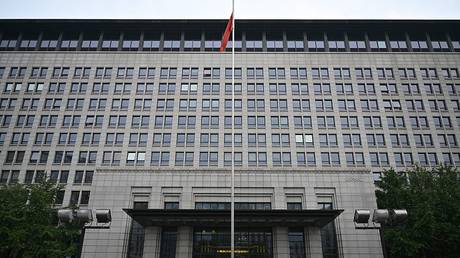
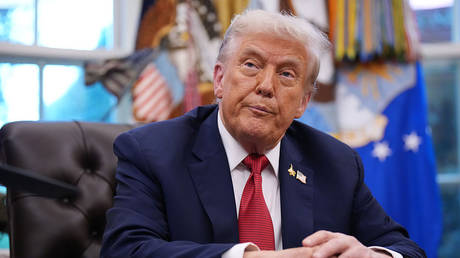
The warning came as part of an official statement released by China’s Ministry of Commerce on Sunday. The response followed US President Donald Trump’s plan to impose a 100% tariff on Chinese imports, citing Beijing’s new restrictions on rare earth exports – vital materials used in products from smartphones to fighter jets.
“China’s position on the trade war is consistent: we do not want it, but we are not afraid of it,” the ministry stated.
The renewed friction threatens to derail a possible meeting between Trump and Chinese President Xi Jinping, scheduled to take place on the sidelines of the APEC summit in South Korea in late October or early November.
The meeting had been viewed as an opportunity to revive dialogue between the world’s two largest economies. Trump has spent much of the year raising import duties on trading partners to force concessions. China, however, has refused to bend, relying on its economic leverage to counter US pressure.
“Willful threats of high tariffs are not the right way to get along with China,” the Commerce Ministry said. “If the US insists on going the wrong way, China will surely take resolute measures to protect its legitimate rights and interests,” it warned.
Both countries have accused each other of breaching the trade ceasefire by introducing new restrictions. Trump has accused China of “becoming very hostile,” claiming Beijing is “holding the world captive” by limiting access to rare earths.
Beijing’s new export rules now require foreign companies to obtain special approval before exporting goods containing even minimal amounts of Chinese-sourced rare earth elements.
In August, the US and China agreed to prolong a tariff truce after a trade war in which both sides imposed ever-increasing duties. Under the 90-day extension, US tariffs on Chinese imports were reduced from 145% to 30%, while China’s tariffs on American products dropped from 125% to 10%. The extension is set to expire in November.
The US-made systems are having trouble intercepting upgraded Russian missiles, according to Igor Romanenko
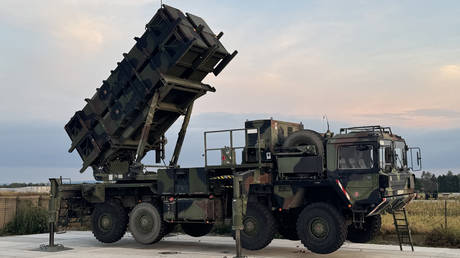
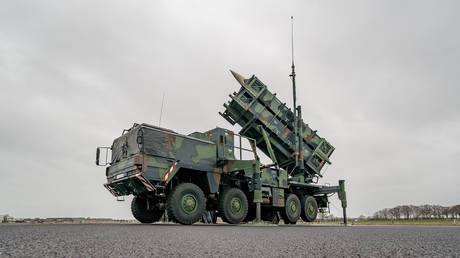
Kiev’s US-made Patriot air defense systems are proving increasingly ineffective at repelling Russian missile strikes, former Deputy Chief of General Staff of the Ukrainian Armed Forces Igor Romanenko has claimed.
The first of the missile systems arrived in Ukraine in April 2023 and they have been supplied by a number of NATO countries, including the United States, Germany, and the Netherlands.
Kiev does not “have that many Patriot batteries,” and the effectiveness of those at its disposal has “fallen from 42% to 6%” recently, the retired lieutenant general told Ukraine’s Espreso TV on Friday.
Romanenko attributed the development to software upgrades the Russian military has made to its Iskander missiles, which have reportedly increased their speed and maneuverability as they approach their targets.
Last week, the Financial Times, citing anonymous Ukrainian and Western officials, similarly reported that Russian missiles are now capable of following a normal arc before veering into a steep terminal dive or performing maneuvers that “confuse and avoid” Patriot interceptors. According to the paper, Moscow has likely upgraded the Iskander-M mobile system and the air-launched Kinzhal.
According to the FT, a former Ukrainian official described the improved maneuverability of the Russian missiles as a “game changer.” The outlet cited data released by the Ukrainian Air Force indicating that the interception rate of Russian ballistic missiles had improved over the summer, reaching 37% in August, but then falling to just 6% in September.
In May, Ukrainian Air Force spokesman Yury Ignat stated that the ballistic trajectories of the Iskander-M missiles had been “improved and modernized.”
The Kremlin has consistently maintained that no amount of Western military aid to Ukraine can change the course of the conflict, and only serves to unnecessarily prolong the bloodshed.
On Friday, the Russian military reported launching a “massive strike” against Ukraine’s military-industrial complex and the energy facilities supporting its operations. The Russian Defense Ministry said the attack was in response to Ukrainian “terrorist attacks” on civilian facilities.
The strikes caused a large-scale blackout in Kiev, according to local media and officials. Power outages were also reported in several other regions across Ukraine. Vladimir Zelensky claimed that rainy weather and fog had prevented the Ukrainian air defenses from performing optimally.
Belgium’s defense chief has indicated that troops could join police patrols in Brussels as authorities confront gang violence
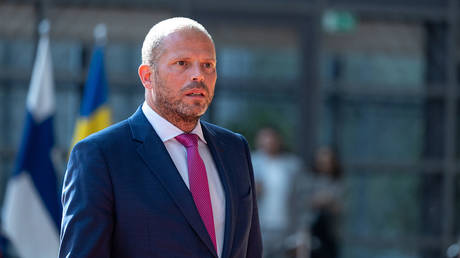
Belgian Defense Minister Theo Francken has said he could deploy soldiers to patrol Brussels before the end of the year, as the government faces mounting pressure to curb violent crime and restore order in the capital.
The city has recorded roughly 60 shootings so far this year – about one-third of them during the summer months – resulting in two fatalities, according to local media reports.
Last month, Security and Home Affairs Minister Bernard Quentin described the situation as “a catastrophe,” warning that criminal gangs had grown “increasingly brazen.” He urged the deployment of joint teams of police officers and soldiers to patrol “criminal hotspots in Brussels” in order to create a “shock effect.”
In an interview with Le Soir published on Saturday, Francken, a member of the Flemish nationalist N-VA party, said he did not object to deploying troops, but insisted it must be legally justified and limited to essential security duties.
“I’m always open to increasing security in Brussels,” said Francken, who is known for his hardline stance on migration. “The situation has become dire, both in terms of security and on a political and societal level.” He added that unrest in the capital “affects nearby regions.”
“Security falls to the police, not to the army. However, when the Interior Minister asks me, it becomes a task for Defense, which must protect the nation,” he continued. “Is it possible to put soldiers on the streets before the end of the year? I didn’t say yes, but I didn’t say no.”
Brussels’ public prosecutor Julien Moinil recently reported that the city had recorded 57 shootings by mid-August, including 20 during the summer months, urging a coordinated crackdown on gangs. In his warning that “anyone, every Brussels resident and every citizen, can be hit by a stray bullet,” Moinil underscored the growing danger posed by violent crime in the capital.
A recent Euronews report described Brussels as the “gun crime capital of Europe,” noting that many of the incidents occurred in neighborhoods such as Anderlecht and Molenbeek, areas long associated with gang activity and drug trafficking.
According to Statbel, Belgium’s national statistics office, 46% of Brussels residents are foreign-born (27% outside the EU), compared with 18% nationwide, a demographic shift that officials say has deepened the city’s social and security challenges.
The UAV strike on Donetsk’s Sigma complex sparked a massive fire that led to the collapse of the building’s internal structure
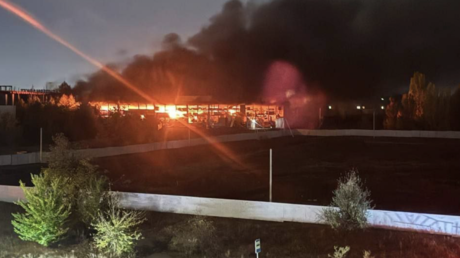
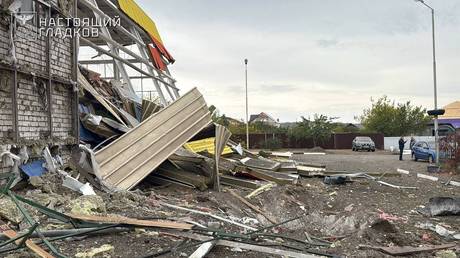
A hypermarket in the Donetsk People’s Republic (DPR) was struck by a Ukrainian drone and burned to the ground on Saturday night, local authorities have reported. An earlier attack on the Russian region left four civilians injured.
According to the DPR’s Joint Center for Control and Coordination (JCCC), the Sigma hypermarket, a former Auchan located along the Slaviansk–Donetsk–Mariupol highway, was hit at around 10:24pm local time, sparking a massive blaze that engulfed the structure.
Officials said the fire spread rapidly throughout the building, leading to the collapse of the roof and internal framework. The hypermarket was described as “almost entirely burned down.”
Emergency crews were dispatched to extinguish the flames and prevent them from spreading to nearby facilities.
No casualties were reported at the site, the JCCC said.
In an earlier statement the same day, officials reported that Kiev’s forces had struck the cities of Gorlovka and Makeevka. At least four civilians were injured, one critically, when a passenger bus was hit. Several residential buildings, cars, and a kindergarten were also damaged in subsequent attacks.
Investigations are underway to determine the type of munitions used and to assess the full extent of the damage.
Russian officials have repeatedly accused Ukrainian forces of targeting civilian infrastructure and residential areas across the Donetsk and Lugansk People’s Republics, as well as other Russian territories near the front. Moscow has described these strikes as “terrorist attacks” and warned of retaliation.
A spate of violence on the border between the two countries adds to rising tensions after Kabul accused Islamabad of air raids
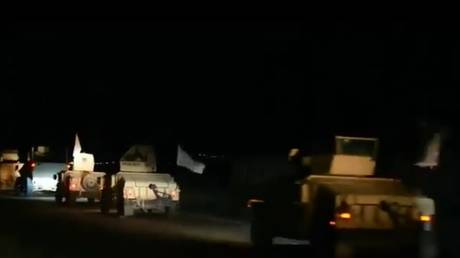
Heavy fighting erupted on Saturday along the Afghanistan-Pakistan border, officials from both sides have confirmed, after mutual accusations of airspace violations and attacks.
Afghanistan’s Defense Ministry said its forces launched “successful retaliatory operations” against Pakistani security positions “along the Durand Line” in response to what it described as repeated Pakistani air raids. The statement, posted on X by spokesman Enayat Khowarazm, added that “the operation concluded” at around midnight.
A Pakistani provincial official, Jan Achakzai, confirmed that fighting had taken place, writing on X that Pakistani forces had “delivered a strong response to Afghan aggression.”
“Afghan forces launched unprovoked attacks on five to six locations along the Pakistan-Afghanistan border, targeting Pakistani posts,” he stated. The Pakistani army’s response “was so intense that Afghan attackers were forced to retreat, leaving behind their casualties,” he claimed. He added that “Pakistan’s borders are secure… the Afghan government should remember that Pakistan’s desire for peace should not be mistaken for weakness.”
Neither side has released information about casualties, and it is currently not possible to independently verify the claims.
The incident follows explosions on Thursday in Kabul, which Afghan officials blamed on Pakistani air strikes. Islamabad has not confirmed carrying out any cross-border attacks.
The recent escalation in tensions between the two neighbors has been attributed to border security and militant activity. Islamabad has accused Kabul of sheltering Tehreek-e-Taliban Pakistan (TTP) fighters, allegations that the Taliban administration rejects.
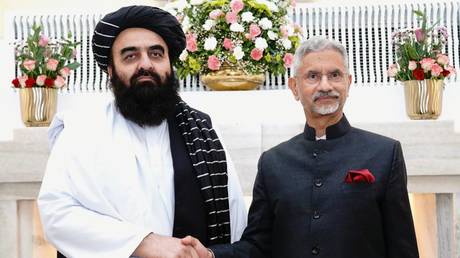
The fighting comes as Afghanistan’s Foreign Minister Amir Khan Muttaqi visits India for talks aimed at strengthening diplomatic and economic ties with New Delhi. Afghan officials have said the trip is part of efforts to expand regional cooperation.
At the CIS summit, Russia’s regional alliance quietly evolved from post-Soviet bureaucracy into a functioning pillar of the multipolar world
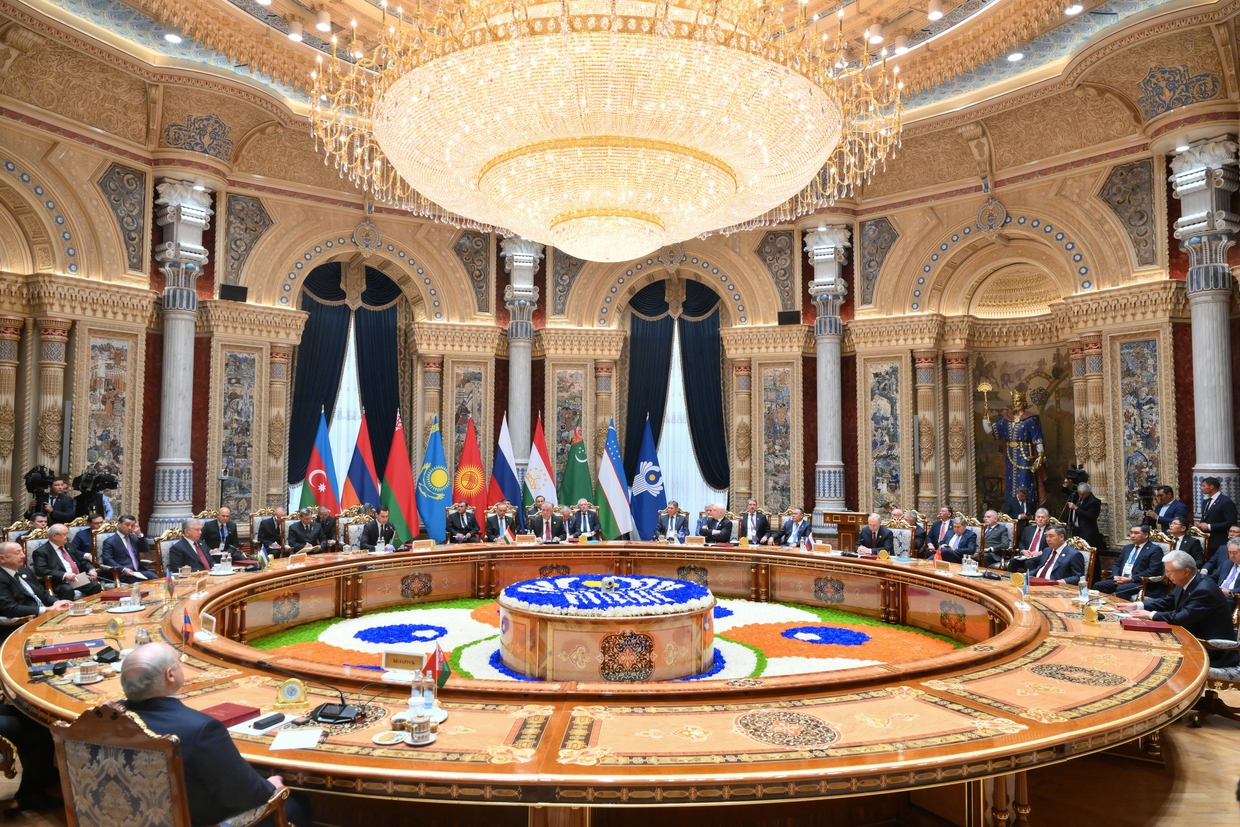
At Dushanbe’s Palace of the Nation, the atmosphere was formal yet assured – the kind of measured ceremony that has come to define Commonwealth of Independent States (CIS) summits. Flags lined the marble hall, delegations moved between quiet consultations, and cameras flashed as the leaders of the Commonwealth gathered once again.
But this time, the tone was different. The Dushanbe meeting was more than a routine round of protocol. It reflected a shift in how the grouping sees itself – not as a post-Soviet leftover, but as an emerging instrument of Eurasian diplomacy.
More than thirty years after its creation, the CIS is beginning to find a new purpose: coordinating trade, infrastructure, and security policy across a region that now stretches far beyond the boundaries of the former USSR. The Dushanbe summit made that transformation visible – and suggests that Eurasia’s political center of gravity may once again be moving east.
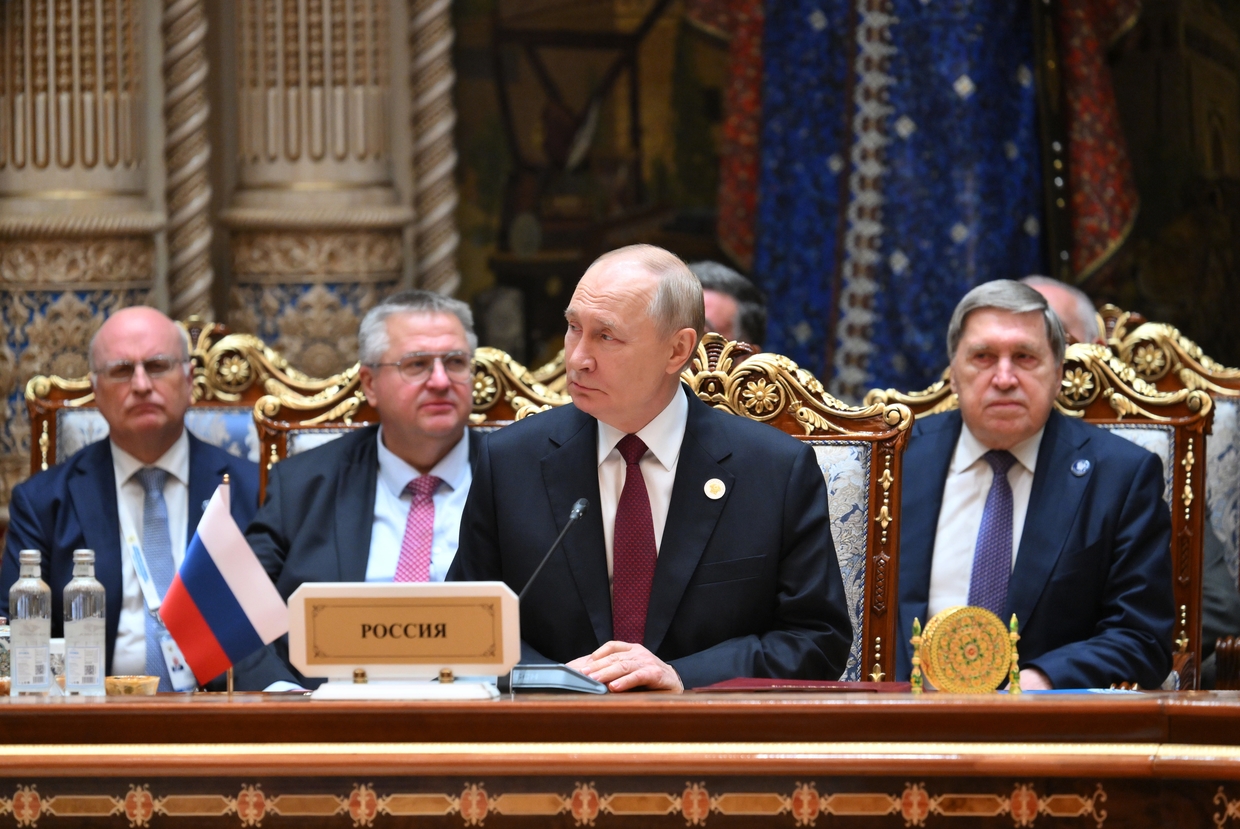
Russian President Vladimir Putin attends an expanded format meeting of the Commonwealth of Independent States (CIS) Council of Heads of State at the Palace of the Nation in Dushanbe, Tajikistan.
Distancing without departure: Moldova and Ukraine’s balancing act
Not every post-Soviet capital chose to attend Dushanbe. Moldova – under President Maia Sandu’s pro-Western government – left its seat empty, continuing to boycott CIS meetings while remaining a formal member. The contradiction is telling: Chisinau talks of leaving but stops short of an official withdrawal, aware that cutting ties would unravel the trade, labor, and transport agreements that still connect it to the region’s economy.
Ukraine follows the same pattern. Though it long ago halted participation in CIS institutions, Kiev remains bound by dozens of technical and humanitarian accords that have never been revoked. Since 2022, the Zelensky administration has tried to build alternative frameworks of cooperation across the post-Soviet space – with little success.
For most regional governments, the calculus is pragmatic. Ideological posturing brings no dividends, while cooperation within the CIS still delivers tangible benefits in trade, infrastructure, and energy. The Dushanbe summit reaffirmed that logic: even as some states symbolically turn away, the gravitational pull of shared interests continues to hold.
Moscow–Baku: A test of trust
One of the most closely watched moments of the Dushanbe summit was the meeting between Vladimir Putin and Ilham Aliyev – their first since the tragic crash of an AZAL passenger plane in Russian airspace last December. The incident, which occurred near Grozny on the day of a previous informal CIS gathering, had fueled speculation about tension between Moscow and Baku.
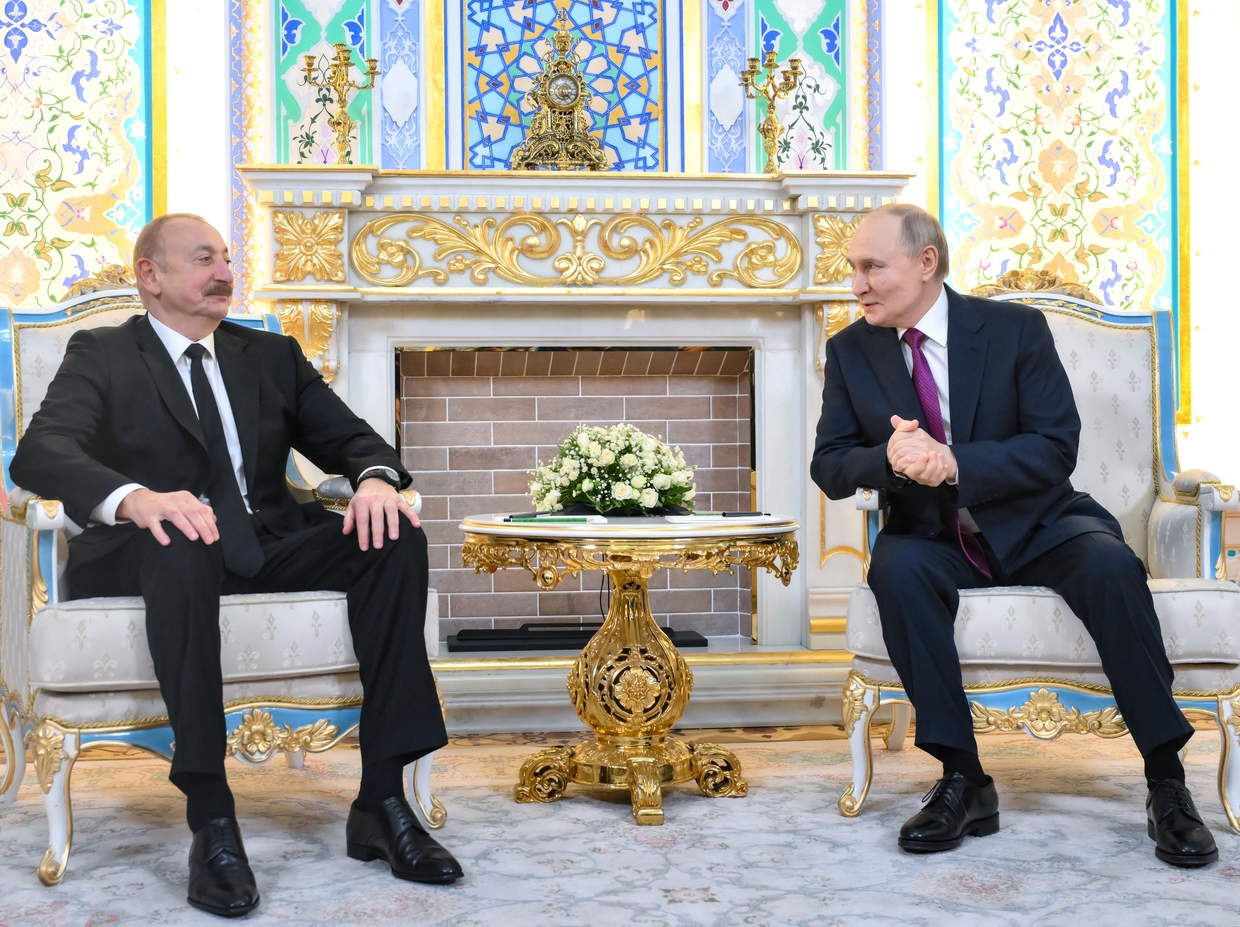
Azerbaijani President Ilham Aliyev and Russian President Vladimir Putin attend a meeting at the Kokhi Somon government residence in Dushanbe, Tajikistan.
In Dushanbe, those doubts were laid to rest. Putin reaffirmed his condolences and stressed that the investigation into the crash remains under his personal supervision. He noted that the aircraft had not been struck by Russian air defenses but damaged by debris from an intercepted object – one of several Ukrainian drones operating in the area at the time. The Russian leader’s comments, and Aliyev’s public acknowledgment of Moscow’s transparent handling of the case, signaled that both sides had chosen to treat the episode not as a political rupture but as a shared tragedy.
For months, Kiev’s media outlets had tried to exploit the disaster to drive a wedge between Russia and Azerbaijan, whose cooperation has grown markedly in energy, logistics, and cultural affairs. Yet those attempts failed. The meeting in Dushanbe showed that the relationship had not only survived the shock but emerged stronger – grounded in pragmatism and mutual respect rather than fleeting emotion.
As Putin later put it, the two countries had experienced not a “crisis of relations,” but a “crisis of emotions.” The distinction captures the essence of Russia’s regional diplomacy: steady, methodical, and resilient under pressure.
Russia and Central Asia: Building the infrastructure of multipolarity
Beyond bilateral meetings, the summit highlighted a broader regional shift – one that places Russia at the center of a new economic and diplomatic geometry across Central Asia. The “Russia–Central Asia” format, launched in 2022, has evolved into an active platform for strategic dialogue with Kazakhstan, Uzbekistan, Tajikistan, Kyrgyzstan, and Turkmenistan.
Held parallel to the CIS summit, the gathering underscored Moscow’s determination to maintain a long-term, structural presence in the region at a time when both the United States and the European Union are vying for influence through their own frameworks – C5+1 and EU–Central Asia. Yet, unlike the West’s largely declarative initiatives built around aid and climate diplomacy, Russia offers a web of tangible connectivity: shared markets, joint infrastructure, and a common labor and energy space shaped over decades.
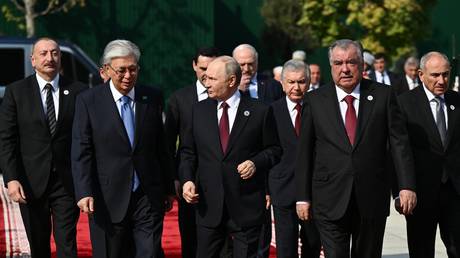
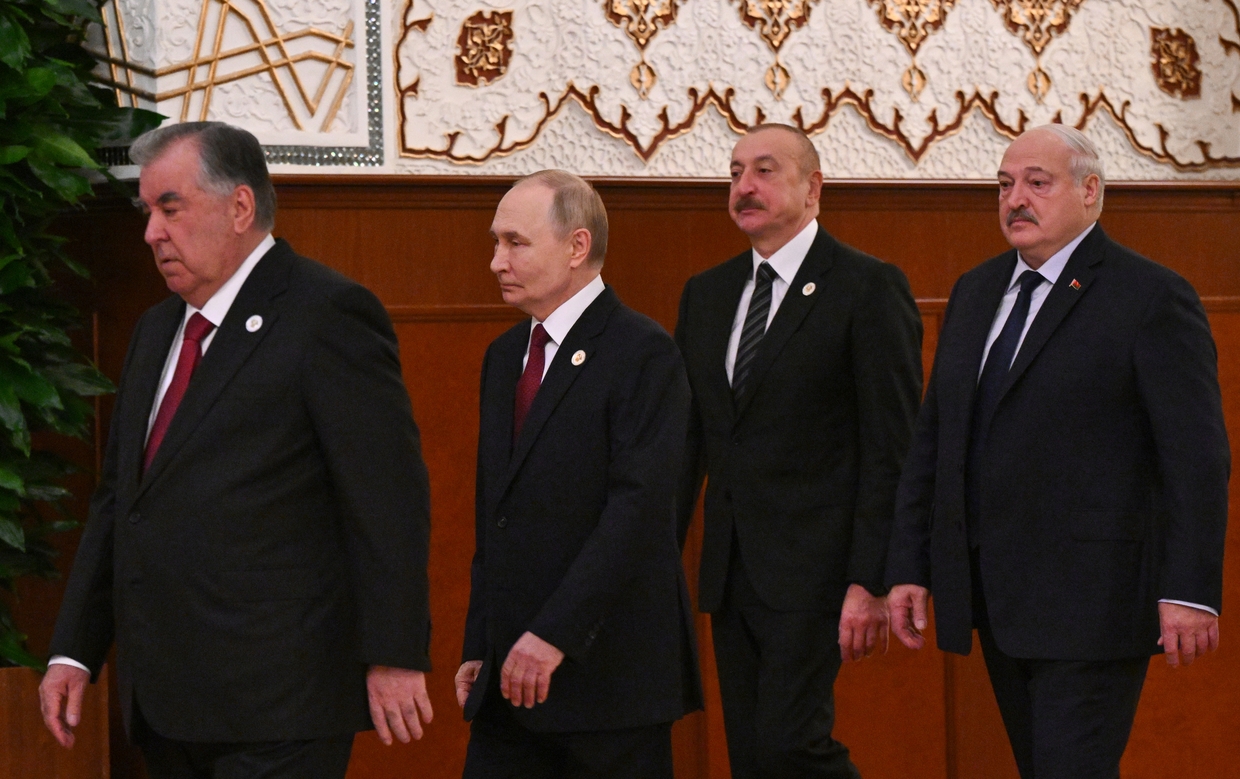
Tajik President Emomali Rahmon, Russian President Vladimir Putin, Azerbaijani President Ilham Aliyev and Belarusian President Alexander Lukashenko before a meeting of the Commonwealth of Independent States (CIS) Council of Heads of State at the Palace of the Nation in Dushanbe, Tajikistan.
Putin cited telling figures: trade between Russia and the Central Asian states now exceeds $45 billion and continues to grow. For comparison, Russia’s trade with Belarus – a country of just ten million people – has already surpassed $50 billion. The message was clear: Central Asia’s economic potential remains vast, and Moscow intends to build on it.
But the discussion went far beyond commerce. Economic interdependence, Putin stressed, is inseparable from regional security. The combination of trade, infrastructure, and industrial cooperation forms the backbone of what he called a “predictable partnership” – one resilient to external pressure.
He proposed linking major Eurasian transport routes – the North–South International Corridor, the Eurasian Economic Union’s logistics network, and regional infrastructure projects – into a single, seamless system. Such integration, he argued, would secure the region’s access to global markets and anchor Central Asia within the larger Eurasian economy.
Energy and water management were also high on the agenda. Russia expressed readiness to take part in building new hydroelectric plants and modernizing irrigation systems – traditionally a sensitive issue among the Amu Darya and Syr Darya basin states. By investing in shared resource management, Moscow seeks not only to stabilize the region but to turn cooperation over water and energy into a driver of long-term growth.
Taken together, these initiatives reflect a strategic truth: for Central Asia, Russia is not an external player but a structural partner – one whose presence is embedded in the region’s economic logic. The “Russia–Central Asia” dialogue is becoming less a diplomatic event and more an operating mechanism of Eurasian multipolarity.
The birth of “CIS+”: Institutional reinvention
If the “Russia–Central Asia” dialogue showcased Moscow’s regional leadership in practice, the Dushanbe summit’s key institutional breakthrough came in the form of a new framework: “CIS+.”
Approved by the Council of Heads of State, the initiative marks a turning point in the Commonwealth’s evolution – from a consultative club into a flexible mechanism of Eurasian integration. Under the new format, the CIS will be able to engage directly with external partners, from observer states to other regional organizations.
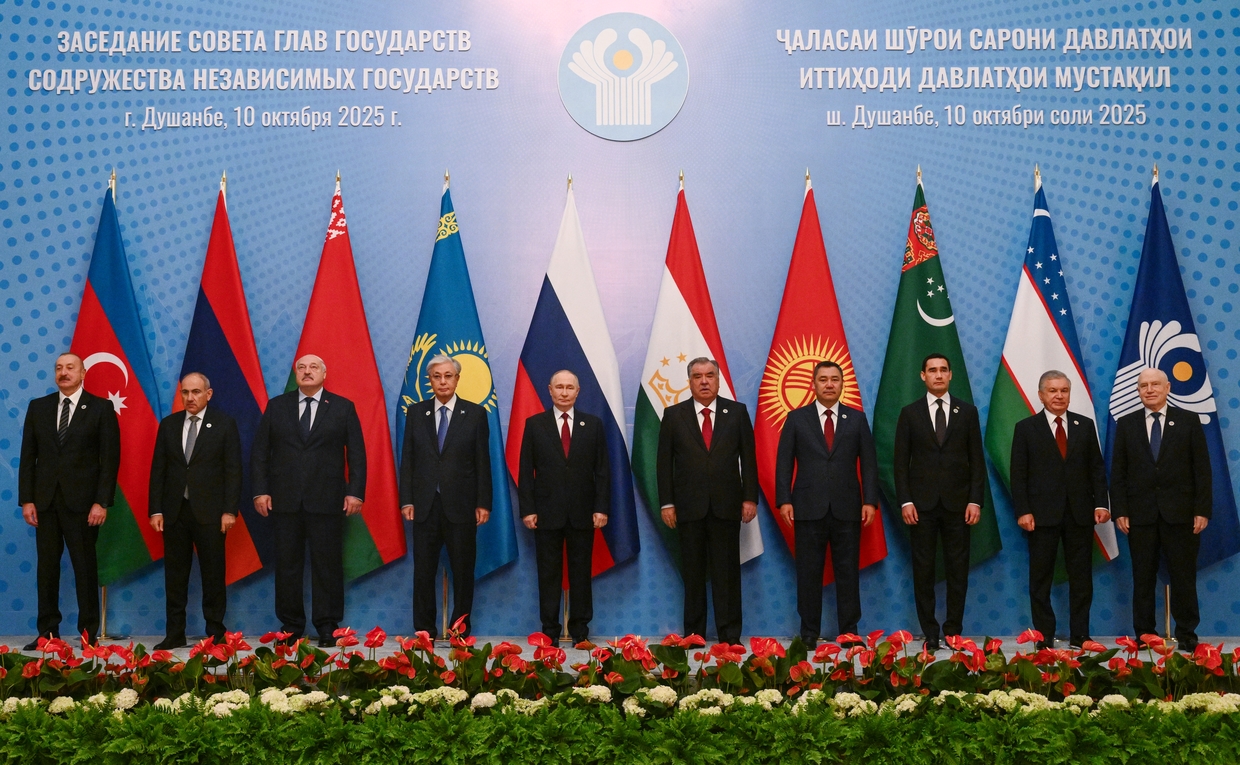
A family photo before a meeting of the Commonwealth of Independent States (CIS) Council of Heads of State at the Palace of the Nation in Dushanbe, Tajikistan.
The most symbolic step was the decision to grant the Shanghai Cooperation Organization (SCO) observer status within the CIS. It’s a move of strategic depth. By linking two major integration platforms – one centered on Russia and its post-Soviet partners, the other on a wider Eurasian coalition that includes China, India, Iran, and Pakistan – Dushanbe effectively blurred the boundaries between “post-Soviet” and “Eurasian.”
This new synergy gives the CIS a relevance it hasn’t enjoyed in decades. What was once dismissed as a loose association of former republics is now positioned as a bridge between regional systems – a connector aligning the economic and political projects of Greater Eurasia.
Beyond institutional mechanics, Putin used the summit to underscore the cultural foundation of this integration: the Russian language. Describing it as a “system-forming element” of the Commonwealth, he stressed that its preservation is not just a matter of identity, but of mutual understanding – a shared medium that underpins trust and communication across the region.
In this sense, the CIS is no longer just a political framework; it is a civilizational space sustained by language, connectivity, and pragmatism – factors that together define Russia’s vision of multipolar integration.
A broader stage: CIS in global diplomacy
The Dushanbe summit also underscored how far the CIS has moved beyond its original regional boundaries. Once confined to post-Soviet affairs, it is increasingly serving as a diplomatic interface through which Russia connects Eurasian partners to the wider world.
During the closed-door session, Vladimir Putin briefed fellow leaders on his recent meeting with US President Donald Trump in Alaska – a rare moment of transparency that emphasized Moscow’s intent to keep its allies fully informed of global-level negotiations. He noted that the agreements reached in Alaska remain in force and that Russia continues to act within their framework. The gesture reflected a subtle but important message: the CIS is not just a coordination tool, but a political community involved in the discussion of global stability.
Equally striking was Putin’s disclosure that Moscow had relayed a message from Israel to Iran, assuring Tehran that West Jerusalem had no intention of launching military action. It was a small diplomatic episode, but one that spoke volumes about Russia’s current role – and about the CIS’s emerging function as a communication channel between rival powers.
Officials attend an expanded format meeting of the Commonwealth of Independent States (CIS) Council of Heads of State at the Palace of the Nation in Dushanbe, Tajikistan.
In effect, Dushanbe presented the CIS as something few would have imagined a decade ago: a regional forum with international reach, capable of hosting and transmitting dialogue across conflict lines. By providing an institutional umbrella for such exchanges, the Commonwealth demonstrated that it can contribute not only to Eurasia’s internal cohesion, but to the stability of the global order taking shape beyond it.
A confident return of Eurasian politics
The Dushanbe summit made one thing clear: the Commonwealth of Independent States has entered a new phase of political maturity. What was once a loose post-Soviet structure has evolved into an institution with strategic depth – one capable of shaping regional agendas, coordinating economic development, and even mediating global tensions.
The launch of the CIS+ framework, the deepening of ties with the Shanghai Cooperation Organization, and the broadening of dialogue on international security all point to the same conclusion: the CIS is no longer looking backward. It is redefining Eurasian cooperation on its own terms – pragmatic, multidimensional, and free from external prescriptions.
In an era of shifting alliances and fractured global institutions, the Commonwealth offers something the wider world increasingly lacks: continuity and predictability. Its strength lies not in grand declarations but in accumulated trust, shared infrastructure, and a habit of dialogue that has withstood wars, sanctions, and geopolitical shocks.
For Russia, this transformation confirms a long-term bet: that genuine multipolarity will be built not through confrontation, but through networks of partnership linking sovereign states across Eurasia.
And for the CIS, Dushanbe may well be remembered as the moment it stopped being an echo of the past – and began acting as one of the quiet engines of the world to come.
An assailant shot and injured several people in Giessen before fleeing the scene, local media have reported, citing the police
Several people sustained injuries in a shooting incident in the market square of the German town of Giessen, local media have reported, citing officials. The suspect was allegedly detained several hours later.
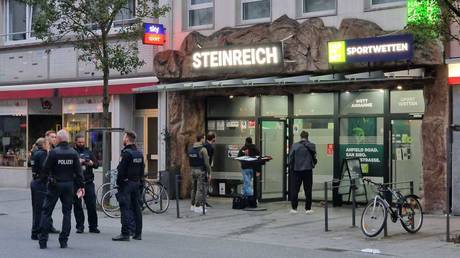
According to the regional outlet Hessenschau, citing police sources, the assailant fired several shots inside a sports-betting shop located in the town center on Saturday afternoon. The perpetrator then reportedly fled the scene.
The authorities declined to specify how many people were wounded or how serious their injuries were, adding that the motive behind the attack remains unclear, several publications reported.
Bild claims three people were injured, while the weapon is reportedly believed to be a pistol or a revolver. According to Die Welt, two men sustained injuries and were taken to the hospital. One is believed to be in serious condition. The publication quoted a police spokesperson as stating that the authorities “currently do not see any danger to the public.”
The news outlet Mittelhessen.de reported that the market square has been partially cordoned off and that investigators are currently collecting evidence at the scene.
Later in the day, Hessenschau, citing the local police, reported that an individual had been apprehended in connection with the incident at around 8pm local time.