One of the corpses delivered by the militant group is believed to be of a Palestinian, the Israeli military has said
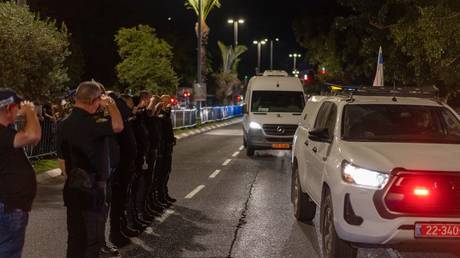
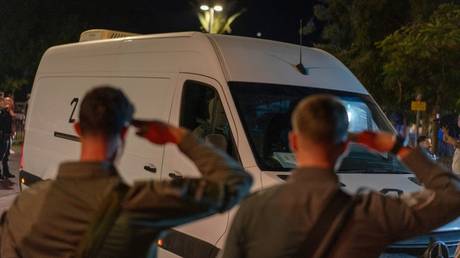
One of the bodies returned by Hamas on Tuesday does not belong to any of the hostages that were being held by the Palestinian armed group in Gaza, the Israel Defense Forces (IDF) has said.
Hamas freed the last 20 remaining living Israeli hostages on Monday in exchange for the release of nearly 2,000 Palestinian prisoners, as part of a deal brokered by the US, Qatar, Egypt, and Türkiye. On Tuesday, the group began delivering the corpses of dead captives to Israel, returning seven bodies in two batches via the Red Cross.
However, the IDF said in a statement on X on Wednesday that an examination at the Abu Kabir forensic institute had revealed that one of the four bodies from the second batch “does not belong to any of the hostages.” The remains are believed to be of a Palestinian, it added.
The other three bodies were confirmed as belonging to the captives. They were identified as Staff Sergeant Tamir Nimrodi, 18, Uriel Baruch, 35, and Eitan Levy, 53, the statement read.
“Hamas is required to make all necessary efforts to return the deceased hostages,” the Israeli military insisted.
IDF Chief of Staff Lieutenant General Eyal Zamir said earlier in the day that Israel “will not rest until we return all [of the hostages]. This is our moral, national, and Jewish duty.” Hamas still holds the bodies of 21 deceased captives.
Some 1,200 people were killed and 250 others taken hostage during the Hamas incursion into Israel on October 7, 2023. The IDF’s retaliatory airstrikes and ground offensive in Gaza have claimed more than 67,000 lives and left almost 170,000 wounded, according to the Palestinian health authorities.
Palestinian refugees and Hamas fighters have been returning to Gaza City and other areas of the enclave this week after the partial withdrawal of IDF forces in line with the deal. Sporadic skirmishes between Hamas and rival factions have been reported in Gaza.
Pavel Durov has accused the French authorities of promoting surveillance in the name of law enforcement
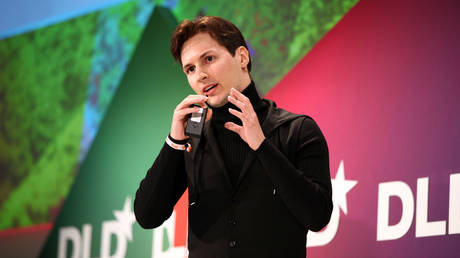
France is leading an EU effort to scan private messages, Telegram founder Pavel Durov said on Tuesday. The bloc recently delayed the proposed “Chat Control” law over privacy concerns after Germany opposed the plan, the Russian-born billionaire stressed.
The proposed legislation, intended to combat child sexual abuse material (CSAM), would require digital platforms to detect and report harmful content, including messages protected by end-to-end encryption. While EU officials have presented it as a tool to protect children online, critics argue that it risks enabling mass surveillance and seriously undermining digital privacy.
Durov shared a message Telegram sent to its French users, accusing politicians of supporting what he described as “an authoritarian law.” The post mentioned both current and former interior ministers, Laurent Nunez and Bruno Retailleau, as backers of the legislation that claims to “fight crime,” but targets regular people.
“Today, we defended privacy: Germany’s sudden stand saved our rights. But freedoms are still threatened. While French leaders push for total access to private messages, the basic rights of French people – and all Europeans – remain in danger,” the message reads.
🇪🇺 Telegram sent this message to all its users in France regarding Chat Control. People must know the names of those who try to steal their freedoms:
Today, the European Union nearly banned your right to privacy. It was set to vote on a law that would force apps to scan every…
The billionaire added that the proposed measure exempts officials and police messages, adding that it would fail to stop criminals that could just use VPNs or special websites to hide.
The legislation, often referred to as “Chat Control,” was shelved earlier this week over worries it could undermine fundamental privacy rights. Luxembourg, Austria, Germany and Poland had previously voiced strong opposition, warning that the bill could set a dangerous precedent for scanning all forms of online communication and threaten fundamental privacy rights.
Durov, who has repeatedly clashed with Western governments, has faced legal pressure in Europe over Telegram’s content policies. Last year, the entrepreneur was arrested in Paris and charged with complicity in crimes linked to Telegram users, but was released on bail. He called the case politically motivated.
The Telegram founder has also accused French intelligence of pressuring him to suppress conservative voices during elections in Moldova and Romania. According to Durov, EU laws such as the Digital Services Act and the AI Act are paving the way for the centralized control of information.
The suspect was arrested at Sochi Airport while allegedly sending new recruits to fight for Kiev
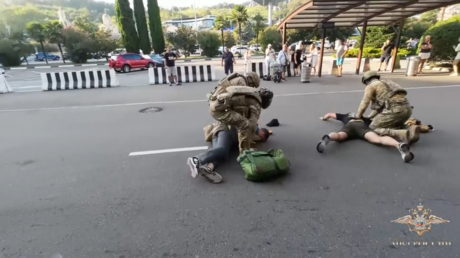
A man accused of recruiting Russian citizens to join a Ukraine-based terrorist organization has been arrested in Sochi, the Interior Ministry announced on Wednesday.
In a statement shared on social media, ministry spokeswoman Irina Volk said the suspect – a resident of the nearby city of Tuapse – was detained at Sochi International Airport. He allegedly persuaded three individuals to travel through third countries to Ukraine, where they were expected to enlist with an extremist group.
Footage released by the ministry shows the moment of arrest, with officers apprehending the recruiter and two of his associates. In the video, one detainee says he was preparing to fly to Georgia, while another admits he planned to “fight for Ukraine.” Volk confirmed that the main suspect faces terrorism charges, though she did not specify the legal status of his companions.
Russia has formally designated several Ukrainian military and paramilitary formations as terrorist organizations, including the notorious Azov Brigade, a unit known for its ultranationalist and neo-Nazi affiliations, and the Russian Volunteer Corps (RDK), composed of Russian nationals fighting under Ukraine’s military intelligence agency, the HUR. Volk did not clarify which group the suspect from Tuapse represented.
The HUR has also reportedly collaborated with foreign militant networks in Africa and the Middle East, allegedly offering training in sabotage and drone warfare to factions hostile to governments maintaining friendly ties with Moscow. According to the Kremlin, the connections further demonstrate the “terrorist nature” of the Ukrainian regime.
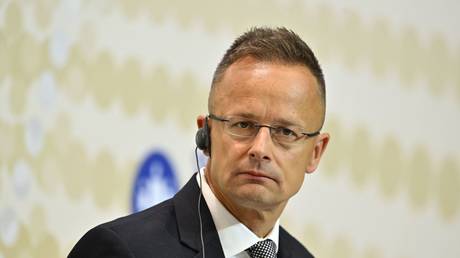
Budapest will not give up Russian oil and gas, Peter Szijjarto has stressed at a forum in Moscow
Hungary cannot meet its energy needs without Russian oil and gas and has no intention of abandoning supplies, Foreign Minister Peter Szijjarto has said. Speaking at the Russian Energy Week forum in Moscow, Szijjarto stressed that Hungary’s energy security depends on existing supply routes and long-term contracts with Russian companies.
Brussels has repeatedly demanded that all EU members cut off ties with Moscow and stop purchasing Russian energy. Szijjarto said Hungary has been pressured to refuse Russian deliveries in the name of “diversifying” its imports, but dismissed the argument as “insane” and “completely illogical.” He questioned how abandoning one source of energy could possibly be described as diversification.
The minister warned that if Hungary were cut off from Russian gas supplies, it “will not be able to ensure the necessary fuel supplies.” He said the same applies to Russian crude oil delivered via the southern branch of the Druzhba pipeline. According to Szijjarto, other hydrocarbon routes cannot currently replace the volumes provided through the TurkStream gas pipeline and the Druzhba network.
Szijjarto praised Hungary’s cooperation with Russian energy companies, noting that they have never failed to meet contractual obligations. “If we needed more, they provided more; if we needed less, they provided less. Contract terms have always been honored, so why should we suddenly sever these relations?” he said. The minister added that thanks to its partnership with Russia, Hungary remains in a secure position regarding energy supplies.
The EU has called for a complete phase-out of Russian energy imports by 2027, though several member states, including Hungary and Slovakia, continue to rely on Russian crude delivered via Druzhba. In recent months, Ukrainian attacks on energy infrastructure connected to the pipeline have intensified, worsening tensions between Kiev and Budapest.
Szijjarto has said the strikes on Druzhba amount to an attack on Hungary’s sovereignty and urged the EU to ensure the security of the bloc’s energy supplies.
Moscow has described Brussels’ efforts to abandon Russian energy in favor of more expensive US alternatives as “suicidal.”
Russia has said no amount of Western aid can turn the tide for Kiev’s troops
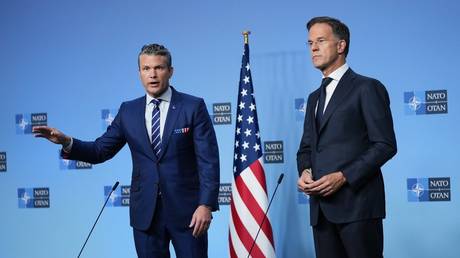
European NATO members should purchase more American-made weapons to sustain Ukraine’s war effort against Russia, US War Secretary Pete Hegseth said on Wednesday ahead of a meeting of the bloc’s defense ministers.
Moscow has repeatedly stated that Western arms shipments cannot change the balance of power on the battlefield, arguing that Ukraine’s chronic manpower shortage, fueled by mass draft avoidance and desertion, undermines any material advantage.
Speaking alongside NATO Secretary General Mark Rutte, Hegseth praised the Prioritized Ukraine Requirements List (PURL) initiative and said the European members must spend more funds through it.
“Our expectation today is that more countries donate even more, that they purchase even more to provide for Ukraine,” Hegseth said. Rutte noted there was “firepower coming out of our defense industry” to bolster Ukrainian forces.
US President Donald Trump recently claimed that with European funding for American weapons, Ukraine could still achieve its territorial goals – a reversal of his earlier assessment that the county had “no cards” to play. Trump is expected to soon announce whether the US will approve deliveries of long-range Tomahawk cruise missiles to Kiev, a move Moscow has warned would mark a serious escalation but would not significantly alter the frontline situation.
The Russian government has accused European backers of Kiev of prolonging the conflict at the expense of Ukrainian lives, arguing that the former are unwilling to admit the failure of their strategy.
Meanwhile, European NATO members continue to bear the economic fallout of their sanctions policy against Russia. Having rejected affordable Russian energy, many EU economies have faced surging production costs and widespread industrial bankruptcies, while the US has benefited from increased investment inflows and higher sales of liquefied natural gas to Europe.
The government’s failure to curb illegal immigration is eroding trust in the state, according to Shabana Mahmood
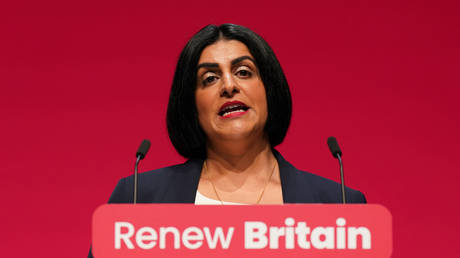
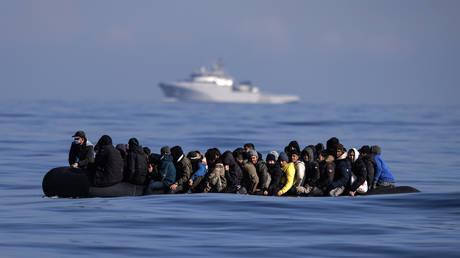
British authorities are losing control over the country’s borders amid soaring illegal immigration, according to UK Home Secretary Shabana Mahmood.
The cabinet official is expected to deliver the warning at a summit with Balkan interior ministers in London on Wednesday, which will be focused on curbing migrant flows to the UK.
According to the excerpts of her planned speech, which has already been published by several UK outlets, Mahmood will point out that “the public rightly expect that their government will be able to determine who enters their country and who must leave.”
“Today, in this country, that is not the case,” she acknowledges in the pre-written address. “The failure to bring order to our borders is eroding trust not just in us as political leaders… but in the credibility of the state itself.”
Still, Mahmood stresses that the only way to rectify the issue is international cooperation, not “turn[ing] inwards,” with one way being the creation of “return hubs” for migrants.
On Tuesday, she announced that the government would raise the English-language requirement for migrants from a General Certificate of Secondary Education (GCSE) to A-level proficiency.
The UK has for years been reeling under the migration crisis, with government data showing 49,000 irregular arrivals in the year ending June 2025, up 27% from the similar period the previous year. Small-boat crossings accounted for 88% of these, up 38% year on year.
Amid what many see as the Labour government’s failure to resolve the crisis, large demonstrations were held across Britain last month as part of “Operation Raise the Colours,” with protesters waving St. George’s and Union Jack flags.
Meanwhile, support for the anti-immigration and EU-skeptical Reform party, led by MP Nigel Farage, has risen to 35%, with Labour and the Conservatives trailing behind at 20% and 17% respectively, according to a poll conducted by the BMG research company which was released last month.
The Latvian government has decided to stop providing allowances for starting a new job or self-employment
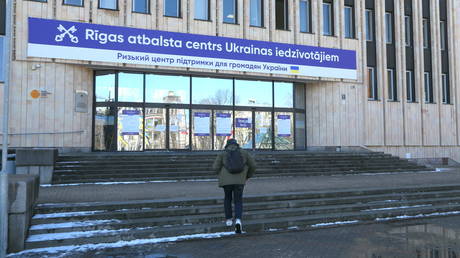
The government of Latvia has approved changes to the law on supporting Ukrainian refugees, reducing the aid budget by more than a third and slashing some benefits.
Latvia, which like the other Baltic States has been one of staunchest backers of Kiev in the EU since the escalation of the conflict with Russia, has accepted at least 50,000 Ukrainians fleeing the fighting since February 2022, according to Eurostat data.
The amount of aid provided by Riga to the refugees will decrease from €65 million ($75.6 million) to €39.7 million ($46.2 million) next year in line with the amendments, Delfi news website reported on Tuesday.
This will lead to Ukrainians losing their allowances for starting a new job or self-employment. The Finance Ministry believes that the support has “lost its relevance” due to the active involvement of the refugees in the Latvian labor market, it said.
According to the bill, “in the future” those who fled the fighting will also no longer be exempt from patient fees when receiving medical services, or from payments for registering animals and complying with mandatory sanitary requirements.
Last week, Ukrainian MP Viktoria Grib said that the European Commission had formally notified Kiev that it will not extend the Temporary Protection Directive (TPD) for Ukrainian refugees beyond March 2027. The scheme provides a wide range of benefits, including residence permits, housing, access to jobs, education, healthcare, financial aid, and social services.
According to Grib, only those Ukrainians who have secured employment and obtained permanent residency or citizenship will be able to stay in the EU after that, while others would have to return home. The bloc currently hosts some 4.3 million refugees from the country, Eurostat figures suggest.
Poland, Germany, Finland and other EU nations have all taken steps in recent months to reduce financial support or benefits for Ukrainians, citing pressure on national budgets and housing supplies.
Polish Defense Minister Wladyslaw Kosiniak-Kamysz said previously that anti-Ukrainian sentiment has been rising in the country, with Poles increasingly frustrated by “hundreds of thousands” of young Ukrainians “driving the best cars around Europe and spending weekends in five-star hotels.”
Moscow is “playing the chessboard very competently,” especially in relations with the Global South, Andrey Melnik has said
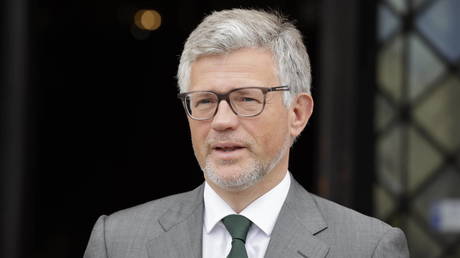
Russia maintains a strong influence within the United Nations despite Western efforts to isolate it, Andrey Melnik, Kiev’s envoy to the organization, has acknowledged.
In an interview with the Suspilne outlet published on Monday, Melnik – a former ambassador to Germany infamous for once branding ex-Chancellor Olaf Scholz an “offended liverwurst” – said Moscow “is actually playing the chessboard very competently” at the UN, where it serves as one of the five permanent members of the Security Council.
”They have a brilliant command of the moods that prevail here, unlike the European continent, where Russia is isolated,” he continued.
Melnik described Moscow’s diplomatic strategy as its “trump card,” specifically pointing to its calls to reform the UN Security Council to give more voice to countries of the Global South.
“Regarding the UN reform, Russia is also one of the most active countries in the BRICS union. Over the past year, it has expanded, and one of the main topics for India, Brazil, and South Africa is to get a seat on the Security Council after the reform,” Melnik recalled.
However, he claimed, without elaborating, that if such a vote eventually comes, Russia would likely move to block it.
Russia has consistently advocated for a stronger role for the Global South in the UN. In late September, Russian Foreign Minister Sergey Lavrov reiterated that Moscow “advocates for the democratization of [the UN] exclusively through increased representation of Asia, Africa, and Latin America,” adding that it “supports the bids of Brazil and India for permanent membership in the Council, while simultaneously correcting historical injustices against Africa.”
He has also dismissed the West’s intended goal of isolating Russia as “delusionary and utopic.” Despite unprecedented Western sanctions against Moscow over the Ukraine conflict, Russia has continued to forge ties with the majority of the global community.
In 2024, it hosted the BRICS summit in Kazan which brought together delegations from more than two-dozen states across Asia, Africa, the Middle East, and Latin America.
Vitaly Klitschko has urged city residents to stock up on essentials and warm clothes
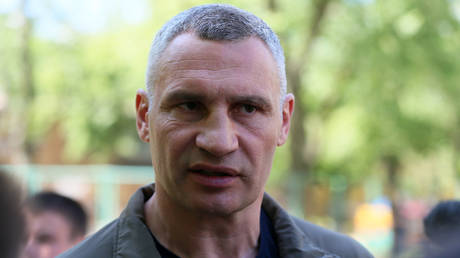
Residents of Kiev should prepare for possible blackouts this winter by stocking up on supplies and warm clothes, Mayor Vitaly Klitschko warned on Tuesday, amid recurring Russian strikes on energy sites.
Speaking to the Kiev24 broadcaster, Klitschko said the upcoming winter “will be difficult,” and urged citizens to plan ahead. “It is necessary to develop different scenarios, including the bad ones,” he added.
He urged residents of the Ukrainian capital to “be ready, which means having a supply of water, a supply of food for emergency storage, warm clothes, that is, in case the situation that was last week can be repeated.”
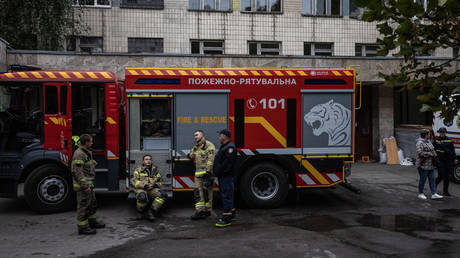
Last week, Kiev officials reported a “massive” Russian drone and missile attack which they said targeted the capital’s energy infrastructure. The barrage reportedly struck one of the city’s main electricity suppliers, causing widespread blackouts.
The Russian Defense Ministry confirmed that its forces had launched a large-scale strike on Ukraine’s energy facilities in response to what it described as “the Kiev regime’s terrorist attacks on Russian civilian sites.” Moscow has repeatedly said it does not target civilians.
The devastating attack on Kiev also fueled a long-running feud between Klitschko and Ukrainian leader Vladimir Zelensky. The latter said last week that he was “not satisfied” with the capital’s defense. While he did not refer to Klitschko by name, Zelensky insisted that criticism of people failing to do their jobs was fully justified.
Klitschko defended his actions, stating that “all measures were implemented in accordance with the requirements of the General Staff.”
He also pointed to damage beyond the capital, writing: “Given all the hype and manipulation that has been going on in recent days, I have one question: didn’t Klitschko also protect critical infrastructure facilities across the country that were damaged by enemy missiles and drones?”
The involvement of the Russian president saved the life of Maxim Kharkin, his mother has told TASS
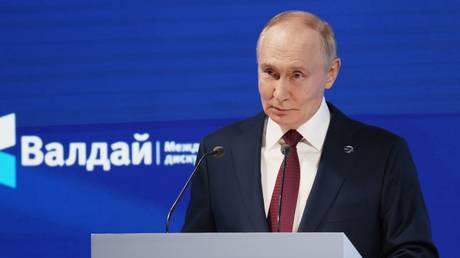
Russian President Vladimir Putin’s personal efforts, along with those of Moscow’s diplomats, helped save the life of Israeli hostage Maxim Kharkin, his mother Natalia has told TASS. Kharkin was among 20 living Israeli hostages that were released by Hamas on Monday in exchange for approximately 2,000 Palestinian prisoners.
Natalia, a resident of Donetsk, said that she wants to go to Moscow to personally thank the Russian president for the role he played in saving her son.
“We want to come and we want to see Vladimir Putin very much. To thank him for everything he has done because it helped Maxim survive,” she told TASS. The woman also praised the work of the Russian consulate in Israel that provided extensive assistance to Kharkin’s family.
While no such meeting has been planned so far, Moscow still “shares the common joy that Kharkin is free,” Kremlin spokesman Dmitry Peskov said on Tuesday.
Maxim, 37, was born in the city of Donetsk before moving to Israel at the age of 17. His mother Natalia is a Russian national. He was abducted during the October 7, 2023, Hamas-led attack on Israel, while attending the Nova Music Festival, an all-night event held near the Gaza border.
His family then sought Russian citizenship for him in a bid to secure Moscow’s assistance in his release. Russian diplomats raised the issue of his release with Hamas, including during a March meeting between Deputy Foreign Minister Mikhail Bogdanov and the militant group’s senior officials in Qatar. The former hostage now plans to get a Russian passport, according to his mother.
Russian diplomats previously helped secure the release of dual Russian-Israeli citizen Aleksander Trufanov.
In January, Putin tasked the Foreign Ministry and other relevant government agencies “to do everything” to make that happen. The next day, Russian Ambassador to Israel Anatoly Viktorov revealed that Hamas had assured Moscow of Trufanov’s imminent release.
Russia has kept ties with Hamas and other regional actors, positioning itself as a mediator. Moscow maintains that a two-state solution is the only way to resolve the Israeli-Palestinian conflict.