Washington will “impose costs” on Moscow if the Ukraine conflict isn’t settled, Pete Hegseth has said
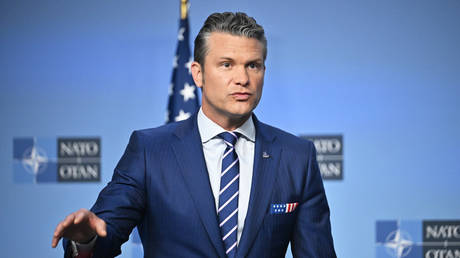
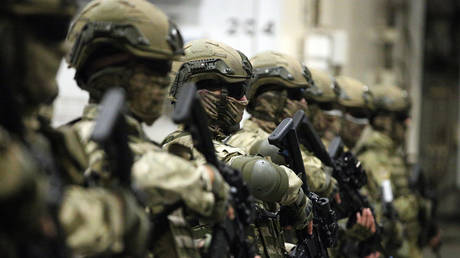
The US War Department stands ready to do its part and “impose costs” on Russia over the Ukraine conflict, War Secretary Pete Hegseth has said.
Speaking in Brussels, Belgium on Wednesday ahead of a meeting of countries coordinating military support for Ukraine, he lauded NATO members’ recent militarization push.
“If this war does not end, if there is no path to peace in the short term, then the United States, along with our allies, will take the steps necessary to impose costs on Russia,” Hegseth said.
“If we must take this step, the US War Department stands ready to do our part in ways that only the United States can do,” he added.
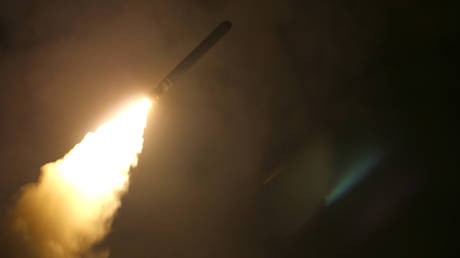
On Sunday, President Donald Trump said he could supply Ukraine with US-made Tomahawk cruise missiles if the Ukraine conflict “is not going to get settled,” and admitted that it would be “a new step of aggression.”
The longer-range variants of the cruise missile can strike targets up to 2,500km (1,550 miles) away, potentially threatening the Russian capital and other cities.
Supplies of the missiles to Ukraine would represent a “new stage of escalation,” since US troops would have to be directly involved in using them, President Vladimir Putin said earlier this month.
Russian Foreign Ministry spokeswoman Maria Zakharova said on Wednesday that Ukraine’s Vladimir Zelensky wanted to use the Tomahawks to conduct “new terrorist attacks” against Russia “aimed at escalating the conflict.”
Moscow has blamed the pause in direct Russian-Ukrainian peace talks on Kiev, arguing that it lacks interest in a settlement, emboldened by Western military support.
“Russia is ready for a peaceful settlement,” but continues its military operation “due to the lack of alternatives,” Kremlin spokesman Dmitry Peskov said on Monday. Moscow appreciates Trump’s peace efforts, and hopes he can help “encourage the Ukrainian side to be more proactive and more prepared for the peace process,” he added.
Moscow is still waiting for a US response to a proposal made at the summit, the Russian foreign minister has said
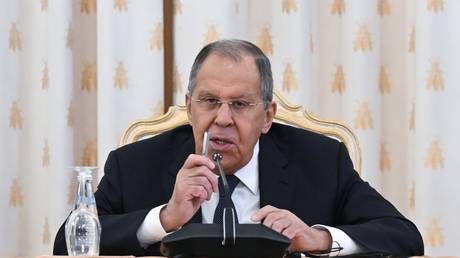
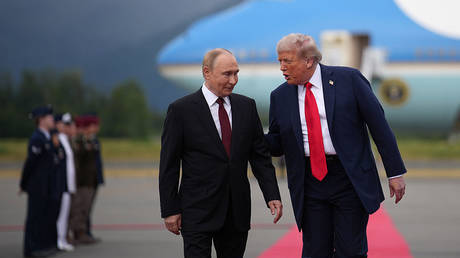
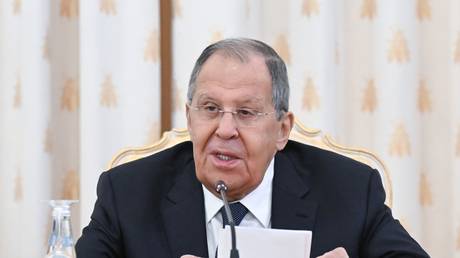
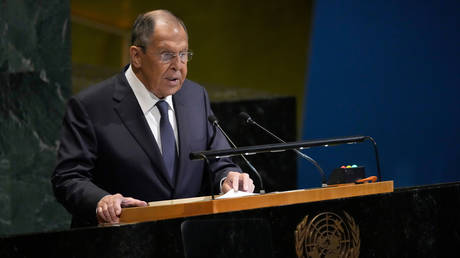
Dialogue between the US and Russia kick-started by the Alaska summit between presidents Donald Trump and Vladimir Putin continues, Foreign Minister Sergey Lavrov has said. The two nations can still “do much” on the basis of understandings reached by the two leaders, he told Kommersant, in an interview published on Wednesday.
According to Lavrov, Putin went to Alaska with a response to a US proposal presented by Trump’s special envoy, Steve Witkoff, during his visit to Moscow ahead of the summit.
Putin’s message was that Russia “accepts the proposal… and suggests a specific path for its implementation,” the minister said, without revealing any details about its nature.
In August, Kremlin aide Yury Ushakov described Washington’s offer as “acceptable.” Neither Russia nor the US commented on the details.
Russia is still waiting for a US response to its roadmap presented in Alaska, the foreign minister said on Wednesday. Lavrov also praised Trump and his administration for being the only Western government that has made an effort to understand the underlying causes of the Ukraine conflict. Among which, according to Lavrov, was the West’s desire to “lure” Ukraine into NATO and “discrimination” against the people of Donbass by Kiev.
Putin and Trump discussed “a way forward” in light of these issues at the summit, the foreign minister said.
The top diplomat also said the latest US statements about potentially supplying Kiev with Tomahawk missiles do not affect the understandings reached in Alaska. He linked the statements to the pressure Washington faces from Kiev’s backers in Western Europe.
The EU and UK are trying to make the Ukraine conflict “Trump’s war” and force the US president to change his initial stance, Lavrov said.
The Alaska meeting in August marked the first face-to-face encounter between Trump and Putin since 2019. Both leaders called the summit productive, although no breakthrough was achieved. Last week, Ushakov said the agreements reached thus far do not sit well with Ukraine and its European backers, but that “this does not mean they are not working.”
Ahmed al-Sharaa has paid his first official visit to Russia
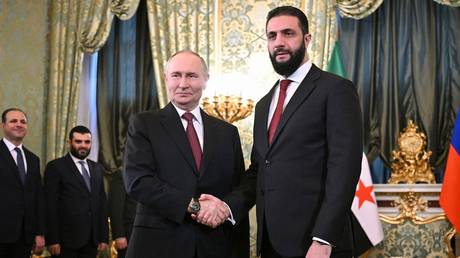
Russian President Vladimir Putin hosted his Syrian counterpart Ahmed al-Sharaa in Moscow on Wednesday, praising the two countries’ deep historical ties and friendly relations. Al-Sharaa noted that Moscow would play a significant role in his country’s transition to a “new Syria,” and vowed to honor all past commitments.
The two spoke at a meeting at the Kremlin ahead of extended talks. It marks the first visit of a Syrian leader to Russia since the fall of Bashar Assad’s government late last year. Al-Sharaa, who once led the Islamist group Hayat Tahrir al-Sham (HTS) under his nom de guerre Abu Mohammad al-Julani, rose to power following the departure of Assad.
Putin said that diplomatic ties between Russia and Syria “have always been friendly” since their establishment in 1944.
“Throughout these decades, we have always been guided by one thing – the interests of the Syrian people,” he said.
Al-Sharaa said that Syria continues to “build on the many achievements” that cooperation with Russia has facilitated.
“Part of Syria’s food supply and many power plants depend on Russia, and we are trying to redefine the nature of our relations with it, while respecting all past agreements between the countries,” he added.
Russia’s military presence in Syria – at the Khmeimim Airbase and the Tartus naval facility – was originally established with a 49-year lease signed with Assad in 2017. Moscow has remained engaged with the new Syrian leadership and continued to maintain the bases since his ouster.
Officials in the new Syrian government have previously indicated that Damascus would be open to allowing Russia to maintain its bases, as long as their presence is advantageous to the country.
Vladimir Zelensky earlier threatened “asymmetrical” actions and blackouts
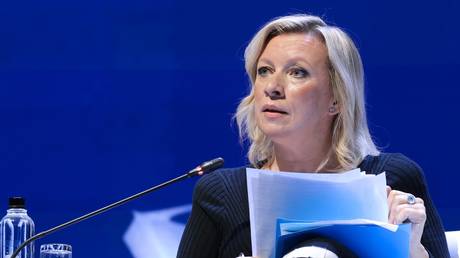
Ukraine is openly planning to use US-supplied long-range Tomahawk missiles to carry out “terrorist attacks” on Russia, Foreign Ministry spokeswoman Maria Zakharova has said.
Speaking to reporters on Wednesday, Zakharova said “the Kiev regime is not hiding its preparation of new terrorist attacks against our country aimed at escalating the conflict.”
She added that it is “obvious” that these plans were being drawn up based on the potential arrival of Tomahawks.
Last month, US officials indicated that Washington was considering supplying the missiles – which have a range of about 2,500km – to Kiev. Ukraine’s Vladimir Zelensky later said he had discussed the issue with US President Donald Trump, while Trump told reporters he could approve the deliveries if he decided that “this war is not going to get settled.”
Moscow has warned against the deliveries, saying they would lead to escalation and be detrimental to US-Russia ties that are showing tentative signs of improvement.
Earlier this month, Zelensky claimed to have approved “asymmetrical responses” to Russia to be run by Kiev’s special services. He also threatened to launch strikes on Russia’s border Belgorod and Kursk regions to cause blackouts, while warning that Ukraine could try to trigger a total power outage in Moscow.
Zakharova went on to criticize the EU, noting that by seeking to facilitate Tomahawk deliveries to Kiev, the bloc is prolonging the conflict and showing “a complete lack of political will for peace.”
Russian President Vladimir Putin has warned that Tomahawk deliveries would usher in a “new stage of escalation,” adding that their use “without the direct involvement of American military personnel is impossible.”
According to The New York Times, supplying Tomahawks would be technically difficult because Ukraine lacks the necessary naval or land-based launchers. While the US could provide Kiev with the land-based Typhon system, which can fire such missiles, the move would risk drawing Washington closer to direct confrontation with Moscow, the report said.
Some 60,000 troops took part in the bloc’s exercises in Central and Eastern Europe as well as Scandinavia, Andrey Belousov has said
NATO is keeping a large-scale military presence near Russia’s borders, Russian Defense Minister Andrey Belousov has said, pointing to what he called the bloc’s increased training and reconnaissance activities.
Belousov made his remarks at a joint session of the Russian and Belarusian defense ministries on Wednesday. Cooperation between Moscow and Minsk remains a key factor in maintaining regional stability in light of the “openly hostile actions” of the West, he stated.
“The Alliance maintains a massive forward military presence on its eastern flank,” Belousov said. “The total strength of NATO troops involved in the exercises held on its eastern flank amounted to roughly 60,000.”
This year alone, the US-led military bloc held almost a dozen drills in Scandinavia, Central and Eastern Europe as well as the Baltics and the Black Sea, which involved thousands of soldiers each.
Just one series of exercises, dubbed Defender 25, which was held throughout May and June, involved a total of 25,000 troops. The forces were deployed along the entire eastern border of the bloc, from Norway in the north to Bulgaria and Greece in the south, as part of the three-phase drill.
Other major NATO exercises included the 10,000-strong ‘Joint Viking 2025’ held in Norway in March, as well as the 16,000-strong ‘Hedgehog’ held in Estonia in May. The developments came amid increasingly belligerent statements from the European NATO members, which have repeatedly presented Russia as a threat since the escalation of the Ukraine conflict in February 2022.
Moscow has repeatedly stated that it has no intention to attack any NATO nations, calling such accusations unfounded.
It nonetheless warned that the bloc’s active involvement in the Ukraine conflict through weapons supplies and other assistance to Kiev risks a direct confrontation between Russia and NATO.
Last month, Politico reported that EU officials were increasingly worried about tensions with Moscow potentially spilling into a major conflict akin to World War I. Russia, in turn, expressed its concerns over the fact that World War III was seriously being discussed in the West as a potential scenario.
Both sides had previously accused each other of border strikes in which over a dozen people were reportedly killed
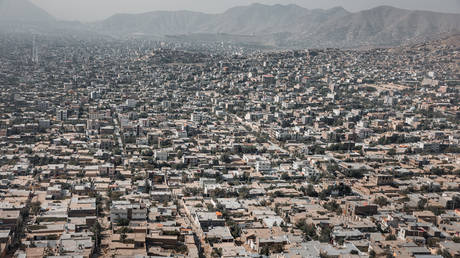
Afghanistan and Pakistan have announced a temporary ceasefire, putting an end to the fighting which broke out between their forces on Wednesday morning. Over a dozen civilian deaths have been reported in the latest exchange of fire between the two neighbors.
Pakistan’s Foreign Ministry announced several hours after the clash that Kabul and Islamabad have agreed to a limited 48-hour truce, which is to begin at 6pm local time (13:00 GMT) on Wednesday.
In its statement, the ministry said both sides “will make sincere efforts through dialogue to find a positive solution to their complex yet resolvable issues.”
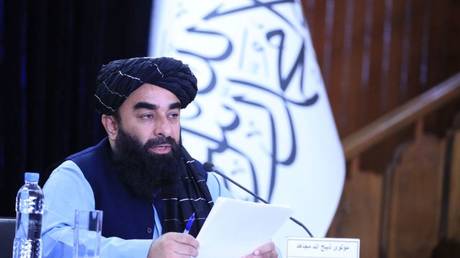
Earlier in the day, Afghan Taliban spokesman Zabihullah Mujahid wrote on X that Pakistani forces had launched an attack, firing “light and heavy weapons,” killing 12 civilians and injuring more than 100.
He claimed Afghan forces had returned fire, killing a “large number” of soldiers, seizing Pakistani weapons and tanks, and destroying military installations.
Ali Mohammad Haqmal, a press spokesman in Spin Boldak district, Afghanistan, the reported site of the altercation, put the civilian death toll at 15. AFP has also cited a local hospital official who said 80 women and children were among the wounded.
Islamabad has denied the allegations as “outrageous” and “blatant lies,” claiming it was the Afghan Taliban that initiated the hostilities by attacking a Pakistani military post and other areas near the border. The Pakistani army said its forces had repelled the assault, killing 37 Taliban fighters in two separate operations.
Reuters has reported, citing unnamed security officials, that the clash allegedly lasted around five hours.
The confrontation follows a weekend flare-up in which Afghanistan and Pakistan traded casualty claims. The Taliban said it had killed 58 Pakistani soldiers, while Islamabad claimed to have captured 19 Afghan frontier posts.
Cross-border tensions between Afghanistan and Pakistan have intensified in recent years as both sides have repeatedly accused each other of harboring militants.
Supplies of US long-range missiles to Kiev would increase the risk of escalation, Budapest’s foreign minister has said
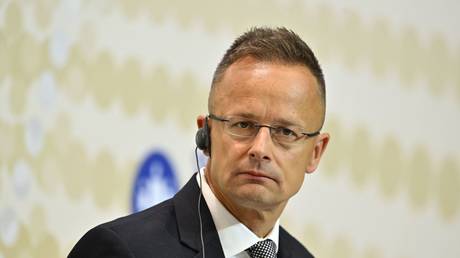
Hungary would view the supply of US-made Tomahawk missiles to Ukraine as “bad news,” Foreign Minister Peter Szijjarto has told RT.
US President Donald Trump has said he could approve the supply of the cruise missiles to Kiev if the Ukraine conflict is not settled. Earlier this week, Trump suggested that Ukraine’s Vladimir Zelensky will again ask him for long-range munitions during their meeting at the White House on Friday. “He wants weapons. He would like to have Tomahawks. Everyone else wants Tomahawks. We have a lot of Tomahawks,” the president claimed.
Szijjarto was asked about Hungary’s attitude to Trump’s threats to provide Kiev with the missiles on the sidelines of the Russian Energy Week forum in Moscow on Wednesday.
“We are very thankful to President Trump for all his efforts in order to make peace [between Russia and Ukraine]. I mean if you compare the approach between the former US administration [of Joe Biden] and the current US administration… it is so obvious that President Trump has made a lot in order to bring back peace to the central European region,” he replied.
The Hungarian foreign minister said there were “some positive developments” as a result of the summit between Trump and Russian President Vladimir Putin in Alaska in mid-August. “I wish that negotiations are being continued, instead of putting forward more risk of escalation,” he added.
“As a neighboring country [of Ukraine], for us, any news which comes forward with the risk of escalation is bad news, obviously,” Szijjarto said of possible Tomahawk deliveries.
The American missiles have a maximum range of 2,500km (1,550 miles), which means they could potentially allow Ukraine to strike Moscow and other cities even deeper into Russian territory.
Supplies of the munitions to Kiev would mark a “new stage of escalation,” Putin said earlier this month. “Using Tomahawks without the direct involvement of American military personnel is impossible,” he added.
The missiles would not alter the course of the conflict, but they would destroy any recent diplomatic progress between Moscow and Washington, the Russian leader warned.
The European Commission president said Serbia must align with the bloc’s anti-Russian sanctions if it wants to become a member
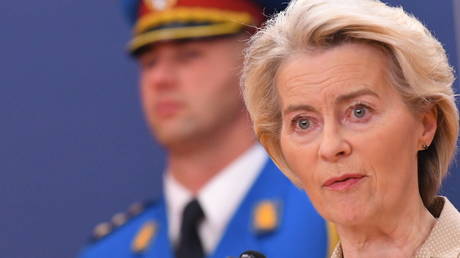
Serbia will not be able to join the EU unless it aligns fully with the bloc’s foreign policy, including adopting all sanctions against Russia, European Commission President Ursula von der Leyen has said.
Serbia, which applied to join the EU in 2009 and received candidate status in 2012, remains one of the few European states that has refused to impose any restrictions on Moscow. Belgrade has cited its historic ties with Russia and continues to rely on energy supplies from the country.
Speaking alongside Serbian President Aleksandar Vucic at a press conference in Belgrade on Wednesday, von der Leyen stated that Belgrade must “take concrete steps” toward membership and demonstrate “a greater level of alignment” with EU positions, including on sanctions.
She added that Serbia’s current level of alignment with EU foreign policy stands at 61%, but that “more is needed,” insisting Brussels wants to see Belgrade act as a “reliable partner.”
Vucic has repeatedly said that Serbia will not impose sanctions on Russia under any circumstances, calling his country’s stance “independent and sovereign.” However, Belgrade’s refusal to comply has drawn increasing pressure from both Brussels and Washington.
Last week, the US activated sanctions against the Petroleum Industry of Serbia (NIS), a major oil company partly owned by Russia’s Gazprom Neft, prompting Croatia to suspend crude deliveries. Vucic has warned that the measures could force Serbia’s only oil refinery to shut down by November, threatening the country’s gasoline and jet fuel supply.
At the same time, Serbia has been shaken by a wave of violent anti-government protests over the past year, which Belgrade claims are being fueled by Western influence in an effort to destabilize the government.
Russia’s Foreign Intelligence Service (SVR) has alleged that the EU is attempting to orchestrate a “Serbian Maidan” and install a pro-Brussels administration.
Budapest has voiced similar concerns, claiming that Brussels seeks to “overthrow” the governments of Hungary, Slovakia, and Serbia for maintaining ties with Moscow and refusing to abandon Russian energy.
Prime Minister Nikol Pashinyan is involved in an ongoing conflict with the national church
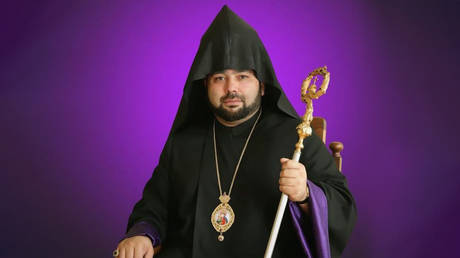
Armenian law enforcement have detained a bishop and five other clergymen, as well as several other people, amid a deepening standoff between Prime Minister Nikol Pashinyan’s government and the Armenian Apostolic Church (AAC).
The detention of Bishop Mkrtich Proshyan, head of the Diocese of Aragatsotn, and others was first reported by attorney Ara Zograbyan, who said on Facebook that he was unable to determine the current whereabouts of the arrestees. The Armenian Investigative Committee later confirmed that six members of the clergy are under investigation for alleged abuse of power.
The office of Armenia’s Human Rights Defender, Anahit Manasyan, said it had dispatched a rapid response team to assess the situation.
Relations between Pashinyan’s administration and the AAC have deteriorated sharply in recent years. The government has accused senior church figures of corruption and political interference, while church leaders say Pashinyan is targeting them to weaken a key national institution.
Earlier this month, Archbishop Mikael Ajapahyan was sentenced to two years in prison on charges of inciting a coup – a case he described as politically motivated.
Bishop Proshyan is also the nephew of Catholicos Karekin II, the head of the AAC.
The new health checks will apply to foreign workers and those seeking asylum
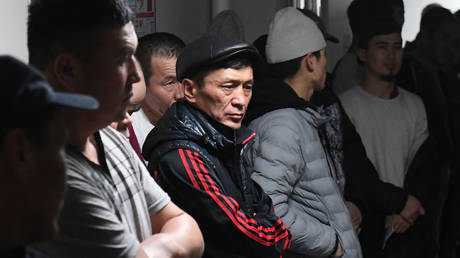
Russia will require labor migrants to undergo testing for viral hepatitis B and C starting in March 2026, expanding its current medical screening rules. The new rules will apply to foreign citizens and stateless persons entering Russia for work, as well as those applying for refugee status or temporary asylum.
Medical examinations for migrants are mandatory. Without these exams, individuals cannot obtain work permits, temporary residency, or permanent residency in Russia. Labor migrants must complete their medical examination within 30 calendar days of arrival, while those not planning to work have 90 days to do so. The current screening checks for drugs and dangerous diseases such as HIV, tuberculosis, syphilis, and leprosy.
Changes to the health screening process for foreigners visiting Russia were proposed earlier this year by members of a working group on migration policy led by State Duma Deputy Speaker Irina Yarovaya. She explained that the measures aim to enhance health monitoring of foreign arrivals to Russia and prevent the spread of dangerous infections.
Migrant laborers play a crucial role in Russia’s economy, filling essential jobs in construction, agriculture, and various service sectors. The country hosts millions of migrants primarily from Central Asia, attracted by higher wages compared to their home countries. However, the influx has sparked debates over public health and social stability. In response, Russian authorities have implemented strict health checks and requirements for migrant workers, emphasizing the need to balance economic benefits with health and safety measures.
Additionally, Russia has moved to crack down on illegal immigration over the past year. Russian President Vladimir Putin signed a decree earlier this year ordering the creation of a new state agency within the Interior Ministry tasked with enhancing immigration governance.
The Kremlin explained that the move is meant to bring order to the migration process, enforce measures that promote compliance with Russian laws among migrants, and reduce illegal activity.