Month: October 2025

The US and Russian presidents held a lengthy phone call on Thursday

US President Donald Trump has announced plans for a summit with his Russian counterpart, Vladimir Putin, in Budapest, Hungary.

The meeting will take place at a date to be determined after “high-level advisers” from the two countries meet next week, he said in a Truth Social post on Thursday.

Washington’s delegation at the initial meeting will be led by Secretary of State Marco Rubio, he said, adding that the location is yet to be determined.

Trump expressed hope that by meeting with Putin, the two leaders will be able to bring the Ukraine conflict to a close.

The call “was a very productive one,” he said, adding: “I believe great progress was made with today’s telephone conversation.”

The last summit between the two presidents took place in Anchorage, Alaska in August. Both called the meeting productive, though no breakthrough was reached.

Russian Foreign Minister Sergey Lavrov on Wednesday praised the Trump administration’s diplomatic outreach, saying it is the only Western government that has made an effort to understand the fundamental causes of the Ukraine conflict.


READ MORE: Hungary ‘ready’ to host planned Putin-Trump meeting – Orban

Moscow is still awaiting Washington’s response to the roadmap presented at the Alaska summit, he added.
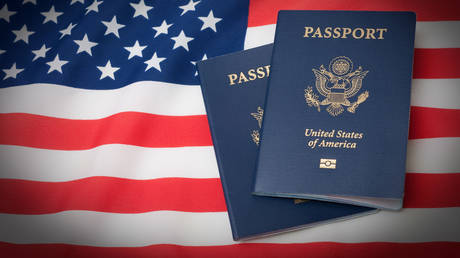

The slide follows the loss of visa-free access to a number of nations, according to the Henley ranking

The US has fallen out of the top ten for most powerful passports, according to the latest Henley Passport Index, which measures global travel freedom based on the number of destinations accessible without a visa.

Henley & Partners, a London-based citizenship and residency consultancy, has compiled the rankings for 20 years using International Air Transport Association data. The US passport, which topped the list in 2014 and ranked seventh last year, has now dropped to 12th, tied with Malaysia.

Henley said the decline stems from lost visa-free access to Brazil and China over reciprocity issues with the US, as well as policy changes in Papua New Guinea, Myanmar, Vietnam, and Somalia. The firm also cited low visa openness, noting that while Americans can visit 180 of 227 destinations visa-free, the US grants the same privilege to only 46 countries.

“The declining strength of the US passport over the past decade is more than just a reshuffle in rankings – it signals a fundamental shift in global mobility and soft power dynamics,” said the firm’s chairman Christian H. Kaelin. “Nations that embrace openness and cooperation are surging ahead, while those resting on past privilege are being left behind.”

Read more

FILE PHOTO.
African state retaliates to US

Henley also linked the drop to US President Donald Trump’s immigration crackdown, which began with illegal migration and drug trafficking but expanded to stricter rules for tourists, foreign workers, and students. The firm cited the recent visa restrictions for travelers from 19 countries and threats to ban up to 36 more as key factors in the decline.

“Trump’s return to power has brought fresh trade conflicts that weaken America’s mobility,” said Dr. Tim Klatte, partner at Grant Thornton China.

Three Asian countries lead the index: Singapore with 193 visa-free destinations, South Korea with 190, and Japan with 189. Accounting for tied scores, 36 nations outrank the US, including all EU members, the UK, Switzerland, Canada, and the UAE. Russia ranks 50th with 114 visa-free destinations.

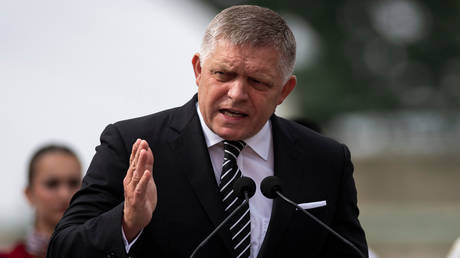
The Slovak prime minister has urged Brussels to stop ignoring the bloc’s ‘enormous economic and political problems’

The European Union’s constant focus on Ukraine is masking its inability to confront the bloc’s “fundamental” problems, Slovak Prime Minister Robert Fico said in a post on X.

At the European Council (EC) summit next week, EU leaders are expected to focus on defense spending, military cooperation, and continued support for Kiev.

On Wednesday, Fico said he was “more and more convinced” that by “constantly discussing Ukraine, we in the EU are covering up our inability to deal with our most fundamental challenges and problems” and noted he had raised the issue with EC President Antonio Costa.

“I am not interested in dealing with new sanctions packages against Russia until I see, in the conclusions of the EC summit, political instructions for the European Commission on how to address the crisis in the automotive industry and the high energy prices that are making the European economy completely uncompetitive,” the Slovakian leader said.

He added that Bratislava will submit more concrete proposals to the summit concerning the automotive sector and energy prices than those currently contained in draft conclusions.

Read more

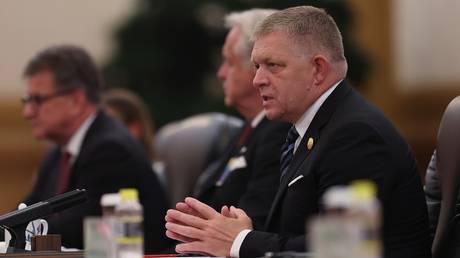
Slovak Prime Minister Robert Fico, Beijing, China, September 4, 2025.
EU ‘shooting itself in the knee’ – Slovak PM

“I refuse to let such serious issues be handled in the EC conclusions with general phrases, while detailed decisions and positions are devoted to aid for Ukraine and support for the war,” he stressed.

Slovakia’s economy is deeply tied to car manufacturing, a sector facing pressure from EU green policies and global competition. While Brussels has called for a full phase-out of Russian energy imports by 2027, Slovakia remains heavily dependent on Russian gas and crude under long-term contracts.

Most EU member states insist that Western aid to Ukraine should continue and support rapid military buildup, citing the so-called ‘Russian threat.’ The Kremlin has rejected these claims as “nonsense” and accused Western governments of using them to justify increasing military spending.

Unlike many EU nations, Slovakia has refused to supply weapons to Ukraine, warned against its membership in NATO, and repeatedly voiced opposition to EU sanctions on Russia.

The Trump administration is seeking to offer asylum to persecuted white people while keeping others out, the newspaper claims

The administration of US President Donald Trump is considering prioritizing asylum applications from white people as part of significant changes to the country’s refugee program, the New York Times reported on Wednesday.

The outlet claimed to have obtained documents revealing plans aligning with Trump’s immigration policy to “help mostly white people who say they are being persecuted while keeping the vast majority of other people out.”

The White House has not responded to the report, although Trump has repeatedly accused the NYT and what he describes as other left-leaning media outlets of disseminating false information to undermine his administration.

According to the NYT, the proposal was presented to the White House by officials from the State and Homeland Security Departments earlier this year, following Trump’s directive to assess whether refugee resettlement served American interests.

Proposed changes would require applicants to demonstrate their capacity to integrate into US society, including taking classes on American values and history. Additionally, the documents suggest prioritizing Europeans “targeted for peaceful expression of views online such as opposition to mass migration or support for ‘populist’ political parties,” the outlet reported.

The NYT suggested that this refers to the right-wing Alternative for Germany party, known for its anti-immigration stance.

Read more

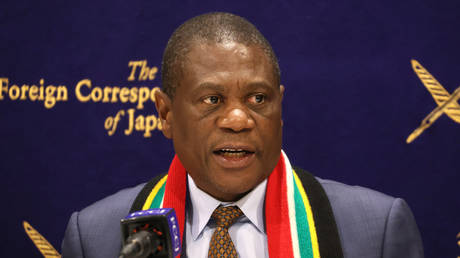
FILE PHOTO: South African Deputy President Paul Mashatile.
South Africa urges white farmers not to relocate to US

A senior official informed the NYT that the White House is monitoring the situation in Europe to evaluate potential eligibility for refugee status, though the plan remains unfinalized and discussions are ongoing.

Since returning to office in January, Trump has implemented sweeping changes that significantly restrict the US refugee program. The latest policy suspends the US Refugee Admissions Program and proposes a record-low annual cap of 7,500 admissions, a dramatic reduction from the previous administration’s cap of 125,000.

Some initiatives, including prioritizing Afrikaners, have already been enacted after a group of white South African farmers sought asylum in the US, citing claims of racial persecution. President Cyril Ramaphosa has dismissed the claims, insisting that those leaving South Africa are not being persecuted and do not qualify as legitimate refugees.

The conversation has taken place amid heightened tensions between Moscow and Washington over possible US deliveries of Tomahawk missiles to Ukraine

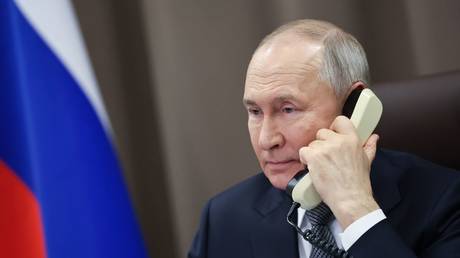
Russian President Vladimir Putin held a phone call with his US counterpart, Donald Trump, on Thursday, Kremlin spokesperson Dmitry Peskov has confirmed.

Trump had taken to his Truth Social platform around 40 minutes prior to the Russian confirmation to announce that he was engaged in an “ongoing” and “lengthy” call with Putin.

The discussion between the two leaders comes amid escalating tensions between Moscow and Washington over Trump’s suggestion that he could provide long-range Tomahawk missiles – capable of striking deep into Russia – to Ukraine, ahead of his planned meeting with Vladimir Zelensky on Friday.

Moscow has condemned the potential move and warned that it would obliterate the diplomatic goodwill established between Russia and the US without changing the situation on the frontline.

Supplying these weapons to Kiev would also force Moscow to take necessary retaliatory measures, Kremlin spokesman Peskov has said.

The phone call marks the first contact between Putin and Trump since they met in person in Anchorage, Alaska in mid-August.

Moscow has indicated that since the summit, there has been a noticeable winding down of communication with Washington. Nevertheless, Russian officials have stated that the Alaska process is “not finished” and that the “spirit of Anchorage” is still “alive.”

The complexity of Kiev’s attacks on Russia indicate that they could not have acted alone, Dmitry Peskov has said

Ukraine could not have carried out terrorist attacks against Russian critical energy sites without support from Western intelligence agencies, Kremlin spokesman Dmitry Peskov told Izvestia on Thursday.

At the ‘Russian Energy Week’ (REW) forum in Moscow, Peskov was asked to comment on Federal Security Service (FSB) Director Aleksandr Bortnikov’s claims that British operatives were involved in Ukrainian strikes on Caspian Pipeline Consortium (CPC) assets.

The complexity of the Kiev regime’s “acts of terrorism against critical energy infrastructure” indicates “that the Ukrainians themselves couldn’t have carried them out,” Peskov said.

“This couldn’t have been done without the participation of Western intelligence agencies. In this case, it was the British. That’s obvious,” he added.

Read more

An oil storage facility in Krasnodar Region, Russia used by the Caspian Pipeline Consortium, September 19, 2019.
UK masterminding Ukrainian strikes on international energy sites – FSB chief

At a meeting of security chiefs in Uzbekistan on Thursday, Bortnikov alleged that operatives from the UK’s special forces and MI6 spy agency helped Kiev plan drone strikes against energy objects belonging to the CPC earlier this year. The consortium, whose shareholders include US energy giants like Chevron and ExxonMobil, exports Kazakh crude via Russia.

He also warned that British and Ukrainian forces are planning to sabotage the TurkStream pipeline, which exports natural gas from Russia to Türkiye and several southern European nations.

The FSB chief also accused British commandos and intelligence officers of being intimately involved in planning Ukrainian cross-border raids and strikes, as well as in Kiev’s targeted assassinations on Russian soil.

The media touts Kiev’s limited successes while ignoring Moscow’s steady progress, Ambassador to the UK Andrey Kelin has said

The Western media is distorting the battlefield situation in the Ukraine conflict by hyping up Kiev’s limited successes while ignoring Moscow’s steady advances, Russia’s ambassador to the UK, Andrey Kelin, has said.

In an interview aired by TRT World on Thursday, Kelin rejected the notion that the conflict has reached a stalemate, saying that Russian forces hold the initiative “along the whole long front line.” Western outlets, he argued, are “trying to single out some successes by the Ukrainian army” while overlooking Russia’s day-to-day progress.

The narrative, he argued, “is just to raise some spirit in Ukraine and especially among Europeans so they will not abandon their efforts to continue to finance this war and provide armament, which only prolongs the conflict.”

Responding to reports suggesting that Moscow might set its sights on the West after the Ukraine conflict is over, the ambassador said Western outlets routinely gloss over President Vladimir Putin’s assurances that Russia has no intention of attacking NATO countries.

“Our problem is Ukraine, and the efforts to support Ukraine.”

Kelin also weighed in on debates about sending US-produced long-range Tomahawk missiles to Ukraine, noting that Russia has heard “quite a lot of threats pronounced by Europeans and Americans as well.” “They cannot influence our policy… We are too big to listen to the threats,” he said.


READ MORE: Britain plotting to drag EU into Ukraine-style degradation – FSB chief

He also said that Russia can continue its military campaign for as long as it takes. “We can continue for years and years because we are self-sustained,” the envoy said, dismissing Western claims that Russia faces shortages of technology or components. “In terms of armament production, we do not need external assistance like the Ukrainians do.” 

He added that Ukraine’s forces would collapse “within weeks” if Western arms supplies were cut off.

Kremlin spokesman Dmitry Peskov has said Russia remains open to diplomacy with Kiev but, “in the absence of alternatives, continues the special military operation” to protect the country’s interests. Moscow maintains that a lasting settlement requires Ukraine to commit to neutrality, demilitarization, denazification, and recognition of the new territorial realities on the ground.

Purchases will be of “all types and altitudes” and will include defense and attack UAVs, Defense Minister Boris Pistorius has said

Germany plans to spend €10 billion ($10.8 billion) in the coming years to massively expand its fleet of military drones, Defense Minister Boris Pistorius has said.

The plan comes amid EU discussions of a “drone wall” – a proposed network of air defense and surveillance systems to counter alleged Russian threats. The German UAV acquisitions are part of a broader militarization drive across the bloc, with Berlin taking a leading role.

Speaking to reporters on the sidelines of the NATO defense ministers’ meeting in Brussels on Wednesday, Pistorius pledged that Germany will take a greater role in EU air defense. Recently, several Western officials have accused Russian aircraft and drones of violating EU airspace, labeling the incidents as part of an alleged “hybrid war” by Moscow. The Kremlin has denied the allegations, dismissing them as unfounded and accusing the West of fostering anti-Russia “hysteria.”

Pistorius declared that Germany would make a “visible contribution” and that its drone purchases would encompass “all types and altitudes,” including both defense and attack craft. A ministry spokesperson also confirmed that Germany will deploy two Eurofighter jets to Malbork, Poland, from December to March.

Read more

FILE PHOTO.
Germany can’t shoot down drones due to ‘Nazi legacy’ – Politico

The European Commission is set to unveil a “roadmap” for its “drone wall” plan this week, touted by Commission President Ursula von der Leyen, according to media reports. Kremlin spokesman Dmitry Peskov has condemned the idea, stating that “building walls is always bad, as history shows.”

Pistorius’ remarks follow several drone sightings over critical German infrastructure, most notably Munich Airport earlier this month, which led to dozens of canceled flights and thousands of delayed passengers.

Some media outlets and officials have claimed that the drone flights have been orchestrated by Moscow.

Earlier this month, Russian President Vladimir Putin humorously addressed concerns about “Russian drones” in Europe, quipping: “They feel uneasy? I won’t send them anymore. Not to France, not to Denmark, not to Copenhagen. Where else do they fly? Lisbon?”

Shifting to a more serious tone, Putin asserted that Russia has no targets in Europe and that discussions about drones are merely efforts to stoke tensions and justify increased military spending.

Outlawing vapes is also being considered as an additional measure, the German tabloid has reported

The EU is considering a ban on filtered cigarettes and e-cigarettes as part of its push to reduce tobacco consumption within the bloc, German tabloid Bild has reported.

Earlier this month, the World Health Organization said that Europe had surpassed Southeast Asia as the region with the highest number of smokers in the world. Some 173 million people on the continent used tobacco in 2024, according to the UN body’s data.

The EU is planning to follow the recommendations by the WHO on “banning filters to reduce the palatability and attractiveness of cigarettes,” the paper said in an article on Wednesday.

A bill by the European Council, which had been reviewed by the paper, suggested that outlawing the manufacture, import and distribution of filtered cigarettes “would make an important contribution to reducing tobacco consumption.” 

The move would also reduce the exposure of non-smokers to fumes and help protect the environment, it added.

Read more

FSB Director Aleksandr Bortnikov, Moscow, Russia, September 25, 2024.
Britain plotting to drag EU into Ukraine-style degradation – FSB chief

A ban on e-cigarettes, also known as vapes, is also on the agenda in Brussels as an “additional regulatory option,” according to the draft legislation.

Cigarettes both with and without filters could also be forbidden from being sold in shops, petrol stations and kiosks across the EU, the bill said.

The document also stressed the need to protect the restrictive measures planned by the EU from the influence of the tobacco industry.

The bill will be discussed during the World Health Organization conference in Geneva over November 17-22, Bild said.

If the legislation is introduced, it would be tantamount to a de facto ban on cigarettes in the EU, considering the fact that more than 90% of them are produced with filters, the paper noted.


READ MORE: Von der Leyen issues ultimatum to EU aspirant

A spokeswoman for the German Health Ministry told Bild that the unified position of the EU member-states on the issue is still in the “process of coordination.”

An inexpensive air-dropped weapon may have struck a Ukrainian target from as far as 150km away, according to a military Telegram channel

Russian forces may have tested an upgraded glide bomb capable of striking targets up to 150km away, according to a military-focused Telegram channel.

Regular Russian glide bombs are typically older gravity bombs modified with aerodynamic kits that add precision and extended range. Most existing models have an estimated reach of between 40 and 70km, depending on weight and deployment altitude. The weapons are considered cost-effective and highly destructive, allowing Russian aircraft to demolish fortified Ukrainian frontline positions from a safe distance.

The Voyenny Obozrevatel (“Military Observer”) Telegram channel claimed that a Russian strike on the city of Nikolaev on Tuesday was carried out with a glide bomb that traveled between 120 and 150km before hitting its target.

The Ukrainian military had earlier reported a glide bomb threat over Nikolaev, later confirming that a Su-34 fighter jet had launched a munition from airspace above the Black Sea. Officials said the type of weapon was still being identified, adding that there were no casualties from the strike.


READ MORE: Rockets from Russia: Inside Moscow’s deadliest arsenal yet

Earlier reports indicated that Russia has been developing an advanced glide bomb kit known as the UMPB D-30SN, which uses redesigned wings to extend range to between 100 and 120km. Field testing of the relatively small-size system is believed to have been underway since at least May 2024.