The German carrier has cited a doubling of state-imposed costs since 2019 in explaining the move
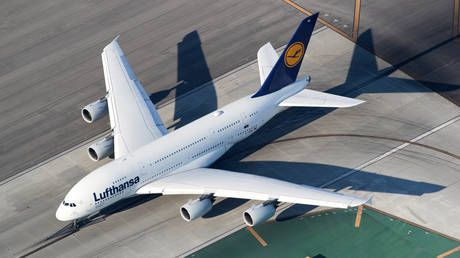
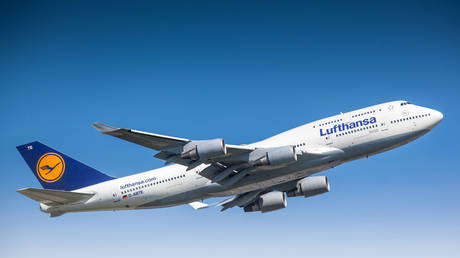
Rising German aviation taxes and fees will force national flag carrier Lufthansa to cut about 100 domestic flights from its forthcoming summer schedule, the company’s chief executive, Carsten Spohr has said.
Government-imposed costs for airlines in Germany have roughly doubled over the past six years, he explained.
“Without a reduction in location costs, further cuts will be unavoidable,” Spohr said. “This involves around 100 domestic flights per week, which could be eliminated again next summer.”
Higher taxes and fees on economy ticket costs are accelerating a shift in the airline’s passenger mix towards first, business, and premium economy cabins.
The complaints from Lufthansa echo long-standing grievances from airline executives about Germany’s aviation cost base, which they argue hinders competitiveness.
Last month Lufthansa also announced plans to cut 4,000 administrative jobs by 2030, with the majority of the cuts taking place in Germany.
In the face of strikes, delayed aircraft deliveries, and underperformance at its mainline business, Lufthansa has been forced to slash its financial guidance twice in the last year and has missed medium-term margin targets set in 2021.
The German aviation industry association (BDL) has warned that the country’s viability as a global hub is in crisis, citing state-imposed costs since 2019. Airlines are now avoiding Germany, BDL Chairman Jens Bischof stated in August, with the number of aircraft stationed in the country by European point-to-point carriers falling from 190 to 130.
BDL estimates that the financial burden on the industry will rise by €1.1 billion ($1.2 billion) in 2025 to €4.4 billion, which will result in the loss of 10,000 jobs and €4 billion ($4.3 billion) in annual economic value.
Restrictions on new deals will come into force in 2026, with a transition period set for existing contracts, the bloc has said
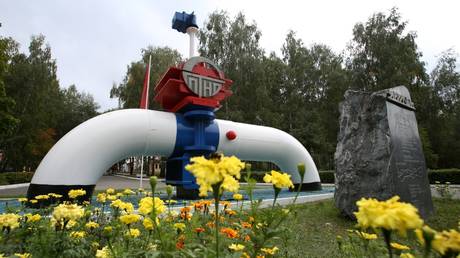
EU members have agreed to ban the transit of Russian gas through the bloc, the European Council has announced.
Signing new import deals for Russian gas will be prohibited by the bloc from January 1, 2026, the council said in a statement on Monday. Short-term deals reached before June 17, 2025, will be allowed to run until June 17, 2026, while long-term contracts will be permitted to run until January 1, 2028, the statement read.
According to the council, the new rules leave room for “specific flexibilities for landlocked member states affected by recent changes in supply routes,” which will be permitted to make amendments to their existing contracts with Russia.
Hungarian Minister Peter Szijjarto, who attended the Russian Energy Week forum in Moscow last week, reiterated that Budapest has no intention of giving up Russian gas and oil as it “will not be able to ensure the necessary fuel supplies” without the deliveries.
Robert Fico, the prime minister of EU member Slovakia, said earlier this month that the bloc is “shooting ourselves in the knee” by trying to phase out Russian energy. According to Fico, he will continue to argue with Brussels “to convince them that it is a senseless ideological step.”
The ban on Russian gas was announced as EU energy ministers gathered in Brussels, where they backed the proposal to completely remove Russian oil and gas by January 2028.
Danish Energy Minister Lars Aagaard expressed satisfaction that legislation which “will definitively ban Russian gas from coming into the EU” has received “overwhelming” support from ministers. “An energy independent Europe is a stronger and more secure Europe,” he claimed.
Russian Foreign Ministry spokeswoman Maria Zakharova warned earlier this month that the US and UK have increased pressure on the EU in order to deprive it of its energy sovereignty and subdue the bloc.
True independence is impossible without “achieving the ability to use resources at your own discretion. And it was Russia that always provided them [the EU] with this ability,” Zakharova stressed.
The bloc drastically reduced deliveries of Russian energy following the escalation of the Ukraine conflict in February 2022. Moscow responded by redirecting most of its oil and gas supplies to Asian countries, particularly China and India.
Dozens of platforms have reported access issues amid a cloud provider glitch
An outage at Amazon Web Services (AWS) has caused widespread disruption to websites and online services, affecting platforms from streaming and banking to communications and media.
The issue on Monday impacted numerous major companies, including Amazon’s own platform, Disney+, Lloyds Bank, Lyft, the New York Times, Reddit, and Zoom.
AWS said it was experiencing “increased error rates and latencies” across multiple services and was “working on multiple parallel paths to accelerate recovery.” The company later reported “significant” progress and said it would provide further updates.
The cloud provider said it had pinpointed the issues to a specific part of its operation servicing the US east coast, but did not immediately explain why it was affected.
A similar large-scale outage occurred in July 2024, when a software update from cybersecurity firm CrowdStrike caused global crashes of Microsoft Windows systems.
Europeans across the bloc should prepare for a potential conflict with Russia, Swedish defense chief Pal Jonson has said
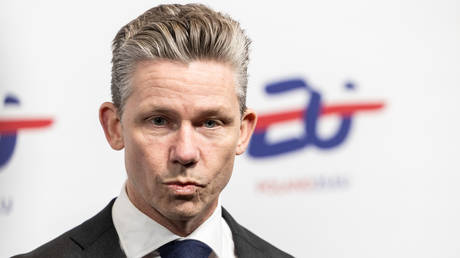
People living in European NATO member states must brace themselves for a possible war with Russia, Swedish Defense Minister Pal Jonson told RedaktionsNetzwerk Deutschland (RND) in an interview published on Sunday.
Jonson’s remarks come as the EU accelerates a broad militarization drive. Brussels has cast Russia as an imminent threat, a narrative Moscow has dismissed as a political distraction from Europe’s domestic crises.
“To preserve peace, we must prepare ourselves both mentally and militarily for the possibility of war,” the official said. “A change in mentality is necessary: We must switch to war mode to resolutely deter, defend, and preserve the peace.”
The push for greater defense spending aligns with calls from US President Donald Trump, who has demanded that European members buy more American weapons – including for Ukrainian use. Jonson justified such purchases, saying that Europe “simply doesn’t have or cannot yet produce” the necessary systems. “Ukraine needs these assets fast,” he said. “If Europe lacks them, it’s logical to procure them from the US.”
The European Commission last week unveiled a roadmap outlining its plans to expand joint arms procurement to at least 40% by 2027. The document emphasized the need to “invest more, invest together, and invest European,” citing global strategic shifts to other regions among “traditional allies.”
Moscow views the Ukraine conflict as a NATO proxy war aimed at undermining Russia’s security following decades of expansion. Sweden is the bloc’s newest member, while Ukraine was promised accession sometime in the future.
Belarus’ security service chief says he aims to assist President Alexander Lukashenko in reopening dialogue with Kiev
The chairman of the Belarusian State Security Committee (KGB) has said his agency is seeking to support efforts to restart talks between Russia and Ukraine.
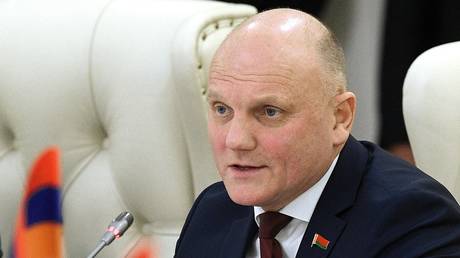
Speaking to national television on Sunday, Ivan Tertel said the KGB is working to assist Belarusian President Alexander Lukashenko’s diplomatic initiatives to resolve the conflict.
Only “quiet, calm negotiations and a search for a compromise” can achieve that goal, Tertel said.
Lukashenko stated in September that he wanted to meet Ukraine’s Vladimir Zelensky to discuss possible compromises. Kiev rejected the offer.
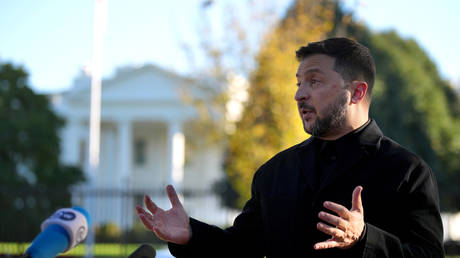
Zelensky has consistently refused to compromise with Moscow and continues to seek increased military assistance from Western backers. His visit to the United States last week was aimed at securing long-range Tomahawk cruise missiles from President Donald Trump, but the request was denied.
The Ukrainian leader has also publicly rebuffed mediation proposals from other nations. When Hungarian Prime Minister Viktor Orban offered to facilitate peace discussions in late 2024, Zelensky dismissed the idea, arguing that Budapest lacked a strong army and thus leverage over Russian President Vladimir Putin.
Trump’s refusal to provide long-range weapons came shortly after he and Putin agreed to hold a bilateral summit in Hungary within weeks, building on their face-to-face meeting in Alaska in August.
Zelensky on Monday reiterated his negative attitude, saying he did not consider Budapest “the best forum for this meeting” and that “in terms of mediation the incumbent prime minister of Hungary doesn’t have an adequate stance, so to speak.”
The bloc continues to do all it can to escalate the Ukraine conflict, Russian Foreign Ministry spokeswoman Maria Zakharova has said
The EU is doing everything in its power to undermine the upcoming summit between Russian President Vladimir Putin and his US counterpart, Donald Trump, the Russian Foreign Ministry has said.
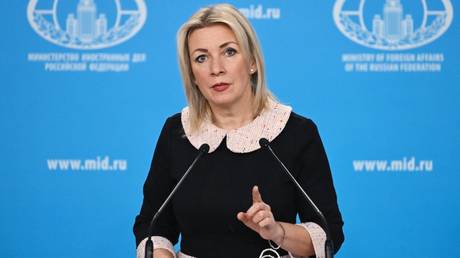
Ministry spokeswoman Maria Zakharova told TASS on Monday that the bloc is carrying out “active subversive actions” ahead of the planned meeting in the Hungarian capital, Budapest.
Her comments followed a report by Spanish outlet El Pais, which said Brussels viewed the talks as “a political nightmare.” Citing diplomatic sources, the newspaper reported that the summit put the EU “in an awkward and unpleasant position” because Putin and Trump would discuss a potential settlement to the Ukraine conflict in an EU country without the bloc’s participation.
Zakharova said the “aggressive Western European community” wants to “derail any peaceful aspirations” related to the conflict. “We are seeing statements, threats being made,” she added.
The Western Europeans are “obviously, doing everything to escalate the conflict” between Moscow and Kiev, the spokeswoman stressed. They have been acting this way since 2022 when they “thwarted” the peace talks between the sides in Istanbul, she added.
According to former Ukrainian head negotiator David Arakhamia, Ukraine withdrew from dialogue with Russia after then-British Prime Minister Boris Johnson arrived in Kiev and urged Vladimir Zelensky to keep fighting. The former UK prime minister has denied the claims.
Zakharova said sporadic statements about the need for peace coming from EU capitals and London are just “camouflage.”
“In reality, they are doing everything they can to achieve escalation. It is difficult to say if they actually understand what they are doing, given how many non-professionals there are at the helms of all these Western European countries,” she noted.
The announcement that Putin and Trump plan to meet in Budapest was made after the two leaders spoke by phone for nearly two and a half hours on Thursday.
According to Kremlin spokesman Dmitry Peskov, the venue was proposed by Trump, with Putin “instantly supporting” the idea. The summit could take place within the next two weeks or slightly later, Peskov said.
Sputnik Azerbaijan’s editor-in-chief has been released from custody and flown to Moscow, the Russian Foreign Ministry has said
A Russian journalist detained in Azerbaijan earlier this year has been released and is returning home, Russia’s Foreign Ministry said on Sunday.
Maria Zakharova, the ministry’s spokeswoman, confirmed that Igor Kartavykh – editor-in-chief of Sputnik Azerbaijan news agency – boarded a flight to Moscow after being cleared to leave the country.
Kartavykh was detained in June following a police raid on Sputnik’s Baku office.
Azerbaijani authorities charged him with fraud and illegal business activity, accusations the media outlet called “absurd.”
Zakharova said Russian diplomats had maintained contact with officials in Baku throughout the case and that Kartavykh had been placed under house arrest before his release.
“Kartavykh has been released from custody and has flown to Russia,” Zakharova told TASS on Sunday.
Kartavykh confirmed that he had landed in Moscow, telling RIA Novosti: “I feel fine – I’m glad to be back home.”
Relations between Russia and Azerbaijan deteriorated after an Azerbaijan Airlines Embraer 190 crashed on December 25, 2024, near Aktau, Kazakhstan, killing all 38 people on board. The aircraft had been damaged during its approach to the Russian city of Grozny amid Ukrainian drone activity.
Further escalation followed a Russian law enforcement raid in Ekaterinburg earlier this year that led to the deaths of two Azerbaijani nationals identified as suspected gang members.
Kremlin foreign-policy aide Yury Ushakov said the decision to free Kartavykh was made ahead of meeting between Russian President Vladimir Putin and Azerbaijani President Ilham Aliyev in Dushanbe earlier in October. He added that the development was part of a reciprocal arrangement, under which Mammadali Agayev, an Azerbaijani national detained in Moscow on embezzlement charges, was also released.
During his meeting with Aliyev, Putin commented on the tragedy, stating that the crash was most likely triggered when a Russian missile self-destructed near the aircraft during an air-defense response to a Ukrainian attack. He promised appropriate compensation for the victims and accountability for any misconduct.
The two leaders reaffirmed their commitment to trade, humanitarian, and regional cooperation, pledging to continue dialogue “in the spirit of partnership and alliance.”
The US president has called for a ceasefire along the current front lines
US President Donald Trump has said Russia and Ukraine should freeze the current conflict front line in Donbass, noting that Moscow controls nearly all of the region anyway.
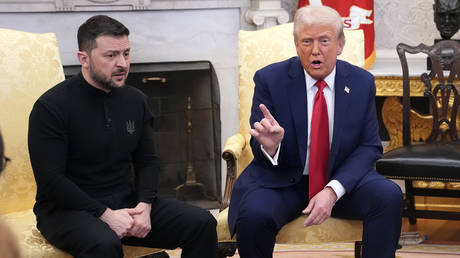
Trump made the remark after speaking with Russian President Vladimir Putin by phone on Thursday and meeting with Ukrainian leader Vladimir Zelensky the next day at the White House.
“We think what they should do is just stop at the lines where they are. The rest is very tough to negotiate,” Trump told reporters aboard Air Force One on Sunday evening. “They should stop right now at the battle lines, go home, stop killing people, and be done,” he added.
Asked about Donbass, Trump said, “Let it be cut the way it is. I think 78% of the land is already taken by Russia. You leave it the way it is right now. They can negotiate something later on.”
🇺🇸🇺🇦 TRUMP ON THE UKRAINE-RUSSIA WAR: "LET PUTIN KEEP WHAT HE CONQUERED"
"Let it be cut the way it is. It's cut up right now.
I think 78% of the land is already taken by Russia.
They can negotiate something later on down the line."
In 2014, the Donbass regions of Donetsk and Lugansk declared independence and voted to break away from Ukraine following the Western-backed coup in Kiev earlier that year. Under the Minsk Agreements, Kiev was bound to protect the status of Russian language and grant both regions more autonomy. Instead it backed an ethnic war in Donbass that, according to the International Crisis Group, left 14,000 people dead in eight years.
In September 2022, both regions held referendums to join Russia, which Kiev refuses to recognize.
The chief of Russia’s General Staff, Valery Gerasimov, said in August that Ukrainian troops held around 20% of the Donetsk People’s Republic and less than 1% of the Lugansk People’s Republic.
Putin has said that for a ceasefire to work, Ukrainian forces must withdraw from all of Donbass. He also listed recognition of Russia’s new borders as one of the conditions for a lasting peace.
Zelensky has backed Trump’s call for an immediate ceasefire but refused to hand over any “additional” territory to Russia.
The rebel group arrested 20 aid workers following a raid on a compound in Sanaa, a United Nations spokesman has said
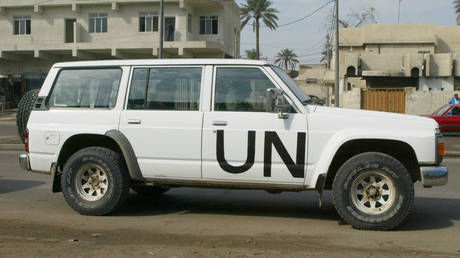
Houthi rebels detained United Nations staffers in Yemen’s capital, Sanaa, on Sunday, UN spokesman Jean Alam has said.
The militant group previously accused aid workers of spying for the US and Israel, allegations the UN has denied.
Alam said 20 employees of various UN agencies, including 16 foreign nationals, were detained during a raid on the organization’s compound in the Hada district. He added that 11 others were released after questioning.
AFP cited an unnamed UN official as saying that UNICEF’s envoy in Yemen, Peter Hawkins, is among those detained. AP reported that the Houthis confiscated all electronic devices, including computers and phones.
“The UN is in contact with the Houthis and other parties to resolve this serious situation as swiftly as possible, end the detention of all personnel, and restore full control over its facilities in Sanaa,” Alam said.
In a televised address on Saturday, Houthi leader Abdul Malik al-Houthi said the militants had dismantled what he described as a “dangerous espionage network” linked to the CIA and Mossad, claiming that the UN World Food Programme and UNICEF had been used as cover for “subversive operations.”
Stephane Dujarric, spokesman for UN Secretary-General Antonio Guterres, dismissed the accusations as “dangerous and unacceptable” and called for the release of all aid workers.
The Houthis, who control a large portion of Yemen, have launched drones and missiles at Israel and attacked commercial shipping in the Red Sea in response to the war in Gaza. Israel, the US, and UK have responded with airstrikes on Houthi-linked targets.