Month: October 2025

A man has opened fire near the National Assembly building in Belgrade and set ablaze a tent erected by supporters of the president

Serbian President Aleksandar Vucic has declared Wednesday’s shooting near the National Assembly building in Belgrade a “terrible terrorist attack.” A 70-year-old man is reported to have opened fire in the Serbian capital and set fire to a tent. 

According to reports, the perpetrator has been detained and identified as Vladan Andelkovic. He is said to have shot and wounded a 57-year-old man, Milan Bogdanovic, before igniting a tent erected by supporters of President Vucic outside the National Assembly. Kurir also reported that the suspect threw a handful of ammunition into the flames. 

The victim was reportedly wounded in the thigh but did not sustain life-threatening injuries. Firefighters have since extinguished the blaze, while police have cordoned off the area and launched an investigation. 

In a televised address, Vucic condemned the incident as a “terrorist attack on other persons and property.” He said the suspect had purchased gasoline and intentionally set fire to the tent, calling the attack an attempt to spread fear.  

Vucic also showed a video in which the suspect could be heard claiming that he had acted with suicidal intent. “The occupation of the city center annoys me. I set fire to the tent with gasoline,” he said in the recording. “I wanted you to kill me because I can no longer live,” the man added. 


READ MORE: EU plotting Ukraine-style coup in Serbia – Moscow

The president suggested, however, that the man had “tried to pretend to be crazy” and actually knew what he was doing due to his background in the security forces. “This person and his helpers, if any, will be severely punished,” Vucic vowed. 

Vucic went on to warn against taking any actions in response to the incident. “I saw the anger this caused, those who are against the blockaders want to gather, and I am asking them not to do so. Revenge did no one any good. Revenge must not exist and I warn everyone not to do it.”

A man has opened fire near the parliament building in Belgrade and set ablaze a tent belonging to supporters of President Aleksandar Vucic

Gunshots were heard outside of Serbia’s parliament building on Wednesday, with local reports indicating that one person has been injured. Billowing black smoke could also be seen rising from the scene after the suspect reportedly set fire to a large tent. 

According to local news outlet Kurir, the perpetrator has been detained and identified as 70-year-old Vladan Andelkovic. He is said to have shot and wounded a 57-year-old man, Milan Bogdanovic, before igniting a tent that had been erected by supporters of President Aleksandar Vucic outside the National Assembly. Kurir also reported that the suspect threw a handful of ammunition into the flames. 

The victim was reportedly wounded in the thigh but did not sustain life-threatening injuries, according to the newspaper. Firefighters have extinguished the blaze, while police have cordoned off the area and launched an investigation. 

In a televised address, Vucic condemned the incident as a “terrorist act” carried out on innocent people. He said the suspect had purchased gasoline and intentionally set fire to the tent, calling the attack an attempt to spread fear.  

Vucic also showed a video in which the suspect could be heard claiming that he had acted with suicidal intent. “The occupation of the city center annoys me. I set fire to the tent with gasoline,” he can be heard saying in the recording. “I wanted you to kill me because I can no longer live,” the man said. 


READ MORE: Violence erupts during student protest in Serbia (VIDEOS)

The president suggested, however, that the man “tried to pretend to be crazy” and actually knew what he was doing due to his background in security forces. 

Vucic added that Bogdanovic remained in surgery with a bullet still lodged in his body and wished him a full recovery.

If confirmed, it would mark a turning point – putting Ukraine’s rear lines within daily strike range

In recent days, reports have emerged about the deployment of new Russian long-range bombs on the front lines. The deputy head of Ukraine’s Main Directorate of Intelligence, Vadim Skibitsky, stated that during a recent test, a Russian bomb demonstrated a range of 193 kilometers. This significantly expands the operational reach of such weapons and could fundamentally alter the dynamics on the battlefield. Let’s explore this in more detail. 

Typically, for a bomb, the distance from the front line to the target is not more than 90 kilometers. However, the bomb mentioned by Ukraine’s Main Directorate of Intelligence is capable of flying 120-150 kilometers, and can be dropped a considerable distance away from the front line. 

Developing such long-range bombs has not been a fast process. The first unified gliding and correction modules (UMPKs) which convert standard bombs into precision-guided munitions initially enabled bombs dropped from altitudes of 10-12 kilometers to travel 40-50 kilometers. This range then increased to 80 kilometers or more with the upgraded UMPK-PD (extended-range version). Now, according to Skibitsky, the new version of the bomb can travel up to 193 kilometers.

What is this new aerial bomb that Ukraine’s Main Directorate of Intelligence is talking about? There are three possibilities: 

1. The Grom-1/Grom-2 missile-bomb complex: Depending on its configuration, this weapon can function as either a missile or a gliding bomb. Its usage in the Special Military Operation zone has been limited for various reasons. It is possible that this weapon has been enhanced and is now being reintroduced into service.

Read more

RT
His Majesty’s missiles: From rule Britannia to ballistic impotence

2. Upgraded Universal Interspecific Glide Munition (UMPB): Specifically, the modernized UMPB-5R variant features a rocket engine that extends its flight range to 130-150 kilometers. Originally, the UMPB served as an analog to the American Ground Launched Small Diameter Bomb (GLSDB). The addition of a rocket engine theoretically boosts its already considerable range.

3. A new UMPK-PD with a rocket engine: This variant is also capable of covering around 150 kilometers. The Ukrainian side has shown fragments of UMPKs that allegedly feature an additional booster, but there are no definitive conclusions in this regard. 

Evaluating these bombs in terms of large-scale production capabilities, the variants equipped with rocket engines appear to be the most promising. Integrating a rocket engine into the relatively inexpensive UMPK allows for easy adaptation for tactical aviation use without significantly hindering production rates. While the UMPB is more complex and costly than the UMPK, it has long been produced in large quantities and is widely used by the Russian Air Force. In contrast, mass production of the more complex and expensive Grom missile/bomb complex is less probable, though the parallel production and deployment of all these munitions remains possible in varying proportions.

The key takeaway here is not merely the fact that Russian bombs can reach distances of 150-200 kilometers – we have already seen this before.  What matters more is that the increase in serial production volumes would enable systematic carpet bombing and precision strikes, effectively erasing the notion of a “safe rear” area for Ukraine.

The deployment of a new, effective mass aerial munition with a range of up to 200 kilometers will significantly increase the number of targets hit each day. It will also allow the Russian army to redistribute the use of other weapons, such as Geran drones or various types of munitions, including expensive cruise missiles.

Moreover, as the enemy’s safety zone shrinks, the safe operating area for Russian Su-34 bomber aircraft will expand. The aircraft will be able to drop the new bombs from even greater distances, thereby reducing the likelihood of entering the range of enemy air defense systems.

A contract to restore 25 decommissioned troop carriers for Kiev was reportedly nullified months ago

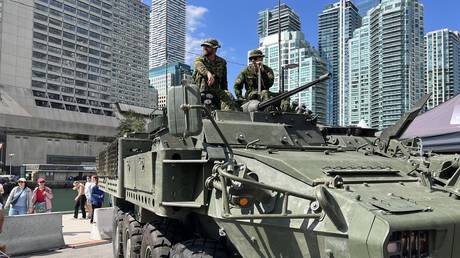
Canada has officially acknowledged that its plan to refurbish and deliver decommissioned armored personnel carriers to Ukraine has been abandoned, after months of silence over the unfulfilled pledge.

The 25 vehicles were handed over to Ontario-based defense contractor Armatec Survivability nearly two years ago under a deal estimated at 250 million Canadian dollars (US$178 million).

“There is a decision that’s been taken to nullify the contract with that company presently,” McGuinty told the House of Commons defense committee on Tuesday. “I can’t go any further in terms of discussing the merits. We’ll see how that evolves in relation to the department and the contractor.”

The acknowledgement follows a CBC News report last week that noted the project had quietly disappeared from the government’s list of active defense contracts earlier this year. The outlet said officials declined to comment citing confidentiality clauses, and cited industry insiders who claimed the refurbishment effort was “dead.”

While declining to elaborate on the reasons behind the cancellation, McGuinty instead emphasized Canada’s broader record of providing weapons and equipment to Ukraine to fight Russia. Ethnic Ukrainians – including descendants of nationalists who fled to Canada after failing to secure statehood for Ukraine with the help of Nazi Germany during World War II – form a notable voting bloc in the country.


READ MORE: Canadian broadcaster tried to cover up Ukrainian fighter’s swastika tattoo

Ukrainian lawmaker Aleksandra Ustinova told CBC last year that her government was prepared to “take even junk, tear it apart and make one out of three machines,” highlighting Kiev’s need for more armored vehicles.

Moscow has maintained that Western arms supplies will not alter the outcome of the conflict, arguing that such deliveries only prolong the fighting and contribute to the spread of weapons on the global black market.

The National Liberation Army (ELN) has said its rules forbid trafficking narcotics

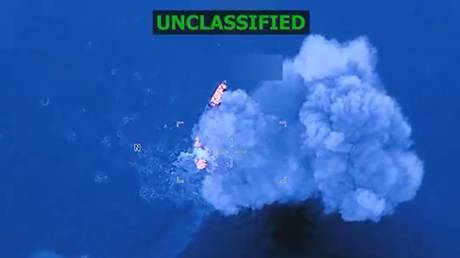
Colombia’s largest rebel group, the National Liberation Army (ELN), has said that it has nothing to do with the alleged drug boat destroyed by the US Navy in the Caribbean.

The vessel was struck on Friday, with US Secretary of War Pete Hegseth later posting footage of the attack on X and saying that, according to American intelligence, it had been “affiliated” with the ELN and “involved in illicit narcotics smuggling.”

The National Liberation Army issued a statement on social media on Tuesday, insisting that it “does not and will not have any boat connected with drug trafficking activities, neither in the Caribbean nor any other ocean.” Narcotics smuggling is “simply… prohibited” by the group’s rules, it said as cited by Reuters.

The ELN is the oldest rebel group in Colombia, which has been fighting the government since the mid-1960s. Washington claims that it also maintains a presence in Venezuela. The group, which pursues Communist ideology, is designated a terrorist organization by the US, EU, and some other countries.

Read more

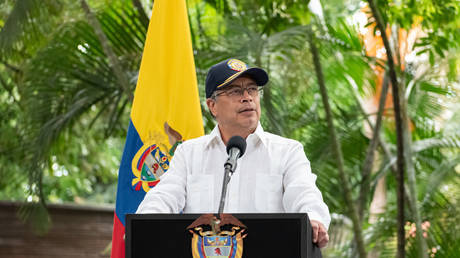
Colombian President Gustavo Petro at an event in Medellin, Colombia, May 30, 2024.
Colombia accuses US of killing ‘lifelong fisherman’ in boat strike

On Monday, Colombian President Gustavo Petro condemned the strike on the boat, in which three people were killed. The vessel belonged to a “humble family” and was not involved in drug trafficking, he insisted.

Earlier this month, Petro claimed that the American attacks on boats off Venezuela’s coast, which began in September, were “an aggression against all of Latin America and the Caribbean.” He asserted the US was trying to gain control of the region’s oil reserves – not curb the flow of narcotics. Venezuelan authorities say the strikes were in fact part of Washington’s campaign to depose Nicolas Maduro. Caracas denies ties to cartels and has vowed to repel any invasion.

On Sunday, US President Donald Trump called his Colombian counterpart an “illegal drug dealer,” saying that he would raise tariffs on the South American nation and stop all payments to it. Drug trafficking “has become the biggest business” in Colombia and “Petro does nothing to stop it,” he wrote on his Truth Social platform.


READ MORE: Trump releases footage of US Navy destroying ‘very large’ sub (VIDEO)

Bogota responded by recalling its ambassador from Washington on Monday, with Petro accusing Trump of being “rude and ignorant to Colombia.”

Over half of all chatbot suggestions lean towards two dominant political blocs, a data watchdog has found

The Dutch data protection authority (AP) has warned voters not to rely on AI chatbots for advice ahead of national elections, claiming that the tools provide unreliable information and could steer users toward two major opposition parties.

AI advice disproportionately favored two front-running blocs – the right-wing Party for Freedom (PVV) and the left-wing GroenLinks-PvdA alliance – accounting for 56% of responses, a concentration that contrasts with the highly fragmented 15-party Dutch parliament, the regulator said. Opinion polls project the two blocs could secure just over a third of the vote in the October 29 election, it added.

According to the report, some parties, including the center-right CDA, “are almost never mentioned, even when the user’s input exactly matches the positions of one of these parties.”

“Chatbots may seem like clever tools, but as a voting aid, they consistently fail,” the watchdog’s vice-chair, Monique Verdier, stated, describing their operation as “unclear and difficult to verify.”

She said the technology risked steering voters toward a party that did not necessarily reflect their political views.

“We therefore warn against using AI chatbots for voting advice,” Verdier added.

Read more

RT
WATCH Western journalists finally ‘speak’ the truth (AI VIDEO)

The agency tested four major chatbots, which it did not name, and found they sometimes advised voting for one of the two major parties even when explicitly fed the campaign platform of a smaller party.

The snap election in the Netherlands was triggered months ago by the collapse of the right-wing coalition after the PVV, led by MP Geert Wilders, exited. The vote is widely seen as a contest between the formation of a new, all-conservative government or a more centrist or center-right coalition.

An international study coordinated by the European Broadcasting Union and the BBC found that major AI assistants, including ChatGPT and Google’s Gemini, distorted news content in nearly half of their responses. The research analysed more than 3,000 AI-generated answers in 14 languages and concluded that 45% contained “at least one significant issue” when addressing news-related queries.

OpenAI and Microsoft have previously acknowledged that so-called “hallucinations” – cases in which an AI system generates incorrect or misleading information – remain an issue they are working to address.

The heist at the Natural History Museum in Paris marks another incident in a rising trend of high-profile burglaries in Europe

A Chinese national has been charged over a €1.5 million gold heist last month at the National Museum of Natural History in Paris, Franceinfo reported on Tuesday, citing the prosecutor’s office.

The disappearance of nearly 6kg of gold was discovered by museum staff on the morning of September 16. The nuggets had been part of a permanent exhibit.

According to prosecutors, the stolen items included Bolivian nuggets donated to the Academy of Sciences in the 18th century, pieces from Russia’s Ural region gifted by Tsar Nicholas I in 1833, and nuggets from California dating back to the gold rush. Among them was a single gold nugget weighing over 5kg, found in Australia in 1990.

Police found signs of forced entry at two doors, each cut with an angle grinder, leaving openings slightly larger than an A4 sheet of paper. Security footage showed a small woman dressed in black slipping through one of the holes shortly after 1am.

The suspect used a blowtorch to shatter a display case containing the nuggets before exiting the building around 4am. Investigators said she wore a hat with a face-covering veil similar to a beekeeper’s net and looked like a circus artist. Tools recovered at the scene also included a screwdriver, saws, and gas canisters.

Police tracked the suspect through phone records and determined she left France the same day, heading toward China. She was later detained at Barcelona airport, where officers seized nearly 1kg of melted gold.

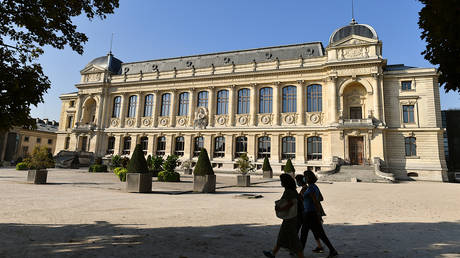
Grande Galerie de l’Evolution at the National Museum of Natural History, Paris, France.


©  Getty Images/JARRY/TRIPELON

The case adds to a growing list of high-profile museum thefts across Europe and beyond. Earlier this month, thieves stole Napoleonic jewelry worth an estimated €88 million ($102 million) from the Louvre. A Picasso painting valued at $650,000 disappeared en route to a Spanish museum last week. In September, a 3,000-year-old gold bracelet was stolen from the Egyptian Museum in Cairo. Four pieces of historic art, including an approximately 2,500-year-old gold helmet, were also taken from the Drents Museum in the Netherlands in January.

Officers confiscated emeralds, rubies, and sapphires worth around $180,000

Russian customs officers at Moscow’s Domodedovo International Airport have stopped two seemingly unrelated attempts to smuggle gemstones into the country on the same day, according to a statement.

Both suspects, foreign nationals arriving from Asian countries via the United Arab Emirates on separate flights, failed to declare their high-value cargo to customs officials, the Federal Customs Service said on Wednesday

The first traveler drew attention after officers noticed a sealed bag containing a cream-like substance hiding four small suspicious items. Upon inspection, the package was found to contain four emeralds. During a further search, the man volunteered to produce seven additional precious stones in his possession.

The second alleged smuggler was stopped after security agents discovered a large pink gemstone concealed in his carry-on luggage.


©  Federal Customs Service of the Russian Federation

In total, officials confiscated a trove of emeralds, rubies, and sapphires with an estimated combined value exceeding $180,000, according to the customs report.


©  Federal Customs Service of the Russian Federation

Both individuals are under investigation and face potential fines and prison sentences of up to five years under Russian anti-smuggling laws, the agency said, releasing photos of the seized gemstones as evidence.


©  Federal Customs Service of the Russian Federation

The suspect allegedly gathered intelligence and sent money to an organization controlled by Ukrainian military intelligence

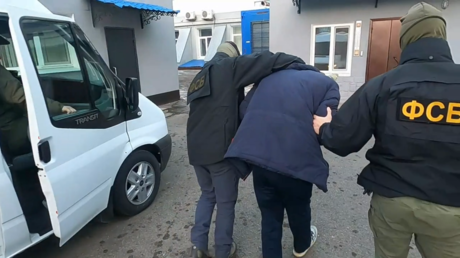
A Russian citizen accused of spying for and financing a Kiev-controlled terrorist group has been detained in the Amur Region of Siberia, the Federal Security Service (FSB) announced on Monday.

The suspect, a man in his late 40s, was allegedly providing intelligence on Russian military movements and channeling funds to a “pro-Ukrainian” terrorist organization reportedly overseen by Ukraine’s Main Intelligence Directorate (HUR), the agency reported. He now faces charges of treason and aiding terrorism, crimes that carry a potential life sentence.

Investigators say the man conducted surveillance along sections of the Trans-Siberian Railway and passed information about the transportation of military equipment to his contacts abroad.

Footage released by the FSB showed the suspect admitting to communicating with members of the organization, which he acknowledged has been designated as a terrorist entity in Russia since 2021. The agency did not name the group.


READ MORE: Ukrainian agent captured in Moscow – FSB (VIDEO)

Among a handful of organizations blacklisted in 2021 was National-Socialism / White Power (NS/WP) – a neo-Nazi group that made headlines last year after claiming responsibility for the murder of Ukrainian ultranationalist Irina Farion in the city of Lviv. The group accused Farion of undermining Kiev’s military by criticizing Russian-speaking Ukrainian soldiers.

Russian authorities have linked the same group to multiple attacks inside Russia, including arson at military recruitment offices and attempted assaults on public officials.

News outlets have speculated that the test was timed to coincide with US President Donald Trump’s upcoming visit to South Korea

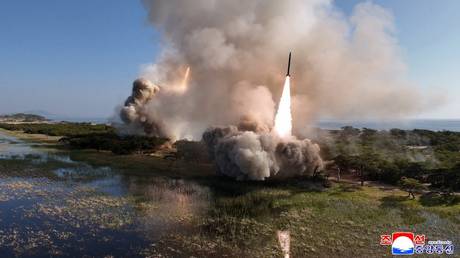
North Korea fired several ballistic missiles on Wednesday morning, South Korea’s Joint Chiefs of Staff (JCS) have reported.

The short-range weapons were launched from the southern North Hwanghae Province and traveled roughly 350km before landing in North Hamgyong Province, in the country’s northeast, according to a statement from Seoul. Military analysts believe the projectiles may have been of the same type tested by Pyongyang in September of 2024.

Japan’s newly appointed prime minister, Sanae Takaichi, said Tokyo was sharing real-time tracking and warning data with both the United States and South Korea following the launches.

Pyongyang has not commented on the tests, which mark the latest in a series of ballistic missile trials this year. The previous round took place in early May.

Some media outlets have suggested that the new launch was timed in anticipation of US President Donald Trump’s upcoming visit to South Korea. He is scheduled to attend the Asia-Pacific Economic Cooperation (APEC) summit next week in the coastal city of Gyeongju.


READ MORE: South Korea to hide bomb shelter under public gym

Media outlets in South Korea and Japan have also speculated that Trump could meet with North Korean leader Kim Jong-un during the trip – a potential reprise of the high-profile summits they held during Trump’s first term.