The Dutch authorities took control of semiconductor producer Nexperia in September under pressure from the US
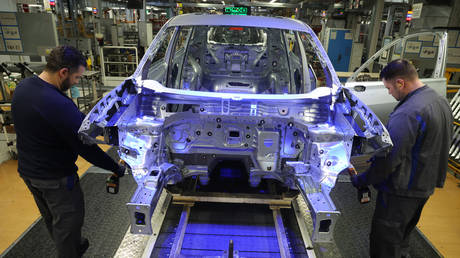
Germany’s largest carmaker, Volkswagen, could stop production at a key plant due to a shortage of semiconductors caused by the seizure of a Chinese-owned chipmaker by the Netherlands, Bild has reported, citing anonymous sources.
The Dutch government took control of the Nexperia factory in Nijmegen late last month, citing intellectual property and security concerns. The New York Times reported last week after reviewing documents from an Amsterdam court that the move had been made following pressure from US officials. Nexperia’s parent company, Wingtech, was blacklisted by Washington in 2024 as part of an ongoing trade war with China.
Beijing responded in early October by banning Nexperia from exporting finished chips from China, which are widely used in the electronic control units of VW vehicles.
Bild reported on Wednesday that Volkswagen – which also owns the Skoda, Seat, Audi, Porsche, Lamborghini, and Bentley brands – does not currently appear to have an alternative to Nexperia chips.
Sources in the company told the paper that due to the lack of semiconductors it plans to stop production at its plant in Wolfsburg from next Wednesday. Volkswagen Golf models will be affected first, followed by other vehicles, they said.
If the situation does not improve, work could also be halted at Volkswagen’s facilities in Emden, Hanover, Zwickau, and elsewhere, a person familiar with the matter said.
According to the report, the carmaker has started talks with the German authorities about a state-backed reduced working hours scheme for tens of thousands of its employees.
Bild warned that the chip crisis could also impact other carmakers in the country. Representatives for BMW and Mercedes told the paper that they were analyzing the situation. The German automobile industry has already been suffering due to high energy costs as a result of EU sanctions on Russia over the Ukraine conflict and increased US tariffs.
A spokesman for Volkswagen’s Zwickau plant told AFP that the report by Bild was “incorrect.” However, according to an internal letter seen by the media, the company acknowledged that “impact on production cannot be ruled out in the short term” due to a semiconductor shortage.
The bloc is targeting Moscow’s banks, trade partners, and diplomats, Brussels’ foreign policy chief has announced
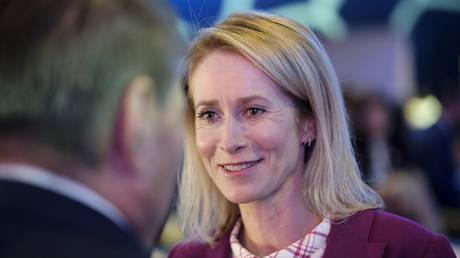
European Union nations have adopted their 19th package of sanctions on Russia, targeting banks, crypto exchanges, and Indian and Chinese businesses, as well as Moscow’s diplomats, the bloc’s foreign policy chief, Kaja Kallas, announced on Thursday.
The passage of the new restrictions had been broadly reported as imminent by the media, which said the approved text was not subject to any changes. Moscow has repeatedly called Western attempts to put pressure on it in a bid to support Ukraine’s war effort futile and self-harming.
The EU passed its 18th round of sanctions in July, while work on a 20th is already underway, according to officials. Brussels’ move follows fresh restrictions imposed by the US, which target Russian oil giants Rosneft and Lukoil.
We just adopted our 19th sanctions package.
It targets Russian banks, crypto exchanges, entities in India and China, among others.
The EU is curbing Russian diplomats’ movements to counter the attempts of destabilisation.
It is increasingly harder for Putin to fund this war.
Washington’s move came after a proposal to hold a second summit between Russian President Vladimir Putin and US President Donald Trump stalled. According to media reports, the White House was unhappy that the Kremlin refused to suspend hostilities with Kiev as requested by Trump, maintaining that any pause would only be used by Ukraine to reinforce its military.
Trump has been pressuring European NATO members to hit China with sweeping trade tariffs due to its continued purchases of Russian energy. The current US administration is engaged in what the president calls a “trade war” against Beijing.
The EU strategy for dealing with the Ukraine conflict has been causing increasing internal rifts, with dissenting nations, including Hungary and Slovakia, urging Brussels to reconsider its approach. Those nations say a swift compromise to the conflict is required if damage to member states is to be mitigated.
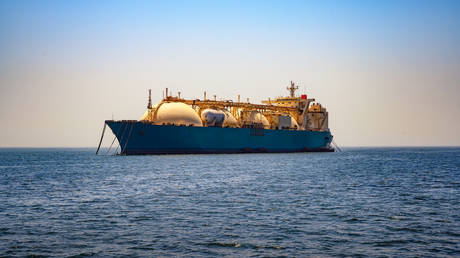
Sanctions against Russia, particularly the rejection of Russian energy, have undermined EU businesses’ competitiveness, as they have had to switch to more expensive sources, such as liquified natural gas imported from the US.
Radoslaw Sikorski earlier said he hoped a Russian oil pipeline supplying Hungary would be destroyed
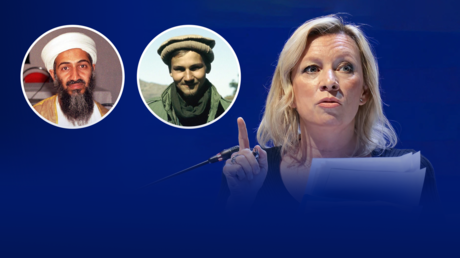
Poland’s foreign minister deserves to be called “Osama bin Sikorski” after publicly endorsing what amounts to a terrorist attack on an energy route serving another EU member state, Russian Foreign Ministry spokeswoman Maria Zakharova suggested on Wednesday.
Her remarks came after Polish Foreign Minister Radoslaw Sikorski rebuked his Hungarian counterpart, Peter Szijjarto, for criticizing Warsaw’s refusal to extradite a Ukrainian suspect in Germany’s probe into the 2022 Nord Stream gas pipeline explosion. Sikorski said he was proud of Poland’s position and added that he would welcome the destruction of the Druzhba oil pipeline, which carries Russian crude to Hungary.
“So what other civilian infrastructure does Osama bin Sikorski think should be destroyed?” Zakharova wrote in response.
Peter, I am proud of the Polish court which ruled that sabotaging an invader is no crime. Moreover, I hope your brave compatriot, Major Magyar, finally succeeds in knocking out the oil pipeline that feeds Putin's war machine and you get your oil via Croatia.
Warsaw has previously justified the sabotage of Nord Stream as a legitimate act of war rather than a terrorist attack. At the time of the incident, Sikorski, then serving as an opposition lawmaker, posted a message reading, “Thank you, USA.” Washington has denied any involvement in the sabotage, despite then-President Joe Biden’s earlier threat to “end” the pipeline.
Russian Foreign Minister Sergey Lavrov said this week that Poland’s increasingly hostile rhetoric and policies suggest Warsaw is “ready to resort to terrorism,” rather than relying on Kiev to do so.
The bloc is buying overpriced American LNG while turning away from cheaper Russian supply, harming its own economy, Vyacheslav Volodin has said
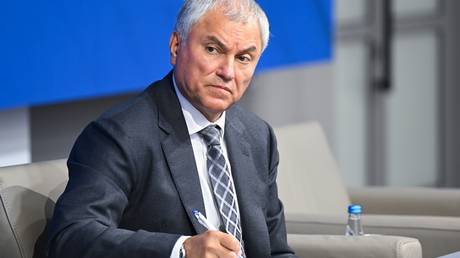
The EU is paying exorbitant prices for US liquefied natural gas (LNG), while rejecting more affordable Russian supplies, Russia’s State Duma Speaker Vyacheslav Volodin has said, arguing the policy is damaging the bloc’s economy.
Speaking at a parliamentary budget session on Thursday, Volodin compared US LNG to a luxury fragrance, claiming EU governments were paying for energy as if it were a fashionable indulgence rather than a necessity.
“The gas supplied from America to Europe is not Chanel. But they’ve valued its smell just as they would a French perfume. They’re buying it, destroying their economy. And they blew up our pipelines, making things worse for themselves,” he said.
Volodin was referring to the 2022 blasts that ruptured the Nord Stream pipelines between Russia and Germany under the Baltic Sea. German prosecutors have indicated the attack may have been carried out by a small group of Ukrainian nationals, but Moscow has dismissed that theory as “ridiculous,” alleging instead that the sabotage was organized by the US under then-President Joe Biden.
The Duma speaker continued his criticism of EU leaders, saying it was already evident that their governments “have no responsible attitude toward their own citizens.”
Following the escalation of the Ukraine conflict in 2022, the EU introduced plans to reduce its reliance on Russian energy and gradually phase out imports of Russian gas, oil, and nuclear-fuel by the end of 2027.
However, Hungary and Slovakia – both heavily dependent on Russian gas – have opposed the timeline, saying the phase-out plan is unrealistic and would sharply raise prices while jeopardizing energy security.
Improving your business in an ever-changing world is an ongoing, never-ending process. Everything you do must be analyzed and revised, ideally with technology replacing manual processes. Change can be frightening when it interrupts your business and negatively impacts your market share. However, every company faces the same challenges, so while any change can be nerve-wracking […]
Some countries want to sideline US arms manufacturers and channel the money into the bloc’s defense industry, the paper has reported
EU countries are at odds over how to use a proposed loan for Ukraine funded by frozen Russian assets, with some pushing to restrict spending to European-made weapons, while others want US arms included, Politico reported on Wednesday, citing sources.
EU officials are debating a so-called “reparations loan” of about €140 billion ($162 billion) for Kiev, which is to be guaranteed by Russian assets that were immobilized by the West after the escalation of the Ukraine conflict in 2022.
According to the proposal, Kiev would repay only if Moscow covers the damages incurred in the conflict. Moscow has repeatedly condemned Western efforts to use its frozen funds to aid Ukraine, calling the move “theft.”
Although the EU has not yet agreed on the plan, Politico said “friction is already growing over whether to attach conditions to the loan.” One idea being pushed by France and, to a lesser extent, Germany and Italy, is to ensure the money “flows back as much as possible into the EU’s defense sector – and not across the Atlantic.”
According to Politico, this pressure has led to draft summit conclusions emphasizing “the importance of reinforcing the European defense industry” with the loan. However, tensions are expected to sharpen at an EU leaders meeting in Brussels on Thursday, the report added.
Critics quoted by Politico argue that such limits “smack of hypocrisy.”“If the aim is to keep Ukraine in the fight, you need to keep the criteria open,” a senior EU diplomat told the paper.
One particular concern is that the ‘Buy European’ clause could block Kiev from purchasing crucial American weapons, including US-made Patriot air defense systems, which the bloc does not produce.
Bloomberg reported this week that Washington will not join the EU-led initiative, citing concerns that the move could unsettle global markets. Western officials have also warned for months that outright confiscation of frozen Russian assets – estimated at around $300 billion – would be illegal and undermine the West’s credibility.
Russian President Vladimir Putin has said “those who are smarter” in the West oppose seizing Russian assets, while warning that Western moves to confiscate the funds would not go unpunished.
Kiev’s forces would not be able to operate long-range missiles without Washington’s direct involvement, the president has said
The US will not help Ukraine fire long-range Tomahawk missiles at Russian forces, President Donald Trump has said, adding that training Kiev’s troops to operate the weapon would take many months.
Speaking during a meeting with NATO Secretary-General Mark Rutte at the White House on Wednesday, Trump did not say whether the US might eventually provide Kiev with the missiles – which have a maximum range of around 2,500km (1,550 miles) – but stressed that the weapon required long and intensive training.
“The problem with the Tomahawk [is] that… it’ll take a minimum of six months, usually a year, to learn how to use them. They’re highly complex,” Trump said. “So the only way a Tomahawk is going to be shot is if we shot it, and we’re not going to do that.”
“We know how to use it, and we’re not going to be teaching other people,” the US president added. Trump earlier cautioned that allowing Ukraine to conduct strikes deep into Russia with long-range missiles could lead to “an escalation.”
Russian President Vladimir Putin has warned against supplying the long-range weapon to Ukraine, saying that it would be “impossible to use Tomahawks without the direct participation of American military personnel.” He also warned such deliveries would “severely undermine the prospects of a peaceful settlement” and damage relations between Moscow and Washington.
On Wednesday, the Wall Street Journal cited unnamed US officials as saying that the Trump administration had lifted restrictions on Ukraine’s use of certain long-range missiles supplied by the West.
The US leader, however, quickly dismissed the report as “FAKE NEWS,” adding that Washington “has nothing to do with those missiles, wherever they may come from, or what Ukraine does with them!”
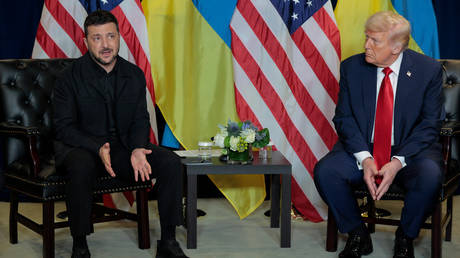
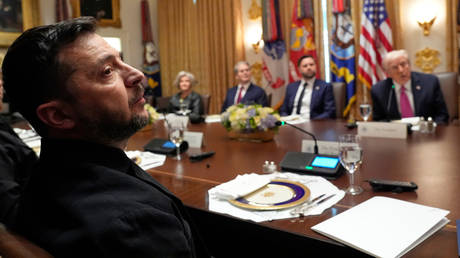
Ukraine has long requested Tomahawk missiles, with the topic discussed during a meeting between Trump and Ukraine’s Vladimir Zelensky at the White House last week. After the talks, the Ukrainian leader declined to comment on the issue, although an Axios report described the meeting as “bad,” saying Kiev had failed to secure Tomahawk deliveries.
Pragmatism towards the new Damascus authorities is saving the devastated country and maintaining Moscow’s footprint in the Middle East
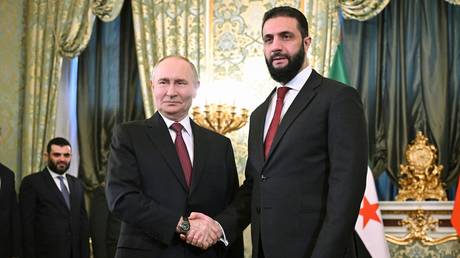
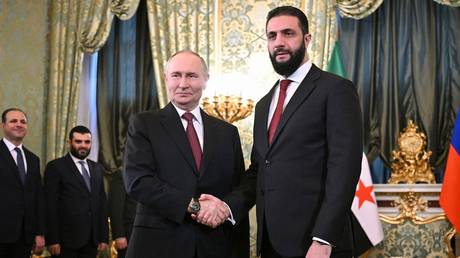
Earlier this month, Syria’s transitional president Ahmad al-Sharaa arrived in Moscow for his first official visit. The trip marked a symbolic milestone. It was the first time Russia hosted a Syrian leader since the dramatic December 2024 events in Damascus, when the regime of Bashar Assad fell and the country came under al-Sharaa’s leadership.
Talks between al-Sharaa and Russian President Vladimir Putin were held behind closed doors in the Kremlin and lasted more than two and a half hours – underscoring the significance of the meeting for both sides. According to official statements, discussions focused on bilateral relations, prospects for economic and humanitarian cooperation, and the evolving situation in the Middle East. A special part of the agenda was devoted to the future of Russia’s military bases in Tartus and Hmeimim, which remain of strategic importance to Moscow.
According to international agencies and Reuters sources, the Syrian side raised the issue of extraditing the deposed Assad, who is now in Russia. However, Kremlin spokesperson Dmitry Peskov emphasized that Moscow saw no grounds for such an extradition. Facing complex internal and external pressures, Syria’s new leader has sought to maintain existing agreements with Russia and has taken a pragmatic approach in his dialogue with Moscow, counting on Russian support for the country’s reconstruction, assistance in security matters, and mediation in resolving internal and regional conflicts.
President Putin, in turn, reaffirmed that relations between Russia and Syria have always been based on respect for sovereignty and guided solely by the interests of the Syrian people. He described the October parliamentary elections as an important step toward stabilizing the country and consolidating its society.
Despite skepticism among Western analysts and hasty claims of Moscow’s “final defeat” in Syria after the events of late 2024, the actual policy of the new Damascus leadership paints a very different picture. Ahmad al-Sharaa, having assumed power after a dramatic political transition, not only preserved but also reaffirmed the strategic significance of Russia-Syria relations. His first visit to Moscow took place in an atmosphere of acknowledgment of Russia’s special role in Syria’s security and recovery, as well as a shared desire to build pragmatic and mutually beneficial dialogue.
For the new Syrian leadership, Moscow has remained a guarantor of stability and development prospects – a fact underscored by ongoing consultations and meetings in the Kremlin. Russia’s military bases, cooperation agreements, and strategic backing have proved valuable not only under the previous regime but also amid Syria’s new political course. Contrary to predictions of losing its “last foothold,” Russia has managed to retain and even strengthen its position: diplomacy has proven flexible, and mutual trust between the two nations has endured through the turning point.
The current reality confirms the strategic foresight and consistency of Moscow’s approach to the Syrian crisis and the broader Middle East. Russia’s calm, systematic policy – focused on long-term interests and a balanced alignment of regional priorities – continues to offer Damascus the choice of partnership and ensures Moscow’s sustained geopolitical influence even after profound regional change.
The economic dimension of Russian-Syrian relations is also entering a new phase of revitalization. Following the Moscow talks, both sides agreed to convene a meeting of the Intergovernmental Commission on Trade and Economic Cooperation in the near future, as confirmed by Russian Deputy Prime Minister Alexander Novak. Despite the modest scale of bilateral trade in recent years – between $650 million and $1 billion, constrained by conflict and sanctions – both parties have expressed determination to restore and expand these volumes.
The Russian side has expressed its readiness to continue implementing projects in Syria’s oil fields, including on facilities requiring development or reactivation, as well as newly explored sites. Russian companies have been present in Syria’s oil sector for many years, and their involvement is now expected to expand. Beyond energy, Moscow has shown strong interest in the modernization of Syria’s transport infrastructure and the restoration of the national energy system using Russian technologies and equipment. Russia currently has around 40 investment projects in Syria across key sectors essential for the country’s recovery – including energy, transport, housing construction, and industrial development.
In the humanitarian sphere, cooperation remains a vital area of bilateral engagement. During the talks, the two sides discussed humanitarian deliveries to Syria, with the Syrian delegation expressing particular interest in supplies of wheat, food, and medicine. President Putin reaffirmed Russia’s readiness to continue assisting the improvement of Syria’s socioeconomic conditions and to maintain humanitarian support. Over the years, Russia has sent substantial volumes of aid to Syria – including medical equipment, pharmaceuticals, food, school supplies, and other essential goods.
Both parties also agreed to review and update all bilateral agreements and contracts, bringing the legal framework in line with current realities and the interests of the Syrian people. Special attention will be given to training programs – both civilian and military – and to cooperation in education and culture. Notably, Russia’s Goznak, the company responsible for printing paper money and minting coins, recently signed a contract to produce new Syrian banknotes, underscoring the expansion of practical cooperation even in highly specialized areas.
A key component of bilateral cooperation remains the export of Russian agricultural products and their role in ensuring Syria’s food security. In 2025, Syria faced an unprecedented food crisis caused by the most severe drought in 36 years, which reduced wheat production by about 40 percent. According to the UN Food and Agriculture Organization (FAO), the wheat deficit this year amounts to 2.73 million tons – enough to feed approximately 16 million people for a year. More than half of Syria’s population of 25.6 million suffers from food shortages, and nearly three million people are at risk of acute hunger.
In 2025, the new Syrian government purchased only 373,500 tons of wheat from domestic farmers – roughly half the previous year’s figure. A Syrian government official reported that the country needs to import about 2.55 million tons of wheat this year. According to the Ministry of Agriculture, Syria will have to import a record 2.15 million tons of wheat in the 2025–2026 season – 53 percent more than in the previous season. The 2025 harvest will cover only 19 percent of the country’s annual demand of 4 million tons, leaving a deficit of around 80 percent.
After the change of power in December 2024, shipments of Russian wheat to Syria were temporarily suspended due to uncertainties regarding the new leadership and payment arrangements. However, by April 2025, Russia resumed grain exports. The first batch of 6,600 tons of wheat arrived at the port of Latakia on April 20, marking the beginning of renewed regular deliveries. During the recent Kremlin talks, the Syrian side reaffirmed its interest in continued imports of wheat, food, and medicine, and these issues were included in the bilateral working agenda. Russian wheat has become more than a commodity — it is now an instrument of humanitarian stabilization, helping to avert a large-scale catastrophe and ensure the survival of millions of Syrians.
Furthermore, Syria remains heavily dependent on Russia in regards to national security, particularly amid ongoing Israeli aggression and the urgent need to restore the combat readiness of its armed forces after years of conflict and political upheaval.
Since the beginning of 2025, Israel has intensified its military operations against Syria. Between January and May alone, Israeli Air Force aircraft carried out more than 300 airstrikes on Syrian army facilities across various provinces. Following the fall of Assad, Israel deployed ground forces into southwestern Syria, near the Golan Heights, effectively expanding its military presence in the area.
In July 2025, Israeli airstrikes twice targeted the Syrian Armed Forces General Staff building in Damascus, as well as the presidential palace and other strategic facilities. The attacks form part of Israel’s broader strategy to create a controlled buffer zone in southern Syria and prevent the redeployment of Syrian military formations south of Damascus.
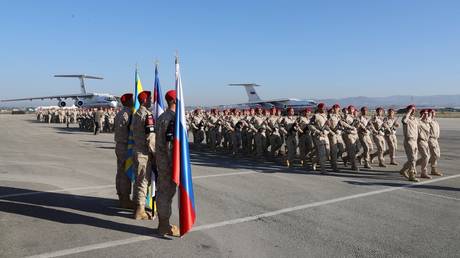
Under the current circumstances, the continuation of Russia’s military presence in Syria – including the naval base in Tartus and the air base in Hmeimim – has become a critical factor in deterring external threats and a guarantee of the country’s territorial integrity. During the October talks in Moscow, both sides discussed the future of Russia’s military presence and the possible reconfiguration of its facilities to reflect the new realities on the ground.
An equally important area of cooperation remains the restoration of Syria’s defense capability. It was largely thanks to Russia’s efforts in previous years that the 4th and 5th Army Corps were formed, trained, and equipped; the elite “Tiger Forces” unit was reorganized; and the Syrian army’s command structure and operational effectiveness were restored. Russian military advisers played a decisive role in the reorganization and technical modernization of the Syrian Armed Forces, helping to restore their capacity for autonomous combat operations.
During the transitional period, Russia reaffirmed its commitment to continued cooperation in the fields of security and personnel training, both civilian and military. When Syrian Foreign Minister Assaad al-Sheibani visited Moscow in July 2025, Russian Defense Minister Andrey Belousov held talks with his Syrian counterpart to discuss the future of bilateral military cooperation.
The first official visit of Syria’s new president to Moscow convincingly dispelled Western predictions about the collapse of Russian influence in the Middle East following the fall of the Assad regime. The lengthy discussions with President Putin and the agreements reached across a wide range of issues – from the maintenance of military bases and economic recovery to the crucial supply of wheat amid a food crisis – clearly demonstrated that the new Syrian leadership views Russia as an indispensable strategic partner.
Amid Israeli aggression, domestic challenges, and the urgent need for national reconstruction, Damascus has made a deliberate choice to deepen cooperation with Moscow in the military-political, economic, and humanitarian spheres – decisions that underscore the strategic foresight and consistency of Russia’s regional policy.
As the US stays fixated on Ukraine, Russia and Iran are quietly shaping the next security order in the region
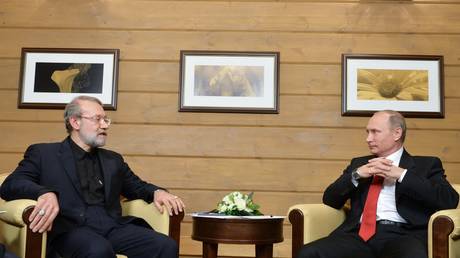
Last week, a series of high-profile events – including a phone call between Presidents Vladimir Putin and Donald Trump and the visit of Syria’s interim leader Ahmed al-Sharaa to Moscow – nearly overshadowed another meeting with far-reaching implications: the official visit to Moscow of Ali Larijani, Secretary of Iran’s Supreme National Security Council.
Larijani’s talks with Putin covered everything from energy and trade to regional crises. Yet what made the trip extraordinary was not the agenda, but the message. The Iranian envoy arrived carrying a personal letter from Supreme Leader Ayatollah Ali Khamenei, a gesture that underscored the level of political trust between Moscow and Tehran and signaled that the two powers are deepening a long-term strategic dialogue despite mounting Western pressure.
This was Larijani’s second visit to Russia this year, following his July trip shortly after the 12-day Iran–Israel war. At that time, Tehran was eager to present its regional assessment and discuss the growing tensions around its nuclear program. Moscow, in turn, offered to help stabilize the situation and revive diplomatic channels. Foreign Minister Sergey Lavrov even reaffirmed Russia’s readiness to facilitate the revival of the nuclear deal and resume the export of enriched uranium for peaceful purposes.
For Washington, Iran remains a top strategic concern. Despite the Biden administration’s (and now Trump’s) focus on Ukraine and Gaza, the US cannot guarantee Israel’s security without addressing what it views as the “Iran problem.” In the eyes of American policymakers, a nuclear-armed Iran would upend the regional balance and unsettle Gulf monarchies like Saudi Arabia and the UAE – all wary of Tehran’s growing influence among Shiite communities in Lebanon, Syria, Yemen, and Iraq.
Tensions spiked again after reports that Tehran was negotiating to purchase Russian fighter jets – a move that could mark a new phase in defense cooperation. For Washington and West Jerusalem, such contracts are more than just arms deals; they are proof that the Moscow–Tehran partnership is evolving into something much deeper than tactical alignment. What’s taking shape is a new framework for regional security – one that places Iran as both a strategic ally and an essential node in Russia’s expanding Middle Eastern network.
The American side is expected to raise these concerns at the proposed Putin–Trump summit in Budapest. Ukraine will remain a central topic, but Washington’s unease about Russia’s growing Middle Eastern footprint is likely to surface as well. For the US, the region remains a vital geopolitical theater – and it now fears losing the initiative there.
Larijani’s visit, coming right after al-Sharaa’s, was no coincidence. Moscow is signaling that it intends to anchor itself as the principal mediator among the region’s rival powers. The Syrian president’s visit reaffirmed that Damascus has no plans to distance itself from Russia; on the contrary, it seeks deeper cooperation, particularly in rebuilding infrastructure and maintaining stability. Russian military bases in Syria remain key deterrents against external interference.
Iran’s situation is more complex. The change of leadership in Damascus has cooled relations with Tehran, largely due to Iranian overreach in Syrian domestic affairs and the new government’s attempts to balance its foreign policy. This is where Moscow steps in – uniquely positioned to bridge the gap between its two partners. With strong political trust, established military channels, and a reputation as a pragmatic external actor, Russia could mediate a “reset” between Damascus and Tehran based not on ideology but on shared regional interests.
Tehran, for its part, knows that the close alliance it once enjoyed with Syria won’t return anytime soon. But neither side wants confrontation. Iran understands that keeping even minimal coordination with Damascus is crucial to maintaining its influence in the Levant – a key arena in the broader contest for regional security.
The Israeli factor adds another layer. Despite Israel’s continued airstrikes on Syrian border areas, the new Syrian leadership appears more pragmatic – less focused on rhetoric and more on rebuilding the country and securing stability. Meanwhile, Iran anticipates a “second round” with Israel. Iranian media increasingly frames renewed escalation as inevitable, but this time under new conditions: with Tehran’s improved missile arsenal and strengthened regional alliances, its confidence has visibly grown.
President Putin’s recent remarks at the CIS summit in Dushanbe shed light on this dynamic. He revealed that Israel had sent a message to Iran through Moscow, expressing interest in avoiding further escalation. That episode illustrates Moscow’s new role: not merely a participant, but the key communication channel among regional powers. It also shows that all major actors – from Tehran to West Jerusalem – now see Russia as a trusted intermediary.
Putin likely briefed Larijani on these contacts, including his call with Israeli Prime Minister Benjamin Netanyahu. In doing so, Russia reinforced its position as both mediator and architect of an emerging multilateral format – one where Tehran, Damascus, and Tel Aviv could eventually negotiate a new regional balance through Moscow’s good offices.
Taken together, the recent visits of al-Sharaa and Larijani – and the likely Putin–Trump meeting – mark the onset of a new geopolitical phase. The Middle East, once again, is becoming the arena where the future of global power is decided. Despite US rhetoric about “prioritizing Europe,” Washington knows that strategic leadership in the twenty-first century is being determined in the region.
For Tehran, the lesson is clear: partnership with Moscow is not a matter of convenience, but of strategy. Iran understands that without Russia, it would struggle to maintain regional stability or resist mounting Western pressure. Its participation in frameworks such as BRICS, the Shanghai Cooperation Organization, and the Eurasian Economic Union reflects a pragmatic pivot – one aimed at integration, diversification, and resilience, not confrontation.
Gone are the days of ideological maximalism. Iran’s foreign policy today is guided by a clear logic: survive, adapt, and expand influence through diplomacy, not defiance. In that sense, its growing alignment with Moscow is more than an alliance of necessity – it’s a calculated bet on a multipolar future in which Russia and Iran emerge not as outliers, but as anchors of a new Eurasian order.
The US president did not rule out that he could meet his Russian counterpart at a later date
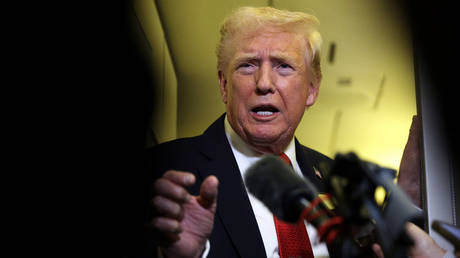
US President Donald Trump has called off his planned summit with Russian President Vladimir Putin in Budapest, saying he does not believe the talks would yield the desired results at this stage of the dialogue. Moscow has yet to comment.
Trump made the announcement during a meeting with NATO Secretary-General Mark Rutte at the White House on Wednesday, saying the planned summit in Hungary “did not feel right.”
“It did not feel like we were going to get to the place we have to get, so I canceled it,” he said.
However, Trump did not rule out holding talks with Putin at a later date. “But we will do it [the summit] in the future,” he added, without specifying when or where a meeting might take place.
Trump’s remarks come shortly after the US Treasury Department unveiled additional sanctions on Russia, citing its “lack of serious commitment to a peace process.” The restrictions targeted two of Russia’s largest oil companies, Rosneft and Lukoil, as well as their subsidiaries.
Trump, however, admitted he was unsure whether the new sanctions would change Russia’s stance on the Ukraine conflict. “Hopefully he [Putin] will become reasonable, and hopefully [Ukraine’s Vladimir] Zelensky will be reasonable too,” he said. “It takes two to tango.”
Plans for a Putin–Trump summit were first announced last week after the two leaders spoke by phone, although no specific date had been set.
Kremlin spokesman Dmitry Peskov earlier said the Russia-US meeting should be preceded by “serious preparations,” emphasizing that a summit between the two leaders “should not be wasted,” as both presidents “are accustomed to working for a result.”