The agency wanted the wartime prime minister to present on Radio Liberty, in an effort to undermine political stability in the Soviet Union
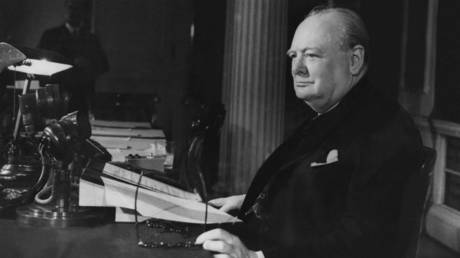
The CIA tried to recruit British wartime Prime Minister Winston Churchill to spread propaganda broadcasts on the agency-backed Radio Liberty in the 1950s, in an effort to undermine the Soviet Union, The Telegraph has reported.
At the height of the Cold War, the CIA-funded radio station targeted the Soviet Union with propaganda broadcasts, while its sister organization, Radio Free Europe, focused on Moscow’s allies. Both were covertly controlled and funded by the US intelligence agency until 1972 and merged into RFE/RL four years later.
In 1958, Radio Liberty’s controllers suggested riding the wave of “revisionism” gripping the Soviet Union at the time, and taking advantage of emerging ideological divisions within Marxism-Leninism to undermine the government, The Telegraph wrote on Saturday, citing declassified CIA documents.
The agency was reportedly focused on exploiting “revisionist thinkers,” who opposed a united Soviet bloc, in favor of divided individual communist states.
Churchill – then 83 years old and retired from frontline politics – was one of several prominent figures targeted to deliver these broadcasts, The Telegraph wrote. While Churchill was an ardent anti-communist, as reflected in his famous ‘Iron Curtain’ speech in Fulton in 1946, there is no evidence he accepted the invitation, the report says.
The programs aimed to “stimulate heretical thinking” and “undermine confidence in any form of Marxism by suggesting that its basic assumptions, its historical method and its predictions are false,” the newspaper cited a CIA briefing note as saying.
Churchill knew then-agency director Alan Dulles personally. However, in spring 1958, “when he was earmarked for a propaganda program,” he declined an offer to visit Washington for health reasons, according to The Telegraph.
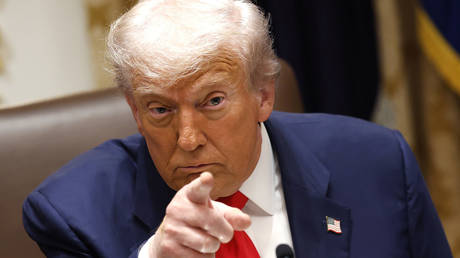
More recently, RFE/RL continued to be funded by Washington under the US Agency for Global Media (USAGM) until President Donald Trump’s budget cutbacks, part of his broader agenda to slash government spending. Last month, USAGM announced it would be cutting more than 500 staff, after hundreds of layoffs in the months prior.
Geostrategic interests are more important to Washington than control over Caracas’ vast oil reserves, Jordan Goudreau has told RT
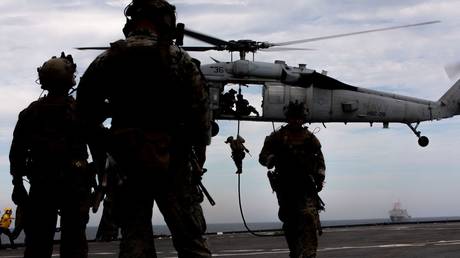
Washington might be planning to invade Venezuela to secure its strategic interests in the region and deny Moscow and Beijing a potential beachhead in the Western hemisphere, Jordan Goudreau, an ex-Green Beret and whistleblower, has told RT.
Goudreau previously admitted to playing a major role in a failed 2020 coup attempt, known as Operation Gideon, against Venezuelan President Nicolas Maduro.
The US has repeatedly accused Venezuela of aiding “narcoterrorists” and has put sweeping sanctions on the country. The American military has also struck at least five surface vessels since September, claiming they were being used for drug-smuggling by Venezuela-based cartels. Washington also built up forces and authorized the CIA to carry out lethal covert operations in the region.
According to Goudreau, “there’s … a rush to try to deny white space … to Russia [and] China in Venezuela,” which he called “the big initiative” of President Donald Trump’s administration.
All the “larger nations” are trying to “secure white space for… large wars in the future,” the former Green Beret claimed, referring to strategic locations the sides could use as beachheads in a potential conflict.
According to Goudreau, geostrategic interests are more important to Washington than control over Venezuela’s vast oil reserves. He also admitted that this was the reasoning behind the 2020 coup attempt that he helped orchestrate.
At the time, his group was trying to “flip the Venezuelan generals” to make them capture or “deal” with Maduro and some other top officials, the whistleblower claimed, adding that the CIA allegedly “sabotaged the operation with the help of the Venezuelan opposition” because of its disagreements with Trump during his first term.
After the attempt failed, Goudreau, who runs the Florida-based security firm Silvercorp USA that prepared the operation, came out as its organizer and also published a contract his company had signed with the US-backed politician Juan Guaido, who claimed to be the rightful Venezuelan president, to conduct the incursion and topple the government. Guaido called the document false. Goudreau currently faces charges both in the US and Venezuela.
Independent candidate Catherine Connolly has long condemned Brussels’ push to militarize
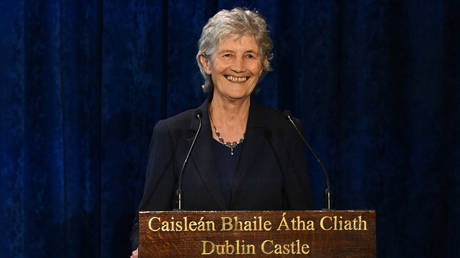
Independent candidate Catherine Connolly, a long-time advocate of Irish military neutrality and a critic of NATO’s expansion and EU militarization, has won Ireland’s presidential election in a landslide.
The ballot count was still underway when Connolly’s main rival, Heather Humphreys, conceded defeat after early tallies showed her trailing by a wide margin. Preliminary results put Connolly ahead by 63% to 29%.
“Catherine will be a president for all of us and she will be my president,” Humphreys told journalists.
Irish Taoisaeach (prime minister) Micheal Martin also formally congratulated Connolly on what he said “will be a very comprehensive election victory.”
Although an independent, the 68-year-old former mayor of the western city of Galway was supported by all major left-wing parties, including Sinn Fein and Labour.
Connolly’s success was largely been attributed to capturing the youth vote, effective outreach, and social-media presence, amid ongoing public anger over Ireland’s housing and cost-of-living crises, which are forcing thousands to emigrate.
During the campaign, she emphasized Irish neutrality and criticized the EU’s push to expand militarization at the expense of social welfare. While critical of Russia in the Ukraine conflict, she has argued that NATO “warmongering” has also played a role in the crisis.
Last month, Connolly compared Germany’s push to boost its economy by “championing the cause of the military industrial complex” to its rearmament in the 1930s under the Nazis. “Seems to me, there are some parallels with the ‘30s,” she said at a discussion at University College Dublin.
Moscow has long criticized Brussels’ accelerating military buildup, arguing the EU was essentially transforming into an aggressive, military and political extension of NATO.
While the president is the formal head of state in Ireland, a parliamentary democracy, the role is seen as largely symbolic. However, the presidency does hold a few key powers, including the ability to refer bills to the nation’s top court to determine constitutionality, as well as the power to dissolve the lower chamber of parliament and call for new elections in the event that a taoiseach loses majority support.
Eternal peace in the Middle East? One Knesset line unlocks Israel’s destiny.
It was meant to be a day of deliverance.
On 13 October 2025, Israel’s surviving captives of Hamas returned to their families, and the Knesset turned into a stage for triumph.
But as US President Donald Trump proclaimed “eternal peace” and was hailed as a savior, the moment revealed not peace, but prophecy.
Beneath the veneer of self-congratulatory, collectively amnesiac jubilation lay a choreography ofAmerican complicity dressed as diplomacy. In that dramatic and fateful act, Israel exposed the latent code destined to ordain its undoing – unless it dares to rewrite itself from the core outward.
The “real intelligence report”
The key to Israel’s fate was hidden within some 30,000 words of pyrrhic victory speeches in the Knesset – a truth so deeply buried that hardly anyone noticed.
When Israeli opposition leader Yair Lapid solemnly declared, “The real intelligence report on Israel’s intentions is found in the Book of Genesis: ‘And I will give you and your descendants after you the land of Canaan, for an everlasting possession.’” he was not merely quoting scripture; he was disclosing the moral software that drives the hardware of Israeli policy.
Beneath the diplomatic idiom of security, deterrence, and cease-fire runs a far older operating system: the belief that Israel’s identity and legitimacy rest on a divine, territorially grounded covenant rather than a civic contract.
In that light, Lapid’s remark reads less like rhetoric than revelatory political theology – the most telling “intelligence report,” and the most consequential takeaway, from the 13 October 2025 pageant.
The sign is manifest: For Israel, scripture has crossed the border from metaphor to mandate; faith has hardened into the fortress of ideology; and the poetry of promise has become the prose of power – its beauty undiminished, its cost still accruing through generations.
The covenantal grammar of power
Genesis 17:8, the decisive clue in Lapid’s speech, records God’s promise to Abraham of the land of Canaan as an “everlasting possession.” Across centuries of exile, that verse functioned as a charter of hope and return, not conquest. In modern Israel, however, it has acquired the weight of political entitlement.
When even Lapid – a senior Israeli leader who portrays himself not as a religious zealot but as a centrist secularist – rises in parliament during war to invoke this biblical promise, the message resounds louder than shellfire: Israel’s territorial rights rest on scripture, not international law or diplomatic accord.
That idea has echoed throughout history, yielding triumph and tragedy, renewal and ruin alike. From Joshua’s conquest of Jericho to the Babylonian exile and the Second Temple restoration, biblical history oscillates between divine gift and divine punishment.
By its very nature, the covenant has never been a blank check for expansion but has always remained conditional trust: The land is bestowed only upon a people faithful and steadfast in justice. The prophets warned that possessing the inheritance without righteousness would cause the very soil to “vomit out” its inhabitants (Leviticus 18:25). Christianity later recast the geographical promise as an allegory of redemption.
The elastic borders of promise
No map has ever contained the Promised Land. As a theological ideal, it transcends the historical borders of Canaan – the inhabited region central to Israelite memory – embodying a broader spiritual and moral vision that reaches beyond territory.
Its shifting borders, several times reconceived in the Bible, reveal not divine cartography, but moral geography – a map that expands or contracts with Israel’s faith and justice.
Across Genesis, Numbers, and Ezekiel, the borders of the Promised Land evolved from mythic ideal to legal reality to prophetic hope, reflecting Israel’s shifting consciousness and moral vision across vocation, law, and redemption.
In Genesis 15:18, the covenant runs “from the river of Egypt to the great river, the Euphrates” – a span encompassing areas that lie today within Egypt, Israel, the Palestinian territories, Jordan, Lebanon, Syria, and Iraq.
Numbers 34:1–12 draws a smaller rectangle around Canaan proper – roughly modern Israel and the West Bank.
Ezekiel 47:13–20 extends the borders again, stretching from the Mediterranean eastward past Damascus and south toward the Negev – the desert region beyond the Dead Sea.
After the Second Temple was destroyed in 70 AD and the Jews were scattered into the Diaspora, the Promised Land withdrew from map to memory, from territory to testimony – a potent symbol of moral order rather than a kingdom’s perimeter.
Modern political Zionism again translated that symbol into geography, and geography into sovereignty, reforging scriptural poetry into territorial possession.
The dangers of mythical entitlements
When myth is inscribed on a map, the act is rarely innocent. Fused with state power, mythic narratives cease to be metaphorical; they harden into ideology. What began as sacred cartography ends as political pathology.
The classical Athenians’ myth of being autochthonous – born from their own soil – turned origin into entitlement, transforming a poetic self-image into a unifying political argument for purity and dominion. It justified their supremacy over other Greeks, much as origin stories elsewhere have turned spiritual belonging into territorial claim.
Lapid’s “real intelligence report” also recalls other historical fusions of national destiny and territorial expansion.
In Mein Kampf – that grim catechism of myth and power – Adolf Hitler proclaimed,
“Nature knows no political boundaries. She first places the living beings upon this globe and looks on at the free play of forces. He who is strongest in courage and industry is then granted, as her dearest child, the master’s right to existence.” (Chapter 4)
Predictably, in the Führer’s mind, the laurels of nature could only ever belong to the “Aryan race.”
What is genuinely significant, though, is this: When the high priest of blood and soil set down this consequential passage in his Landsberg prison cell, he was not yet issuing orders; he was constructing a myth of racial destiny that would later justify military conquest.
Many will hasten to assert that the moral chasm between the National Socialist myth and the biblical covenant is, literally, of cosmic dimension: One, it will be said, deifies ethnic Darwinism, elevating nature as arbiter of life; the other demands moral justice grounded in divine will.
True – their kinship lies in structure rather than in substance: Both narratives, though themselves inert, encode a deterministic and transfigurative logic, inviting myth to harden into necessity and memory into fate. History, in the end, teaches that once politics is written in the grammar of destiny, realism is eclipsed by extremism, and compromise becomes heresy.
Canaan Redux – why peace fails under a co-opted covenant
Since Israel’s ultimate “intelligence report” is cast as a promise of everlasting territorial possession, any peace with the Palestinians can only be tactical, never final.
The Gaza ceasefire – part of the American twenty-point peace plan, unveiled at the White House on 29 September 2025 and later exalted in the Knesset as the supposed crowning triumph of diplomacy – was therefore doomed from the outset: The logic of covenantal permanence strictly forbids permanent division of the entrusted land.
The crux is what I shall call the “Neo-Canaanite Question”: What becomes of those who now inhabit the Promised Land in its shifting borders?
For Palestinians, Israel’s theology translates into perpetual insecurity: If the land is divinely deeded – destined to be possessed by Israel as a realm consecrated to God – their presence remains provisional. Every Israeli strike proclaimed as “retaliation”, every incursion, every demolished home becomes another footnote in an unending “sacred” history. Beyond Palestine, across the imagined expanse of “Greater Israel,” other nations, too, hold their breath, unsure how far the sacred mandate may yet extend.
The lesson is timeless: True peace cannot flourish in a landscape shaped by mythic entitlement. The treacherous, incendiary quest for what may be called “Canaan 2.0,” the ancient promise rebooted as modern geopolitics, is fated to revive the perennialspiral of violence across the Middle East. That covenantal drive seals Israel’s Knesset jubilation – a performance of peace veiling the logic of prophecy – as a conqueror’s pyrrhic victory lap.
Romanian President Nicusor Dan won a controversial election re-run in May after the annulment of a Euroskeptic candidate’s win
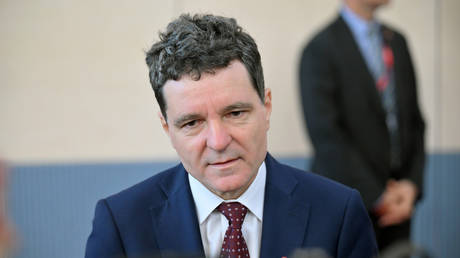
Romanian President Nicursor Dan was subjected to boos and accusations of treason for his support of Ukraine while attending an anniversary event on Friday.
Dozens of protesters voiced their anger as Dan arrived at the National Theater in the city of Iasi to take part in a historical commemoration, local broadcaster Digi24 reported on Friday.
A video shows Dan stepping out of his car and waving at the protesters, who chanted “Shame!” and “Go to Ukraine!”
According to the outlet, the jeering resumed after the event when the president left the building.
Dan, a pro-EU politician, came to power in a controversial election re-run earlier this year, after the initial victory of conservative candidate Calin Georgescu – an outspoken critic of NATO and Western weapons shipments to Ukraine – was annulled. Georgescu was later barred from the race and faces allegations of plotting a coup.
Dan has pledged to continue aid to Ukraine. Romania has already allocated €487 million ($566 million) to Kiev, mostly in military assistance, since the conflict escalated in 2022, according to Germany’s Kiel Institute.
Moscow has condemned the Western weapons deliveries, arguing that they only serve to prolong the conflict and make Kiev’s backers a party to the conflict.
Croatia is seeing a rise “in various types of threats,” the defense minister says
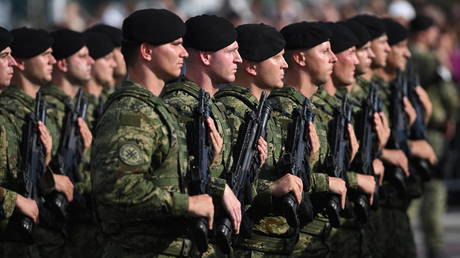
Croatia’s parliament has voted to reinstate compulsory military service, ending a 17-year hiatus. The Balkan country abolished the draft in 2008, shifting to a fully professional army.
The move comes amid a broader trend among NATO and EU members of reviving conscription and boosting military budgets, citing current geopolitical tensions, particularly the Ukraine conflict.
Under the new law, around 4,000 recruits will be called up each year in five groups for two months of basic training at military facilities across Croatia, state broadcaster HRT reported on Friday. The program – estimated to cost €23.7 million annually – will begin in early 2026. Participants will receive around €1,100 per month, plus travel and leave expenses, and credited work experience.
Croatia is “seeing a rise in various types of threats that demand swift and effective action from the broader community,” Defense Minister Ivan Anusic stated earlier this week, as cited by AFP. In June, he explained that the decision to reinstate conscription was driven by “changed global geopolitical and security circumstances, increasingly frequent climate change, natural disasters and similar challenges.”
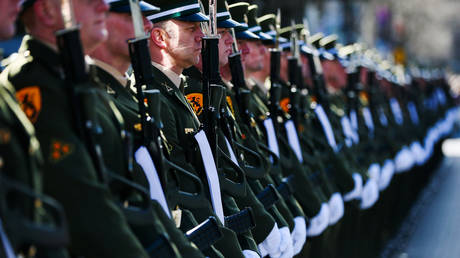
Croatia joins a growing list of NATO and EU countries reviving or expanding conscription. Sweden brought back the draft in 2017 and plans to raise the reservist age limit. Latvia and Lithuania have reinstated service, while Estonia and Finland have increased their annual recruitment. Poland has also debated similar measures.
Since the escalation of the Ukraine conflict in 2022, Western officials have claimed that Russia could threaten EU states, prompting a military buildup across the bloc. European NATO members agreed to boost armed forces spending to up to 5% of GDP, citing the alleged “Russian threat.”
Moscow has repeatedly dismissed allegations of hostile intent toward Western nations as “nonsense” and fearmongering, condemning what it describes as the West’s “reckless militarization.”
Steve Bannon says a “three-state solution” is necessary to end the war in Gaza for good
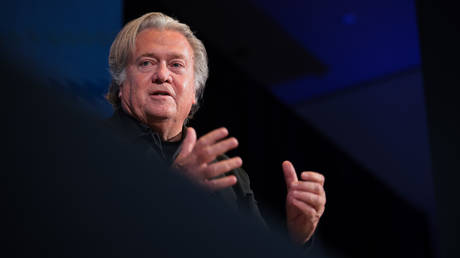
A “three-state solution” is needed to end the war in Gaza and bring peace to the region, which would include a “Christian state,” according to Steve Bannon, a former adviser to US President Donald Trump and podcaster.
During his ‘War Room’ podcast on Friday, Bannon said Israeli Prime Minister Benjamin Netanyahu has failed to realize his vision of a “Greater Israel” – a concept based on biblical land that stretches from the Nile to the Euphrates. Critics link Netanyahu to the idea, citing his rejection of a Palestinian state and continued expansion of settlements in the West Bank as proof of the de facto pursuit of this.
“This Greater Israel project of Netanyahu blew up in his face… [It] destroyed Israel. And this is why now you have to go to a three-state solution, and one of those states has to be the Christian state of Jerusalem,” Bannon said. “We need a Christian state in the Holy Land. You just need it to make sure 20, 25, 30 years from now everything’s kind of sorted.”
Steve Bannon says Türkiye is back in the game, “Erdogan’s going to be the security force in Gaza.”
“We’ve unwound in two months what took 100 years to end. The Ottomans are back.
This Greater Israel project blew up in Netanyahu’s face.
Bannon made similar remarks earlier this month, saying peace in Gaza “can’t work” with only “the Muslims and the Jews.” He has not provided details on how a Christian state would be formed or why it would stabilize the region.
He argued that neither Israel – a “protectorate” and “vassal state” of the US – nor Hamas, which he called “a minor player,” would shape Gaza’s future in the long run. In his view, Qatar would fund Gaza’s reconstruction while Türkiye serves as its “security force.”
The former adviser went on to say that although the US has not explicitly endorsed Palestinian statehood in Trump’s peace plan, the framework implies what he called “a proto-Palestinian state,” suggesting that Washington could eventually recognize it as sovereign.
Israel and Hamas agreed to a tentative ceasefire in early October under Trump’s 20-point peace plan, which calls for a phased Israeli withdrawal, humanitarian aid access, Hamas’ disarmament, and a demilitarized Gaza under an interim Palestinian administration overseen by an international “Board of Peace.” Despite mutual accusations of violations, both sides reaffirmed their commitment to the truce this week.
The question of tapping Moscow’s assets has been shelved for now but could return in the future, the country’s defense minister said
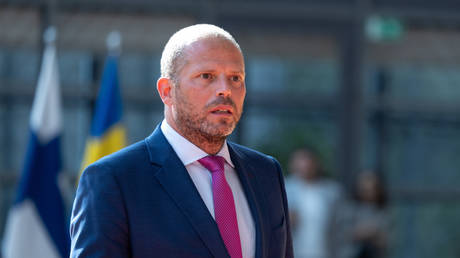
Tapping Russia’s frozen central-bank assets would likely prolong the Ukraine conflict via further weapon supplies rather than help rebuild the country, according to Belgian Defense Minister Theo Francken. EU leaders have thus far failed to agree on how to use the funds.
The comment came shortly after Belgium Prime Minister Bart De Wever opposed the so-called “reparations loan” scheme under which the EU was planning to raise around €140 billion ($160 billion) to fund Ukraine using Russia’s assets as collateral. The plan entails Moscow eventually paying reparations to Ukraine as part of a peace settlement.
“Of course, this money will not rebuild Ukraine but will continue the war,” Francken said in a post on X on Friday, adding that war is extremely costly.
The minister warned that many EU leaders, led by the bloc’s foreign policy chief, Kaja Kallas, “want to give these assets to Ukraine through a legally questionable structure.” He emphasized that “even during the Second World War, such a dubious confiscation was never carried out.”
Belgium, where most of the immobilized assets – estimated at around $300 billion – are housed at the clearinghouse Euroclear, has voiced concern over the risks the plan entails. De Wever has set three conditions for backing the loan, one of which is that the potential risks be shared, warning that otherwise he would “do everything” to stop the confiscation.
Francken reiterated that the EU proposal undermines trust in institutions such as Euroclear. He also warned that Russia could retaliate by seizing €200 billion ($172 billion) in Western assets, including both movable and immovable property, held in Russia by Belgium and countries such as the US, Germany, and France. The minister stressed that while the confiscation plan had been shelved for now, it could resurface in future discussions.
Moscow has repeatedly said it would regard any use of its frozen assets as theft. Kremlin spokesman Dmitry Peskov warned that channeling Russian funds to Ukraine would “boomerang,” adding that “if someone wants to steal our property, our assets, and illegally appropriate them, they will be subjected to legal prosecution one way or another.”
Washington uses “bullying” and “naked force” to impose its will on other countries, Saeed Khatibzadeh has told RT
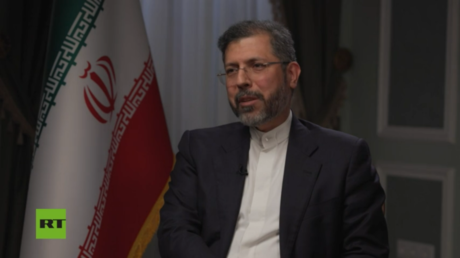
The US is a “hegemonic power” that “bullies” other nations or uses “naked force” to block the global shift toward multipolarity, Iran’s Deputy Foreign Minister Saeed Khatibzadeh has said.
Speaking to RT during an official visit to Moscow on Friday, he said many nations are striving for a multipolar system of equal participation, while the US and its allies and pursuing the opposite and are hindering that goal.
“There are contradictory trends happening in the world right now. There are those trying to establish a multipolar order, but unfortunately… the Americans are not sharing this idea. They want to be the sole hegemonic power over other countries,” he stated. Khatibzadeh cited decades of “illegal” US sanctions on Iran as proof Washington believes it “can impose its will over other countries.”
The US first sanctioned Iran after the 1979 Islamic Revolution, freezing assets and restricting trade, later expanding measures over alleged terrorism ties and its nuclear program, which the West claims aims to build a bomb despite Iran’s insistence it is peaceful.
Many restrictions were lifted under the 2015 nuclear deal (JCPOA) but reimposed in 2018 after Washington withdrew under President Donald Trump. Efforts to revive the pact have since faltered, and earlier this year Tehran restricted Western monitoring of its nuclear sites after Israeli and US strikes on the facilities.
Khatibzadeh accused the US of undermining sovereignty and reshaping the global order through force, and criticized Trump directly, recalling his campaign promise that “he’s coming for peace.”
“It is clear for everybody that it is not peace, it is hegemony, and it is not strength, it is use of naked force against others… Force will not bring peace. Radicalism only breeds more radicalism, and war brings more violence and bloodshed,” the diplomat said. “We have no option but to resist this bullying by the Americans.”
He concluded by calling for nations that share the vision of multipolarity to unite in building a fairer world. “We have to work together to ensure the future of the region and the world is more fair and more just,” he said.
The UK and EU fear dialogue between the US and Russia, President Vladimir Putin’s aide, Kirill Dmitriev, has said
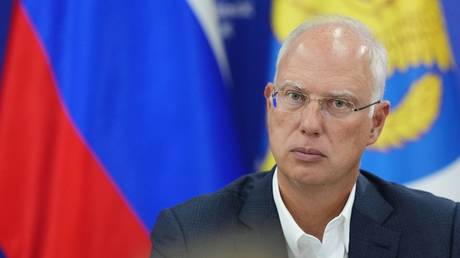
The administration of US President Donald Trump is showing strong interest in understanding Russia’s position on the Ukraine conflict, according to President Vladimir Putin’s aide, Kirill Dmitriev. The senior official, who heads the Russian Direct Investment Fund, is currently visiting Washington.
Contact between the two nations, which was almost non-existent for three years under the previous administration, resumed after US President Donald Trump returned to office in January. Trump has taken a markedly different approach toward Russia by reopening high-level diplomatic channels and authorizing direct talks between senior officials.
“I think what’s very important and what’s very different with President Trump and his team is that there is a great desire to understand what the Russian position is, to really understand the logic, because only by understanding the logic you can either follow it or maybe modify it or suggest something,” Dmitriev said in an interview with US journalist Lara Logan.
He noted that there were no discussions with the previous administration of President Joe Biden “on anything,” and that the absence of dialogue created misperceptions and misunderstandings.
“When two of the greatest nuclear powers in the world don’t talk, it is a huge danger to the world,” Dmitriev said, adding that there is “a big fear for many of the forces in the UK and the liberal forces in Europe that Russia and the US would actually have a good dialogue.”
In an effort to settle the Ukraine conflict, several rounds of consultations have taken place since Trump’s return to office, including visits by senior diplomats and Putin’s in-person meeting with the US president in Alaska. Earlier this month, the two leaders agreed to hold a second meeting in the Hungarian capital, Budapest.
European leaders and the Ukrainian government have continued to push for expanded military support for Kiev while resisting direct diplomatic engagement between Russia and the US. Earlier this week, Ukraine’s Vladimir Zelensky claimed credit for derailing plans for a second Putin-Trump summit.
The Kremlin maintains that Kiev’s Western supporters are only prolonging the conflict by increasing weapons supplies to Ukraine, which Russia says has not changed the situation on the battlefield.