Air defenses have shot down more than three dozen UAVs, Sergey Sobyanin has said
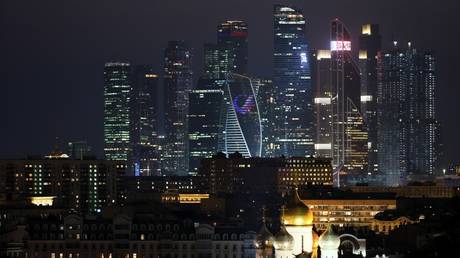
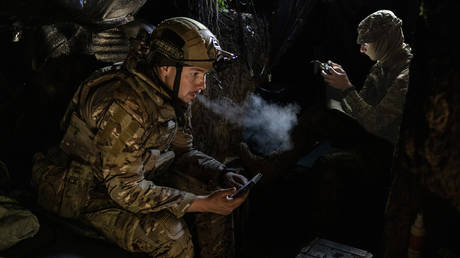
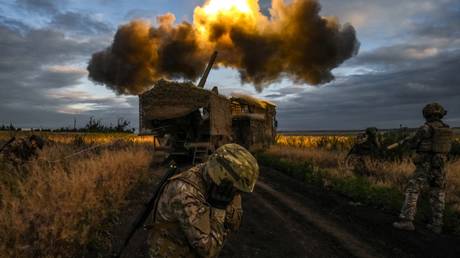
Russian air defenses have neutralized more than 30 Ukrainian drones attacking Moscow overnight, Mayor Sergey Sobyanin has said.
In a series of posts late Sunday to early Monday, the official said the large-scale raid involved at least 37 drones, adding that emergency services were working at the sites where debris fell. He provided no data on casualties or damage on the ground.
According to the SHOT Telegram channel, explosions were heard across the Ramensky District, Podolsk, Klimovsk, Domodedovo, Kolomna, and Troitsk — all suburban towns located to the south and southeast of Moscow. There were no reports of injuries or damage on the ground, the outlet said.
The Russian authorities imposed temporary flight restrictions at Domodedovo and Zhukovsky airports, both around 40km south and southeast of Moscow, respectively.
On Saturday, Moscow also came under a drone attack, although it only involved seven drones.
Ukraine has routinely launched long-range drone raids deep into Russia, targeting energy sites, critical infrastructure, and residential areas. Moscow has denounced the attacks as “acts of terrorism.”
Investigators reportedly believe one of the museum’s security guards may have colluded with the thieves
French detectives investigating the robbery of the Louvre Museum have uncovered evidence pointing to an inside job, The Telegraph reported on Saturday, citing sources close to the investigation.
Last week, four masked men with a chainsaw broke into the iconic Paris museum, making off with eight pieces of France’s crown jewels worth about $102 million.
According to The Telegraph, investigators discovered messages and recordings showing that the museum’s employees had been in contact with suspected gang members before the raid.
“We have found digital forensic evidence that shows there was cooperation with one of the museum’s security guards and the thieves,” a source told the paper.
“Sensitive information was passed on about the museum’s security, which is how they were aware of the breach.”
The burglars are believed to have used a crane to reach a balcony and smash a window of the Galerie d’Apollon, which was open to visitors at the time. The entire operation lasted just seven minutes, with the robbers escaping down the furniture elevator before speeding away on motorbikes.
Investigators have collected more than 150 DNA samples from helmets, gloves, and tools left at the scene.
Louvre director Laurence des Cars told a French Senate committee that a camera near the break-in site was “pointing in the wrong direction,” describing the theft as a “terrible failure.”
The museum has since transferred several of its most valuable jewels to the Bank of France for safekeeping.
On Sunday, two suspects were reportedly arrested near Paris, one of them at Charles de Gaulle Airport as he attempted to board a flight to Algeria. An AP source said those detained were men in their 30s, adding that one of them was identified through DNA traces.
Paris prosecutor Laure Beccuau confirmed the arrests but condemned the media leaks, saying they could “hinder the efforts of the 100 investigators mobilized.”
There was no indication on Sunday that any of France’s stolen crown jewels have been recovered.
French Interior Minister Laurent Nunez congratulated the police on their progress, adding that the investigation must continue “in accordance with judicial secrecy.”
The long-range Flamingo is facing technical snags and funding delays, the Ukrainian leader has said
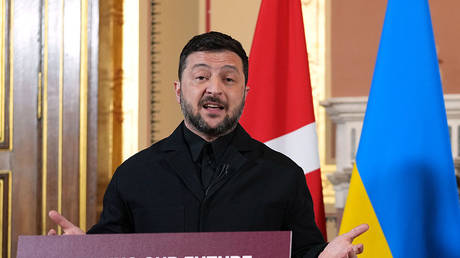
Production of Ukraine’s long-range Flamingo missile has encountered both technical setbacks and financing delays, Ukrainian leader Vladimir Zelensky has said, adding that a procurement order would be ready in several weeks.
Zelensky first announced that development of the Flamingo was underway in August, touting it as Ukraine’s first domestically produced long-range cruise missile, which he claimed has a range of up to 3,000km. Some analysts, however, have noted its close resemblance to the FP-5 system unveiled by British-UAE defense company Milanion Group earlier this year at an arms expo in Abu Dhabi.
In an interview with TSN on Sunday, Zelensky acknowledged that “there was a technological problem at the production of Flamingo,” adding that “there is a delay in financing from partners, which is being resolved.” Nevertheless, he claimed that the order for the missiles “would be fully fulfilled by the end of the year.”
The reported range of the Flamingo means that the missiles could potentially reach Moscow if launched from Ukraine, with Zelensky previously threatening blackouts in Russian border regions and the Russian capital itself.
Russian media reports claimed that Moscow’s air defenses intercepted a Flamingo, which traveled at relatively low speed, adding that it appeared to feature a Soviet-era engine and numerous parts of Chinese origin.
Earlier media reports suggested that the fuel for the Flamingo would be produced in Denmark. According to the broadcaster DR, the facility in the south of the country is owned by FPRT, a subsidiary of the Ukrainian company Fire Point, which developed the missile. The company, however, has faced an anti-corruption investigation over allegations of misleading the government on pricing and delivery schedules.
Russian Foreign Ministry spokeswoman Maria Zakharova has said Flamingo missiles are “intended to strike deep inside Russia,” while accusing Denmark of being one of the “sponsors of the terrorist Kiev regime.”
Without interference, diplomacy would have already yielded results, the Russian foreign minister has said
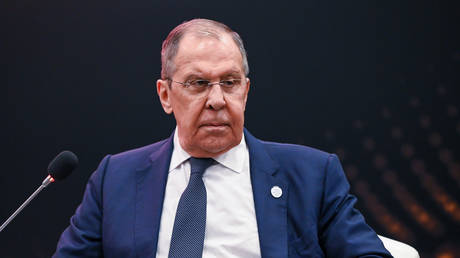
The administration of US President Donald Trump has been subjected to “unbelievable” pressure by “hawks” in Europe and Ukraine, who are bent on derailing negotiations with Russia, Foreign Minister Sergey Lavrov has said.
He made the remarks in an interview with Hungarian YouTube channel Ultrahang, which aired on Sunday.
Russia is not seeking to influence or “interfere” in the “internal considerations” of the US leadership, which has faced mounting pressure amid the rapprochement effort with Moscow begun under Trump, Lavrov said.
“We don’t want to create some discomfort for the United States, which is under huge, unbelievable pressure from the European ‘hawks’, from [Ukraine’s Vladimir] Zelensky, and others who don’t want to have any American-Russian cooperation on anything,” Lavrov stated.
There are enough people who are not very polite and who impose themselves upon Washington politicians and use every means to undermine the process, which could have achieved its goals some time ago.
Those seeking to disrupt the negotiations between Washington and Moscow are “trying to push President Trump from the logic that he repeatedly presented in the past,” Lavrov stated. The US president has repeatedly said the Ukraine conflict must be resolved for good and clearly reiterated that position when he hosted his Russian counterpart, Vladimir Putin, in Alaska, the foreign minister added.
“It was determined by all that the best way to end the horrific war between Russia and Ukraine is to go directly to a peace agreement, which would end the war, and not a mere ceasefire agreement. This is key,” he said.
The latest shifts in US rhetoric, “when people now say, ‘nothing but a ceasefire, immediate ceasefire, and then history will judge,’ it’s a very radical change,” Lavrov stated.
“This also means that the Europeans, they don’t sleep, they don’t eat, and they try to twist the hands of this administration.”
Moscow has said it is seeking a lasting solution to the Ukraine conflict rather than a temporary pause. Kiev and its Western backers, however, have repeatedly called for an immediate ceasefire, which Moscow regards as a means to give Ukraine time to replenish the ranks of its military and rearm.
The Ukrainian leader shared his assessment of his country’s readiness with Donald Tusk amid an EU scramble for cash for Kiev
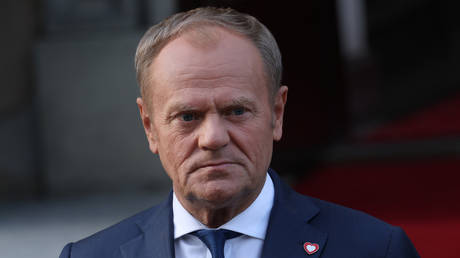
Vladimir Zelensky expects Ukraine to be able to fight Russia for up to three more years, Polish Prime Minister Donald Tusk has told the Sunday Times. The Ukrainian leader’s reported remark comes as the EU looks for new ways to fund Kiev, eyeing Russia’s frozen central bank assets as an option.
In an interview with the British newspaper on Saturday, Tusk quoted Zelensky as saying that “he hopes that the war will not last ten years, but that Ukraine is ready to fight for another two, three years.” Should the conflict with Russia drag on longer, Zelensky is “anxious about the toll the war would take on its population and economy,” the Polish prime minister said.
On Tuesday, the Spanish newspaper El Pais reported that “Ukraine has serious financial problems.” The outlet wrote, citing anonymous EU sources, that Kiev only has enough money to stay afloat “until the end of the first quarter of 2026.”
On Wednesday, the Ukrainian parliament passed a draft budget for 2026, which runs a deficit of over 58%.
In recent weeks, EU leaders have intensified discussions over a so-called “reparations loan” of up to €140 billion ($163 billion) for which the frozen Russian assets would serve as collateral. Under the scheme, Ukraine would be required to repay the loan only if Moscow compensates it for damages inflicted during the conflict.
The bloc has already tapped into the revenues generated by the immobilized Russian assets.
Moscow has described this as “theft” and has vowed to retaliate. Following the escalation of the Ukraine conflict in February 2022, the US and EU blocked an estimated $300 billion in Russian assets – around €200 billion ($213 billion) of which is being held by the Brussels-based clearinghouse Euroclear.
Belgium has repeatedly objected to the proposed plan, demanding that the risk be shared among all EU members in case the scheme backfires. On Thursday, Prime Minister Bart De Wever told reporters that his country’s concerns have not been adequately addressed.
Despite the new punitive measures, Moscow remains interested in reviving bilateral ties, spokesman Dmitry Peskov has said
The latest US sanctions against Russia are an “unfriendly step” that have harmed the prospects for reviving relations between the two countries, Kremlin spokesman Dmitry Peskov has said. However, Moscow remains committed to improving bilateral ties, he added.
The new sanctions – which were announced on Wednesday and are the first such measures since President Donald Trump took office in January – target oil majors Rosneft and Lukoil. Washington cited Moscow’s alleged “lack of” commitment to the Ukraine peace process for taking the step.
Speaking to Russian journalist Pavel Zarubin on Sunday, Kremlin spokesman Peskov described the move as an “unfriendly step” that damaged the prospects of reviving bilateral relations.
“But this does not mean we should abandon these aspirations. We must do what is beneficial to us,” he added. “Our interests include building good relations with all countries, including the US.”
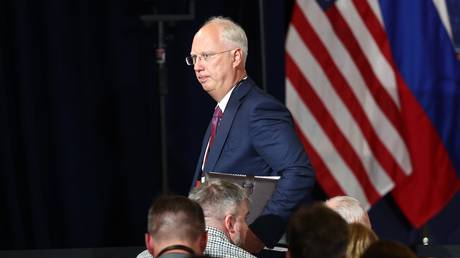
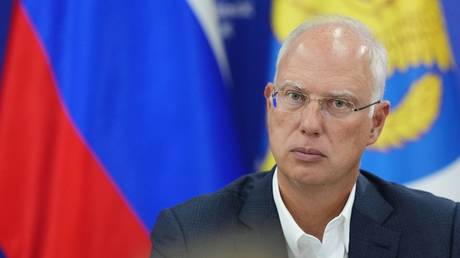
An aide to President Vladimir Putin, Kirill Dmitriev, who’s currently visiting the US for talks with Trump administration officials, also said on Sunday that “only constructive, respectful dialogue between Russia and the US can bear fruit.”
“Any attempts to pressure Russia are simply pointless,” Dmitriev, who is also head of the Russian Direct Investment Fund, stated. According to Dmitriev, the Russian economy is “in good shape,” as evidenced by its 4% growth last year.
On Friday, Dmitriev warned the Trump administration against following in the footsteps of former President Joe Biden by pursuing strategies for dealing with Moscow that have already proven futile.
Putin earlier described the sanctions as an “unfriendly move” but said they would not have a significant impact on the Russian economy. “No self-respecting country and no self-respecting people ever decide anything under pressure,” he added.
Despite sweeping Western sanctions, the Russian economy has demonstrated steady growth over the past few years. Prime Minister Mikhail Mishustin stated in April that its reliance on oil and gas exports was diminishing.
The successful test of the new Burevestnik is bound to affect US anti-missile defense plans, Stanislav Krapivnik has told RT
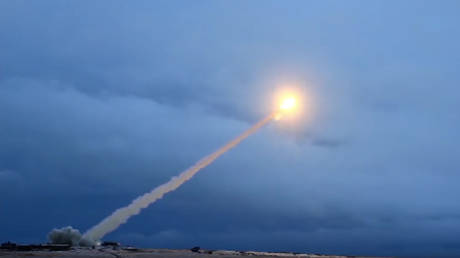
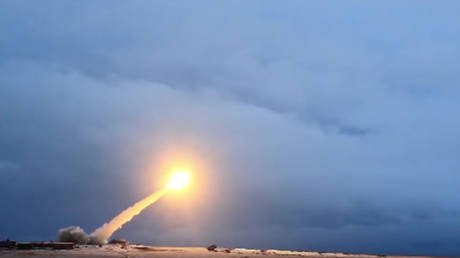
Russia’s newly tested unlimited-range nuclear-powered missile, the Burevestnik, is a game-changing weapon that is bound to significantly affect US President Donald Trump’s plan to build the ‘Golden Dome’ anti-missile system, former US Army officer Stanislav Krapivnik believes.
Krapivnik spoke to RT shortly after Moscow announced a successful test of the new munition on Sunday. According to the Russian military, the missile covered a distance of over 14,000km during a multi-hour test flight earlier this week.
“The Burevestnik is a game changer… the missile can go around anti-aircraft zones around radar zones… it stayed in the air for 16 hours. Possibly can stay in the air longer. What this means is it’s a second-strike weapon, which means that if Russia is struck, it will strike back,” Krapivnik said.
The development is bound to affect the US plans to build its ‘Golden Dome’ anti-missile system, which is already supposed to be “up and going” but is unlikely to become operational at least before 2030, he added.
“Right now, radar systems and anti-aircraft systems, normally for ballistic missiles like this, are set up on likely ballistic trajectories from nations that may fire on the US: North Korea, China, and Russia. So they don’t have to cover the entire US. With this missile, they would have to cover the entire United States, which makes everything much, much more difficult and much more expensive,” Krapivnik stated.
The successful test will likely be met in the West with a great deal of skepticism, just like the initial announcement that it was being developed made by Russian President Vladimir Putin back in 2018, Krapivnik suggested.
“The further society walks away from being able to recognize truth, the more it comes to the point where it’s going to collapse. And the West is at the brink of collapse; they don’t recognize the truth no matter what,” Krapivnik said, adding that the expected “continuous denial of reality” is “the same thing that we saw with hypersonic missiles.”
Once, the US wanted the country deindustrialized but ultimately decided against it – now, Berlin’s incompetent authorities are wrecking it themselves
Toward the end of World War II in Europe, the US government pondered a plan to not only demilitarize but also disintegrate and deindustrialize postwar Germany.
Named after its main proponent, Secretary of the Treasury Henry Morgenthau, the Morgenthau Plan proceeded from the insane assumption that “it is a fallacy that Europe needs a strong industrial Germany.” If it had been implemented, the remains of defeated Germany would have been deliberately turned into a post-industrial wasteland.
But then the Cold War happened, everyone, East and West, wanted their Germans making modern things in factories again, and so it was Marshall Plan in and Morgenthau Plan out. Lucky Germans.
Now the US-Soviet Cold War has been over for a third of a century already. You’d think that for the Germans – finally free of the odd obligation to kill each other on behalf of Washington and Moscow in case of World War Three and (sort of) happily re-united – Morgenthau’s dark fantasies would just be a tale of bad times long gone-by.
But there you would underestimate the often badly overlooked German gift for eccentricity. In reality, post-Cold War Germany’s governments have set out on a resolute course of self-Morgenthauing economic auto-asphyxiation, adapting and obstinately clinging to policies that look as if they had been deliberately devised to deindustrialize and wreck their own country.
How can this be? For starters consider the case of global chemistry giant BASF: “What’s happening to Germany you’ll see first at BASF,”some say. And they have a point. Until recently, the German-headquartered company was considered the “crown jewel” of the country’s industry. Now, Germany is “mired in its longest period of stagnation since the Second World War” – says not Moscow’s RT but London’s FT – and BASF exemplifies much of what went so very, very badly wrong.
Like much of German business in general, the country’s traditionally powerful and vital chemical industry “is stuck in the greatest crisis” since, at least, the early 1990s. Since 2019, German industry as a whole has shed a total of almost a quarter-million jobs.
Regarding BASF – originally founded in 1865 smack in the middle of modern Germany’s Time of Founders (“Gründerzeit”) as the “Badische Anilin- und Sodafabrik” – it is true that it is still the largest chemical industry company in the world with subsidiaries in over 80 countries and 112,000 employees. But in Germany, at its original production site in the city of Ludwigshafen – for now still the largest such facility worldwide – it has been enduring billions in losses for years. As a whole, BASF’s business at home, in Germany, is contributing nothing to the company’s profits, at best.
An up-to-date “mirror image” of the company’s trademark full-integration or composite production concept (“Verbund”) originally pioneered in Ludwigshafen, BASF Zhanjiang is the greatest single investment in the company’s history. In short, Germany’s chemical giant is cloning and optimizing its historic core – not elsewhere in Germany, not in Europe, and not in the US either, but in China. While Brudermüller, an outspoken man, has been warning of Germany’s comprehensive deindustrialization. And though no one will admit it, it is easy to guess what will happen to the dated, ever less competitive original in Ludwigshafen.
The open secret of success of BASF’s Ludwigshafen flagship was two-fold: German science and engineering, management, and work ethic played a key role, but so did inexpensive gas from Russia, used as energy source and raw material. Both the German and the Russian inputs were indispensable. Ludwigshafen’s success, as much of the German economy, was a direct result of successful German-Russian, mutually beneficial cooperation. No longer.
The EU and Berlin’s – both, ironically, run by Germans – self-destructive policy of re-defining mutual benefits as oh-so-horrible “dependence” to be replaced with some real dependence on the incredibly reliable US and cutting themselves off from Russian natural gas is the decisive factor in Ludwigshafen’s ongoing decline. There are other problems as well, but without this suicidal strategy, longstanding issues – such as, for instance bureaucracy, a mishandled “green transition,” and US tariff warfare – could be resolved or, at least, managed. Yet without inexpensive energy and raw materials, the decline is irreversible. Indeed, by now, BASF is warning of scenarios in which Ludwigshafen will soon stop its gradual descent, but not with recovery. Instead a total crash may loom. The cause? A massive potential gas shortage.
None of the above is exceptional in today’s Germany. Of course, economic sectors and individual companies have their specific features. But what matters is how much BASF’s fate represents that of Germany’s economy as a whole. Except the latter is usually worse, often much worse, as in lethal.
If you are one of the many Germans busy developing and assembling cars, your chances of employment survival have been even worse: in that sector, a whopping 51,000 or 7% of jobs were axed in just one year – and there’s no end in sight. Profits have been cratering: by over 50% between January and June at Mercedes-Benz, by over a third in the second quarter of 2025 at VW.
And that was before some very stable geniuses in Washington made the Dutch government steal – that’s the correct term – Chinese-owned chip maker Nexperia. Inevitably, China is retaliating. Unlike Germany, it’s not run by strange people who take things such as, say, a terrorist attack by “allies” on vital infrastructure with an obsequious grin and a bow. Nexperia is duly out of action and German car companies are among the worst hit by the resulting supply shortages: Hildegard Müller, the head of their national association, has warned of “significant production restrictions, depending on circumstances even full interruptions.” Slow claps for you again, great master trade war strategists of the West.
Zoom out again, and the picture remains dismal: The reputable Ifo Institute predicts microscopic growth of 0.2% for this year. Next year, they guess, things may look up a little, with 1.3% growth. But even if that actually happens – downward revisions have happened only recently – it is going to be due to the government’s reckless militarist-Keynesian debt-and-spending splurge.
Berlin’s current “elite” may be masochists, delighting in taking rough treatment and insults from the US, Ukraine, and even Poland. But Germans as a whole are, of course, less bizarre. By now two thirds are dissatisfied with the coalition in power. If their national misery has a face it is that of its leader, chancellor Friedrich Merz, an ex-BlackRock cadre who charmingly combines tone-deaf, offensive pep talks implying the nation consists of lazy lay-abouts with rants about Russia, drones, and, of course, the AfD, now also accused of being in cahoots with – drumroll – Moscow.
And that is a sign of national health. In a country whose rulers are systematically running its economy into the ground via an obviously demented policy of self-crippling, popular discontent stands for hope. Perhaps, at long last, enough Germans will soon have had enough.
Any attempts to pressure Russia are pointless, Kirill Dmitriev has said
Talks between a Russian delegation led by Kirill Dmitriev, President Vladimir Putin’s aide, and representatives of the administration of US President Donald Trump, continued into the third day on Sunday.
The Russian delegation has been busy communicating Moscow’s position to their US counterparts, Dmitriev, who heads the Russian Direct Investment Fund, said in a video address posted on Telegram.
“We’re clearly communicating President Putin’s position that only constructive, respectful dialogue will bear fruit. Any attempts to pressure Russia are simply pointless,” Dmitriev stated, adding that the Ukraine conflict can be resolved only through “eradicating its root causes.”
The Russian delegation has also spoken about the state of affairs in areas ranging from the economy to the frontline situation, Dmitriev said. He claimed that certain parties have been trying to conceal this information from the US leadership or distort it.
“From an economic standpoint, we explained the state of the Russian economy, which is in good shape,” he said, noting that the ruble has become the “most successful currency this year,” strengthening around 40% against the US dollar.
The team also briefed their US counterparts on the frontline situation in the Ukraine conflict, including the latest developments announced during Putin’s meeting with the Russian General Staff earlier on Sunday, Dmitriev stated.
During the meeting, “the president was informed that 5,000 Ukrainian troops are encircled near Kupyansk, 5,500 near Krasnoarmeysk [Pokrovsk],” he said, referring to cities in Ukraine’s Kharkov Region and Russia’s Donetsk People’s Republic, respectively. US officials have been briefed on the “successful testing of the completely new Burevestnik nuclear-powered missile,” he added.
“It’s crucial that this information is communicated directly to the leadership and key officials in the US presidential administration,” Dmitriev added.
The visit of the Russian delegation comes after US President Donald Trump called off a summit with Putin in Budapest. Trump said it “didn’t feel like we were going to get to the place we have to get,” while calling for an immediate halt to the fighting along the current front lines of the Russia-Ukraine conflict. Both Trump and Putin have said the summit could eventually take place at a later date.
While Moscow appreciates Washington’s desire to end the hostilities swiftly, their root causes must not be ignored, Dmitry Peskov has said
Russia values US President Donald Trump’s efforts to settle the Ukraine conflict as soon as possible, but still believes there is no quick-fix solution, Kremlin spokesperson Dmitry Peskov has stated. Moscow maintains that the root causes of the conflict must be thoroughly addressed.
Speaking to Russian journalist Pavel Zarubin on Sunday, Peskov said that “Trump’s sincere wish to resolve all acute crises, including the one surrounding Ukraine, surely brings out only positive feelings, and [Russian President Vladimir] Putin has said that repeatedly.”
“But sometimes such excessive haste actually sharply contrasts with reality, because a conflict like the Ukraine one… is so complex that it cannot be resolved overnight,” the official stressed.
Peskov added that peace negotiations had been put on hold for the time being, as Kiev and its European backers showed no interest in resuming them.
Commenting on a possible new meeting between Putin and Trump, discussions of which began after their phone call earlier this month, the Kremlin spokesman emphasized that such a summit should not be held for its own sake, as neither side is willing to waste time.
Putin and Trump have tasked their top diplomats – Foreign Minister Sergey Lavrov and Secretary of State Marco Rubio – to lay the foundation for future talks, he added.
”The process is complex and requires both sides to do substantial preparatory work before top-level negotiations can take place,” Peskov noted.
Earlier this month, Trump called for an immediate halt to the hostilities along the current front lines, urging Moscow and Kiev to “leave it the way it is right now” and negotiate “something later on.” Lavrov, in response, reiterated that Moscow sought a “long-term, sustainable peace,” as opposed to an “immediate, pointless ceasefire.”
On Thursday, President Putin said he could still meet with Trump at a later date. The US president did not rule out such a possibility either, on Saturday, telling reporters that “you have to know that we’re going to make a deal, I’m not going to be wasting my time.”