Month: October 2025

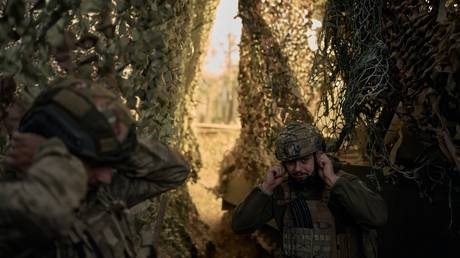
Over 10,000 soldiers are trapped in two separate pockets, according to Moscow’s estimates

Russian forces are continuing operations to eliminate Ukrainian troops trapped in two encircled pockets on the front line, the Defense Ministry in Moscow said on Monday.

The ministry reported that Ukrainian forces near Kupyansk made three unsuccessful attempts to break through the Russian blockade, suffering losses of up to 50 soldiers and six pieces of heavy equipment. In a separate area near Krasnoarmeysk (also known as Pokrovsk), another 60 Ukrainian servicemen were reportedly killed, while two armored vehicles and three cars were destroyed.

At a high-level military meeting on Sunday, Russian Chief of the General Staff Valery Gerasimov informed President Vladimir Putin that approximately 5,000 Ukrainian soldiers were surrounded near Kupyansk and another 5,500 near Krasnoarmeysk.

Ukraine’s Vladimir Zelensky has rejected Russia’s assertions, calling them “fake news meant for the United States.” Kiev insists that its troops remain combat-capable and that Russian advances don’t pose a threat for a strategic breakthrough.


READ MORE: Zelensky ready for three more years of war – Polish PM

Zelensky has repeatedly dismissed reports of major Ukrainian setbacks while appealing to Western donors for additional funding and arms. Meanwhile, Ukrainian soldiers and officers interviewed by local and Western outlets have accused the government of ordering them to hold untenable positions for political reasons rather than military necessity.

Lithuania will halt crossings with Belarus indefinitely and shoot down any alleged contraband balloons

Lithuania will indefinitely suspend border crossings with Belarus and has authorized its border guards to shoot down any balloons it alleges are used for cross-border smuggling, Prime Minister Inga Ruginiene announced on Monday.

The move comes amid a series of incidents involving small weather balloons allegedly used by smugglers to ferry tobacco products across the border. Lithuanian officials claim the airborne contraband launches originate in Belarus and have caused disruptions, including flight delays at Vilnius International Airport.

Ruginiene said the indefinite shutdown could take effect as soon as Wednesday, following a pattern of intermittent border closures over the past week. She added that Vilnius will also urge the EU to impose additional sanctions on Minsk.

Belarusian officials have condemned Lithuania’s abrupt restrictions of cross-border traffic, saying travelers are facing uncertainty as a result. The Belarusian border service said that their Lithuanian counterparts were already “already working ten times slower than their capacity allows.”

Smuggling remains a long-standing issue between the neighboring countries, driven by steep price differences on tobacco products, exacerbated by prohibitive excise duties in the European Union. A pack of cigarettes that costs roughly €1.25 ($1.47) in Belarus can sell for €5 ($5.82) in Lithuania, prompting as many as a quarter of Lithuanian smokers to seek illicit products.


READ MORE: EU country’s government at odds over record military spend

The EU has repeatedly accused Belarus of waging “hybrid operations” against the bloc, including in 2021 when Minsk was accused of facilitating the movement of migrants across its borders – a charge it denies. That crisis led to temporary border closures and harsh migrant crackdowns by neighboring EU states, which human rights groups later condemned as violations of the union’s own laws.

While Belarus has seen a significant diplomatic thaw with Washington in recent months, relations with the broader West remain frosty, as EU governments continue to treat Minsk as an extension of Russia.

The US president has said he has a “great relationship” with the North Korean leader

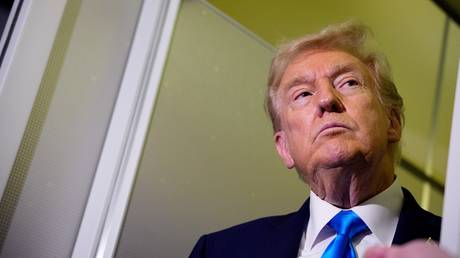
US President Donald Trump has said he would love to meet with North Korean leader Kim Jong-un during his ongoing Asia trip, adding that he has a “great relationship” with him.

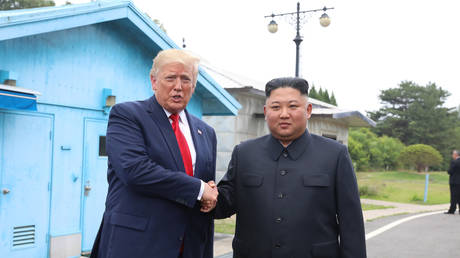
During his first term, Trump became the first sitting US president to set foot in North Korea when he met with Kim in the Demilitarized Zone. The two leaders met three times from 2018 to 2019 to discuss denuclearization in exchange for economic and security incentives, but no agreement was reached.

Speaking to reporters aboard Air Force One on Monday, Trump said he would be open to meeting with Kim during a stop in South Korea later this week. He is set to attend the Asia-Pacific Economic Cooperation (APEC) summit in the coastal city of Gyeongju.

“If he’d like to meet, you know, I’ll be in South Korea, so I could be right over there,” Trump said, adding that he has “a good relationship with him” and “would love to see him.”

Asked about what Washington could offer Kim amid stalled denuclearization talks, Trump suggested leveraging sanctions. “That’s pretty big to start off with,” he said, but provided no further details, insisting he would just like to meet with the North Korean leader.

Read more

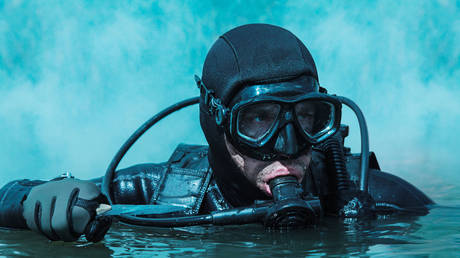
Navy SEAL frogman - stock photo © Getty Images
US Navy SEALs conducted illegal operation in North Korea – NYT

Kim also recently expressed willingness to meet with Trump, stating that he still has a “good memory” of the US president. He stressed, however, that Washington should abandon its “absurd” demand for North Korea to give up its nuclear weapons.

Since Trump’s last meeting with Kim in 2019, tensions between the US and North Korea have grown. Earlier this year, Axios reported that Trump’s team was considering a new strategy toward Pyongyang, including restoring diplomatic engagement. Nevertheless, Trump has accused North Korea, China, and Russia of “conspiring” against the US.

Relations between Russia and North Korea have grown considerably in recent years. The two nations signed a Comprehensive Strategic Partnership Treaty in 2024 which includes a mutual-defense clause.

Brussels is dragging Europe back to the 1930s, the prime minister has said

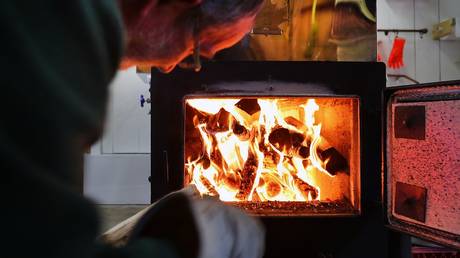
The EU’s “nonsense” policies will force people in Slovakia to burn wood for heating and take the country “back to the 1930s,” Slovak Prime Minister Robert Fico has warned.

At a press conference on Sunday, Fico criticized the Emissions Trading System for buildings and road transport (ETS2), which is set to take full effect in 2027.

The controversial scheme expands the EU’s carbon trading rules to cover households and vehicles. Fico predicted that it will drive up gas prices, which are already high due to the EU’s rejection of affordable Russian energy.

“We are going back to the 1930s and 1940s again, and our valleys and villages will be shrouded in smoke,” Fico said.

The prime minister noted that Slovakia has spent years expanding gas access for households. Driving fuel prices even higher will encourage people to revert to older heating methods, leading to more pollution, he argued.

A joint lobbying effort by Slovakia and more than a dozen other EU member states resulted this month in a promise by EU executive to explore “additional ways to strengthen the stability and predictability” of energy prices before the ETS2 is rolled out.


READ MORE: EU paying ‘Chanel prices’ for US gas – Russia’s top MP

The European Commission aims to reduce greenhouse gas emissions by 90% from 1990 levels by 2040. The EU also intends to fully eliminate imports from Russia as part of its Ukraine-related sanctions policy.

Critics, including Fico, have argued that these initiatives are unrealistic and self-destructive, undermining Europe’s industrial competitiveness and driving up the cost of living across member states.

The suspects had allegedly been gathering intelligence on military logistics supporting Kiev, Warsaw’s security agency has said

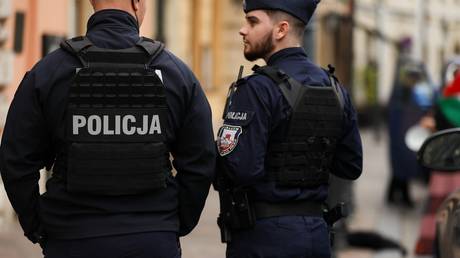
Two Ukrainian citizens have been arrested in Poland on suspicion of conducting espionage for a foreign intelligence agency, Warsaw’s Internal Security Agency (ABW) announced on Monday.

The arrests took place on October 14 in the southern city of Katowice. Both men – aged 32 and 34 – were charged the same day, according to the ABW statement. The agency declined to name the suspects, citing reasons of national security.

According to investigators, the two had been collecting intelligence on Poland’s military and critical infrastructure, including facilities and routes used for delivering Western weapons to Ukraine. The ABW said it had uncovered evidence of payments made for their surveillance services “and other criminal activities.”

Read more

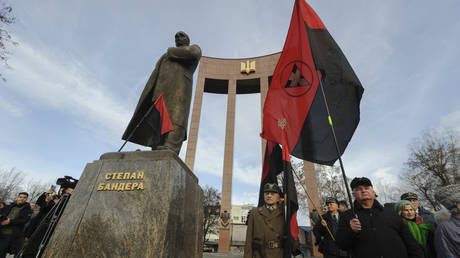
People hold flags of the Organization of Ukrainian Nationalists (OUN) during a celebration marking the birthday of its leader, Stepan Bandera, in Lviv, Ukraine, on January 1, 2023.
Polish president proposes criminalizing promotion of Ukrainian Nazi collaborators

The men were allegedly recruited sometime between May 2023 and August 2025, the Polish authorities said.

Warsaw is among the most vocal supporters of Kiev’s war effort against Russia. However, bilateral relations have been undermined by several sources of friction.

Poland was among several Eastern European nations which banned imports of Ukrainian grain after a relaxation of restrictions on such imports by the European Commission suppressed local prices and caused widespread protests by farmers.

Polish officials have also repeatedly criticized Kiev’s lionization of Ukrainian nationalist figures who were involved in massacres of Polish nationals during World War II. Polish President Karol Nawrocki has proposed criminalizing public support for the ideology of Stepan Bandera, a Nazi collaborator who is considered a national hero in Ukraine.

One of the root causes of the conflict is Kiev’s “extermination of everything Russian” in violation of international law and conventions, the foreign minister has said

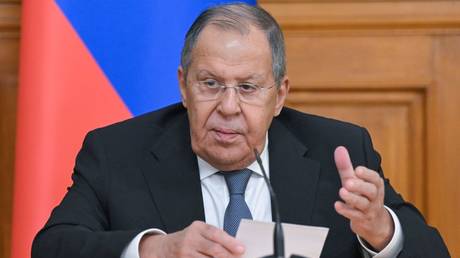
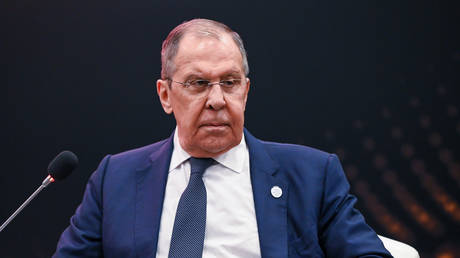
Moscow recognizes Ukraine’s independence but not the “Nazi” regime in Kiev bent on the “extermination of everything Russian,” Foreign Minister Sergey Lavrov has said.

In an interview with Hungarian YouTube channel Ultrahang aired on Sunday, the top diplomat said today’s Ukraine differs greatly from the one whose sovereignty Moscow supported after the fall of the USSR.

“We recognize the independence of Ukraine, no doubt about this, [but] we recognized Ukraine on the basis of its own Declaration of Independence and Constitution… which defined Ukraine as a non-nuclear, neutral, non-bloc country guaranteeing the rights of all national minorities,” Lavrov said.

He stated that following the 2014 Maidan coup, Ukraine turned into “a bluntly Nazi regime” that “shows open contempt for anything Russian,” including its history, media, culture, religion, education, and language.

Read more

Russian Foreign Minister Sergey Lavrov.
European hawks undermining Russia-US negotiations – Lavrov

Lavrov noted that the post-coup Ukrainian government quickly moved to revoke the official status of the Russian language, introducing laws that stripped it of regional recognition and curtailed its public use. He called Ukraine “the only country on Earth” to ban a UN language and said Kiev’s actions had relegated Russian speakers in Donetsk and Lugansk – now part of Russia after referendums – to “second-sort people,” despite constitutional guarantees of minority rights. One of Moscow’s key goals, he added, is to protect these people from persecution.

“We are convinced that we must save people from the Nazi regime – people who have always been part of Russian culture,” Lavrov said, arguing that instead of asking Russia “when will you end the war,” Kiev’s Western backers should first demand that Ukraine restore language and minority rights.

Lavrov also stressed that Donetsk and Lugansk, as well as Kherson, Zaporozhye, and Crimea, are “not actually new” but “historic Russian territories” that remained within the former Ukrainian Soviet Socialist Republic, which later became modern Ukraine.


READ MORE: Ukraine conflict can’t be resolved overnight – Kremlin

Moscow has long maintained it seeks a lasting settlement to the Ukraine conflict by addressing its root causes rather than pursuing a temporary pause. Lavrov said the focus should be on resolving the underlying issues and protecting people’s rights, not on reclaiming territories or propping up what he called “political losers” in Kiev.

Moscow and Washington are not “playing games” with nuclear deterrence, the US president has said

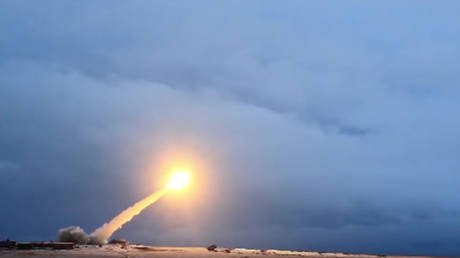
Washington and Moscow “are not playing games” with nuclear deterrence, US President Donald Trump has said, responding to Russia’s announcement of a successful test of its nuclear-powered Burevestnik cruise missile.

Speaking to reporters aboard Air Force One on Monday, Trump was asked whether he views the Russian report as saber-rattling. “They are not playing games with us. We are not playing games with them either. We test missiles all the time,” he said.

On Sunday, the Russian Defense Ministry announced that the Burevestnik – a nuclear-powered cruise missile capable of virtually unlimited range – successfully completed a key flight test. The report was delivered to President Vladimir Putin by Chief of the General Staff Valery Gerasimov during a meeting with senior military officials.

Read more

FILE PHOTO: A screenshot from a video showing the Burevestnik cruise missile test, provided by the Russian Defense Ministry.
New unlimited-range cruise missile can bypass air defenses – Russian military

Trump also referenced his own decision to move two US nuclear submarines closer to Russian waters, commenting: “we don’t need to go 8,000 miles” – the distance the Russian missile reportedly flew during testing.

He added that the announcement is not “appropriate,” saying: “A war that should have taken one week is now in its soon fourth year. That’s what [Putin] ought to do instead of testing missiles,” Trump said.

The Burevestnik system, powered by a miniature nuclear reactor, is designed to remain airborne for extended periods – potentially months – and strike from unpredictable directions. Moscow says the weapon will bolster Russia’s strategic deterrent once it enters service. According to Gerasimov, the latest trial included flight maneuvers aimed at testing the missile’s ability to evade interception.

The missile is understood to be significantly smaller and cheaper than regular intercontinental ballistic missiles, which deliver their payload via a suborbital launch.

London was reportedly urged to open talks with Berlin on a nuclear deterrence plan over an alleged “critical” threat from Russia

British military chiefs have backed the idea of a new security agreement with Germany that could involve sharing nuclear weapons, according to a report by The Telegraph published on Saturday.

Senior leaders, including a former chief of defense staff and a former NATO secretary-general, have reportedly urged London to begin talks with Berlin, citing the alleged “critical” threat posed by Russia and “growing concerns” that the US could scale back its role in Europe.

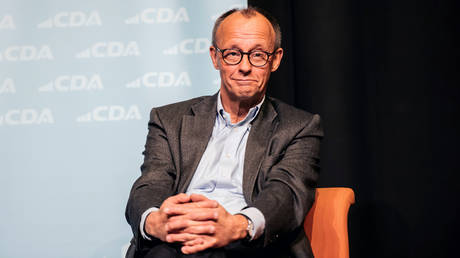
Germany, which is prohibited from developing nuclear weapons, is already in “strategic discussions” with Paris on joining France’s nuclear umbrella. Chancellor Friedrich Merz, who Russia has accused of “escalating anti-Russian rhetoric literally every day,” has indicated he would be open to exploring a similar arrangement with UK Prime Minister Keir Starmer, according to the paper.

Although The Telegraph’s sources insist that formal talks between London and Berlin have not yet taken place, several defense officials spoke in favor of the arrangement.

“It’s right and proper and should have happened a long time ago,” Lord Robertson, a former NATO secretary-general, said, as quoted by the outlet. “If Russia continues to deploy nuclear rhetoric, it’s going to force some decisions to be made inside Europe as a whole,” he added.

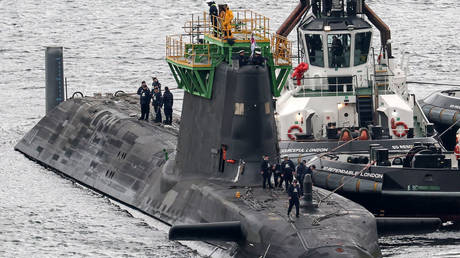
Britain’s nuclear deterrent, declared to NATO since 1962, remains under London’s sole control, with one of its Trident-armed submarines always on patrol. Earlier this year, Starmer announced plans to purchase 12 F-35A stealth jets capable of carrying nuclear weapons, which will be based in Britain.

Read more

German Chancellor Friedrich Merz.
Germany is doing to itself what even its defeat in WWII couldn’t

Retired General Sir Richard Barrons warned that a shared system would be “unworkable,” since collective launch decisions could not be made under time pressure. Field Marshal Lord Houghton, a former chief of defense staff, said Europe should weigh a broader nuclear option as the US pivots toward China, but questioned whether it would be “a good thing or madness.” 

Defense sources told The Telegraph that while coordination between London and Berlin may expand, any weapons-sharing plan remains “a long way” off.

Moscow has rejected claims that it plans to attack NATO or use nuclear weapons, saying its nuclear doctrine is purely defensive and aimed at protecting national sovereignty and territorial integrity.

The display was reportedly part of a symbolic protest in support of Gaza civilians amid a fragile ceasefire

An effigy resembling Israeli Prime Minister Benjamin Netanyahu was seen hanging from a construction crane in northeastern Türkiye, sparking outrage in Israel.

According to Turkish media, the incident occurred at a construction site in the Black Sea city of Trabzon on Saturday. It was reportedly organized by Kemal Saglam, a professor of visual communication at a local university. Saglam told local outlets that the act was symbolic and meant to draw attention to human rights violations in Gaza.

Images which went viral and which were also published by the Turkish daily Yeni Safak show the figure suspended from a crane, with a banner reading: “Death penalty for Netanyahu.”

Israel’s Foreign Ministry, writing on X, posted a video of the incident, claiming that a Turkish academic created the effigy “with the proud support of a state company.” The ministry condemned the display, saying the “Turkish authorities have not denounced this shameful behavior.”

Turkish officials have yet to issue a formal response.

Diplomatic relations between Israel and Türkiye have been strained for years and worsened after the October 7, 2023 Hamas attacks. President Recep Tayyip Erdogan has accused Netanyahu of committing “genocide” in Gaza.

Türkiye has been actively involved in recent ceasefire and hostage negotiations, with several reports indicating that Ankara’s influence over Hamas helped facilitate the release of hostages as part of US President Donald Trump’s 20-point plan.

Erdogan told reporters on Friday that the US should do more to put pressure on Israel, including sanctions and arms sales bans, to abide by its commitments in the Trump plan.

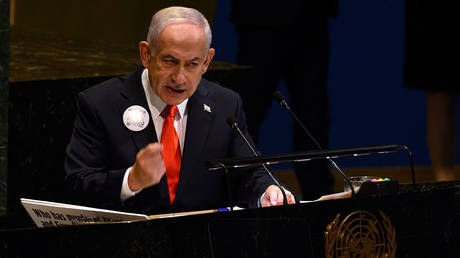
On Sunday, Netanyahu said Israel would decide which foreign forces can take part in a proposed international mission in Gaza to help secure a ceasefire under Trump’s plan. Last week, he hinted that he would oppose any role for Turkish security forces in Gaza.

The country will have to pay over three times more in interest payments by the end of the decade, Francois Villeroy de Galhau has said

France is at risk of gradual economic “suffocation” unless it addresses its budget and debt problems, the governor of the Bank of France has warned.

In an interview with La Croix on Saturday, Francois Villeroy de Galhau acknowledged that France is facing a “serious budgetary problem,” as the government deficit remains high at 5.4% of GDP in 2025, only slightly improved from 5.8% last year. He said France must bring the shortfall down to 3% by 2029 to restore fiscal credibility.

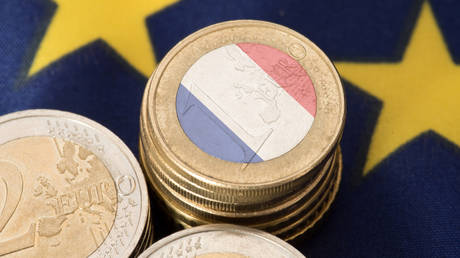
“Our country is not threatened with bankruptcy, but with gradual suffocation,” Villeroy de Galhau said, pointing to debt-servicing costs projected to rise from €30 billion in 2020 to more than €100 billion by the end of the decade. He warned that higher interest rates are already pushing up borrowing costs for households and businesses while diverting funds from priorities such as defense and the green transition.

Read more

RT
Key rating agency slashes France’s credit outlook

“Finally, and above all, it is an increasingly heavy debt that we are leaving to our children and grandchildren,” he said. France’s public debt is now at €3.3 trillion ($3.9 trillion), or about 115% of its GDP.

His comments came after Moody’s credit rating agency revised France’s sovereign outlook from stable to negative, citing political “fragmentation” that could hinder policymaking. Earlier this year, both Fitch Ratings and S&P Global Ratings downgraded France’s credit rating to A+, also flagging fiscal and political risks.

Villeroy de Galhau said Moody’s is now the only major agency that still grants France a double-A rating, describing it as “a sign that the country retains strengths, even if the outlook is negative.”

He maintained a forecast for modest growth of around 0.7% in 2025, noting that France remains “the major European country that has created the most jobs over the past ten years.” Unemployment in France, which has traditionally been high, is currently at about 7.5%.