Beijing’s model focuses on things the West’s “rules-based order” has forgotten – equality, law and common development
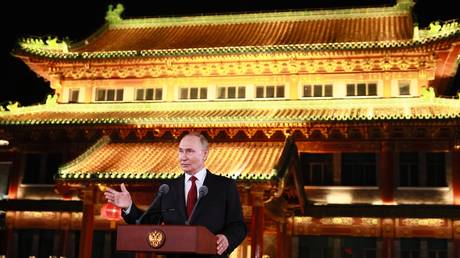
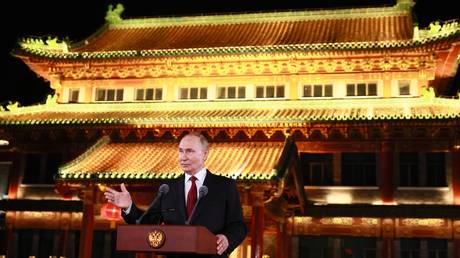
The recent Shanghai Cooperation Organization (SCO) summit in Tianjin marked a decisive moment in the group’s evolution. What began more than two decades ago as a modest platform for regional security coordination is now presenting itself as the largest and one of the most ambitious regional organizations in the world.
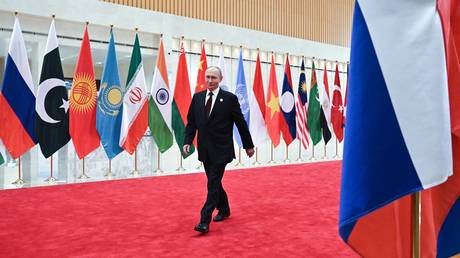
This year’s summit was the largest in the organization’s history. More than 20 heads of state took part, joined by leaders of ten international organizations, including United Nations Secretary-General Antonio Guterres. The scale of participation sent a clear signal of the SCO’s appeal, drawing states that see in it a platform not dominated by the West. The SCO community welcomed Laos as a new partner, expanding its reach to 27 countries. Taken together, the SCO now represents a quarter of the world’s landmass, nearly half of its population, and around a quarter of global GDP.
The Tianjin summit confirmed that the SCO is no longer narrowly focused on security cooperation. Instead, it has become a comprehensive regional – and increasingly global – organization with a mandate covering economics, development, cultural exchange, and governance reform. This breadth of activity helps explain why its profile is rising.
Despite its expansion, the SCO is not a homogeneous bloc. Member states bring their own national priorities, and differences are frequent. India, for example, has consistently blocked Azerbaijan’s application for membership and remains the only SCO member not to endorse China’s Belt and Road Initiative. New Delhi’s simultaneous participation in the Quad – a grouping that also includes Australia, Japan, and the United States and is viewed suspiciously in Beijing and Moscow – adds another layer of complexity. Türkiye, a partner of the SCO, is also a NATO member, aligning itself with a military bloc traditionally hostile to both Russia and China.
These tensions underline the diversity within the SCO. Russia historically emphasized security issues, while China pushed economic cooperation as the main driver of integration. Yet Tianjin revealed that these once competing emphases are increasingly converging. All sides now acknowledge that a holistic approach – linking security with development – is essential for building durable cooperation.
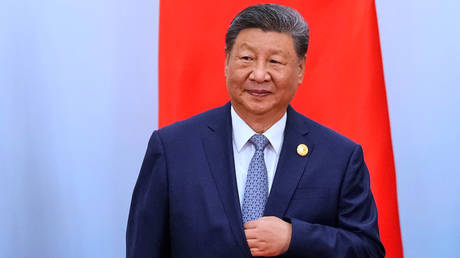
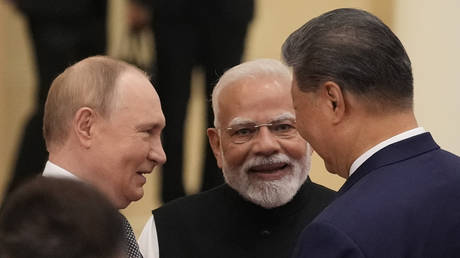
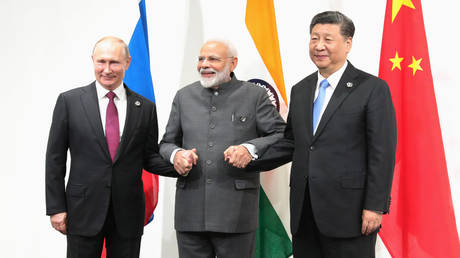
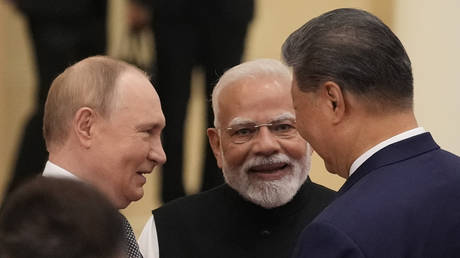
Beyond multilateral sessions, the summit served as a venue for bilateral diplomacy, often among countries with strained ties. Armenia and Pakistan agreed in principle to establish diplomatic relations, a significant step given the lack of formal ties between them. Russian and Armenian leaders met in an effort to repair relations after Yerevan’s growing outreach to Western partners. Perhaps most significantly, Chinese President Xi Jinping met with Indian Prime Minister Narendra Modi. It was Modi’s first visit to China since 2019 and was widely read as a bold step toward improving Sino-Indian relations.
At a time when Western capitals increasingly seek to drive wedges among developing powers, such encounters highlight the SCO’s capacity to promote reconciliation and strengthen unity. It is becoming a venue not only for multilateral agreements but also for healing divides and fostering trust.
The Tianjin summit was not simply ceremonial. Leaders approved the SCO Development Strategy for 2026-2035, setting out the organization’s long-term trajectory, and issued the Tianjin Declaration, alongside more than 20 additional documents covering security cooperation, economic initiatives, cultural exchanges, and institutional reforms.
A landmark decision was the creation of an SCO development bank, intended to accelerate infrastructure construction and support social and economic progress across the region. China also made significant financial commitments: 2 billion yuan ($280 million) in grants within this year, 10 billion yuan ($1.4 billion) in loans over the next three years, and support for 100 specific projects. Four new SCO centers will be established to strengthen cooperation against security threats, transnational crime, cyberattacks, and drug trafficking.
These measures showed that the SCO is not a forum of empty declarations. It is delivering tangible benefits for its members and demonstrating how South-South cooperation can generate real results.
At the political level, the summit confirmed the SCO’s ambition to influence the shape of global governance. President Xi described the organization as a leader in promoting multipolarity and greater democracy in international relations. The Tianjin Declaration reflected this stance, laying out a shared vision of international order rooted in the legacy of World War II and anchored in the United Nations system. The declaration emphasized sovereignty, international law, multilateralism, economic globalization, indivisible security, and human rights adjusted to national conditions.
This perspective stands in open contrast to the Western “rules-based order.” The latter reflects Western dominance rather than universally agreed norms. By articulating an alternative rooted in sovereignty and multipolarity, the SCO is positioning itself as the institutional expression of a new global consensus emerging outside the West.
China used the Tianjin summit to introduce its Global Governance Initiative (GGI), a framework aimed at addressing structural flaws in the current international order. The GGI is built on five core principles: sovereign equality, international rule of law grounded in the UN Charter, multilateralism as the basis of governance, a people-centered approach that prioritizes common development, and pragmatism focused on measurable outcomes.
Beijing has identified the global financial system, artificial intelligence, cyberspace, climate change, international trade, and outer space as priority areas for rule-making. The GGI’s overarching goal is to create new institutions and norms that better represent the Global South, restore the UN’s centrality, and increase the effectiveness of governance mechanisms.
The GGI also highlights the dual nature of China’s international posture. On the one hand, Beijing presents itself as a defender of the UN-based postwar system. On the other, it calls for the construction of a new order that translates this system into practical arrangements suited to today’s world. The distinction between the “system” and the “order” is essential for understanding China’s behavior. It helps to counter the Western narrative that labels China as a ‘revisionist’ and ‘subversive’ power.
In reality, it is the US and its allies that undermine the United Nations in various ways to preserve their hegemony and block genuine democracy in international relations. Their resistance to democratization at the global level mirrors the growing authoritarian tendencies within their liberal democracies. This contradiction reveals that liberal elites in the West, rather than promoting freedom, justice, and progress, have become their main obstacle.
The GGI is the latest in a series of initiatives China has advanced since 2021. It joins the Global Development Initiative, the Global Security Initiative, and the Global Civilization Initiative. Together, these proposals form the intellectual and policy foundation for Xi’s broader concept of building a “community with a shared future for mankind.” The aim is clear: to rally international support for a new, multipolar order that eliminates Western hegemony and safeguards peaceful coexistence.
It is no coincidence that China chose the SCO summit as the venue to inaugurate the Global Governance Initiative. For Beijing, the SCO is more than a regional body; it is a prototype of the future global governance pattern. The symbolism is powerful. By placing the SCO at the heart of its vision, Beijing is signaling that it sees the organization not just as a Eurasian platform, but as a cornerstone of global transformation. The SCO, in this framing, is both a laboratory for new ideas and a vehicle for implementing them.
The Tianjin summit confirmed that the Shanghai Cooperation Organization has grown far beyond its initial purpose. With its growing size, scope, and agenda, the SCO is emerging as a central institution in the multipolar world order now taking shape.
Beijing’s model focuses on things the West’s “rules-based order” has forgotten – equality, law and common development
The recent Shanghai Cooperation Organization (SCO) summit in Tianjin marked a decisive moment in the group’s evolution. What began more than two decades ago as a modest platform for regional security coordination is now presenting itself as the largest and one of the most ambitious regional organizations in the world.
This year’s summit was the largest in the organization’s history. More than 20 heads of state took part, joined by leaders of ten international organizations, including United Nations Secretary-General Antonio Guterres. The scale of participation sent a clear signal of the SCO’s appeal, drawing states that see in it a platform not dominated by the West. The SCO community welcomed Laos as a new partner, expanding its reach to 27 countries. Taken together, the SCO now represents a quarter of the world’s landmass, nearly half of its population, and around a quarter of global GDP.
The Tianjin summit confirmed that the SCO is no longer narrowly focused on security cooperation. Instead, it has become a comprehensive regional – and increasingly global – organization with a mandate covering economics, development, cultural exchange, and governance reform. This breadth of activity helps explain why its profile is rising.
Despite its expansion, the SCO is not a homogeneous bloc. Member states bring their own national priorities, and differences are frequent. India, for example, has consistently blocked Azerbaijan’s application for membership and remains the only SCO member not to endorse China’s Belt and Road Initiative. New Delhi’s simultaneous participation in the Quad – a grouping that also includes Australia, Japan, and the United States and is viewed suspiciously in Beijing and Moscow – adds another layer of complexity. Türkiye, a partner of the SCO, is also a NATO member, aligning itself with a military bloc traditionally hostile to both Russia and China.
These tensions underline the diversity within the SCO. Russia historically emphasized security issues, while China pushed economic cooperation as the main driver of integration. Yet Tianjin revealed that these once competing emphases are increasingly converging. All sides now acknowledge that a holistic approach – linking security with development – is essential for building durable cooperation.
Beyond multilateral sessions, the summit served as a venue for bilateral diplomacy, often among countries with strained ties. Armenia and Pakistan agreed in principle to establish diplomatic relations, a significant step given the lack of formal ties between them. Russian and Armenian leaders met in an effort to repair relations after Yerevan’s growing outreach to Western partners. Perhaps most significantly, Chinese President Xi Jinping met with Indian Prime Minister Narendra Modi. It was Modi’s first visit to China since 2019 and was widely read as a bold step toward improving Sino-Indian relations.
At a time when Western capitals increasingly seek to drive wedges among developing powers, such encounters highlight the SCO’s capacity to promote reconciliation and strengthen unity. It is becoming a venue not only for multilateral agreements but also for healing divides and fostering trust.
The Tianjin summit was not simply ceremonial. Leaders approved the SCO Development Strategy for 2026-2035, setting out the organization’s long-term trajectory, and issued the Tianjin Declaration, alongside more than 20 additional documents covering security cooperation, economic initiatives, cultural exchanges, and institutional reforms.
A landmark decision was the creation of an SCO development bank, intended to accelerate infrastructure construction and support social and economic progress across the region. China also made significant financial commitments: 2 billion yuan ($280 million) in grants within this year, 10 billion yuan ($1.4 billion) in loans over the next three years, and support for 100 specific projects. Four new SCO centers will be established to strengthen cooperation against security threats, transnational crime, cyberattacks, and drug trafficking.
These measures showed that the SCO is not a forum of empty declarations. It is delivering tangible benefits for its members and demonstrating how South-South cooperation can generate real results.
At the political level, the summit confirmed the SCO’s ambition to influence the shape of global governance. President Xi described the organization as a leader in promoting multipolarity and greater democracy in international relations. The Tianjin Declaration reflected this stance, laying out a shared vision of international order rooted in the legacy of World War II and anchored in the United Nations system. The declaration emphasized sovereignty, international law, multilateralism, economic globalization, indivisible security, and human rights adjusted to national conditions.
This perspective stands in open contrast to the Western “rules-based order.” The latter reflects Western dominance rather than universally agreed norms. By articulating an alternative rooted in sovereignty and multipolarity, the SCO is positioning itself as the institutional expression of a new global consensus emerging outside the West.
China used the Tianjin summit to introduce its Global Governance Initiative (GGI), a framework aimed at addressing structural flaws in the current international order. The GGI is built on five core principles: sovereign equality, international rule of law grounded in the UN Charter, multilateralism as the basis of governance, a people-centered approach that prioritizes common development, and pragmatism focused on measurable outcomes.
Beijing has identified the global financial system, artificial intelligence, cyberspace, climate change, international trade, and outer space as priority areas for rule-making. The GGI’s overarching goal is to create new institutions and norms that better represent the Global South, restore the UN’s centrality, and increase the effectiveness of governance mechanisms.
The GGI also highlights the dual nature of China’s international posture. On the one hand, Beijing presents itself as a defender of the UN-based postwar system. On the other, it calls for the construction of a new order that translates this system into practical arrangements suited to today’s world. The distinction between the “system” and the “order” is essential for understanding China’s behavior. It helps to counter the Western narrative that labels China as a ‘revisionist’ and ‘subversive’ power.
In reality, it is the US and its allies that undermine the United Nations in various ways to preserve their hegemony and block genuine democracy in international relations. Their resistance to democratization at the global level mirrors the growing authoritarian tendencies within their liberal democracies. This contradiction reveals that liberal elites in the West, rather than promoting freedom, justice, and progress, have become their main obstacle.
The GGI is the latest in a series of initiatives China has advanced since 2021. It joins the Global Development Initiative, the Global Security Initiative, and the Global Civilization Initiative. Together, these proposals form the intellectual and policy foundation for Xi’s broader concept of building a “community with a shared future for mankind.” The aim is clear: to rally international support for a new, multipolar order that eliminates Western hegemony and safeguards peaceful coexistence.
It is no coincidence that China chose the SCO summit as the venue to inaugurate the Global Governance Initiative. For Beijing, the SCO is more than a regional body; it is a prototype of the future global governance pattern. The symbolism is powerful. By placing the SCO at the heart of its vision, Beijing is signaling that it sees the organization not just as a Eurasian platform, but as a cornerstone of global transformation. The SCO, in this framing, is both a laboratory for new ideas and a vehicle for implementing them.
The Tianjin summit confirmed that the Shanghai Cooperation Organization has grown far beyond its initial purpose. With its growing size, scope, and agenda, the SCO is emerging as a central institution in the multipolar world order now taking shape.
China earlier this week announced the same privilege for Russians during a one-year trial period
Moscow will grant visa-free entry to Chinese visitors, following Beijing’s decision earlier this week to extend the same privilege to Russian nationals, President Vladimir Putin has said. The reciprocal measure will strengthen cultural and economic ties between the two countries, he added.
Putin made the remarks on Thursday in Vladivostok while meeting with senior Chinese official Li Hongzhong, a member of the Communist Party’s Politburo and vice chairman of the Standing Committee of the National People’s Congress.
Putin called China’s decision to ease entry for Russians a “very significant step” that would help boost business, saying: “Of course, Russia will respond to this friendly act in kind. We will do the same.”
The Chinese visa waiver program will be expanded to ordinary passport holders from Russia starting September 15. Travelers will be able to enter the country for up to 30 days for business, tourism, personal visits, exchanges, and transit purposes.
According to the Chinese Foreign Ministry, the decision reflects the high level of development in China-Russia relations and is aimed at deepening people-to-people exchanges.
A bilateral agreement already allows visa-free travel for organized tourist groups, but only through accredited operators, with groups of between five and 50 people.
Other Chinese travelers have had to rely on standard or electronic visas. An e-visa, introduced in August 2023, permits stays of up to 30 days, can be obtained within days, and reportedly costs about $40–50.
For Russian travelers fees ranged from $31–41 for a single entry, while multiple-entry visas started at $92. Processing typically took a week or longer.
Tourism between the two countries has been surging, supported by eased entry rules and e-visa services. In 2024, Russians made around three million tourist trips to China, with the trend continuing upward, Economy Minister Maksim Reshetnikov told Izvestia on Thursday.
According to booking services, interest in trips to China surged immediately following Beijing’s announcement on Tuesday, with ticket sales for flights departing after September 15 doubling, and hotel searches and travel inquiries jumping five to ninefold.
The EU Commission president’s team reported that Russia had likely interfered with her rented private jet’s navigation systems
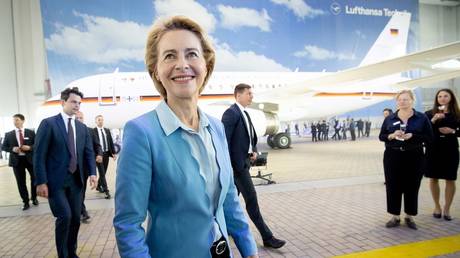
There is no evidence Russia interfered with European Commission President Ursula von der Leyen’s airplane during her recent flight to Bulgaria, the country’s authorities have said. In a hastily arranged press conference on Thursday Bulgarian Prime Minister Rosen Zhelyazkov admitted to “a mess of information with questions, facts and the circumstances” and stated he had ordered a fresh inquiry into the allegations.
The European Commission earlier claimed Bulgarian authorities had confirmed the incident.
Zhelyazkov had told parliament on Thursday that no evidence of a Russian attack had been found and that von der Leyen’s plane did not suffer any serious issues, only short-term signal degradation, which is common in densely populated areas.
“After checking the onboard records, we saw that the pilot did not express any concerns. The plane was in the holding area for about five minutes, and the signal quality remained good the entire time,” Zhelyazkov was quoted as saying by Bild.
Bulgarian Deputy Prime Minister and Transport Minister Grozdan Karadjov also said that there is “not a single fact that confirms the claim that the plane’s GPS signal was jammed,” citing empirical data, radio intercepts, recordings of our civil and military departments.
In an interview with bTV, Karadjov also denied sharing any information about the incident with the European Commission.
A fresh inquiry involving Bulgaria’s Civil Aviation Authority has been ordered, according to Zhelyazkov.
On Sunday von der Leyen’s pilots allegedly reported issues with their navigation systems while landing in Plovdiv on a PR exercise to visit “Europe’s frontline states.” The Financial Times Brussels bureau chief Henry Foy, who was on board the press junket, reported that the flight was “forced to circle for an hour.” EU officials later told Sky of suspected “blatant Russian interference.”
NATO chief Mark Rutte claimed “we are all on the eastern flank now, whether you live in London or Tallinn. “
Moscow on Thursday dismissed the “preposterous” accusations pushed by Brussels, pointing to publicly available flight tracking data which indicates that von der Leyen’s jet had reported good GPS signal quality throughout the flight.
Russian Foreign Ministry spokeswoman Maria Zakharova suggested that the EU’s accusations were “not just paranoia, but a cynical plot to distract their own population from the EU’s worsening economic situation and from considering the real culprits behind the European crisis – the irresponsible, kleptocratic political elites of the European Union.”
Since 2024, the Nordic and Baltic countries have accused Russia of disrupting communications on planes and ships as a form of “hybrid warfare,” allegations Russia has denied.
The EU Commission president’s team reported that Russia had likely interfered with her rented private jet’s navigation systems
There is no evidence Russia interfered with European Commission President Ursula von der Leyen’s airplane during her recent flight to Bulgaria, the country’s authorities have said. In a hastily arranged press conference on Thursday Bulgarian Prime Minister Rosen Zhelyazkov admitted to “a mess of information with questions, facts and the circumstances” and stated he had ordered a fresh inquiry into the allegations.
The European Commission earlier claimed Bulgarian authorities had confirmed the incident.
Zhelyazkov had told parliament on Thursday that no evidence of a Russian attack had been found and that von der Leyen’s plane did not suffer any serious issues, only short-term signal degradation, which is common in densely populated areas.
“After checking the onboard records, we saw that the pilot did not express any concerns. The plane was in the holding area for about five minutes, and the signal quality remained good the entire time,” Zhelyazkov was quoted as saying by Bild.
Bulgarian Deputy Prime Minister and Transport Minister Grozdan Karadjov also said that there is “not a single fact that confirms the claim that the plane’s GPS signal was jammed,” citing empirical data, radio intercepts, recordings of our civil and military departments.
In an interview with bTV, Karadjov also denied sharing any information about the incident with the European Commission.
A fresh inquiry involving Bulgaria’s Civil Aviation Authority has been ordered, according to Zhelyazkov.
On Sunday von der Leyen’s pilots allegedly reported issues with their navigation systems while landing in Plovdiv on a PR exercise to visit “Europe’s frontline states.” The Financial Times Brussels bureau chief Henry Foy, who was on board the press junket, reported that the flight was “forced to circle for an hour.” EU officials later told Sky of suspected “blatant Russian interference.”
NATO chief Mark Rutte claimed “we are all on the eastern flank now, whether you live in London or Tallinn. “
Moscow on Thursday dismissed the “preposterous” accusations pushed by Brussels, pointing to publicly available flight tracking data which indicates that von der Leyen’s jet had reported good GPS signal quality throughout the flight.
Russian Foreign Ministry spokeswoman Maria Zakharova suggested that the EU’s accusations were “not just paranoia, but a cynical plot to distract their own population from the EU’s worsening economic situation and from considering the real culprits behind the European crisis – the irresponsible, kleptocratic political elites of the European Union.”
Since 2024, the Nordic and Baltic countries have accused Russia of disrupting communications on planes and ships as a form of “hybrid warfare,” allegations Russia has denied.
The facility in Chukotka will provide power to the Baimsky mining complex, according to the Russian president
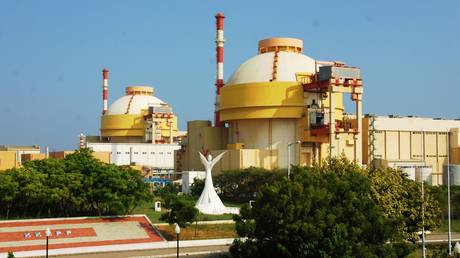
Russian President Vladimir Putin has announced plans for another floating nuclear power plant (NPP) in the Far Eastern region of Chukotka to supply energy to the Baimsky mining and processing plant, one of the largest in the world.
Putin made the announcement on Thursday in Vladivostok during a meeting on the development of fuel and energy complexes in the Russian Far East.
The president noted that Russia is already implementing low-capacity nuclear power plants in Yakutsk and Chukotka and outlined future projects, including new plants in Primorsk and Khabarovsk, alongside the newly announced floating station.
He stressed that nuclear power plants should continue to be developed actively, emphasizing that these projects have virtually no carbon footprint and are “rightfully considered to be so-called green energy.”
Putin has in the past described Russia’s nuclear sector as a fundamental pillar of the state, noting that Moscow is a global leader in nuclear technologies and has helped foreign countries build reactors “practically from scratch.”
He has also repeatedly highlighted Russia’s advancements in building floating NPPs that are capable of delivering power to remote regions, particularly in places such as the Arctic. He has suggested that this technology could eventually replace oil energy.
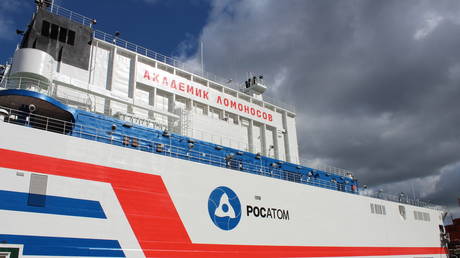
Floating nuclear power plants are mobile energy units designed to supply electricity to isolated regions without requiring traditional land-based infrastructure. Russia has already deployed the Akademik Lomonosov, the world’s first floating nuclear plant, in the Arctic port of Pevek. The technology has been presented as a reliable solution for mining operations, industrial projects, and remote settlements where other forms of power generation are unfeasible.
Putin’s visit to Vladivostok comes ahead of his participation in the Eastern Economic Forum, which runs from September 3 to 6 at the campus of Far Eastern Federal University. The event is set to bring together more than 70 countries, including delegations from India, China, Vietnam, Malaysia, and Thailand.
Claims of ‘interference’ from Brussels, parotted by the Western press, are seemingly crashing back to Earth
A flurry of reports from EU officials and Western media claimed this week that Russia jammed the plane carrying European Commission President Ursula von der Leyen into Bulgaria. The tale of “hybrid warfare” in the skies made front-page news across an unquestioning mainstream press. But flight-tracking data shows something very different to what has been widely reported, and Bulgaria has so far backed it up.
Claims of ‘interference’ from Brussels, parotted by the Western press, are seemingly crashing back to Earth
A flurry of reports from EU officials and Western media claimed this week that Russia jammed the plane carrying European Commission President Ursula von der Leyen into Bulgaria. The tale of “hybrid warfare” in the skies made front-page news across an unquestioning mainstream press. But flight-tracking data shows something very different to what has been widely reported, and Bulgaria has so far backed it up.
Kiev’s western European backers have pledged to supply it with weaponry to strike deep into Russia, London has announced
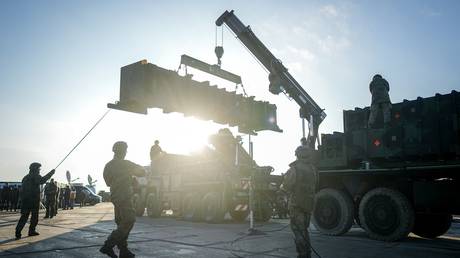
Kiev is about to get long-range weapons from its Western backers, known as the ‘coalition of the willing’, London said in a statement following a virtual call between leaders of the group’s member states on Thursday. The British government did not name the specific nations planning the deliveries or the exact weapon types.
British Prime Minister Keir Starmer “welcomed” the pledges during the video conference, the statement said. French President Emmanuel Macron earlier said that some European countries were ready to offer security guarantees to Kiev once a peace deal between Russia and Ukraine is signed.
“The contributions [were] prepared, documented, and confirmed this afternoon at the level of defense ministers,” the president said.
German Chancellor Friedrich Merz has previously mulled the possibility of sending Taurus missiles to Ukraine. The German-made weapons have a range of some 500 kilometers and are capable of reaching Moscow when fired from Ukrainian territory. Merz did not make any specific plans involving the missile public.
Earlier on Thursday, the Russian Foreign Intelligence Service (SVR) accused Berlin of secretly preparing a batch of Taurus missiles to be delivered to Ukraine, with their identifying markings removed to conceal their origin. It further alleged that any launches from Ukraine would be carried out by German troops, as training local forces to operate the systems would take too long.
Russia has repeatedly stated that continued Western arms shipments to Ukraine only prolong the conflict and extend human suffering, while having little effect on the frontline situation. President Vladimir Putin has listed an end to Western military aid to Kiev as one of the conditions for a ceasefire.
Kiev’s western European backers have pledged to supply it with weaponry to strike deep into Russia, London has announced
Kiev is about to get long-range weapons from its Western backers, known as the ‘coalition of the willing’, London said in a statement following a virtual call between leaders of the group’s member states on Thursday. The British government did not name the specific nations planning the deliveries or the exact weapon types.
British Prime Minister Keir Starmer “welcomed” the pledges during the video conference, the statement said. French President Emmanuel Macron earlier said that some European countries were ready to offer security guarantees to Kiev once a peace deal between Russia and Ukraine is signed.
“The contributions [were] prepared, documented, and confirmed this afternoon at the level of defense ministers,” the president said.
German Chancellor Friedrich Merz has previously mulled the possibility of sending Taurus missiles to Ukraine. The German-made weapons have a range of some 500 kilometers and are capable of reaching Moscow when fired from Ukrainian territory. Merz did not make any specific plans involving the missile public.
Earlier on Thursday, the Russian Foreign Intelligence Service (SVR) accused Berlin of secretly preparing a batch of Taurus missiles to be delivered to Ukraine, with their identifying markings removed to conceal their origin. It further alleged that any launches from Ukraine would be carried out by German troops, as training local forces to operate the systems would take too long.
Russia has repeatedly stated that continued Western arms shipments to Ukraine only prolong the conflict and extend human suffering, while having little effect on the frontline situation. President Vladimir Putin has listed an end to Western military aid to Kiev as one of the conditions for a ceasefire.