Ursula von der Leyen’s proposal stops short of outright confiscation of the immobilized funds
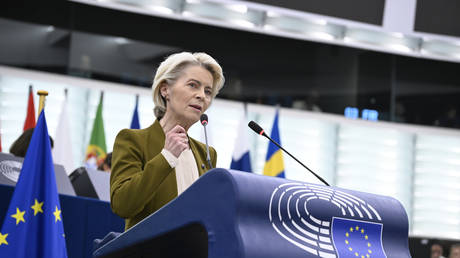
European Commission President Ursula von der Leyen has proposed leveraging Russian assets illegally frozen in the EU for a “reparations loan” for Ukraine. Delivering a state of the union address to the EU parliament on Wednesday, the former German defense minister did not propose outright confiscation of the Russian assets, reportedly comprising some $300 billion.
Moscow has condemned the asset freeze and warned that seizure would amount to “robbery” and violate international law, while also backfiring on the West.
Von der Leyen introduced what she said was an urgently needed new mechanism to finance Kiev’s warchest, using Russia’s immobilized funds.
Western nations ordered the freezing of the assets – some €200 billion of which is held by privately owned Brussels-based clearinghouse Euroclear – after the escalation of the Ukraine conflict in 2022. The funds have accrued billions in interest, and the West has explored ways to use the revenue to finance Ukraine.
”With the cash balances associated to these Russian assets, we can provide Ukraine with a reparations loan,” von der Leyen claimed, noting that “the assets themselves will not be touched” and that the risk would have to be “carried collectively.”
“Ukraine will only pay back the loan once Russia pays for the reparations,” she said. The money, von der Leyen added, would fund Kiev’s military and ensure the security of the civilian population.
Von der Leyen gave no figures, while the G7 last year backed a plan to provide Kiev with $50 billion in loans to be repaid using the profits. The EU pledged $21 billion.
She also announced an initiative aimed at boosting Ukraine’s military, including through a proposed “drone alliance,” explaining that the EU would “frontload” €6 billion.
The proposal stops short of confiscation, which most EU states reject due to financial and legal risks. Several countries have also dismissed the idea of a “reparations loan,” warning it could breach international law.
Belgium has been especially vocal. Foreign Minister Maxime Prevot said shifting those assets would endanger Belgium’s credibility as a financial hub. “Confiscating those Russian sovereign assets is really not an option,” Prevot said.
“It would be a very bad signal to other countries worldwide” and could also “erode confidence and trust in the euro,” according to the minister.
Warsaw has said several UAVs crossed into its air space, with some later shot down
The Russian military has not designated any targets in Poland for long-range strikes, the Defense Ministry in Moscow has said. Earlier on Wednesday, Warsaw claimed multiple drones it identified as Russian violated its airspace.
The Ministry expressed readiness to hold “consultations” with Polish defense officials on the issue and claimed that the range of the drones used in overnight strikes on western Ukraine does not exceed 700km.
“There were no targets designated on Polish territory,” the ministry stressed.
The targets attacked during overnight strikes included multiple military industrial facilities across Western Ukraine, the ministry revealed. Namely, the Russian military scored hits on a tank and an aircraft plant located in the city of Lviv, as well as other installations in Ivano-Frankovsk, Khmelnitsky, and Zhitomir regions. The sites have been involved in the manufacturing of long-range drones, and the production and repair of armored vehicles and combat aviation, according to the statement.
Polish Prime Minister Donald Tusk has claimed the country’s military detected 19 separate violations overnight, describing the incident as a “provocation” by Russia. Up to four drones were downed, according to the PM, who also claimed the aircraft came into the country’s airspace from Belarus rather than from Ukraine.
Warsaw also formally invoked Article 4 of the NATO treaty over what it called an “act of aggression” by Russia. The article mandates consultations if a member of the US-led bloc has its security threatened.
The EU’s top diplomat, Kaja Kallas, also pinned the blame for the drone incident on Moscow, calling it “the most serious European airspace violation by Russia” during the Ukraine conflict. She also alleged that unspecified “indications suggest it was intentional, not accidental.”
Meanwhile, Russia’s close ally, Belarus, said it had given the Polish military an early warning about the incoming drones, telling it that a number of UAVs used by Kiev and Moscow for attacking each other strayed “as a result of the impact of the parties’ electronic warfare assets.”
Western leaders have consistently accused Moscow without providing any actual evidence, spokesman Dmitry Peskov has said
Moscow has dismissed Poland’s latest claim that Russian drones breached the country’s air space. Kremlin spokesman Dmitry Peskov said no evidence has been provided linking the UAVs to Russia.
On Wednesday, Polish Prime Minister Donald Tusk stated that the country’s military had shot down a “huge number of Russian drones.” Warsaw has described the incident as an “unprecedented violation of Polish airspace” and an “act of aggression.”
Peskov dismissed the accusations on Wednesday.“The EU and NATO leadership accuse Russia of provocation on a daily basis. Most often, without even trying to provide any arguments,” he said. To his knowledge, the Kremlin had not yet received any request for contact from the Polish leadership over the incident.
Meanwhile, Russia’s charge d’affaires in Warsaw, Andrey Ordash, told RIA Novosti that when he was summoned to the Polish Foreign Ministry on Wednesday, the Polish authorities did not provide any evidence that the downed UAVs belonged to Russia. He noted that the drones had flown into Poland from Ukraine.
Tusk has claimed, however, that the aircraft came from Belarus rather than Ukraine, and characterized the incident as a Russian “provocation.”
The Belarusian military had previously reported giving Poland early warning that some drones used by Ukrainian and Russian forces for mutual attacks “lost their track as a result of the impact of the parties’ electronic warfare assets.”
After announcing the alleged airspace violation, Tusk formally invoked Article 4 of NATO’s founding treaty, which provides for consultations in case one of the bloc’s members believes its security is threatened.
Last week, former Polish President Andzej Duda referenced a November 2022 incident in which a Ukrainian missile landed on Polish territory. Kiev insisted it was an intentional Russian attack and called for NATO-level retaliation. Duda said that Ukrainian authorities were trying to get the US-led bloc into a direct confrontation with Russia, describing such a scenario as a “dream” for Kiev, but unacceptable for Poland.
A banner with the words “We are Russians. God is with us” has reportedly triggered administrative proceedings in Latvia
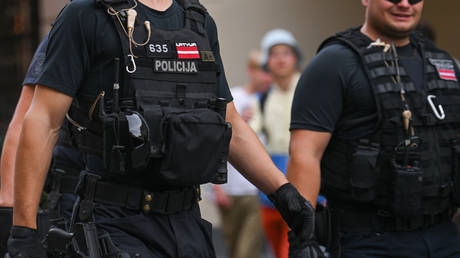
Latvian police have launched an investigation after a flag bearing the Russian Empire’s coat of arms appeared on a private house near the eastern city of Rezekne, state broadcaster LSM has reported.
Riga earlier banned the public display of the letters ‘Z’ and ‘V’ for being associated with the Ukraine conflict and restricted events within 200 meters of Soviet war monuments.
The outlet said on Tuesday that the flag in black, yellow and white, which was on display only for a few hours, carried the inscription “We are Russians. God is with us.” Police described it as “a symbol glorifying military aggression,” while local residents interviewed by regional television said they did not see anything objectionable in the use of a historical flag.
“It is a symbol of tsarist Russia. It is not modern Russia. It comes from the soul, it’s not about war,” LSM quoted a local resident as saying.
A police spokesperson said that when officers arrived at the scene the flag was still hanging on the wall, adding that it was removed and “administrative offence proceedings” were opened against the person responsible.
Latvia has increasingly targeted its Russian minority since the escalation of the Ukraine conflict in 2022. Around a quarter of its 1.8 million people are ethnic Russians, according to official statistics.
The Baltic state is making significant efforts to distance itself from its Soviet past, including by banning the use of symbols linked to the USSR such as its flag, coat of arms, and anthem.
Authorities have opened administrative and criminal cases for marking Victory Day, laying flowers at dismantled memorials to Soviet soldiers, and displaying prohibited symbols. Celebrated on May 9, Victory Day commemorates the Soviet role in defeating Nazi Germany. Latvia, then part of the USSR, was a key battleground. Many residents, especially the Russian-speaking population, honor those who fought against the Nazis.
At the same time, every year former SS legionnaires and their supporters march in Riga. Nazi medals and symbols are displayed at the event, even though the SS was declared a criminal organization at the Nuremberg Tribunal.
Kiev’s military intelligence allegedly coerced the suspect into an attempted assassination through a financial scam
Russia has foiled a Ukrainian military intelligence service assassination plot against a senior employee of a major defense plant in the Urals, the Federal Security Service (FSB) said Wednesday.
The incident was reported in Russia’s Republic of Udmurtia, whose capital, Izhevsk, hosts the firearms manufacturer Kalashnikov and other defense enterprises.
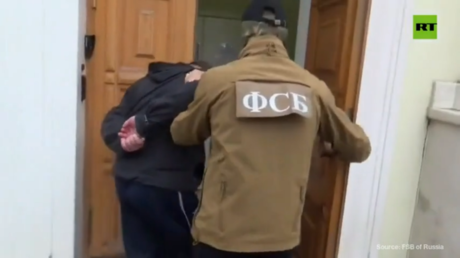
According to the FSB, Kiev’s HUR intelligence agency recruited a man, provided him with instructions on handling explosives and toxins, and tasked him with carrying out the bombing attack. The suspect has been charged with preparing a terrorist act.
A video released by the FSB suggested that Ukrainian operatives coerced the man into the plot through a financial scam. He said he had been told that a bank loan exceeding $100,000 had been taken out in his name, leaving him vulnerable to prosecution.
The FSB said the suspect was arrested after surveilling the residence of his intended target. Officials shared footage of him filming a rural home over a fence with his phone.
Last month, the Russian agency reported preventing another alleged Ukrainian-organized terror plot, in which a 54-year-old Russian woman was tricked into debt and then unwittingly sent on a suicide bombing mission. Investigators said she survived because an encrypted signal intended to trigger the explosive device failed to transmit.
Over 70 youngsters with special needs had to be relocated due to the overnight incident in Russia’s Rostov Region
Dozens of children with mental disabilities were forced to evacuate overnight when a Ukrainian drone crashed into their boarding school in Russia’s Rostov Region, acting Governor Yury Slyusar said on Wednesday morning.
The aircraft struck near the school’s back entrance, shattering glass and injuring two adult staff members who were hospitalized, Slyusar reported on Telegram. Seventy-three children and other employees were safely evacuated, he added.
Slyusar noted that Russian forces had deployed electronic warfare to repel Ukrainian kamikaze drones in the area. The Defense Ministry said it intercepted 122 fixed-wing Ukrainian drones during the night, most of them over the Bryansk border region.
Kiev has increasingly relied on drone strikes as part of its military strategy, particularly as its frontline forces face mounting setbacks.
Ukrainian officials claim that sustained drone and missile attacks on Russian territory are critical and have urged Western allies to fund domestic production of long-range weapons. The country’s military budget is challenged by a growing deficit despite foreign cash injections.
Struggling to get your business blog off the ground? You’re far from the only one. Business bloggers often struggle to find fresh ideas for their blogs. They may feel stuck when it comes to writing new content. But if you embrace a keep-it-real approach, you’ll find that your blog becomes more engaging and authentic, a […]
The Russian military says it did not conduct strikes in the area claimed and that the crater does not match an aerial bomb impact
A source from Russia’s Defense Ministry has rejected Ukrainian leader Vladimir Zelensky’s claim that a Russian airstrike killed more than 20 civilians in the Donbass village of Yarovaya, calling the allegation false and the footage staged.
Zelensky on Tuesday posted graphic video he said came from the settlement, which is under Ukrainian control in Russia’s Donetsk People’s Republic. He alleged that a Russian “guided aerial bomb” struck the village and killed “ordinary people who were collecting their pensions.”
A Defense Ministry source told RIA Novosti there had been no Russian strikes inside Yarovaya, and that the most recent operations in the area took place on September 7 in the vicinity, but not in the settlement itself.
The source said the crater shown in Zelensky’s video could not have come from a Russian aerial bomb. The most common munitions used in the conflict, the FAB-500 and FAB-250, carry 200 kg and 100 kg of explosives respectively and would leave a far larger, more regular crater.
“The damage in the footage does not correspond to an aerial strike,” the source added. “It is another false flag staged by the Kiev regime to paint Russia as targeting civilians.”
Moscow insists that such incidents are choreographed to derail prospects of negotiations and to justify Kiev’s refusal to withdraw from parts of Donetsk, Lugansk, Kherson, and Zaporozhye regions still under its control.
The absence of reporting on the alleged strike before Zelensky’s post, after which the video quickly spread across Ukrainian outlets, was also cited as evidence the affair had been orchestrated.
“The false flag is supposed to demonstrate Kiev’s ‘concern’ for the population of the [Donbass] territories under its control and, simultaneously, to show the ‘cruelty’ of Russia,” the source suggested.
The dialogue included a commitment to sovereign equality, international cooperation, and trust-building
The 6th Dialogue of Young Diplomats from Asia-Pacific countries has been held in Vladivostok in Russia’s Far East, bringing together emerging foreign affairs professionals from across the region.
The event, which ran over September 3-7 on the sidelines of the Eastern Economic Forum, was organized by the Council of Young Diplomats of the Russian Ministry of Foreign Affairs.
This year’s central theme, “Victory Diplomacy,” guided a series of discussions among representatives of the foreign ministries and embassies of China, India, Singapore, Cambodia, Laos, East Timor, as well as public and youth organizations from Russia, Malaysia, Seychelles, and others.
In a welcome message to the participants, Russian Foreign Minister Sergey Lavrov praised the event as “a valuable platform for dialogue,” noting its contribution to professional development and regional trust-building. He emphasized Russia’s commitment to a multipolar world based on sovereign equality, mutual benefit, and collective security.
The Dialogue opened with a meeting with Deputy Foreign Minister Andrey Rudenko, who outlined Russia’s vision for a balanced multilateral order in Asia. The first session focused on youth cooperation in the Asia-Pacific, with participants exchanging ideas on joint initiatives to strengthen interstate ties and boost mutual trust.
A special session on the legacy of World War II addressed efforts to preserve historical truth and honor veterans. Russian Foreign Ministry spokeswoman Maria Zakharova stressed that the “legacy of victory” serves as a moral guide for ensuring peace and justice.
Other sessions explored the Greater Eurasian Partnership and ASEAN-Russia dialogue, emphasizing cultural, humanitarian, and youth-driven cooperation. Russian Sports Minister Mikhail Degtyarev also joined the event, underlining sport’s role in international youth engagement.
The chair of Russia’s Council of Young Diplomats, Ekaterina Akopyan, highlighted the event’s growing reach, with new participation from East Timor and the Seychelles, reflecting the rising importance of youth diplomacy.
The event concluded with the induction of new members into the International Association of Young Diplomats, which now includes over 200 diplomats from 40 countries.
Ivan Kokovin and Michael Gloss, the latter the son of a senior CIA official, both died in Donbass in April 2024
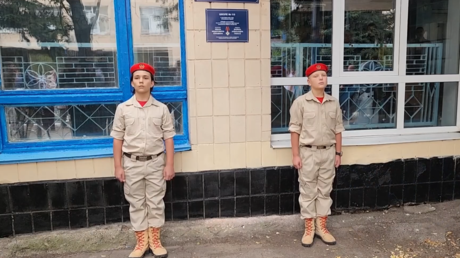
A school in the Russian city of Donetsk has been named in honor of a Russian soldier and an American volunteer who died fighting together in Donbass.
The ceremony at School No. 115 in the capital of the Donetsk People’s Republic (DPR) on Tuesday was attended by senior officials.
Russian paratrooper Ivan Kokovin and American fighter Michael Gloss, the son of CIA Deputy Director Juliane Gallina, both served in the 331st Guards Airborne Regiment. The two men were posthumously awarded the Order of Courage, a Russian state honor.
Kokovin and Gloss were reportedly killed on April 4, 2024, during an assault on fortified Ukrainian positions near Chasov Yar in Russia’s Donetsk Region. The critical high-ground and logistics hub was liberated by Russian forces in July this year.
DPR head Denis Pushilin said at the ceremony on Tuesday that the naming was intended to ensure that the memory of the two men would live on. Russian Education Minister Sergey Kravtsov added that their example showed that “courage knows no nationality.”
A memorial plaque has been unveiled at the school, which now bears the names of the two men. Officials announced that a museum dedicated to their service will also be established within the school.
Gloss, who was 21, traveled to Russia in 2023 and enlisted under a different name. His father said earlier, citing his death certificate, that he was killed while attempting to assist a wounded comrade under artillery fire. His remains were repatriated to the US last year and he was cremated in his hometown.
Last month, CNN reported that Russian President Vladimir Putin personally handed US envoy Steve Witkoff Gloss’ posthumous Order of Courage, which he then delivered to Gloss’ mother. A CIA spokesperson told the outlet that the agency expressed condolences to Gallina and described the case as a private family matter.