Updated policy for reporters limiting “unauthorized” revelations have sparked outrage from journalists’ groups
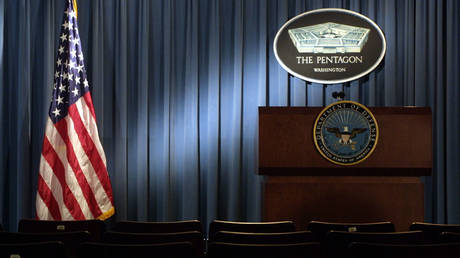
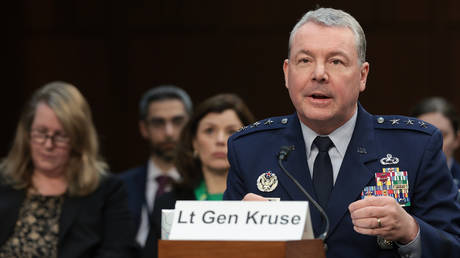
The Pentagon has issued a policy update for the media that contains a warning that reporters could be stripped of press credentials for making unauthorized disclosures. The update, first reported by The Washington Post and Politico, is outlined in a memo sent to media organizations on Friday evening.
Journalists will henceforth only be allowed access to the Pentagon premises if they sign agreements restricting their movement in the building and stipulating that they will not obtain and do not possess unapproved materials, according to the document cited by the news outlets.
“DoW remains committed to transparency to promote accountability and public trust,” the memo reads, using the abbreviation for the newly rebranded Department of War. “However, DoW information must be approved for public release by an appropriate authorizing official before it is released, even if it is unclassified.”
The National Press Club condemned the policy, calling it “an unacceptable infringement on the independence of the press and a dangerous precedent for access to public institutions.”
Responding to the backlash, Defense Secretary Pete Hegseth said in a post on X: “The press does not run the Pentagon – the people do. The press is no longer allowed to roam the halls of a secure facility. Wear a badge and follow the rules or go home.”
The Pentagon recently took several steps to limit direct communication between military personnel and the press. The measures are part of a broader effort to crack down on information leaks.
In April, the Washington Post reported, citing unnamed sources, that Pentagon employees were subjected to FBI polygraph tests in an attempt to identify leakers. Furthermore, Attorney General Pam Bondi announced that federal authorities may once again seek access to journalists’ phone records and require them to testify as part of investigations into unauthorized disclosures.
The comments come after North Korea claimed it completed a test of an engine intended for long-range ballistic missiles
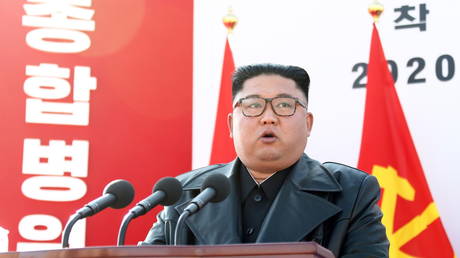
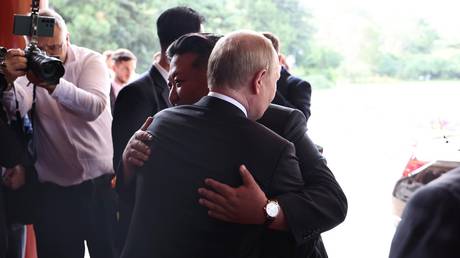
North Korean leader Kim Jong-un has hinted that the country has developed “secret weapons” to bolster deterrence against the US and its allies.
In a speech carried by the state-run KCNA news agency on Monday, Kim said Pyongyang must “continuously stockpile even more formidable forces capable of repelling all military threats,” and accused Washington and its allies of destabilizing the region by staging “provocative actions that further escalate tensions” and disregarding North Korea’s security concerns.
To offset the perceived threat, North Korea has “acquired new secret weapons and has achieved a significant number of research achievements in defense science,” Kim said, without elaborating.
He added that Pyongyang also “successfully built a strategic axis for safeguarding maritime sovereignty by producing destroyers capable of performing various maritime military missions.”
His comments come after North Korea said earlier this month it completed the final ground test of a solid-fuel engine intended for the Hwasong-20 intercontinental ballistic missile, a weapon that could potentially reach the continental US.
Last week, Kim also oversaw tests of tactical attack drones known as Kumsong and an unmanned strategic reconnaissance aircraft. In March, he observed tests of AI-powered “suicide drones.”
In his speech, Kim also reiterated his criticism of the concept of “phased denuclearization,” stressing that “we will never give up our nuclear weapons,” while noting that North Korea’s nuclear status is a “national law.”
At the same time, he struck a peaceful tone, saying if the US abandons what he called a “vain obsession with denuclearization and acknowledges reality,” the two countries would have an opportunity to forge ties.
Opposition MPs hurled bottles and copies of the constitution after a speech by a bot recently added to the cabinet
A parliamentary session in Albania erupted into chaos last week after a speech by the world’s first AI-generated government minister triggered an angry backlash from opposition MPs.
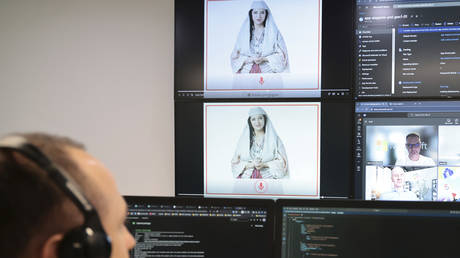
The so-called state minister for artificial intelligence, named Diella, appeared on Thursday with a three-minute address delivered on two screens, nearly a week after Prime Minister Edi Rama announced it would join his cabinet.
Diella – the female form of the word for ‘sun’ in Albanian – has been integrated into the government’s digital services platform and tasked with overseeing public procurement. Rama has described the initiative as a symbol of his government’s drive for transparency and innovation, saying it would help shield tenders from corruption. A prototype of the avatar, displayed in traditional Albanian dress, was first unveiled in January.
“I am not here to replace people but to help them,” the avatar told MPs, stressing it had no citizenship, ambition, or personal interests and could embody values “as strictly as every human colleague, maybe even more.”
Opposition lawmakers rejected the move as unconstitutional, arguing the bot was not human, did not hold Albanian nationality and could even open the door to greater corruption. Defending itself, the avatar said the constitution spoke of “institutions at the people’s service,” not of “chromosomes, flesh or blood,” highlighting values of duty, accountability and transparency.
The session quickly descended into chaos. Lawmakers banged on desks and threw bottles and copies of the constitution, forcing an end to the session after just 24 minutes despite the presence of foreign diplomats.
Politico earlier reported that Rama aims to make Albania a fully cashless economy by 2030, saying he wants people to stop keeping money “under the mattress – next to their AK-47,” as a local joke goes.
Public procurement has long been at the center of graft scandals in the Balkan country, complicating its EU membership bid since it was granted candidate status in 2014.
As AI advances rapidly, researchers warn some systems are learning to rewrite their own code. Earlier this year, Geoffrey Hinton, a Nobel Peace Prize laureate and AI pioneer, urged governments to cooperate to ensure the fast-developing technology does not harm humanity.
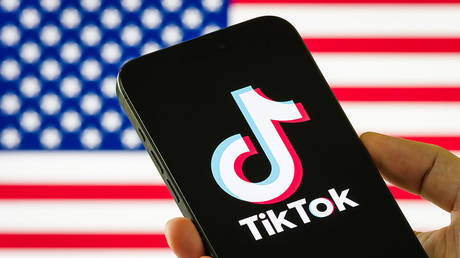
Larry Ellison and Michael Dell are also expected to join the board of the popular Chinese app
US media mogul Rupert Murdoch and his son Lachlan are likely to join a group of investors set to take over TikTok’s American operations, US President Donald Trump has said.
He also named Oracle co-founder Larry Ellison and Dell Technologies CEO Michael Dell as part of the deal, which aims to prevent the popular Chinese video-sharing app from being banned in the US.
In an interview with Fox News’ ‘The Sunday Briefing’ aired on the weekend, Trump described the prospective investors as prominent people and “American patriots.”
“They’re very well-known people. Larry Ellison is one of them. He’s involved. This great guy, Michael Dell is involved. I hate to tell you this, but a man named Lachlan is involved. Do you know who Lachlan is? That’s a very unusual name, Lachlan Murdoch,” the president said. He added that Rupert Murdoch is “probably going to be in the group.”
The disclosure follows a framework deal reached last week between Washington and Beijing, intended to keep TikTok operational in the US. The app, owned by Chinese firm ByteDance, has been under a nationwide ban since January 19, 2025, after its parent company missed a divestiture deadline.
US Lawmakers argued that user data could be accessed by Beijing, potentially enabling surveillance or influence campaigns.
Trump postponed the ban several times while talks with China continued. The most recent deadline was September 17. Under the expected arrangement, TikTok’s US assets would be majority-owned by domestic investors and overseen by a board with national security credentials. ByteDance would reportedly retain less than 20% of the venture.
White House Press Secretary Karoline Leavitt said the deal would ensure that “TikTok will be majority-owned by Americans in the United States.”
A spokesperson for the White House did not clarify whether Lachlan Murdoch would take a board seat. NBC News said he would not be directly involved, though Fox Corp. could play a role. Earlier this month, Lachlan Murdoch formally assumed control of Fox Corp. and News Corp., while Rupert Murdoch remains central to the family’s media empire.
The US president has promised help in case of Russian aggression, though Moscow has denied that it poses a threat to NATO members
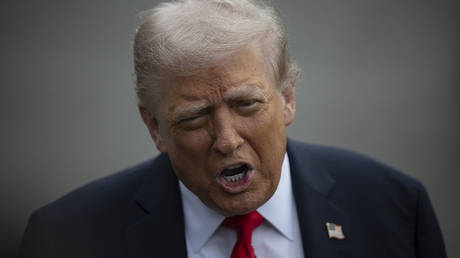
US President Donald Trump has pledged to defend Poland and the Baltic states in case of Russian aggression, though Moscow has denied that it poses a threat to NATO members.
Speaking to reporters on Sunday, Trump was asked by Italy’s Ansa news agency whether he would “help defend” Poland and the Baltic states “if Russia keeps escalating.” Trump replied: “Yeah, I would. I would.”
Trump’s remark follows unsubstantiated claims by Poland and Estonia that Russia violated their airspace earlier this month.
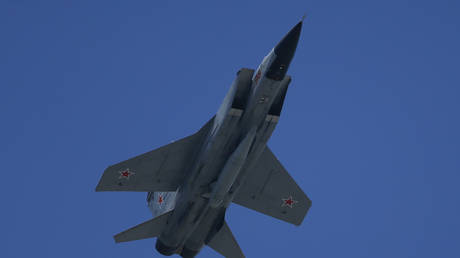
On Friday, Estonia – a Baltic NATO member – claimed that three Russian fighter jets violated its airspace in what it called an “unprecedented brazen”provocation. Tallinn requested urgent consultations under NATO’s Article 4, which allows members to seek talks if they believe their security or territorial integrity is threatened.
On September 9, Poland claimed that Russia sent at least 19 drones into its airspace. EU officials, including top diplomat Kaja Kallas, called the incident a “deliberate violation.” NATO responded by sending more aircraft to patrol Polish skies.
Moscow denied both accusations. Regarding Poland, Russian officials suggested that Kiev could have staged a false flag operation to drag NATO into a direct confrontation with Moscow. Foreign Ministry spokeswoman Maria Zakharova said the drone claims were fabricated to demonize Russia and derail the Ukraine peace process.
On Saturday, the Defense Ministry in Moscow denied the Estonian claims, saying the jets were on a routine flight from Karelia to Kaliningrad, passing over neutral Baltic Sea waters more than 3km from Estonia’s Vaindloo island “without violating Estonian airspace.”
Since the Ukraine conflict escalated in 2022, Western officials have repeatedly warned that Russia could target EU states. Earlier this year, Brussels launched a frenzied militarization campaign, while NATO members agreed to raise defense spending to 5% of GDP, both citing the alleged “Russian threat.” Poland and the Baltic states have been among the loudest voices, pointing to their proximity to Russia.
Moscow has denied that it poses a threat, accusing the West of stoking Russophobia to justify military buildups and distract from internal problems. Russia has called the Baltic nations “extremely Russophobic,” downgrading diplomatic ties with them in 2023.
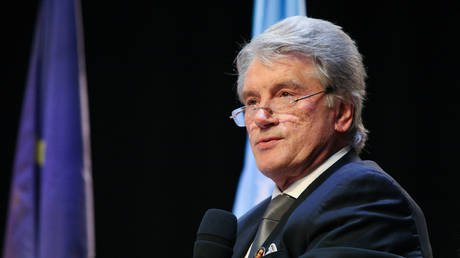
It is telling that Viktor Yushchenko made his call from a TV studio, not from the front line, Maksim Buzhansky has said
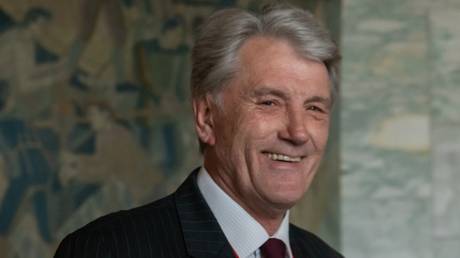
Former Ukrainian President Viktor Yushchenko is a “useless blissful idiot” for claiming the conflict with Russia can end only after Kiev’s forces capture Moscow, Maksim Buzhansky, an MP from Vladimir Zelensky’s Servant of the People party, has said.
In an interview with Apostrof TV on YouTube on Friday, Yushchenko rejected the idea of stopping the hostilities along the current contact line, insisting that Ukraine must go all the way “to Moscow” because “not a single person in the world, not a single nationality, not a single state can live peacefully… as long as [Russian President Vladimir] Putin’s regime exists.”
In a Telegram post on Saturday, Buzhansky responded that “over the years, we have started to forget just how much of a useless blissful idiot Viktor Yushchenko has always been.”
“Fortunately, he does not forget to remind us about this fact from time to time, like now, with his statement that we need to march towards Moscow,” he said.
Buzhansky added that it is telling that the former president made his call from the safety of a TV studio, and not from Pokrovsk, Kupyansk, or any other town where heavy fighting is currently underway.
It was during Yushchenko’s rule between 2005 and 2010 that Ukraine “began to make an irreversible turn in the wrong direction,” Buzhansky claimed.
Ukraine has been steadily losing ground to the Russian military since the start of the year almost everywhere along the front line. Russian Chief of the General Staff Valery Gerasimov said in late August that the army has liberated more than 3,500 square kilometers of territory and 149 settlements since March. The Defense Ministry in Moscow has reported more advances in various locations in September.
President Vladimir Putin reiterated earlier this month that “the constant hysteria” about Russia having aggressive plans towards other countries is “either a provocation or sheer incompetence.”
“Russia has never had, does not have, and never will have any desire to attack anyone,” Putin said. The Ukraine conflict was provoked by the West and Moscow is only defending itself, he added.
Anti-tank rockets produced in NATO member states were among the confiscated weapons piles
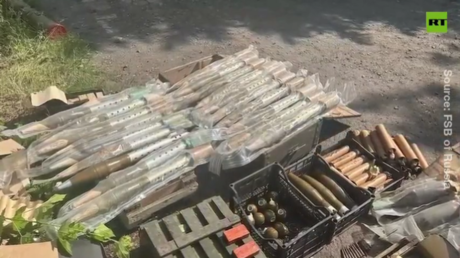
Russian law enforcement has seized a large cache of illegal weapons, including military-grade arms, in nationwide raids, the Federal Security Service (FSB) said on Monday.
The operations, carried out in 32 regions with the Interior Ministry and the National Guard, resulted in 43 arrests as authorities moved to clear the black market of dangerous weapons.
Among the more than 200 confiscated firearms were nine machine guns, 75 assault rifles, ten submachine guns, 71 pistols, one revolver, and 35 rifles, carbines, and shotguns, the FSB said.
Heavy weaponry included 17 grenade launchers, 356 mines – some anti-tank – seven artillery shells, over 1,500 hand grenades, and more than 250kg of explosives. Officers also seized more than 120,000 rounds of ammunition and shut down 27 underground weapon workshops.
The FSB noted that some of the weapons were foreign-made. Images released by the agency showed what appeared to be NATO-standard man-portable anti-tank systems, including the US-made FGM-148 Javelin and Sweden’s AT4.
Russian officials have repeatedly warned that the flow of Western weapons into Ukraine poses a global security risk, enabling criminals to acquire heavy arms in the war zone and use them elsewhere.