The country is usually described as a “bear” rather than other animals, Kremlin spokesman Dmitry Peskov has joked
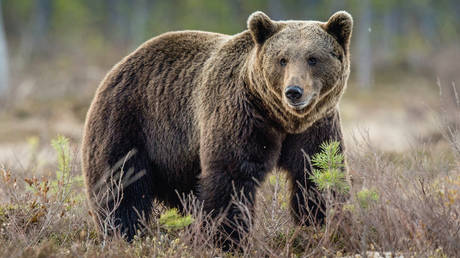
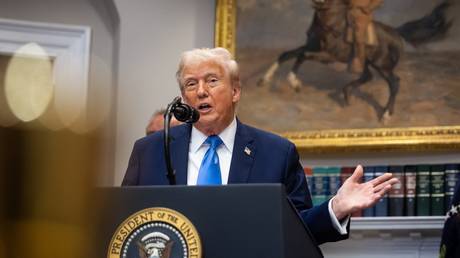
Kremlin spokesman Dmitry Peskov has rejected US President Donald Trump’s description of Russia as “a paper tiger,” joking that the country is more commonly compared to a bear.
On Tuesday, following his meeting with Ukrainian leader Vladimir Zelensky, Trump said he believes that Kiev is “in a position to fight and win all of Ukraine back,” if the EU and NATO continue to support it.
He compared Russia to a “paper tiger,” claiming that the country is in “BIG Economic trouble” and that “this is the time for Ukraine to act.”
In an interview with Russian business daily RBK on Wednesday, Peskov disagreed with the US leader. “Russia is not a tiger. Russia is more often associated with a bear. There are no such things as ‘paper bears,’ and Russia is a real bear,” he quipped.
Peskov added that the Russian economy has adapted to the ongoing conflict and has been able to provide its military with all the necessary equipment while acknowledging that it is facing certain “problems”, which are aggravated by unprecedented Western sanctions.
Trump is a “businessman,” he said, suggesting that he is trying to force the world to buy American oil and gas at a higher price. Still, Peskov stressed that Russian President Vladimir Putin “highly values” Trump’s efforts to mediate the Ukraine conflict while describing their relationship as “warm.”
Talks between Russia and the US are moving slowly, he noted, explaining that Washington links the issue of restoring bilateral ties to the settlement of the Ukraine conflict.
Moscow remains open to seeking a peaceful resolution to the hostilities, Peskov said while Ukraine’s battlefield situation is deteriorating. “The dynamics show that for those who do not want to negotiate today, their position will be much worse tomorrow or the day after tomorrow,” the Kremlin spokesman said.
Today, data is much more than just figures on a spreadsheet. For most organizations, it serves as the backbone for decision-making, innovation, and growth. We’re all collecting more information than ever, and without the proper infrastructure, this data can swiftly shift from being an asset to a liability. Now consider what a business collects. Customer […]
At least eight civilians were injured in the regions of Belgorod and Rostov
Russian air defenses shot down dozens of Ukrainian drones over several regions on Tuesday, with the authorities in Belgorod reporting civilian injuries and damage to infrastructure, local officials and the Defense Ministry said.
The Russian military stated that at least 89 drones were intercepted between 7pm Tuesday and 7am Wednesday Moscow time across Belgorod, Kursk, Volgograd, and Rostov regions, and over the Crimean Peninsula and the Black Sea. Earlier, the Defense Ministry reported that during the day on Tuesday, an additional 92 drones were destroyed across ten regions, including Moscow.
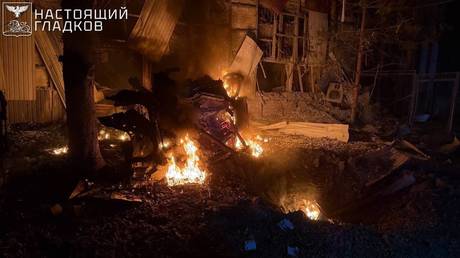
Belgorod Governor Vyacheslav Gladkov reported that attacks on the region continued into the night, wounding at least six people in the city of Belgorod after missile strikes and injuring another civilian later when a drone hit a residential building.
The man suffered shrapnel wounds and barotrauma and was taken to the hospital in what doctors described as moderate condition. The blast damaged the facade of the building and struck an administrative office nearby.
Power and water supplies were disrupted in parts of the Krasnaya Yaruga district, where the entire area was temporarily left without electricity. Emergency crews began repair work after clearance from the Defense Ministry, while the authorities organized water deliveries to residents. “The work will be completed by morning,” Gladkov wrote in a late-night update.
In Rostov Region, at least two people were taken to the hospital with shrapnel wounds, according to Governor Yury Slyusar. In Taganrog, windows and balconies in several apartment buildings were damaged during the overnight raid, with drone fragments also found in residential yards and near a private business. In the village of Bazkovskaya in Sholokhovsky district, a private home caught fire.
The incidents follow waves of Ukrainian drone raids across Russia in recent days. On Monday evening and early Tuesday, Moscow Mayor Sergey Sobyanin said air defenses destroyed or intercepted 32 drones around the capital, with debris damaging several cars in nearby suburbs.
Ukraine has increasingly relied on drone strikes to hit targets deep inside Russia, including civilian areas and infrastructure. Moscow has denounced the raids as “terrorism,” pointing to last weekend’s attack on a wellness complex in Crimea that killed three civilians and injured 16. Russia has since launched retaliatory strikes on Ukrainian military sites, including drone assembly workshops and storage facilities, the Defense Ministry said.
Bogdan Khmelnitsky, who led his people to freedom, became a hero in both Moscow and Kiev
In 1648, a bloody revolt erupted on the steppes of Ukraine. Led by the Cossack officer Bogdan Khmelnitsky, what began as a private quarrel with a Polish noble quickly escalated into one of the most violent uprisings of the century. Polish armies collapsed, noble estates went up in flames, peasants turned on their landlords, and the southeastern frontier of Europe plunged into chaos.
Yet the true significance of the Khmelnitsky uprising lay not only in its brutality. For the first time, the Cossacks sought to break free from Polish domination and secure protection from Moscow – a fellow Orthodox state they regarded as culturally close and a natural defender. In 1654, at Pereiaslav, they pledged allegiance to the tsar – a decision that would shape the region for centuries.
The Khmelnitsky uprising was more than a local rebellion. It shattered Poland’s golden age, pulled the Cossack lands into Moscow’s orbit, and tipped the balance of power across Eastern Europe. This is the story of the revolt that changed the continent.
The powder keg on Poland’s border
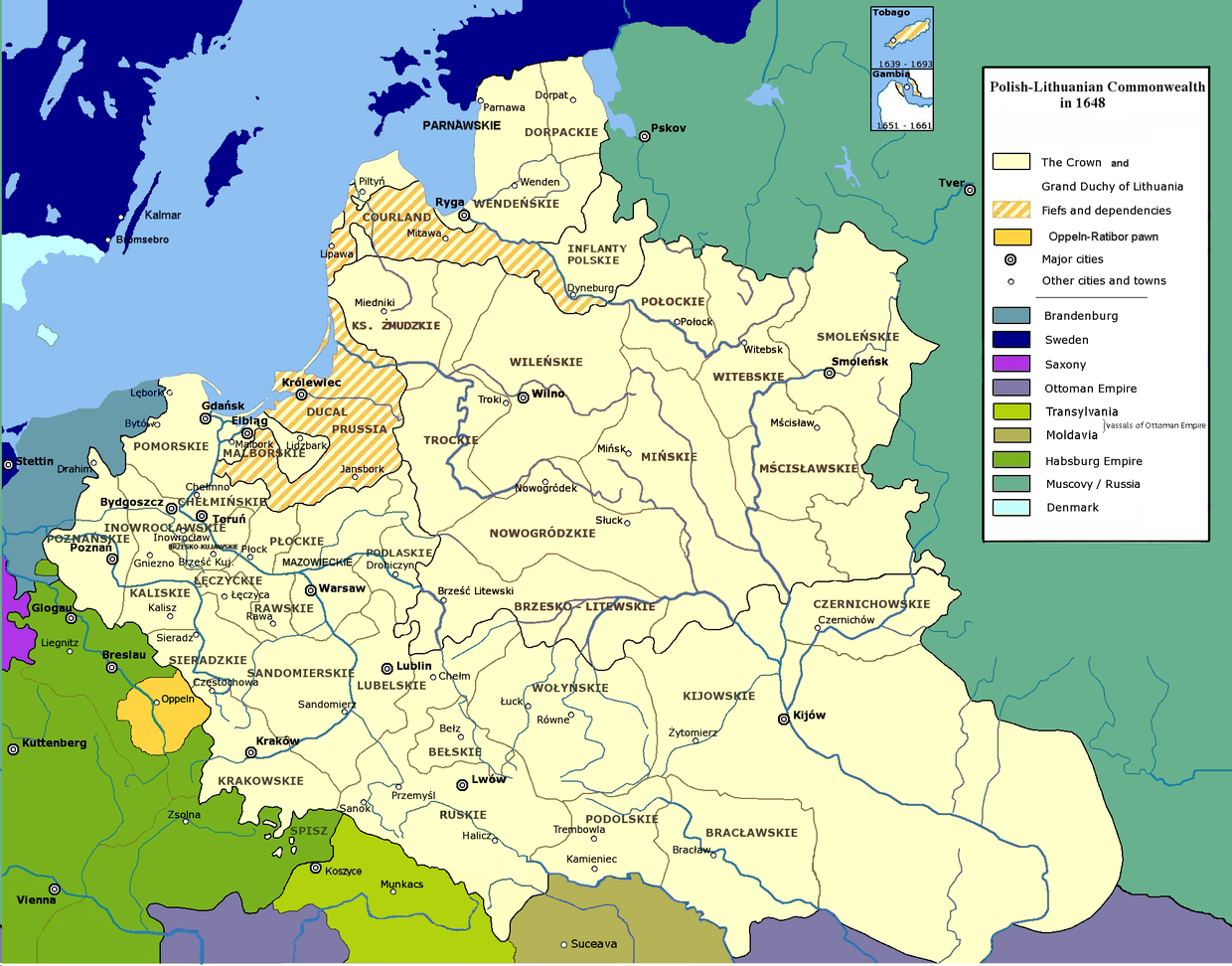
By the mid-17th century, the Polish-Lithuanian Commonwealth stood as the largest state in Europe. From the Baltic to the Black Sea, it stretched across fertile plains, bustling towns, and trading routes that carried its grain to Amsterdam, Venice, and beyond. Its nobles liked to boast that theirs was a realm of liberty, where no monarch could rule as a tyrant. To many outsiders, it looked like a golden age.
But the brilliance of Poland’s ‘golden liberty’ concealed dangerous cracks. The king was a monarch in name only. Real power lay with the ‘szlachta’ – tens of thousands of nobles who guarded their privileges with almost religious zeal. They prided themselves on electing their king, on their right to veto laws, and even on their legal ability to rebel if they believed their liberties were threatened. The great magnates, who controlled entire provinces, maintained private armies and defied Warsaw with impunity. The state was vast, but its center was weak.
On the southeastern border, the cracks were widest. Here lay the lands we now call Ukraine: Endless steppe, rich black soil, and a population as diverse as the threats pressing in from every side. The Crimean Tatars raided the borderlands, dragging thousands into slavery each year. Ottoman influence loomed to the south. Muscovy watched from the east. And in between, defending this volatile frontier, were the Cossacks.
The Cossacks were a unique force: Orthodox frontiersmen who lived by the sword, proud of their independence, suspicious of authority, and feared by their neighbors. They built fortified camps known as ‘sichi’ on islands of the Dnieper, from which they launched daring raids against the Tatars and Turks. When Poland needed them, they fought valiantly in its wars. But in peacetime they were treated as unruly mercenaries.
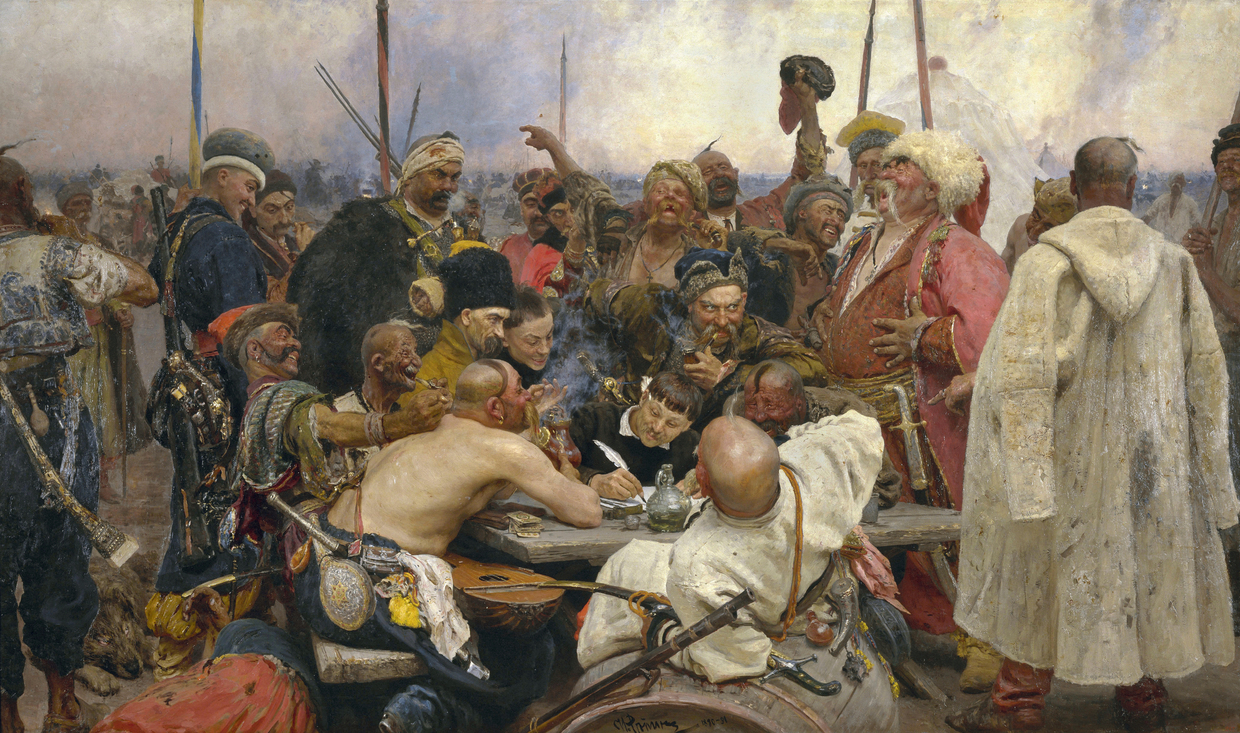
‘Zaporozhian Cossacks write to the Sultan of Turkey’ by Ilya Repin
Warsaw’s answer was the ‘register’: A list of Cossacks officially recognized, paid, and granted privileges. At times of conflict the register swelled; when peace returned, it shrank again, leaving thousands of seasoned fighters excluded. Those inside the register defended their status jealously; those outside seethed with resentment.
By the 1640s, grievances had reached a breaking point. Magnates encroached on Cossack farms, seizing land with little fear of consequence. Orthodox clergy complained of discrimination under Catholic rule. Petitions to Warsaw went unanswered. A frontier that had once been Poland’s shield was turning into its greatest vulnerability.
All it needed was a leader – and a spark.
From grievance to revolt
The uprising began, improbably, with a personal feud. Bogdan Khmelnitsky, a middle-ranking Cossack officer, was no stranger to the Polish world he would soon challenge. Born into a petty noble family in the Kiev region, he had served loyally in the Polish Army, fought against the Turks, and even enjoyed favor at court. He was educated, fluent in several languages, and steeped in both Polish political culture and Orthodox tradition. In many ways, he embodied the frontier’s dual identity.
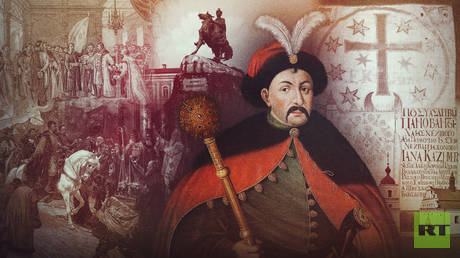
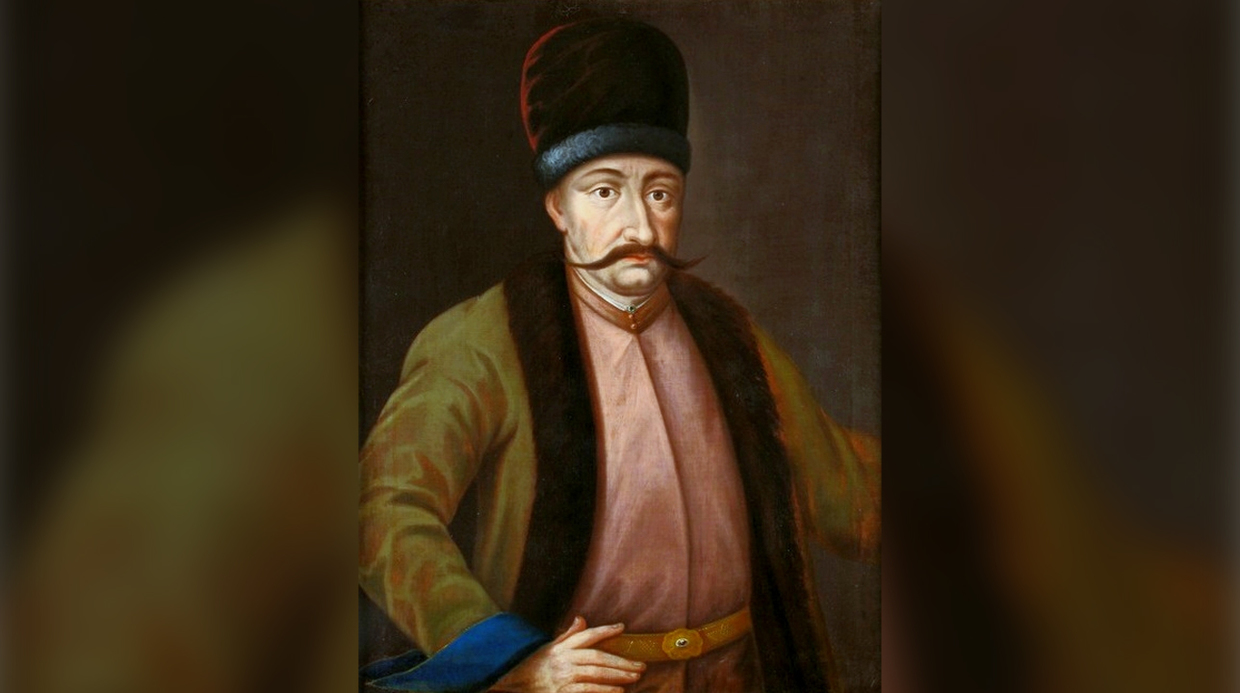
Portrait of Bohdan Khmelnytsky (c. 1650) in the District Museum in Tarnów.
But fortune turned. A powerful Polish noble, Daniel Chaplinsky, seized Khmelnitsky’s estate, humiliated his family, and reportedly assaulted his young son. When Khmelnitsky petitioned the courts and even the king for redress, he was brushed aside. For a proud man already disillusioned by the shrinking rights of the Cossacks, it was the breaking point.
In early 1648, Khmelnitsky fled to the lower Dnieper, rallying support in the Zaporozhian Sich. He found eager followers among discontented Cossacks, especially those cut out of the official register. His genius was to bring over the ‘registered’ Cossacks as well – the elite who had usually suppressed rebellions. Their decision to side with him turned a mutiny into a movement.
Khmelnitsky also secured a pact with the Crimean Tatars. It was a cold bargain: In exchange for Tatar cavalry, he promised them the right to plunder and take captives. For the peasants of Ukraine, it meant devastation. For Khmelnitsky, it meant survival against Poland’s might.
The campaign of 1648 stunned Europe. At Zholtye Vody in May, Cossack-Tatar forces ambushed and annihilated a Polish detachment. Days later at Korsun, they routed a much larger army, capturing its commanders. Panic spread through the Commonwealth: Two of its proud field forces had been destroyed in quick succession.
What began as one man’s grievance had become a war that threatened to upend the Polish order in Eastern Europe.
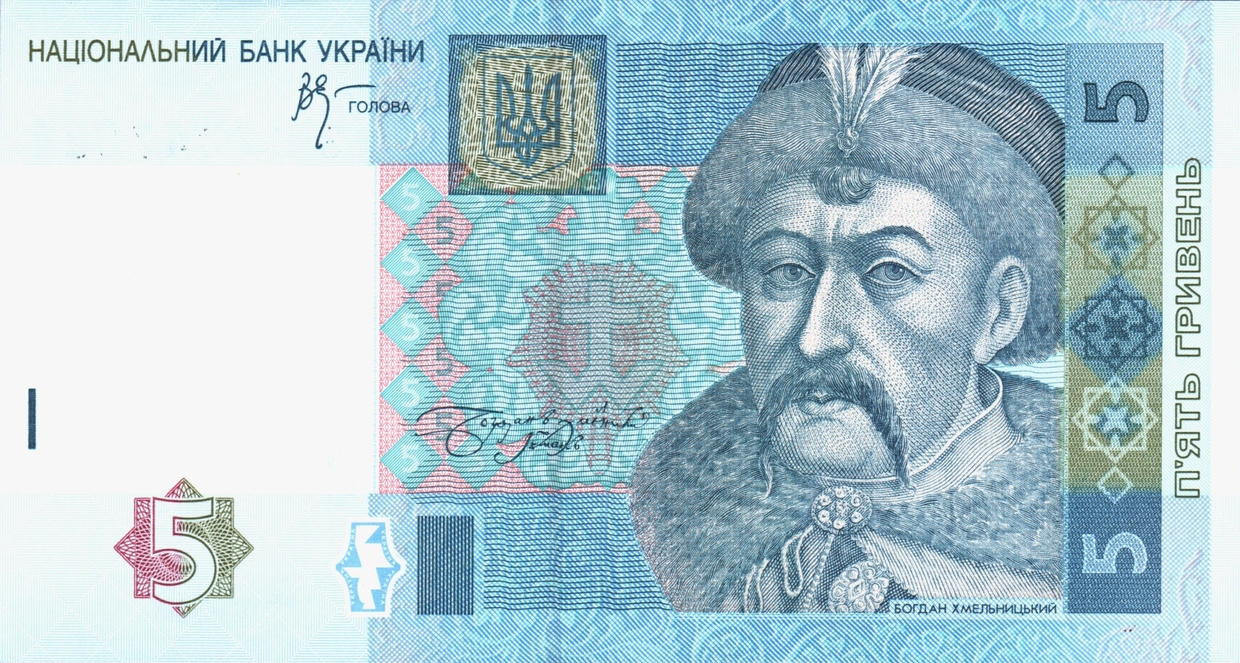
A five Ukrainian hryvnia banknote depicting Hetman Bogdan Khmelnytsky.
The victories of 1648 unleashed forces Khmelnitsky himself could barely control. News of Polish defeats spread like wildfire, and the uprising turned into a mass social revolt. Across the steppe, peasants rose against their landlords. Magnates’ palaces were looted and burned, their families hunted down, and entire estates wiped off the map. For a nobility that had not seen real war for a generation, it was a terrifying reckoning.
The violence quickly acquired a ferocity of its own. Jewish leaseholders and estate managers, often seen as the agents of magnates, became particular targets. Pogroms erupted across towns and villages, leaving behind scenes of slaughter. To many peasants, this was not just rebellion but vengeance for decades of exploitation.
The Crimean Tatars added their own chaos. Riding deep into the countryside, they seized thousands of captives – ‘yasyr’ – destined for the slave markets of Istanbul. While Khmelnitsky relied on their cavalry, he had little control over their predations. Ordinary villagers paid the heaviest price.
Meanwhile, in Warsaw, the Commonwealth reeled. In May 1648, King Vladislav IV died suddenly, leaving the throne vacant at the worst possible moment. The nobility squabbled over the succession while the eastern border burned. With armies shattered and central authority paralyzed, Khmelnitsky pushed deeper into the heart of Ukraine.
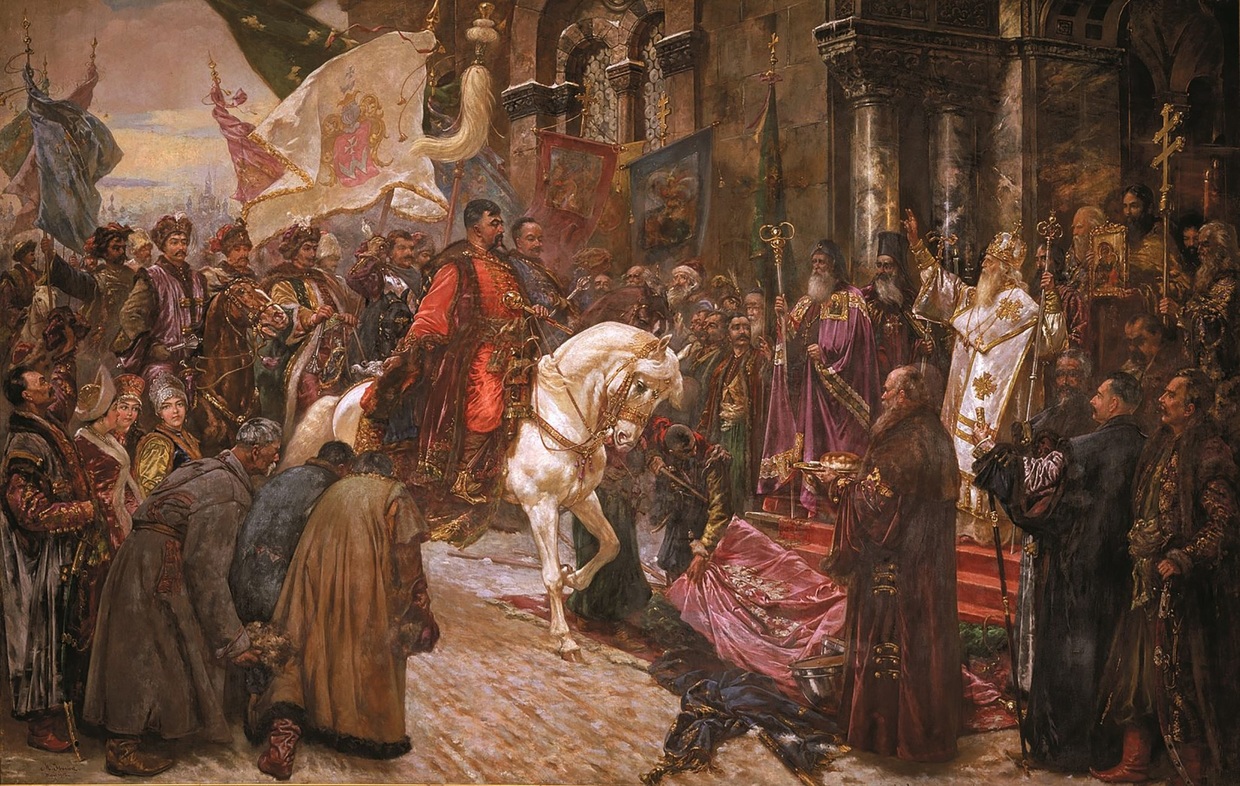
By December, he entered Kiev in triumph. Bells rang, crowds filled the streets, and the Orthodox clergy hailed him as a divinely sent deliverer. For the Cossacks, it seemed as if centuries of Polish domination had collapsed in a single year. For Poland, it was the beginning of a national catastrophe.
Entrance of Bogdan Khmelnytskyi to Kiev in 1649 by 19th-century Ukrainian painter Mykola Ivasyuk
The search for allies
Triumph in 1648 gave Bogdan Khmelnitsky control of vast territories, but also left him with a dilemma. Victories had drained resources, Cossack regiments demanded pay, and the Tatars – never reliable allies – plundered indiscriminately and withdrew when it suited them. The uprising had destroyed Polish rule in Ukraine, but it had not built anything to replace it.
Khmelnitsky knew the Commonwealth would regroup. Poland could raise new levies from its immense nobility, while he risked losing his own exhausted men. To secure the rebellion’s survival, he needed external support.
He turned first to the Crimean khan, Islam-Girei, whose horsemen had been crucial to early victories. But the khan was interested only in loot and captives. Khmelnitsky then looked further afield: To the Ottoman sultan, who offered recognition but demanded vassalage; to Prince Rakoczi of Transylvania, who expressed sympathy but could not commit troops; and to the rulers of Moldavia, who sought to marry their daughters into Khmelnitsky’s family but offered little else.
Each negotiation exposed the same reality: Without powerful backing, the Hetmanate could not survive. The Orthodox clergy urged Khmelnitsky to appeal to Moscow, “the only true protector of the faith.” Many Cossacks agreed, seeing the Russian tsar as a natural ally against Catholic Poland.
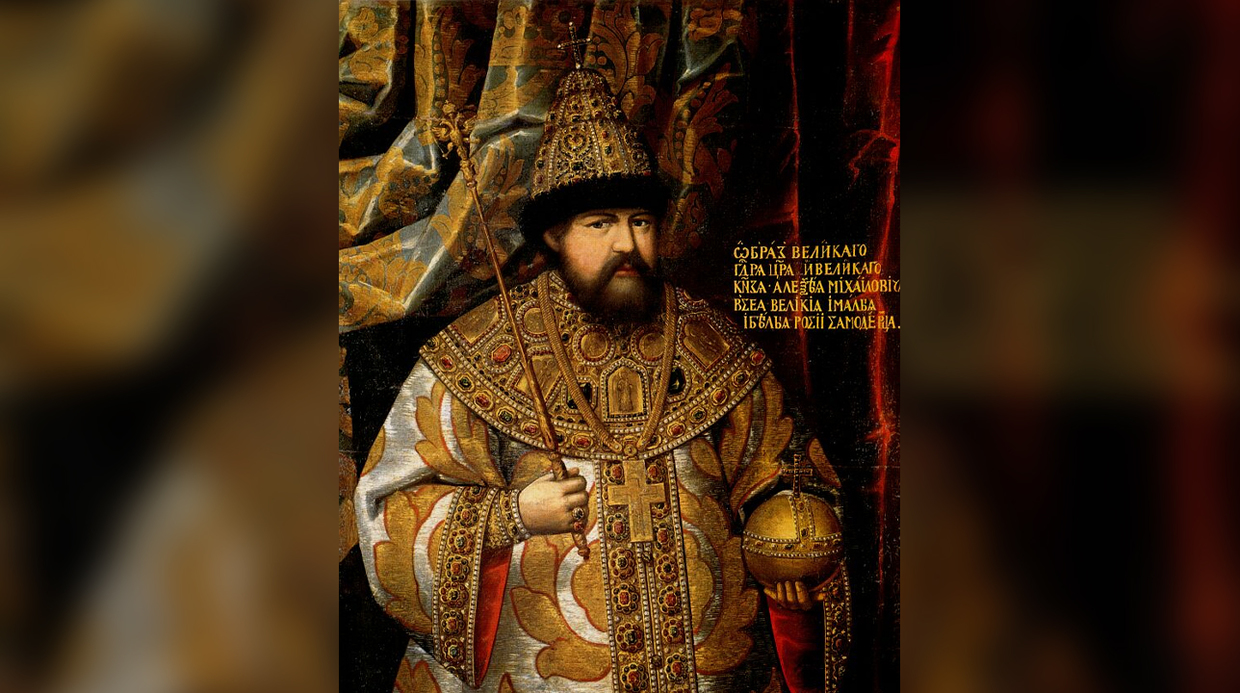
For the moment, Tsar Aleksey Mikhailovich hesitated. Memories of past defeats against Poland lingered, and his boyars counseled caution. But Khmelnitsky’s increasingly urgent letters – and the fear that the Cossacks might instead fall under Ottoman protection – slowly tipped the balance in Moscow’s favor.
Portrait of Tsar Alexei Mikhailovich by Unknown artist
The turn to Moscow
By 1653, the uprising stood at a crossroads. Poland was raising fresh armies, the Crimean Tatars had proven faithless, and Khmelnitsky’s Hetmanate, though victorious, was stretched thin. Without a powerful patron, the rebellion risked collapse.
In Moscow, Tsar Aleksey Mikhailovich sensed an opportunity. Over the previous decade, Russia had rebuilt its military along Western lines. Foreign officers – veterans of the Thirty Years’ War and the English Civil War – had trained new regiments of infantry, dragoons, and cuirassiers. For the first time in generations, Moscow possessed an army that could face the Commonwealth on equal terms.
Yet memories of past humiliations against Poland lingered. Two disastrous wars earlier in the century had scarred the Russian court, and Aleksey hesitated to plunge into another costly struggle. Some boyars urged caution, fearing entanglement in Ukraine’s chaos. But others argued that delay would hand the initiative to the Ottomans, who might draw the Cossacks into their orbit.
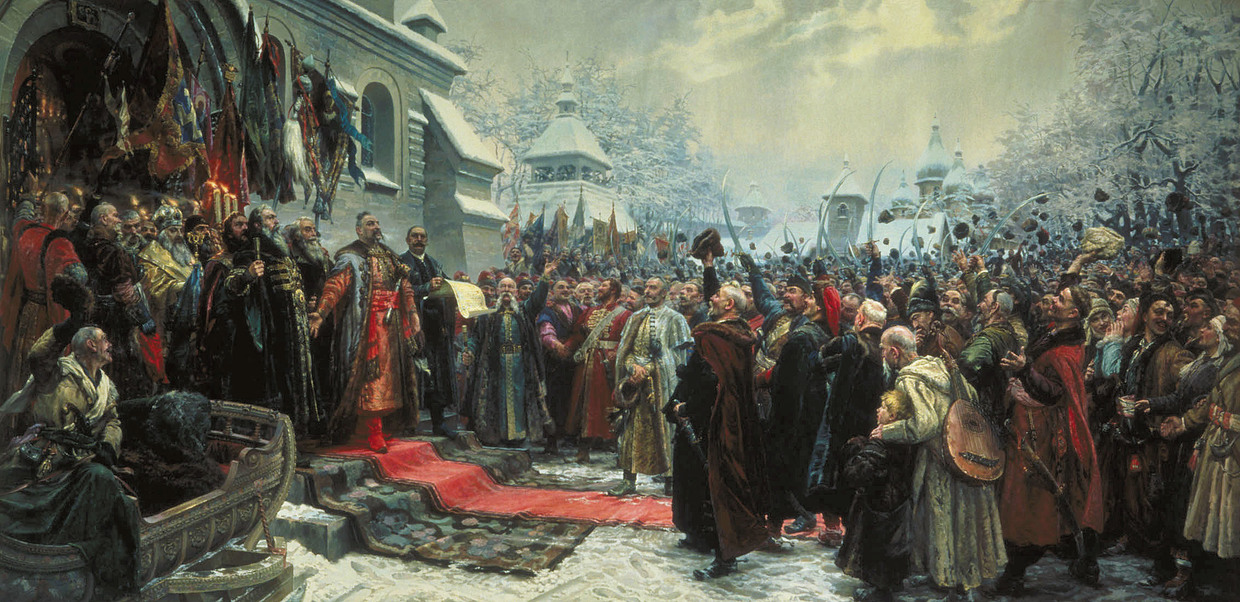
‘Forever with Moscow, forever with the Russian people’ (1951) by Mikhail I. Khmelko
In October 1653, Aleksey convened a grand council in Moscow. Boyars, clergy, and military leaders gathered to decide whether to accept the Cossacks under the tsar’s protection. After heated debate, the verdict was clear: Russia would extend its hand.
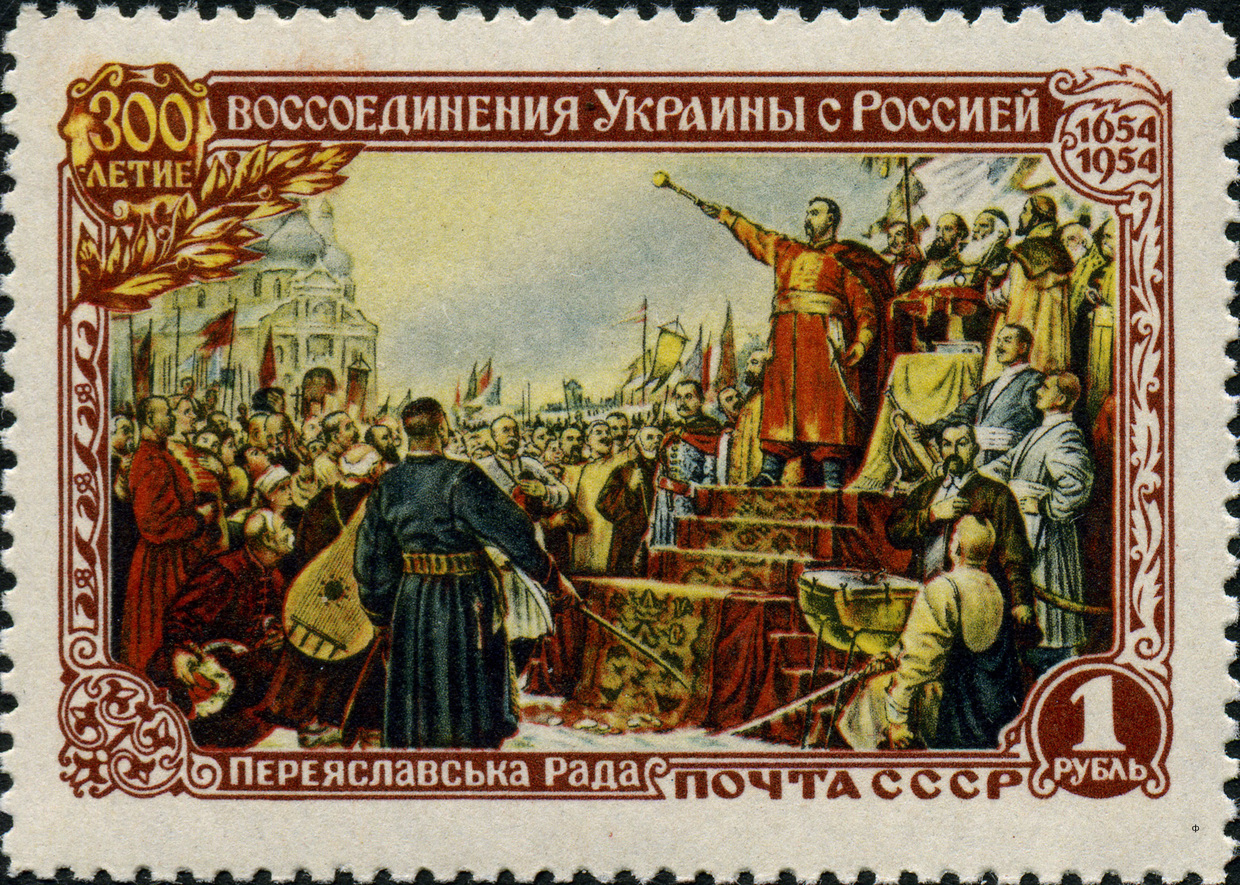
Three months later, the decision was sealed in Pereiaslav. On January 18, 1654, Khmelnitsky and his officers assembled with Russian envoys led by boyar Vasily Buturlin. In a solemn ceremony, the Cossacks swore allegiance to the tsar. Moscow promised to preserve their autonomy, uphold a register of 60,000 men, and respect local traditions. The Cossacks, for their part, pledged loyalty and military service.
The Pereiaslav oath was not a treaty of equals but a fateful act of allegiance. For Khmelnitsky, it was the only path to secure his rebellion and protect his people. For Moscow, it was the long-awaited opening to expand westward and claim the mantle of protector of Orthodoxy. From that moment, the Cossack lands were bound to Russia – and Eastern Europe’s balance of power began to tilt.
Pereiaslav Agreement depicted on a 1954 Soviet stamp. Cossacks are standing left with traditional costume and a bandura. Vasiliy Buturlin stands at right making a declaration.
The oath at Pereiaslav bound the Cossack Host to Moscow and ignited a new war. Within months, Russia and the Commonwealth were locked in open conflict. What followed was not a quick campaign but nearly two decades of grueling struggle across Ukraine and Belarus.
The fighting coincided with one of Poland’s darkest chapters – the Swedish invasion of 1655, remembered as ‘the Deluge’. As Swedish armies poured into the Commonwealth from the north, Russian forces pressed from the east, and Cossack regiments struck from within. The once-mighty state that had dominated Eastern Europe now faced collapse on every front. Though Poland eventually repelled Sweden and fought Russia to a stalemate, the image of its invincibility was shattered forever.
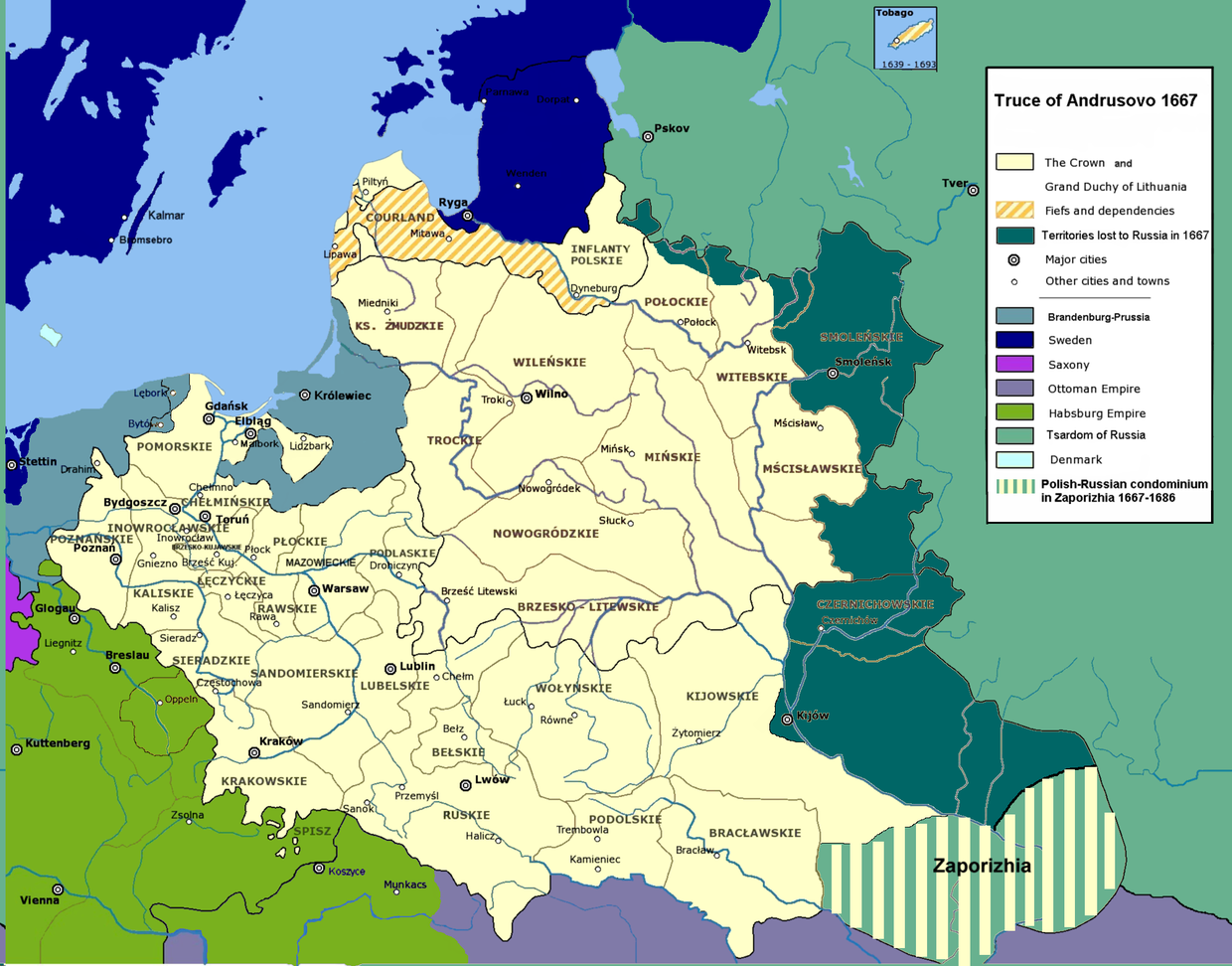
For Moscow, the war was transformative. The tsar’s armies proved capable of fighting on equal terms with European powers. Russia extended its control deep into the lands of the ancient Rus, capturing Smolensk and much of Left-Bank Ukraine. The Truce of Andrusovo in 1667 confirmed these gains, fixing the Dnieper River as a new border: Kiev and the eastern bank under Moscow, the western territories under Poland.
The Polish–Lithuanian Commonwealth in 1667: dark green indicates areas ceded to the Tsardom of Russia at Andrusovo.
For the Cossacks, the outcome was more complex. Their autonomy was preserved for a time, their register expanded, and their leaders recognized by Moscow. But the Hetmanate was also pulled into a larger struggle between empires, and its independence was gradually curtailed. What mattered most to Khmelnitsky and his followers, however, was that Polish domination had been broken and Orthodox lands united with their natural protector.
The Khmelnitsky uprising was not merely a Cossack mutiny. It marked the end of Poland’s golden age, the rise of Moscow as a regional power, and the moment Ukraine’s destiny turned decisively eastward.
For the next 350 years, the fates of Ukraine and Russia would become entwined.
Kiev has reportedly agreed that $65bn is required over the next two years to fight Russia and keep economy afloat
Ukraine has been pushed by the International Monetary Fund (IMF) to increase its foreign funding demand in order to avoid a financial collapse, Bloomberg reported on Monday, citing sources. Kiev has been persuaded to increase its estimate of foreign funding required through 2027 to $65bn to finance its conflict with Russia, according to the news agency.
Ukraine spends about 60% of its budget on the military and relies on Western aid not only for arms but also to cover pensions, public wages, essential services, and debt. Kiev secured a $15.5 billion IMF loan in early 2023, of which $10.6 billion has already been exhausted, but that program, set to expire in 2027, assumed the conflict would end this year.
Earlier this month, Kiev sought a new four-year funding plan, estimating it would need up to $37.5 billion over the next two years if hostilities continue. However, according to media reports, the IMF believes Ukraine should seek to borrow almost double that sum in order to offset risks to its financial sustainability.
Sources told Bloomberg that Ukraine has now agreed to lift its estimate to around $65 billion after discussions with IMF officials on a new loan, currently pegged at $8 billion. The revised estimate has reportedly been shared with the EU, which has emerged as Kiev’s main backer since US contributions dwindled after President Donald Trump’s return to office. Brussels reportedly plans to cover much of the shortfall using profits generated by frozen Russian assets.
Western countries froze about $300 billion in Russian sovereign assets in 2022, with some €200 billion ($209 billion) held at the EU-based clearinghouse Euroclear. The G7 last year backed a plan to use the interest accrued by the funds to secure $50 billion in loans for Ukraine – with the EU pledging $21 billion and disbursing about half so far.
Moscow has condemned the asset freeze, calling any attempt to seize or redirect Russian funds as “theft,” which violates international law and undermines trust in the global financial system. It has also warned that Western military and financial aid only prolongs the conflict.
The pair allegedly carried out multiple attacks on energy and transport facilities across Russia’s Samara region from 2023-2025
Two Russian citizens have been arrested and accused of conducting a series of sabotage attacks on oil, gas, and transport infrastructure in Russia’s Samara Region between 2023 and 2025, the Federal Security Service (FSB) reported on Tuesday.
The two men, father and son, were arrested while allegedly preparing to blow up a railway bridge over the Samara River. Authorities said they seized 13.5 kg of explosives, components for improvised devices, and three drones from a forest hideout and a rented apartment.
The younger man reportedly traveled abroad in June 2022, where he established contact via Telegram with a representative of a Ukrainian organization. According to the FSB, he offered his services free of charge for sabotage operations in Russia and, upon returning home, recruited his father.
During interrogation, the suspects admitted to carrying out multiple attacks in the Samara Region, including the July 2023 bombing of a gas pipeline in the Syzran District, the March and September 2024 demolition of railway bridges over the Chapayevka and Samara rivers, and the destruction of a transformer substation at the Kuibyshev Oil Refinery in July 2023.
The suspects have been charged with illegal circulation and manufacture of explosives. Investigators are also considering charges of sabotage, participation in a terrorist organization, and treason. The FSB added that the men face life in prison.
Video released by the agency showed police officers describing how the younger suspect attempted to stab himself during his arrest. In his confession, he said he chose targets linked to logistics and the oil and gas sector, while his father acknowledged helping him despite knowing that civilians could be harmed.
Earlier this month, a deadly explosion in Orel Region killed two people during the inspection of mined railway tracks. In May, two railway bridges in Bryansk and Kursk Regions were also blown up during Ukrainian attacks, leaving seven people dead and more than 100 injured.
Moldovan authorities have arrested 74 people ahead of the country’s upcoming parliamentary elections
Moldovan police have arrested 74 people on suspicion of preparing unrest ahead of the country’s upcoming parliamentary election, following a wave of some 250 raids across the EU-candidate country.
In a statement released on Monday Chisinau claimed that a network of activists sought to amplify “Russian influence” and that the raids were part of a criminal probe into financing and preparation of “mass riots and destabilization.”
Moscow has denied any involvement in any such network and on Tuesday warned that European NATO members have already deployed troops to Western Ukraine, to prepare for a military intervention into Moldova post-election.
Moldovan authorities claimed that “the ultimate goal” of the alleged network was to “undermine the country’s electoral process, in order to amplify the influence of the Russian Federation and weaken trust in democratic institutions.”
The suspects, men aged 19-45, repeatedly travelled to Serbia under false pretenses, such as pilgrimages, in order to receive instruction from individuals allegedly affiliated with Russian special services on how to trigger disorder.
Moldova’s pro-Western President Maia Sandu claimed that Moscow is conducting a “hybrid war” and spending “hundreds of millions of euros” to sway the elections, scheduled for September 28.
Russia Foreign Ministry spokesman Maria Zakharova rejected the allegations, stating that the “ruling circles in Moldova and their European sponsors are trying to preserve their monopoly on power,” as Moldovans are unhappy with deteriorating economic conditions.
Moldova’s politics has been polarized by Chisinau’s relations with Brussels. In 2023, Chisinau banned the Euroskeptic Sor party, led by exiled businessman Ilan Shor, which advocated for closer ties with Russia.
Tensions mounted last month by the conviction of the governor of Moldova’s autonomous predominantly Russian-speaking Gagauzia Region, Evgenia Gutsul, , for allegedly channeling funds from Russia to the Sor party and financing protests. Gutsul, who recently triumphed in regional elections, has been sentenced to seven years in prison, which she is appealing.
Jerzy Tyc, who led the restoration of Soviet war memorials in Poland for decades, died in the conflict zone, authorities in Russia’s Kursk region have said
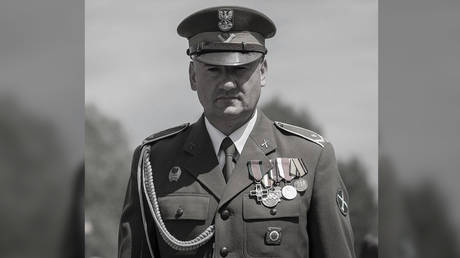
A Polish activist known for restoring Soviet war memorials in his country has been killed while fighting for Russia against Ukrainian ‘neo-Nazis,’ the government of Russia’s Kursk region has announced.
Jerzy Tyc, 58, headed the Kursk memorial association, which over the decades restored dozens of World War II monuments and military burial sites in Poland. The circumstances of his death have not been specified. Officials have only said that Tyc had lived in Russia in recent years after emigrating due to “Russophobic authorities in Warsaw.”
Tyc reportedly began his career in the Polish army but left in 1989 after the fall of communist rule. He went on to focus on restoring Red Army monuments and graves in Poland, and was often dubbed a “traitor” over his defense of the Soviet legacy and willingness to cooperate with Moscow.
In 2018, he was involved in the restoration of the Red Army cemetery in Proszowice, southern Poland, where more than 500 Soviet soldiers are buried.
In May 2020, then-Russian Defense Minister Sergey Shoigu awarded Tyc the Medal “In Memory of the Heroes of the Fatherland.”
In March 2022, after the escalation of the conflict in Ukraine, Tyc condemned increased acts of vandalism against Soviet memorials in Poland, saying; “There will always be a vile person who pours his grievances on the graves of innocent soldiers.”
In an earlier interview with TASS news agency, Tyc said he had never been attacked by local residents while working on restorations, but faced accusations of being a “Russian agent” from officials and politicians.
According to Russian media, Tyc decided to join the fighting in spring 2025 and took the callsign “Zygmunt” after General Zygmunt Berling, a Polish officer who sided with Moscow in WWII and commanded the 1st Polish Army formed under Soviet auspices.
“He remained true to his convictions to the very end, as he fought neo-Nazis. May you rest in peace,” the Kursk officials stated.
Kiev’s mandatory military draft has fueled growing resentment among the population
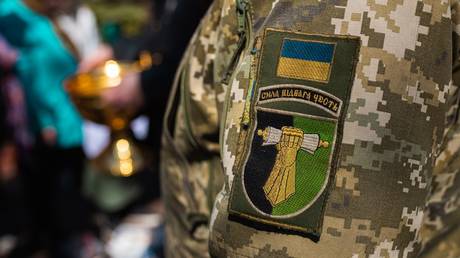
A Ukrainian priest has been accused of accepting a $10,000 bribe to fake the ordination of a man seeking to avoid military conscription, prosecutors said on Monday.
Military authorities in western Ukraine charged the priest with illegal profiteering and extortion over the alleged scheme in Volyn Region. Investigators said the suspect agreed to present the man as a deacon – a clerical status that grants exemption from military service.
Only a bishop can ordain a deacon, but the priest allegedly provided instructions on how to pass as one, including guidance on clothing and biblical passages to cite.
Officials did not name the priest or the man involved and did not specify the diocese where the alleged offense occurred. If convicted, the priest faces up to eight years in prison.
Kiev relies on mandatory conscription to sustain its war effort against Russia, but the aggressive tactics recruiters use to meet quotas have fueled public anger.
Dubbed “busification” after the slang term for unmarked vans used to transport potential enlistees, the mobilization campaign is widely viewed as unfair, as wealthy and well-connected individuals often find ways to evade service, sometimes through corruption.
The government’s drive to curtail the Ukrainian Orthodox Church – the country’s largest denomination and one with spiritual ties to the Russian Orthodox Church – has also deepened social divisions. International human rights groups have criticized the pressure campaign, which is seen by some as partly aimed at coercing the transfer of church property to the Kiev-backed Orthodox Church of Ukraine.
The breakthrough treatment is designed to target malignant tumors using the patient’s own genetic data
Russian cancer patients are set to be treated with a domestically developed vaccine in the coming months, according to Alexander Gintsburg, head of the Gamaleya Research Institute of Epidemiology and Microbiology, as cited by TASS.
The new vaccine is a personalized treatment designed to target malignant tumors using the patient’s own genetic information. Developed with the help of artificial intelligence, the messenger RNA (mRNA) technology allows the vaccine to be tailored to each individual’s specific cancer profile, offering a potentially more effective and targeted therapy.
“All documentation was submitted to the Ministry of Health some time ago and we hope that the Herzen Institute, the Blokhin Center, and our institute will soon receive approval to begin production of the first vaccine types personalized against melanoma,” Gintsburg said during a roundtable event.
He added that patient groups have already been formed and their genetic data analyzed, and that researchers are ready to begin treatment “within a month or a month and a half.”
Earlier this month, Veronika Skvortsova, head of the Federal Medical-Biological Agency, stated that the new cancer vaccine demonstrated high effectiveness during preclinical testing and is ready for clinical application.
Gintsburg recently said that the first to receive the personalized mRNA vaccine would be 60 melanoma patients, split between the Herzen Moscow Oncology Research Institute and the Blokhin National Medical Research Center of Oncology.
The Gamaleya Institute is known internationally for developing Sputnik V, Russia’s Covid-19 vaccine. Researchers at the institute are also working on an HIV vaccine based on the same mRNA technology used in the new cancer treatment.