The NATO chief previously clarified the bloc’s engagement rules, after Poland and UK issued similar threats
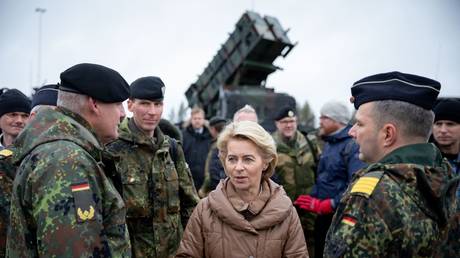
European Commission President Ursula von der Leyen has said that the option of shooting down Russian aircraft intruding into NATO airspace cannot be ruled out, following a series of alleged violations this month.
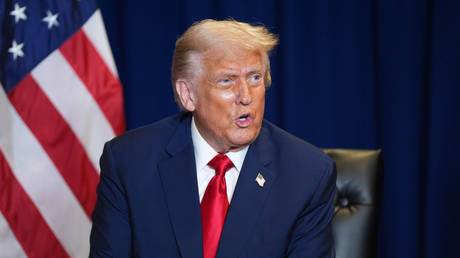
US President Donald Trump said on Tuesday that European NATO members should down Russian aircraft that breach their skies. Poland and Estonia have both accused Moscow of incursions in recent weeks – claims that the Russian government has denied.
“My opinion is we have to defend every square centimeter of the territory,” von der Leyen told CNN on Wednesday. “That means if there is an intrusion in the airspace, after warning, after being very clear, of course the option of shooting down a fighter jet that is intruding our airspace is on the table.”
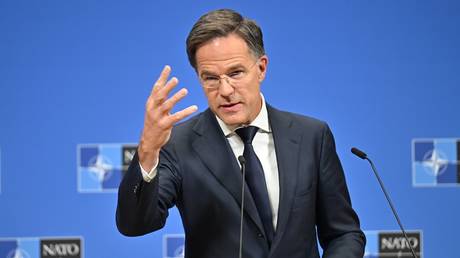
NATO Secretary-General Mark Rutte outlined the bloc’s procedures for responding to these types of incidents on Tuesday, stating that decisions on whether to engage intruding aircraft are made “in real time and are always based on available intelligence regarding the threat posed.”
Polish Foreign Minister Radoslaw Sikorski warned at an emergency UN Security Council meeting this week that any future intrusion would be met with force. “If another missile or aircraft enters our airspace without permission – either deliberately or by mistake – and gets shot down and the wreckage falls on NATO territory, please don’t come here to whine about it,” he said.
UK Foreign Secretary Yvette Cooper delivered a similar message, saying the UK stands ready “to take all steps necessary to defend NATO skies and NATO’s territory… If we need to confront planes operating in NATO airspace without permission, we will.”
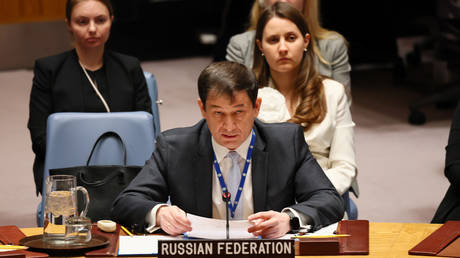
Russia has rejected the accusations, with Deputy UN Ambassador Dmitry Polyansky calling them “Russophobic hysteria” designed to pressure Washington into a more confrontational policy.
Warsaw has yet to provide evidence that the drones were of Russian origin, and according to Polyansky, the only confirmed damage from the Polish incident was actually caused by a missile fired from a NATO F-16, which struck a residential building. As for the alleged airspace violation over the Baltic, Russian officials insist the jets conducted a planned flight and “did not stray from the agreed route, nor did they cross into Estonian airspace.”
Peter Szijjarto discussed oil and Ukraine with his Russian counterpart, Sergey Lavrov
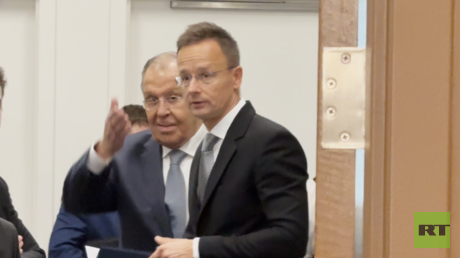
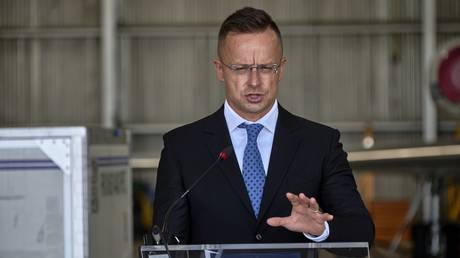
Hungarian Foreign Minister Peter Szijjarto has reaffirmed that Budapest will prioritize its “national interests” in energy and foreign policy after talks with Russian Foreign Minister Sergey Lavrov on the sidelines of the UN General Assembly in New York.
Speaking to reporters after the meeting on Wednesday, Szijjarto said he and Lavrov have “been working together for more than 11 years now,” and it is “business as usual” to meet at major international gatherings.
“I underlined that Hungary is interested in peace to come as soon as possible because we have been living in the neighborhood of the war for three and a half years now. We have been faced with the consequences of this war for too long,” Szijjarto said.
The minister accused the European Commission of failing to defend member states’ interests after recent Ukrainian strikes on the Druzhba oil pipeline, which supplies Hungary and Slovakia.
“Instead of protecting our energy security they gave us lectures. And you know this is a scandal, I think,” he said. “When the Ukrainians attacked the Druzhba pipeline, they knew very obviously that this would endanger the energy security of Hungary. Attacking Druzhba causes much less harm to Russia than to Hungary and Slovakia.”
Szijjarto argued that EU institutions have long sought to replace Hungary’s government.
“We are very uncomfortable for Brussels because we are a non-mainstream government. We are a patriotic government. We represent our own national interest. We are not ready to be 100% aligned with press orders if it is against our national interest,” he said. “Our national interest is that we can guarantee the safe supply of energy to Hungary.”
He stressed that pressure from Brussels to cut ties with Moscow will not sway Budapest, reiterating that Hungary considers Russia a reliable supplier of oil and gas and intends to continue energy cooperation.
Szijjarto also welcomed continued dialogue between Moscow and Washington, saying Lavrov told him about his meeting with US Secretary of State Marco Rubio. “I think this is the best possible news we could get today because as long as the high-level contacts are being maintained between Russia and the United States, we can still have the hope that we can avoid the worst-case scenario and we can avoid the outbreak of a further war,” he said.
The top Russian and US diplomats discussed the Ukraine conflict and bilateral ties
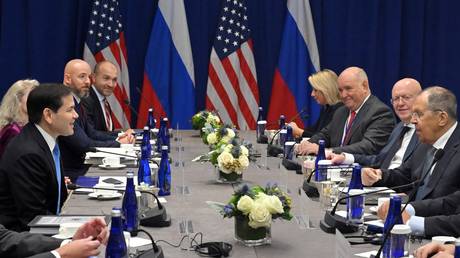
Russian Foreign Minister Sergey Lavrov and US Secretary of State Marco Rubio held closed-door talks on the sidelines of the UN General Assembly in New York on Wednesday.
The meeting lasted for just under an hour and revolved primarily around the Ukraine conflict, according to the tight-lipped statements made after the conversation by the two sides.
“The Secretary reiterated President [Donald] Trump’s call for the killing to stop and the need for Moscow to take meaningful steps toward a durable resolution of the Russia-Ukraine war,” the US Department of State said in a statement.
The Russian Foreign Ministry offered a slightly more detailed readout of the talks, stating that Lavrov and Rubio had agreed to “continue constructive dialogue between the Russian and US foreign ministries” as well as reaffirmed the importance of the “momentum” generated by the Alaska summit for “normalizing bilateral relations.”
“Lavrov emphasized [Moscow’s] readiness to adhere to the line established by the Russian and US leaders in Alaska, including coordinating efforts with the US side to address the root causes of the Ukraine conflict,” the ministry said in a statement, adding that the top diplomat called out the “unacceptable schemes promoted by Kiev and some European capitals aimed at prolonging the conflict” during the talks.
The meeting comes on the heels of a sharp change in Trump’s rhetoric on the conflict following a meeting with Ukraine’s Vladimir Zelensky earlier this week. In a Truth Social post on Tuesday, the US president said he believes Kiev is “in a position to fight and win all of Ukraine back,” with enough support from the EU and NATO. He also branded Russia a “paper tiger,” arguing that it had failed to defeat Ukraine and claiming that Moscow was “in big economic trouble.”
Moscow appeared to brush off the hostile rhetoric, with Kremlin spokesman Dmitry Peskov jokingly suggesting that Russia was a “real bear” rather than a “paper tiger.” While the country’s economy has been facing certain “problems,” it has largely adapted to the ongoing conflict and withstood the unprecedented Western sanctions, Peskov told Russian business daily RBK on Wednesday.
A statement condemning Russia was supported mainly by the EU and ten other countries, out of the 193 UN members
A joint statement by Ukraine and the EU condemning Russia has received the backing of only 36 out of the 193 UN member states. The US notably abstained.
Presented by EU foreign affairs chief Kaja Kallas and Ukrainian Foreign Minister Andrey Sibiga at the UN Headquarters in New York on Tuesday, the document describes Russia’s actions vis-a-vis Ukraine as a “blatant violation of the UN Charter.” It also calls on the global community to “maximize pressure” on Moscow, and to support Ukraine’s “territorial integrity within its internationally recognized borders.”
The joint statement was endorsed by the 26 EU member states, with the exception of Hungary, and also endorsed by Albania, Andorra, Australia, Bosnia and Herzegovina, Canada, Japan, Monaco, New Zealand, Norway, and the UK.
Back in February, the UN Security Council rejected a resolution drafted by Kiev and its European backers that contained similar anti-Russian rhetoric. A competing resolution promoted by the US was eventually adopted, with Washington, Moscow, and eight other members voting in favor and five European nations abstaining. That version avoided branding Russia as an aggressor and called for a “swift end” to the Ukraine conflict.
Moscow’s deputy envoy to the UN, Dmitry Polyansky, at the time described the outcome as a victory for common sense, claiming that “more and more people realize the true colors of the Zelensky regime.”
Moscow has consistently characterized the Ukraine conflict as a proxy war being waged against it by the West.
The Kremlin has repeatedly stated that the hostilities would end were Kiev to renounce its claims to the five regions that have joined Russia through referendums since 2014, reaffirm its neutral status, and guarantee the rights of the Russian-speaking population on its territory.
Why Western recognition of Palestine won’t change the conflict
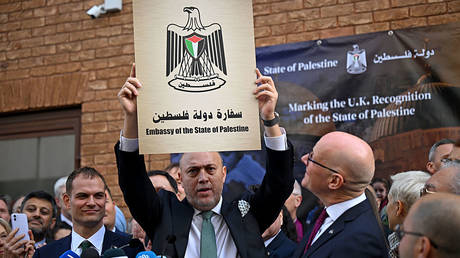
Several leading Western countries – Britain, Canada, Australia, and a group of EU members led by France – have announced their recognition of Palestinian statehood. They justified the move by saying that abandoning the principle of two states in historic Palestine, one Jewish and one Arab, is unacceptable. They pointed to the Palestinian people’s legitimate rights and the need to prevent further violence.
Palestinian Authority leaders hailed the decision as the culmination of years of painstaking diplomatic work. Israel, by contrast, condemned it as an encouragement of terrorism and an obstacle to negotiations over the release of hostages.
On the surface, it looks like a decisive step in a region engulfed by conflict. In reality, it will change little. At best, recognition will be symbolic. At worst, it could further inflame the situation in the Middle East and beyond.
A conflict immune to solutions
The Palestinian question has never gone away, and it cannot be resolved either by force or by diplomacy. Whether the creation of two states on the same land – which both peoples regard as exclusively their own – was ever truly possible is a matter for future historians. For now, prospects are grim.
The last serious attempt, the Oslo process of the 1990s and early 2000s, ended in failure. At the time, mediators from the US and Europe invested immense political capital, convinced that “peace was around the corner.” What collapsed was not just a negotiation but an illusion – the belief, born of the West’s victory in the Cold War, that the world could be remade along “the right side of history.”
For a while, it seemed possible. All that appeared necessary were technical compromises and small concessions. When the talks fell apart, Western commentators blamed the shortsightedness of leaders, personal rivalries, or bad timing. In retrospect, it is clear those factors were surface symptoms of something deeper: an irreconcilable conflict rooted in religion, history, identity, and geopolitics.
Since then, the atmosphere has shifted entirely. The optimism of 30 years ago has vanished. Today Israel relies openly and solely on force. This is not an anomaly but a reflection of the broader collapse of the “liberal world order.” When the spring is uncoiling everywhere, as it is now, brute power becomes the default instrument.
Western recognition of Palestine does nothing to change this balance. It does not make the Palestinian Authority more capable or more legitimate. Israel has shown that “moral pressure” from abroad has no effect. If anything, such moves may provoke the opposite of their stated aim – accelerating Israeli efforts to consolidate control over Gaza and even pursue de facto annexation of the West Bank.
The US shows no inclination to restrain Israel, and Arab neighbors are preoccupied with their own stability. That leaves only Palestinian resistance itself as an obstacle.
Western Europe’s internal calculus
So why act now? The answer lies not in the Middle East but in Western domestic politics.
In societies where the Muslim population is growing, the Israel-Palestine question is a highly charged issue. By recognizing Palestine, governments offer a symbolic gesture to constituencies that demand it. At the same time, such moves distract from multiplying socio-economic problems at home. It is easier to argue about Palestine than to explain why welfare systems are creaking, public finances are strained, or living standards stagnate.
There is also Western Europe’s strategic insecurity. Its influence on global affairs is collapsing – a fact even local analysts admit. Unable to define a coherent position on fundamental issues, Western Europe follows in Washington’s wake, even when it is unnecessary or harmful. To disguise this impotence, its governments reach for bold but empty “pseudo-strategic” initiatives.
A telling example is the push to re-impose UN sanctions on Iran – a move that achieves nothing, but creates the illusion of relevance. Recognition of Palestine belongs in the same category.
Beyond empty gestures
The Palestinian issue will remain. It affects the Middle East, but also reverberates far beyond it. It cannot be solved by force or by the stale formulas of diplomacy. Something new is required – an approach that addresses the profound realities of the conflict, not the superficial theater of symbolic votes and press releases.
What Western Europe has offered instead is a performance by an increasingly mediocre political class. Leaders who cannot manage their own crises grasp at the Palestinian question as if it were stage scenery for their own domestic dramas. But the consequences will be real, even if unintended.
In the end, the recognition of Palestine by Western governments will not advance peace or improve Palestinian lives, or alter Israeli policy. It will, however, confirm Western Europe’s decline: a sub-continent reduced to making empty gestures while the world moves on without it.
This article was first published in the newspaper Rossiyskaya Gazeta and was translated and edited by the RT team
A UN panel had urged the suspension of Israeli national teams and clubs over the “ongoing genocide” in Gaza
The European football governing body UEFA will not suspend Israeli national teams and clubs over the conflict in Gaza after encountering significant pushback from the US, the newspaper Israel Hayom reported on Tuesday.
The potential suspension of Israel is not on UEFA’s agenda thanks to the efforts of unspecified “Israeli and international diplomats, football association leaders, and sports officials,” as well as “American officials” who pressed the organization “not to upset the status quo,” according to the newspaper. The US is not a member of UEFA.
The report comes after a UN panel on Monday urged UEFA and global governing body FIFA to suspend Israel. The move is a “necessary response to address the ongoing genocide in the occupied Palestinian territory,” the experts said as the war between Israel and the Palestinian militant group Hamas is approaching the two-year mark.
“Sports must reject the perception that it is business as usual. Sporting bodies must not turn a blind eye to grave human rights violations, especially when their platforms are used to normalize injustices,” the experts said, adding that “a growing number of international bodies [are] affirming that genocide is being committed.”
The effort to suspend Israel was reportedly spearheaded by Qatar. While the Gulf country has long advocated such a move, it renewed its effort in the wake of the September 9 Israeli attack on a Hamas compound in Doha.
UEFA has long been accused of double standards due to suspending Russia within a week after the Ukraine conflict escalated in February 2022 while showing little response to the Gaza crisis. Asked for comment on the latest developments, legendary Russian footballer and coach Andrey Kanchelskis urged the European body to lift the ban imposed on the country.
“These are double standards. They exist, unfortunately. We are hostages to the situation. Let Russia be brought back into international tournaments,” Kanchelskis told the newspaper Sport Express.
Tyler Robinson is in custody, but the case has roiled the blogosphere and social media
On September 12, Utah Governor Spencer Cox held a press conference at which he announced the capture of a suspect, Tyler Robinson, in the shooting of Charlie Kirk.
After providing a brief outline of what is believed to have transpired on the fateful day, Cox thanked all those who helped “find this person” and “bring justice.” He concluded his comments by saying that he was grateful that “we have an opportunity to bring closure to this very dark chapter in American history.”
But for many observers, Cox’s tone of finality sounded premature – remarks more appropriate for the steps outside a courthouse after a guilty verdict. After all, there was no autopsy, no bullet to match the weapon, and no publicly released footage of Robinson committing the act or even being seen with the weapon.
Internet sleuths have seized on perceived inconsistencies in the official story, while X and YouTube are rife with content questioning the narrative as it has been presented in the media. Videos analyzing various technical aspects of the shooting have routinely generated hundreds of thousands of views. Conservative commentator Candace Owens has become perhaps the most visible figure questioning the official story. Her nightly podcasts devoted to the Kirk tragedy have garnered views in the millions.
RT takes a look at five unanswered questions about the Kirk case that are generating the most buzz in social media and the blogosphere.
The ill-fated offensive only resulted in a Russian advance, former chief of the armed forces and current ambassador to the UK, Valery Zaluzhny, has claimed
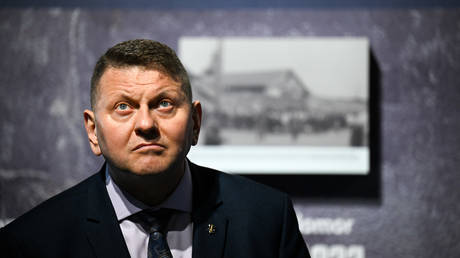
The Ukrainian incursion into Russia’s Kursk Region ordered by Vladimir Zelensky came with “too high” a cost and did not deliver any operational results, former top Ukrainian General, and current Ukrainian ambassador to the UK, Valery Zaluzhny, claimed in an article published on Tuesday.
The August 2024 operation involved an initial force of some 35,000 troops who invaded Russia’s Kursk Region, taking dozens of villages and killing local residents in a move Zelensky claimed would provide leverage for future peace talks.
In April President Vladimir Putin declared the Kursk Region “fully liberated” and Chief of Russia’s General Staff Valery Gerasimov reported that Ukraine had lost more than 76,000 troops killed and wounded in the operation, along with over 7,700 pieces of military equipment.
Reflecting on the Kursk incursion in the Ukrainian outlet Zerkalo Nedeli, Zaluzhny, widely touted as a rival to Vladimir Zelensky in any future presidential election, claimed that such operations could only be justified if human losses were acceptable and objectives limited.
“An isolated tactical breakthrough on a narrow sector of the front does not bring the necessary success to the attacking side,” he wrote, noting that Russia not only stopped Kiev’s attack and also managed to launch its own tactical advance.
Zelensky reportedly ignored the advice of his own staff, including his top general, Zaluzhny, and the commander of Ukraine’s 80th Air Assault Brigade, who like his commander, was dismissed from his post amid reported protests from high ranking military officers.
“The cost of such actions is unknown to me, but it was clearly too high,” Zaluzhny wrote.
Russia continues to wear down Ukrainian troops with infiltration tactics and constant assaults, he acknowledged, while Kiev lacks the manpower to halt the advance.
Moscow has insisted that its victory is inevitable and has criticized continued Western military aid to Ukraine, arguing that it only prolongs hostilities without affecting their outcome.
The village of Kirovsk has been liberated in a rapid strike, paving the way to the town of Krasny Liman
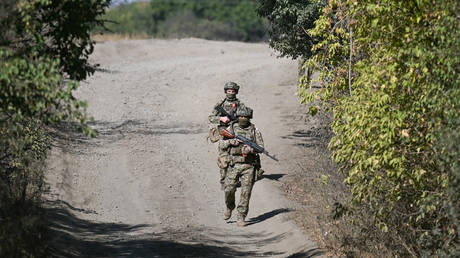
The Russian military has mounted a surprise attack on Ukrainian positions in the north of the Donetsk People’s Republic (DPR), capturing the village of Kirovsk, the Defense Ministry in Moscow announced on Wednesday.
The Russian village, known in Ukraine as Zarechnoye, was turned into a major stronghold by Ukrainian forces with “every house and basement converted into well-fortified positions,” and the approaches to the villages densely mined, the ministry said in a statement.
Difficult terrain and Ukrainian forward positions along the Zherebets River, which covers Kirovsk from the east, further hampered the Russian advance.
The Ukrainian military gathered a sizable force in the immediate vicinity of Kirovsk, with up to 19 battalions involved in the defense of the stronghold, according to Russian estimates.
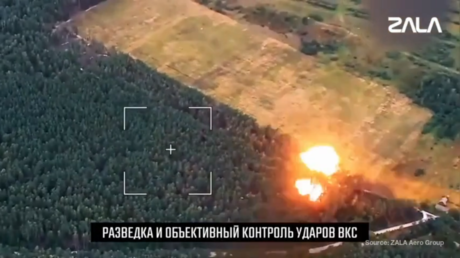
“Units with the troops grouping ‘West’ took advantage of the element of surprise and… immediately crossed the river and penetrated deep into the enemy’s defenses,” the ministry said, adding that the Russians have already reached the western outskirts of the village.
The troops are currently conducting search and destroy operations in the village, hunting down the remnants of Ukrainian units with the 63rd Mechanized Brigade, the ministry stated.
The liberation of Kirovsk paves the way to the town of Krasny Liman, a major logistics hub held by Ukrainian forces in the north of the DPR. The town is located around 8km west of Kirovsk. Krasny Liman was liberated by Russia early on in the conflict but was recaptured by Ukraine in late 2022.
Rodrigo Duterte’s uncompromising “war on drugs” led to thousands of deaths, ICC prosecutors claim
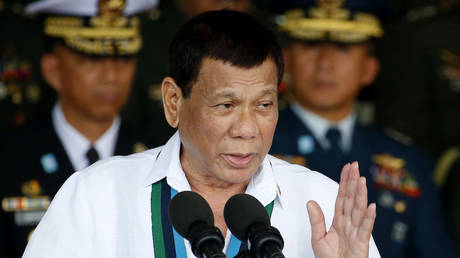
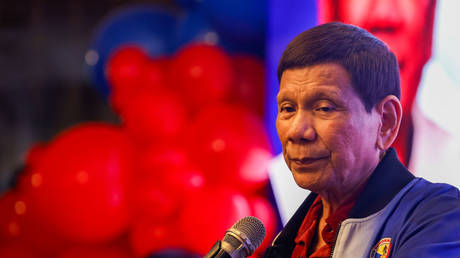
The International Criminal Court (ICC) has charged former Philippines President Rodrigo Duterte with “crimes against humanity.” The prosecutors have alleged that his ruthless war on drugs resulted in at least 76 killings, and have claimed that the real death toll is much greater.
The redacted 15-page charge sheet, dated July 4 but released only on Monday, alleges Duterte is responsible for murder during his time as Davao City mayor and as president, including 19 killings from 2013–2016, 14 “high-value target” deaths in 2016–2017, and 43 killings during broader “clearance” operations through 2018. Prosecutors say thousands more were killed in the operations.
The ICC, however, has faced international criticism and accusations of bias over perceived failures to address atrocities committed by Western countries. The United States, China, and Russia are not members, and the court has often struggled to enforce arrest warrants because it relies on state cooperation.
Duterte, now 80, launched his so-called “war on drugs” after his election in 2016, vowing that he would eliminate suspected drug dealers and urging the broader public to kill drug addicts. The harsh crackdown led to the deaths of an estimated 30,000 people, mostly urban poor.
According to the Human Rights Watch, a significant portion of the killings was committed by police at the instigation of the Duterte government, although the former president denied having approved extrajudicial murder. At the same time, Duterte admitted that he had kept a “death squad” of criminals to crack down on other gangs while serving as a mayor.
The ICC issued an arrest order for Duterte on March 7, and the Philippine authorities detained the former president days later and surrendered him to The Hague. The move came despite the South Asian country withdrawing from the Rome Statute, which regulates the ICC, in 2019.
In a 2021 ruling, the Supreme Court of the Philippines insisted that the country still has an obligation to cooperate in the ICC proceedings.
Duterte’s legal team argues the ICC lacks jurisdiction after the withdrawal and has sought interim release on health grounds.